
A Yard You'll Love Coming Home To
We design, build and maintain beautiful outdoor spaces.

SERVICES
Everything Your
Outdoor Space Needs.
Under One Build.
Altavera coordinates complete outdoor design-build projects across Boise, Eagle, Meridian, Star, Kuna, Nampa, Caldwell, Middleton, and Garden City — from grading and drainage to hardscape, irrigation, structures, and final walkthrough.
The Structural Foundation of Your Outdoor Space
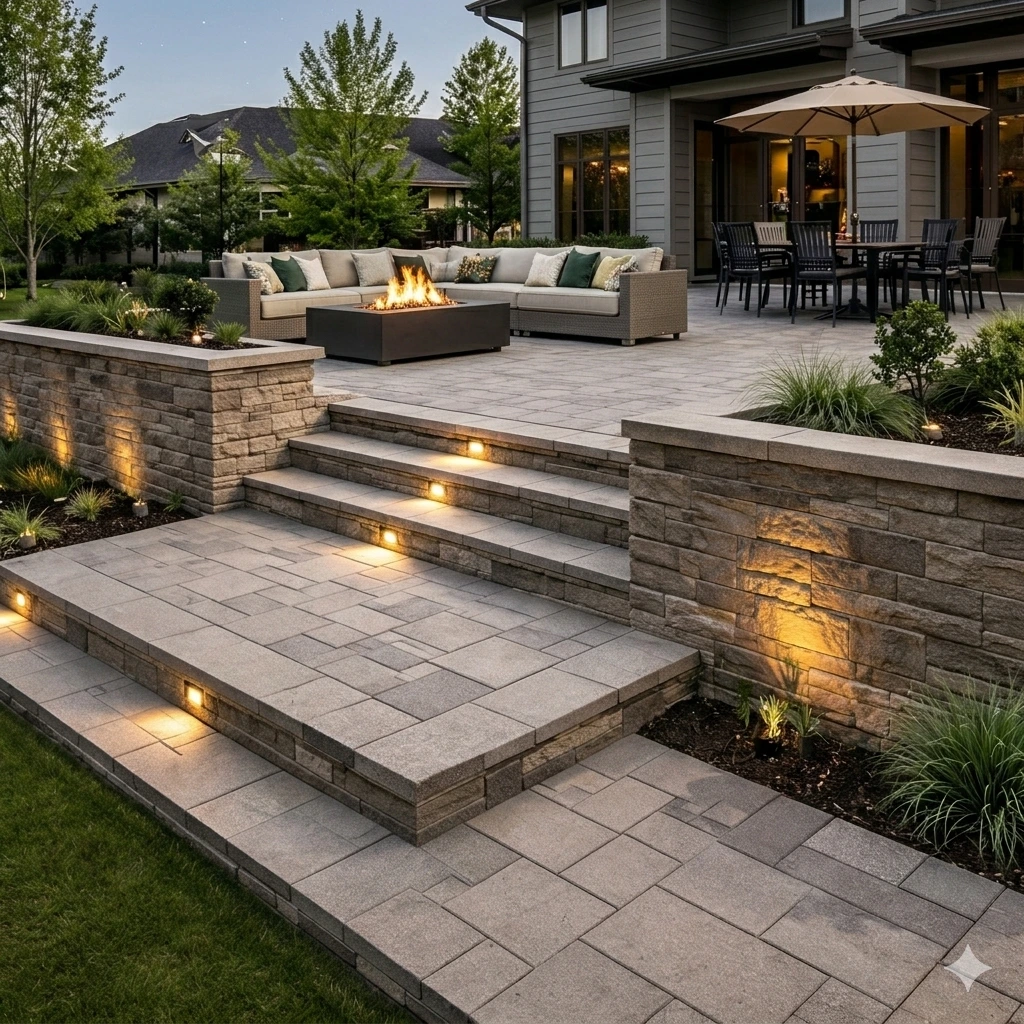
Pavers, concrete, retaining walls, and curbing - built on properly graded and drained ground. The surface is only as good as what's underneath it.
The structural foundation of your outdoor space
Pavers, concrete, retaining walls, and curbing - built on properly graded and drained ground. The surface is only as good as what's underneath it.
Most hardscape failures aren't material failures - they're sequencing failures. Patios that shift, crack, or puddle after a year almost always trace back to one cause: the ground wasn't properly prepared before the surface went down. Grading wasn't addressed. Drainage wasn't considered. The base wasn't compacted correctly for Idaho's freeze-thaw cycles.
At Altavera, hardscape is never the first thing we do. We establish proper grading, run drainage and irrigation lines, then build your patio, walkway, or retaining wall on a foundation engineered to hold. We size patios to how you want to actually use the space - not just what fits on a template plan. Retaining walls are built for the load and drainage behind them. RV pads are designed to the correct surface type and load-bearing width.
A patio poured before drainage is resolved is a patio you'll be tearing up. We address every underground decision before anything is set in concrete.
Water Managed Correctly From the Ground Up
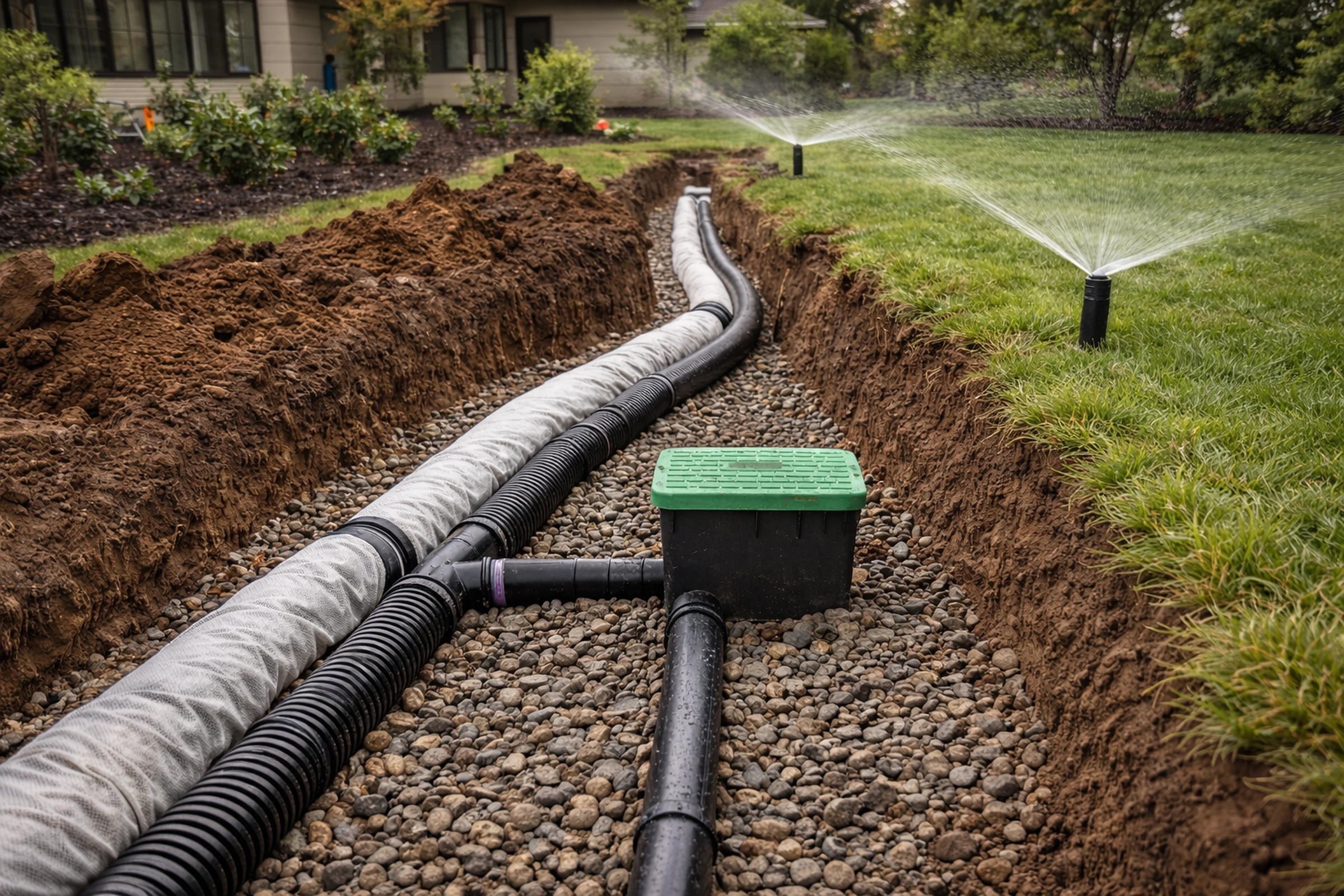
Irrigation & Drainage Systems
Water going where it should - and away from where it shouldn't
Irrigation and drainage are the first decisions we make on every build. Everything else is sequenced around where the water goes.
In the Treasure Valley, water management is not optional. Summers are dry and irrigation-dependent. Storms hit fast. Poorly drained yards develop wet spots, foundation moisture issues, and dead lawn zones that don't recover regardless of how much you water them.
We design irrigation systems as an integral part of the outdoor build - not as an add-on after concrete is already poured. Zones are mapped to what's actually being planted. Drip lines are run where the beds are going. Spray heads are positioned before hardscape goes down, not rerouted around it afterward. Drainage comes before everything: French drains, catch basins, and channel drains are planned in the design phase and installed in sequence so water moves away from your home.
Drainage problems don't appear on install day. They show up six months later after the sod is down and the patio is poured - when fixing them means tearing it all apart.
Living Elements Chosen for the Long Term — Not Just the Install Day
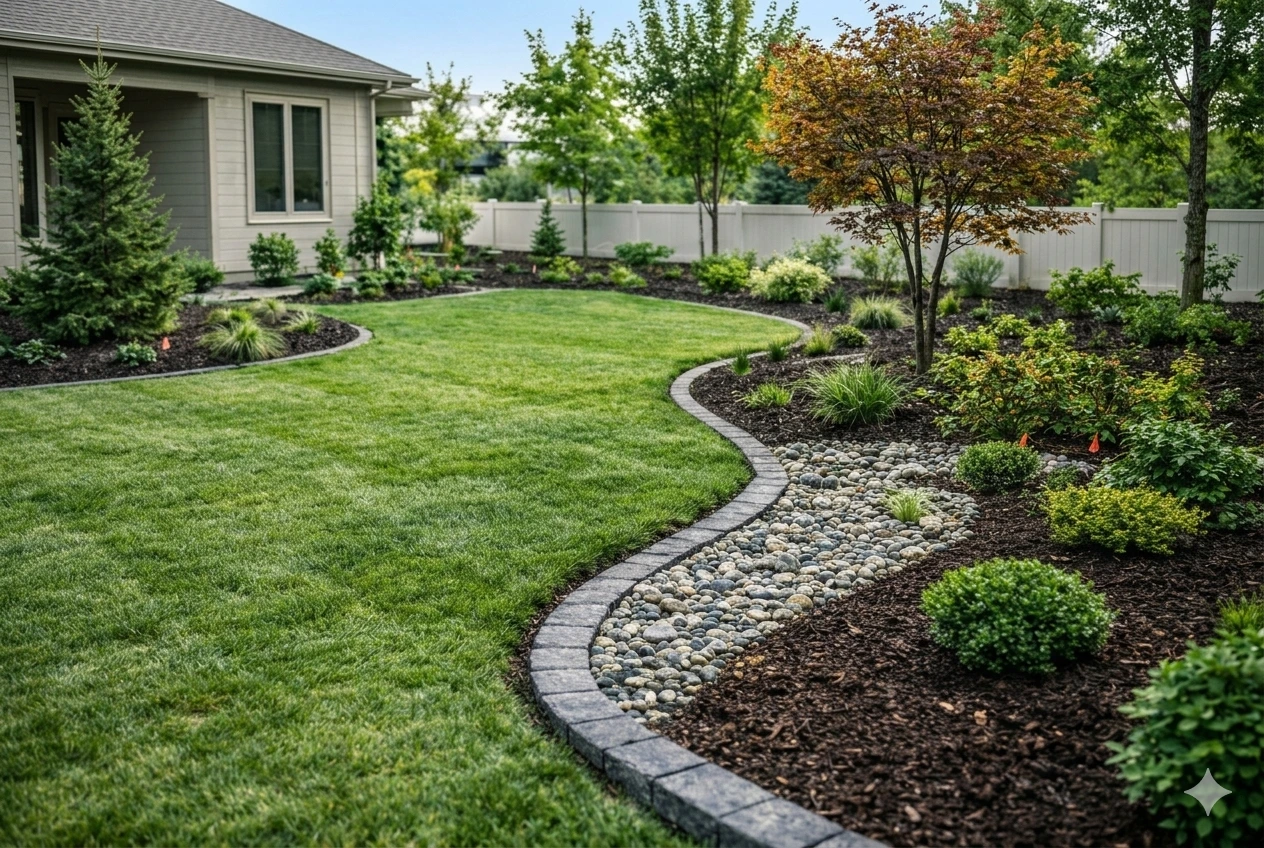
Sod, trees, plants, beds, and decorative rock - installed in the right sequence.
Builder-basic landscaping is the default for a reason: it's fast and cheap. But it doesn't match the quality of the home - and within a season or two, the limitations show.
We design landscaping as part of the full outdoor build. That means irrigation zones are designed before plant selection begins. Beds go where drip lines already run. Trees are chosen for mature size - not just how they look at the nursery today.
Decorative rock and gravel serve drainage function as much as aesthetic. The result is a yard that looks considered, performs correctly season after season, and doesn't need constant intervention to stay that way.
If sod goes down before irrigation is finalized, you'll be repairing it by summer's end. We sequence it so the systems beneath it are already working.
Year-Round Green. Zero Irrigation. Zero Maintenance Headaches.
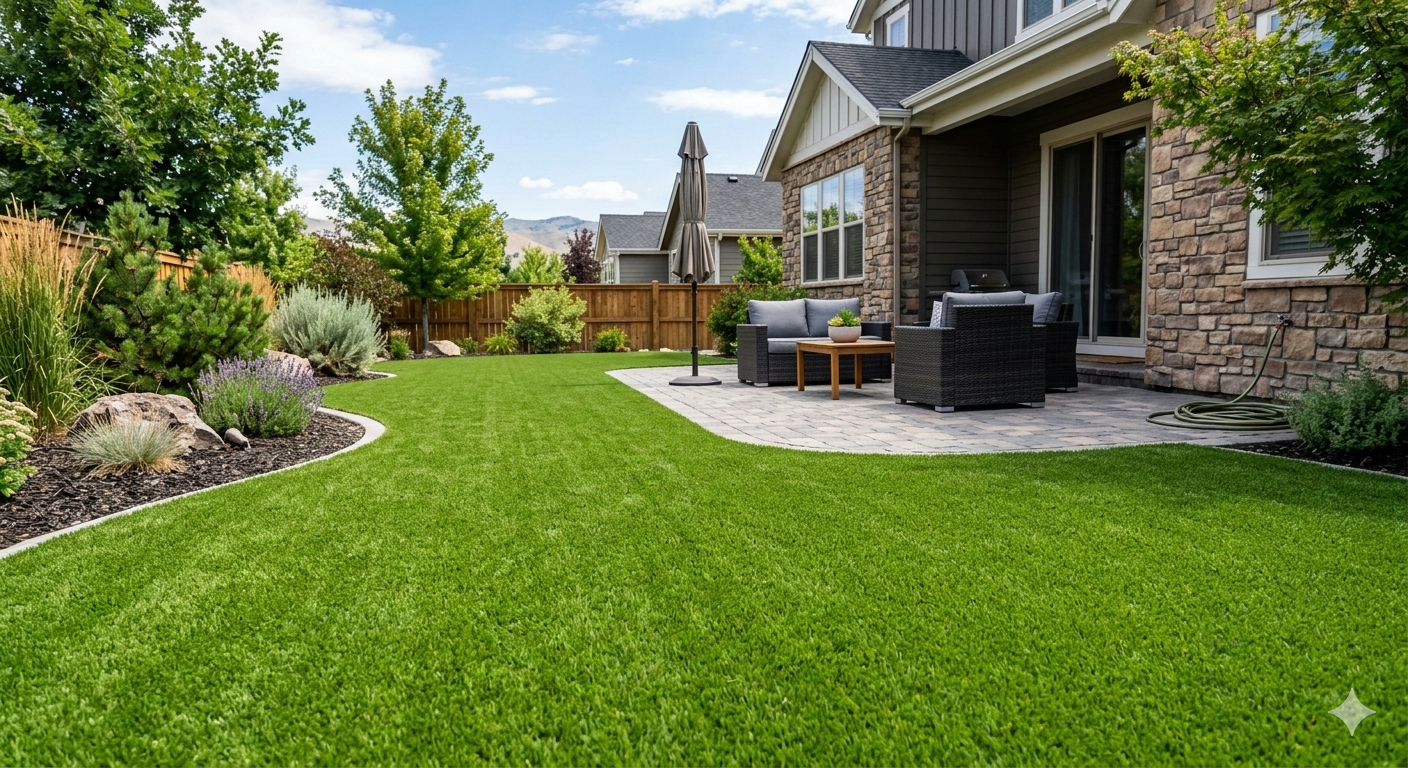
Synthetic turf installed correctly — with proper base excavation, integrated sub-drainage, and seaming that holds through Idaho winters and summers alike.
Artificial turf fails when it's installed like carpet being laid on a floor - without accounting for what's underneath it. Poor base preparation leads to an uneven, spongy surface that shifts under foot traffic. Inadequate drainage causes puddling and odor after rain. Cheap infill compacts. Bad seaming becomes visible after the first freeze-thaw cycle.
We install artificial turf with the same sequenced approach we use for every other element of a build. Base excavation and compaction come first. Drainage is integrated under the turf and tied into the site's overall drainage plan. Infill is selected for the intended use - family lawn, pet area, or low-traffic accent zone. Seams are planned around the layout before material is cut, not improvised on site.
For Treasure Valley homeowners, turf is increasingly practical. Summers are hot and irrigation costs are rising. Natural sod struggles in high-traffic zones, under play equipment, in shaded side yards, and along dog runs. Turf solves those specific problems without sacrificing the look of a maintained lawn - and eliminates irrigation overhead after installation.
No irrigation after install. No brown patches in August. No muddy paws after rain. No mowing. Just a surface that looks right and performs year-round.
Built-In Features That Get Used - Because They Were Built Correctly
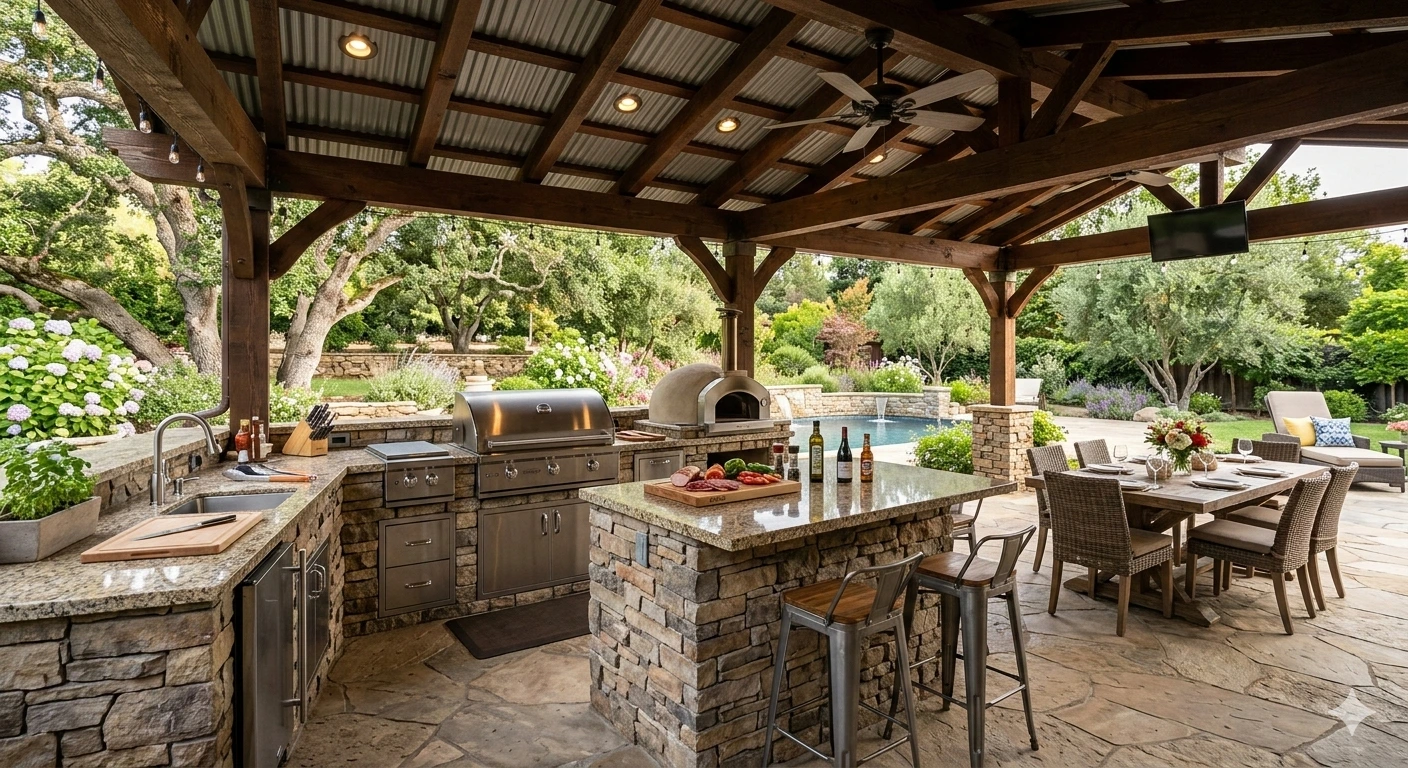
Outdoor kitchens, built-in BBQs, fire pits, and fireplaces — designed with trades coordinated in advance so nothing is improvised, retrofitted, or left unresolved on a punch list.
The most common problem with outdoor kitchens and fire features isn't the finished product — it's what was left unresolved beneath it. A gas line roughed in but never properly tied off. An outlet added as an afterthought to a countertop already built. A fire pit positioned without considering prevailing wind direction, fence proximity, or how it integrates with the seating layout.
We treat outdoor kitchens as the construction projects they are. Infrastructure is built first — the finished surface wraps around it. No exposed conduit. No retrofitted fixes. No details left on a punch list for someone else. Whether you want a simple BBQ island or a full outdoor kitchen with sink, refrigeration, and prep counter, we plan it as part of the whole build — sized and positioned for how you'll actually use it season after season.
An outdoor kitchen with unresolved plumbing or electrical isn't finished — it's a liability waiting to become a problem. We don't leave those details for someone else.
Fencing That Finishes the Property - Not Just Closes It In
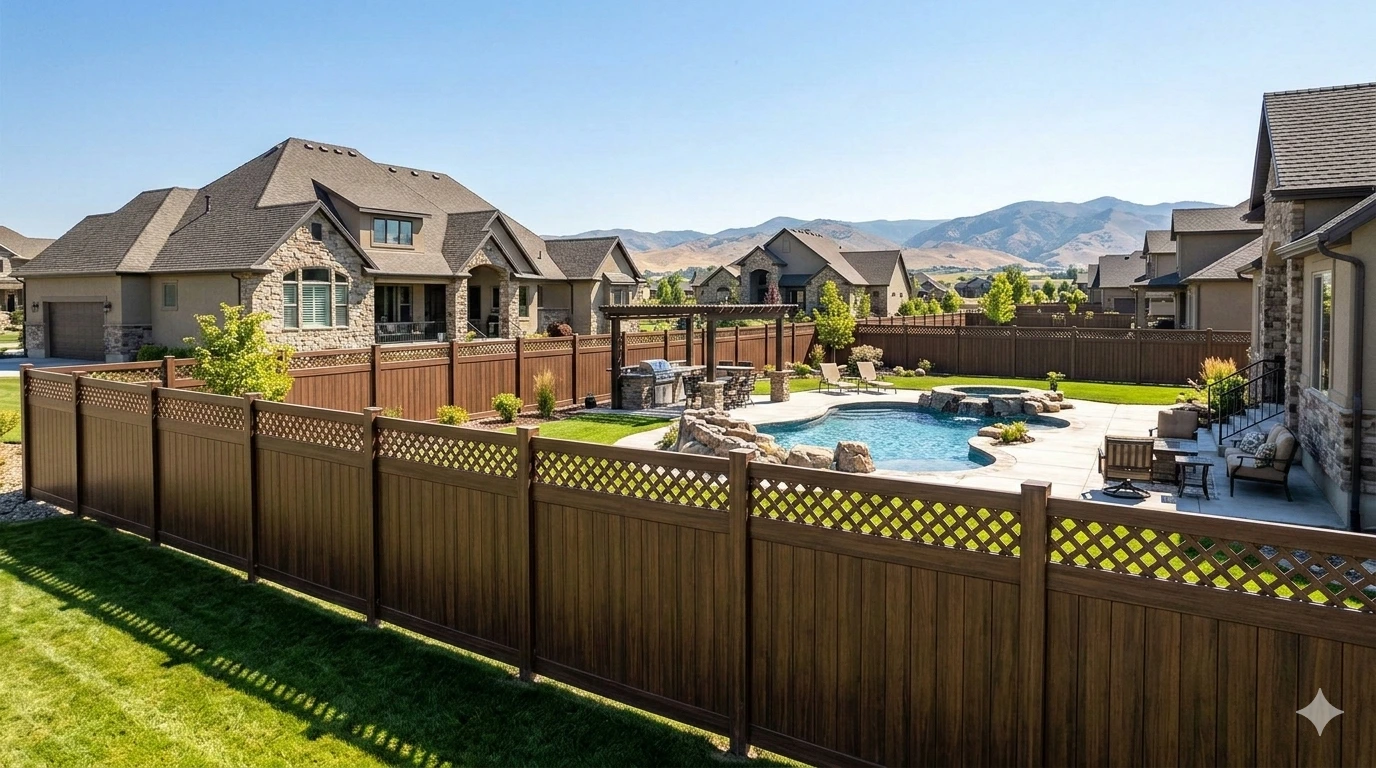
Privacy, vinyl, split rail, and aluminum fencing — installed with proper post depth, correct alignment, and clean transitions at every gate, corner, and grade change.
Fencing is often the last visible element of a backyard project — and one of the most impactful to how the finished space feels overall. A fence that runs straight, sits at consistent height, and transitions cleanly around corners and gates frames every other element.
Post depth is not a detail to rush. Idaho's frost depth and soil conditions require posts set correctly — not just deep enough to stand today, but deep enough to hold through years of freeze-thaw cycles. Gates are planned for real access, and HOA requirements are confirmed before materials are ordered — no surprises at inspection.
A fence installed before grading and drainage are finalized may need to come out to fix what's underneath. We sequence fencing after the ground is ready — not before.
Pickleball & Sport Courts
Built to Play On.
Pickleball is the fastest-growing sport in the country — and the Treasure Valley has caught up fast. We design and build dedicated sport courts that are properly graded, correctly surfaced, and built to last through Idaho winters.
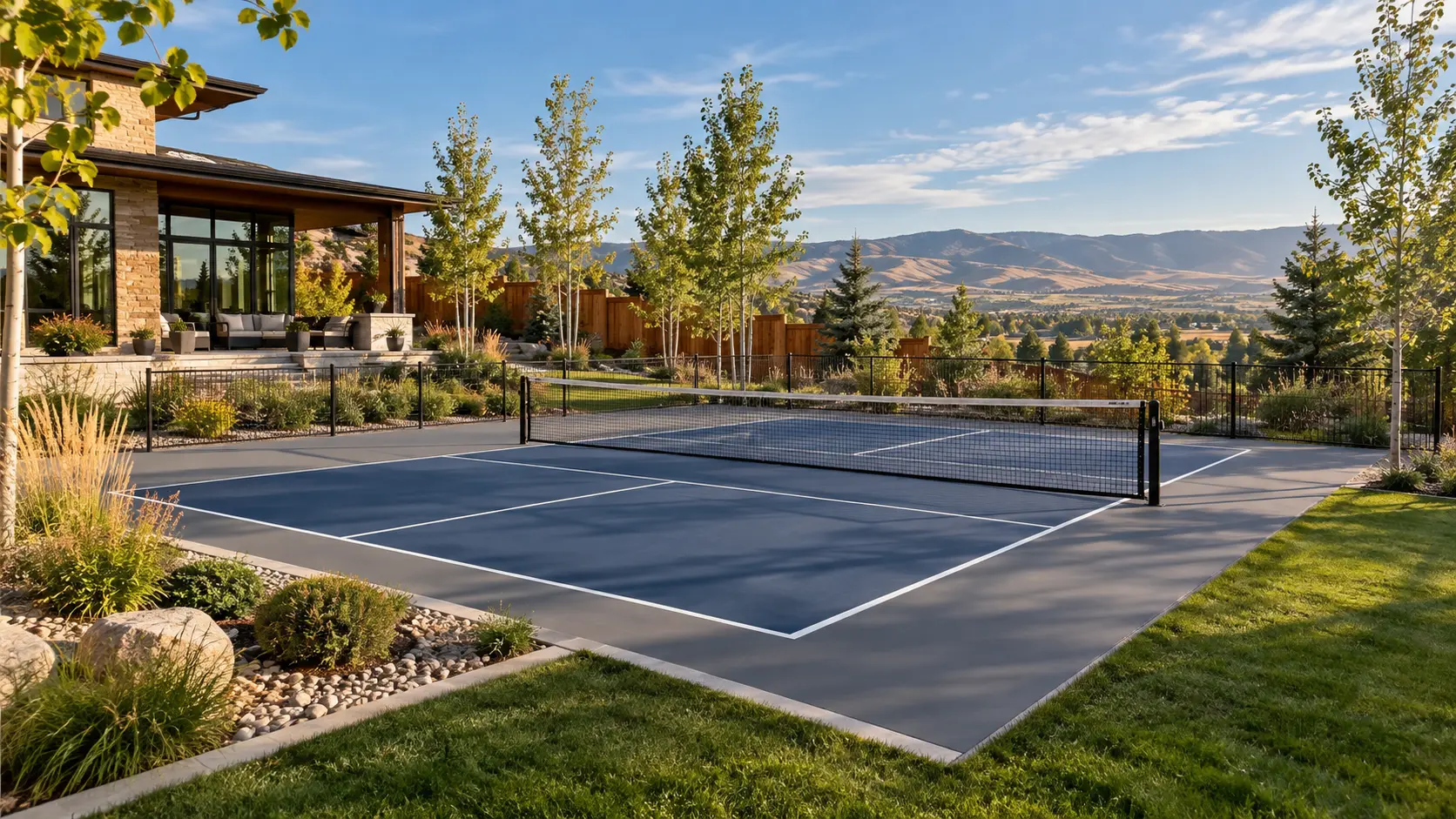
A sport court is a construction project — not a DIY pour. Grading is everything. A court that doesn't drain correctly will crack, heave, and puddle within a season. We apply the same drainage-first sequencing to every court we build that we bring to every other hardscape project.
We handle full-court builds for pickleball, basketball, tennis, and multi-sport configurations. Concrete base, color coating, line striping, net post sleeves, perimeter fencing, and lighting — all coordinated under one team, one timeline, one scope.
Whether you're converting an existing concrete pad, building on bare dirt, or working within HOA constraints, we scope it correctly before breaking ground so there are no surprises mid-build.
Long Summer Evenings. Family Gatherings. A Backyard That Feels Like a Private Resort.
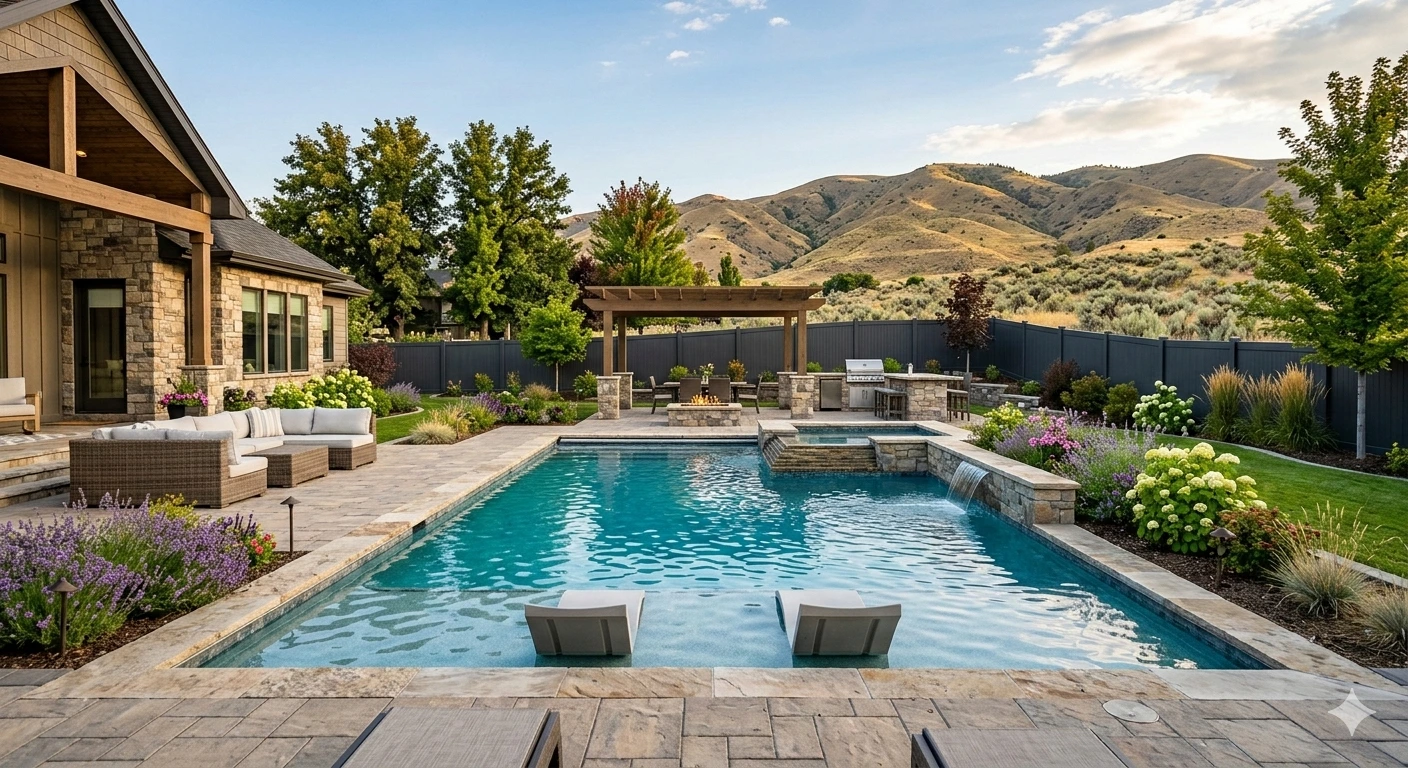
A pool that feels like a private resort — built on correct elevations, clean utility planning, and a finish sequence that protects the final look.
A pool isn't just a feature — it changes how you live at home. It turns a regular weeknight into something you look forward to, gives you a place to host without leaving your property, and makes summer feel like it lasts longer. The difference between "nice pool" and "finished outdoor space" is the planning that happens before excavation starts.
We coordinate the yard around the pool: grade and drainage that move water where it should go, hardscape transitions that feel intentional underfoot, and utilities planned cleanly for equipment access and long-term service. Then we sequence the finish work the right way — so landscaping, lighting, and final details land clean without getting torn up later.
Pools don't "fail" because of the water — they fail because the yard wasn't planned around elevations, drainage, and sequencing. When those pieces are solved upfront, the finished space feels effortless.
One Team. One Build. One Finished Outdoor Space.
Every service we offer, coordinated under one scope, managed by one team, delivered through one point of contact - from grading to final walkthrough.
This is the build that takes a blank yard - or a builder-basic one - and turns it into a space that functions like a true extension of your home. Grading, drainage, hardscape, irrigation, turf, landscaping, fencing, outdoor kitchen - all coordinated in the right sequence by one company who owns the entire outcome.
The reason most full outdoor projects fall short isn't any single trade - it's the absence of anyone managing the whole picture. The irrigation company doesn't know what the concrete contractor planned. The landscaper shows up after everything is in and works around it. Nobody owns the drainage. Nobody catches the sequencing problem until it's already expensive to fix.
Altavera manages the full build the way a general contractor manages a home build - sequenced scope, coordinated trades, proactive communication so you know what's happening before the crew arrives, not after they've gone quiet.
Our clients aren't looking for the cheapest option. They want certainty: that the project will be sequenced correctly, communicated clearly, and finished without loose ends. That's the standard we operate on - from the first site visit to the final punch list.
Site Prep & Grading
Every build starts with the ground. We establish drainage slopes, address grading issues, and prepare a stable base before any surface work begins.
Underground Systems
Irrigation lines, drainage infrastructure, gas and electrical rough-ins are installed before concrete is poured or hardscape is set.
Hardscape & Structures
Patios, retaining walls, outdoor kitchens, fire features, and fencing built in the proper sequence so each phase completes cleanly.
Landscape, Turf & Finish
Sod, turf, plants, and rock installed where irrigation already runs. Final walkthrough and punch list resolved.
Who This Build Is For
New construction homeowners starting with a blank slate, homeowners replacing builder-basic yards, families investing in outdoor living space, and relocation buyers settling into the Treasure Valley who want the project done right the first time.
What You Can Expect
One point of contact from first site visit to final walkthrough. All selections locked before work begins. Clear communication at every phase and a finished outdoor space that functions exactly as planned.
Outdoor Construction FAQs - Boise, Idaho
Quick answers to common questions about coordinated outdoor builds - from grading and drainage to hardscape, irrigation, landscaping, and full-yard transformations across Boise and the Treasure Valley.
What services does Altavera Construction provide?
Altavera coordinates complete outdoor design-build projects under one scope - from grading and drainage to hardscape, irrigation, landscaping, and final walkthrough.
Most projects include some combination of patios and pavers, concrete, retaining walls, irrigation design and install, turf or sod, planting and beds, fencing, and outdoor kitchen features - sequenced intentionally so the yard functions and performs long-term.
Do you offer free estimates for outdoor construction in Boise, Idaho?
We start with a structured consultation, not a quick "driveway quote."
Outdoor projects often involve grading, drainage, base prep, irrigation planning, and trade sequencing. We confirm scope, site constraints, and priorities first - then we discuss realistic budget ranges.
If it's a fit, we move into planning and proposal development with clear scope and next steps.
What's the difference between Altavera and a landscaping company?
Altavera is an outdoor construction contractor - not a "mow-and-blow" landscaper.
We manage complete builds: grading, drainage, hardscape, irrigation, landscaping, fencing, and outdoor living features - all coordinated under one plan.
Sequencing is the difference. Drainage and base prep happen first. Irrigation is designed into the build, not added after. Trades are scheduled intentionally so work doesn't get torn out and redone.
Why do you address grading and drainage before patios, pavers, and turf?
Because water movement determines whether the entire project holds up.
In the Treasure Valley, poor drainage is one of the most common reasons patios settle, pavers shift, and lawns stay soggy. Fixing it later usually means tearing up finished work.
We address drainage and base prep first so everything built on top performs long-term.
How do you approach irrigation on a full-yard build?
Irrigation is designed into the project - not treated like an add-on.
We plan irrigation after grading is established and before hardscape is installed. Sleeves are run under patios and walkways, zones are built around plant types and sun exposure, and spray direction is set up to protect the home's foundation.
At closeout, we test the system and walk you through how to use it and adjust it seasonally.
Do you manage subcontractors and the full backyard build?
Yes - we manage the full scope under one project plan and one point of contact.
Some specialized trades may be involved, but they are scheduled and coordinated by Altavera. You don't manage subs, timelines, deliveries, or trade handoffs.
Can we phase the project (hardscape now, landscaping later)?
Yes. Many homeowners phase projects based on budget, timing, or HOA requirements.
The key is doing the "under-the-surface" work first - drainage, grading, base prep, and anything that needs to go under hardscape (like irrigation sleeves and utilities).
We'll map out a clean phase plan so the finished result still looks intentional - not pieced together.
How much does a full backyard renovation cost in Boise and the Treasure Valley?
Cost depends on scope and site conditions. Grading needs, drainage complexity, material selections, structures, and total square footage all move the budget.
A coordinated build that includes hardscape, irrigation, and landscaping is a different category than a simple patio install. During the consultation, we'll clarify priorities and give realistic ranges based on your property and the outcome you want.
How long does a typical outdoor construction project take?
Timeline depends on scope, weather, and permitting/HOA requirements.
Most projects include planning and selections first, then construction sequencing (grading/drainage, base prep, hardscape/concrete, irrigation, landscaping, and final finishes). Once scope is defined, we provide a clear timeline and keep you informed through each phase.
How should I compare bids from different outdoor contractors?
Don't compare proposals on price alone. Compare what's included, what's excluded, and whether the work is sequenced correctly.
Look for clear detail on base prep, drainage approach, irrigation integration, material specs, and who is responsible for trade coordination. Vague bids often become expensive later.
Do you obtain permits and handle HOA approvals for outdoor construction projects?
When permits are required for the scope, Altavera can coordinate them as part of the project.
Requirements vary by city, neighborhood, and design. If HOA approval is needed, we help provide the documentation and plan details typically required for submission.
We'll flag what applies early so your project stays compliant and avoids delays.
What areas do you serve near Boise?
We serve Boise and the Treasure Valley, including Meridian, Eagle, Star, Kuna, Nampa, Caldwell, Middleton, Garden City, and Emmett.
Ready to Build Something That Actually Gets Done Right?
Tell us about your project. We'll walk the property, talk through your goals, and give you clarity on scope, sequence, and cost — before any work begins. No pressure. Just clarity.
We elevate outdoor spaces with professional planning, expert execution, and quality craftsmanship — because your outdoor space is an extension of your home, not an afterthought.
Elevated standards. Real integrity.
Idaho Contractor License ID #6971895 · Women-Owned Business
SERVICES
COMPANY
CONTACT
FOLLOW US


© Copyright 2026. Altavera Construction. All Rights Reserved.
3313 W Cherry Lane Suite 1053 Meridian, ID 83642