What Kuna Ground Asks of a Patio
Rock, Wind, and Canal Water: Why Kuna Patios Need a Different Plan
A Kuna patio has to work with three local conditions at once, and missing any one of them shows up later.
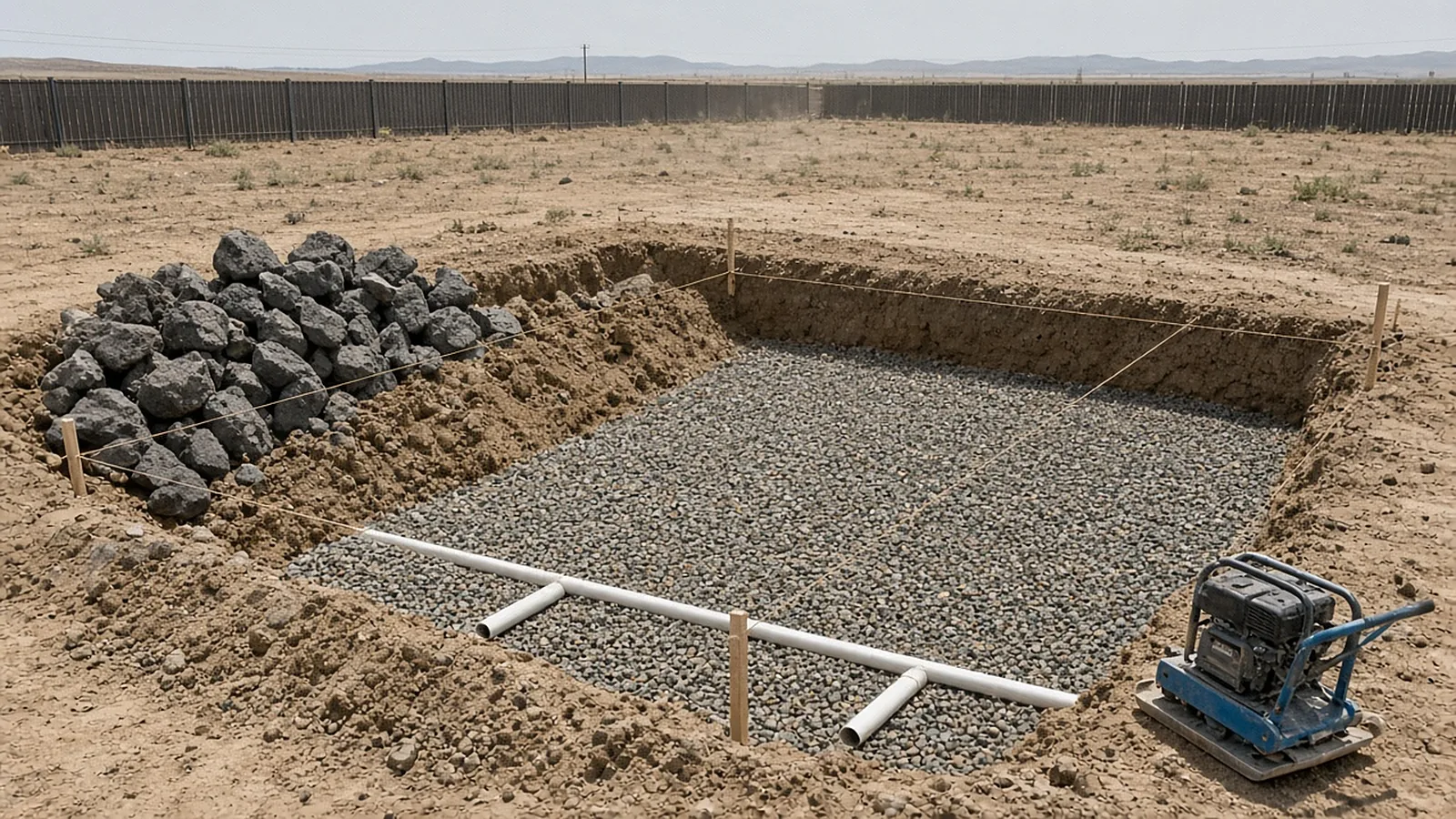
Dig a couple of feet into some Kuna lots and the shovel stops. Shallow basalt and rocky ground show up in parts of the area, especially toward the open country around Kuna Butte and the road out to Swan Falls. That rock changes how a patio gets built. You can't assume a base depth, and a crew that hits ledge partway through excavation has to choose between breaking it out, raising the finished grade, or reshaping the layout. Those decisions belong in planning, before material is ordered or a finished height is set against the back door.
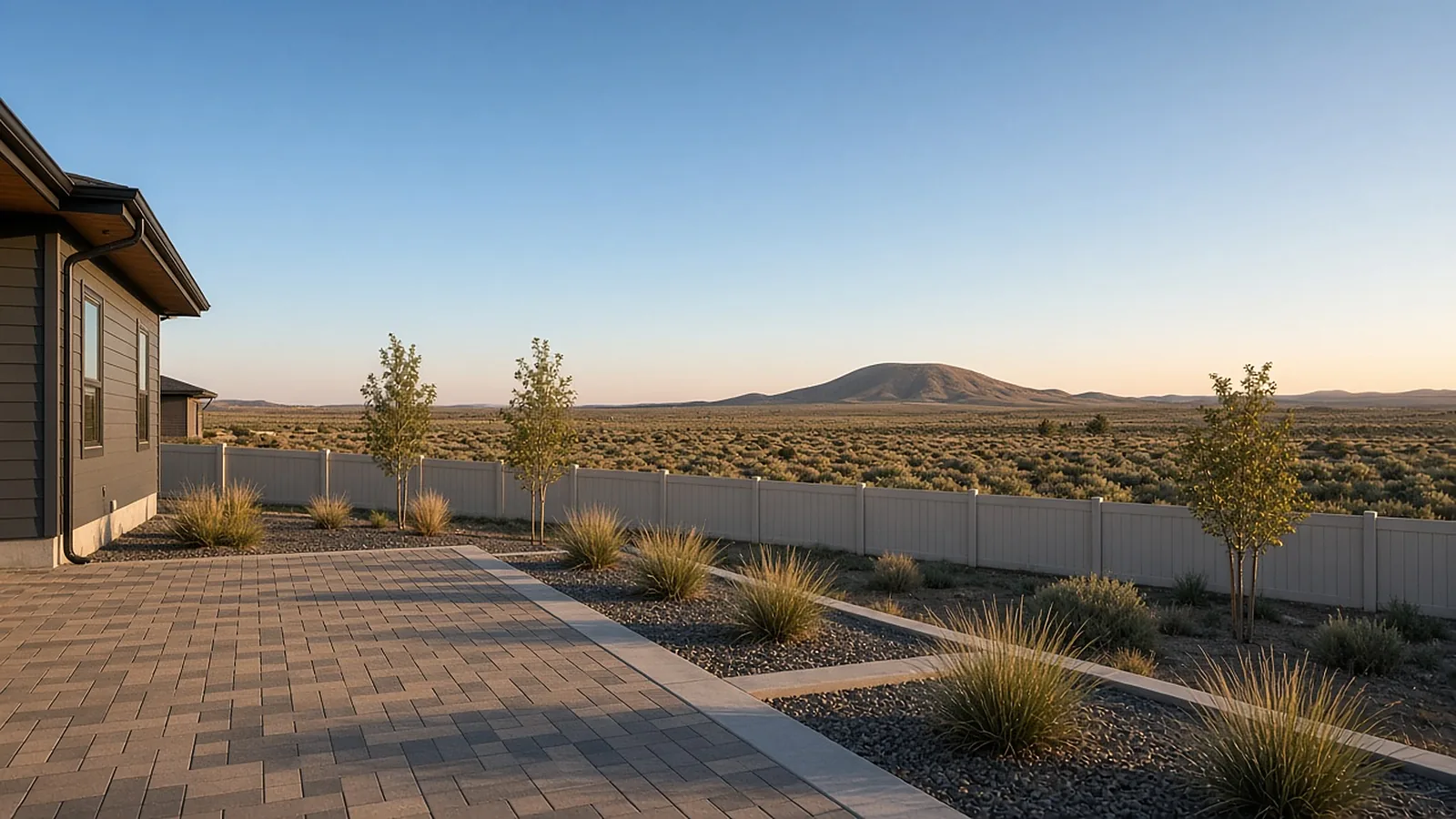
Kuna also sits right where the high desert begins, and the wind here is a regular thing. Newer subdivisions often have very few mature trees, so nothing slows the gusts crossing open fields toward town. Fine dust settles into paver joints, joint sand that wasn't installed and cured correctly can wash or blow out, and a wide slab with no shade bakes all summer afternoon. Paver color, joint treatment, and how the patio relates to a future pergola or windbreak planting all matter more on an exposed Kuna lot than on a shaded street.
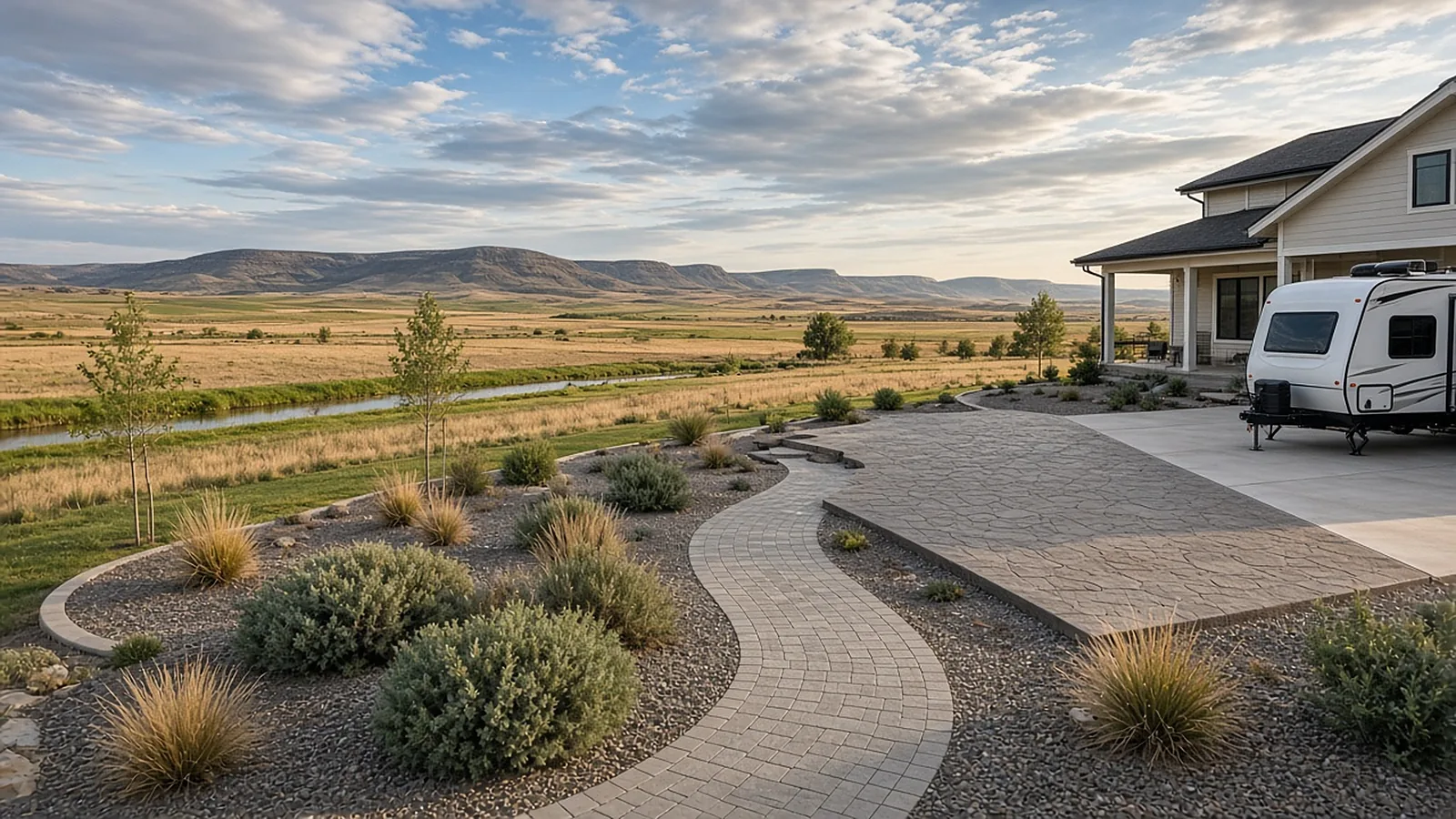
Water is the third piece. Many Kuna subdivisions run pressurized irrigation on canal water from the Boise-Kuna Irrigation District and other systems, and that water only runs part of the year. Lines and valves have to be located before excavation, with sleeves planned under the new hardscape so the lawn past the patio still gets water. Add HOA design review in many newer neighborhoods, established in-town lots near Indian Creek, and acreage parcels that need RV pads, and no two projects start the same way. Patio work often pairs with irrigation and drainage in Kuna.
Our approach in Kuna
Where rock is suspected, we check for it during the on-site estimate. We locate irrigation lines before digging and set grading and drainage first. The written proposal spells out base depth, how any rock will be handled, where sleeves go, and the joint material chosen for wind and dust exposure.