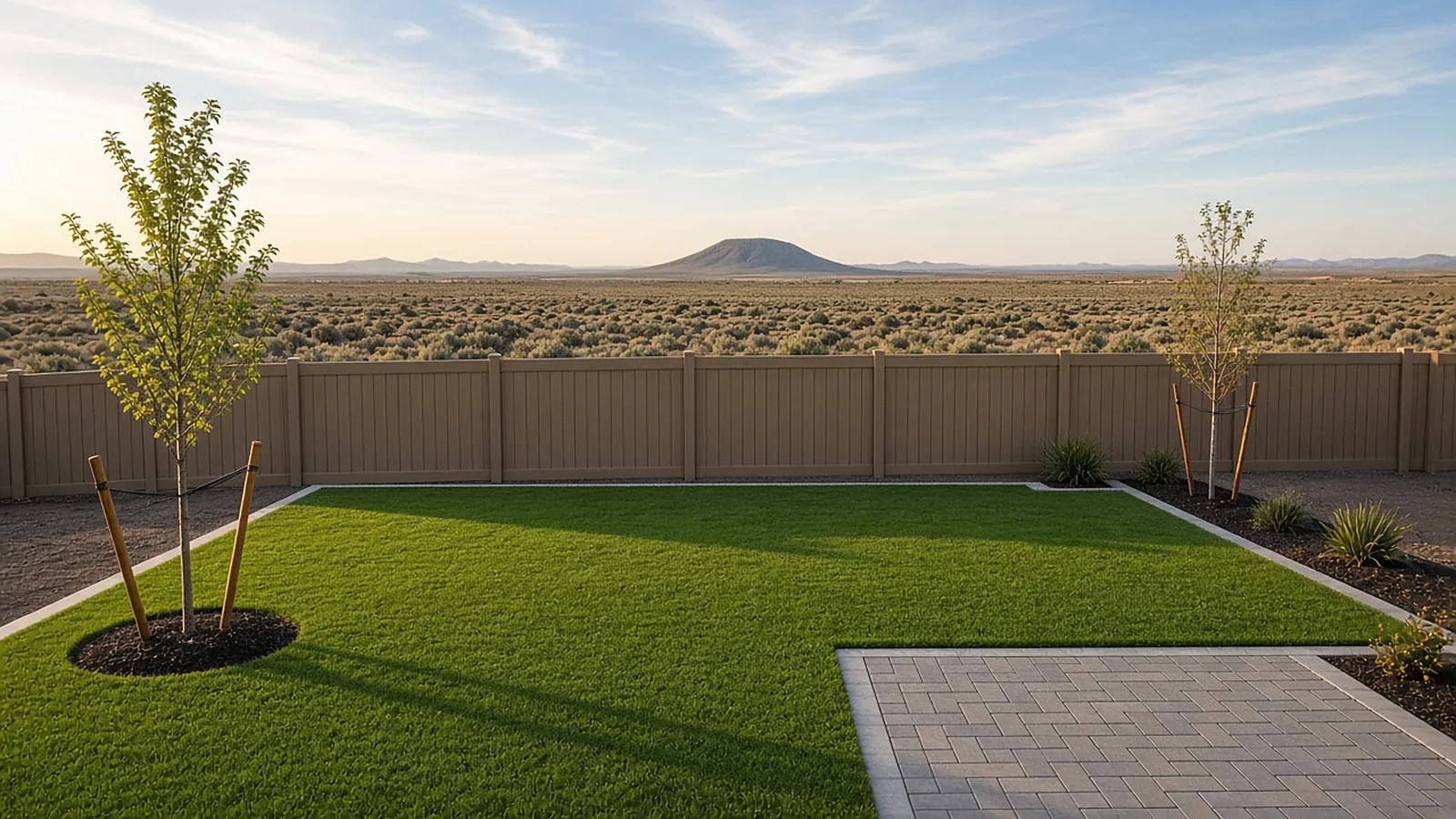
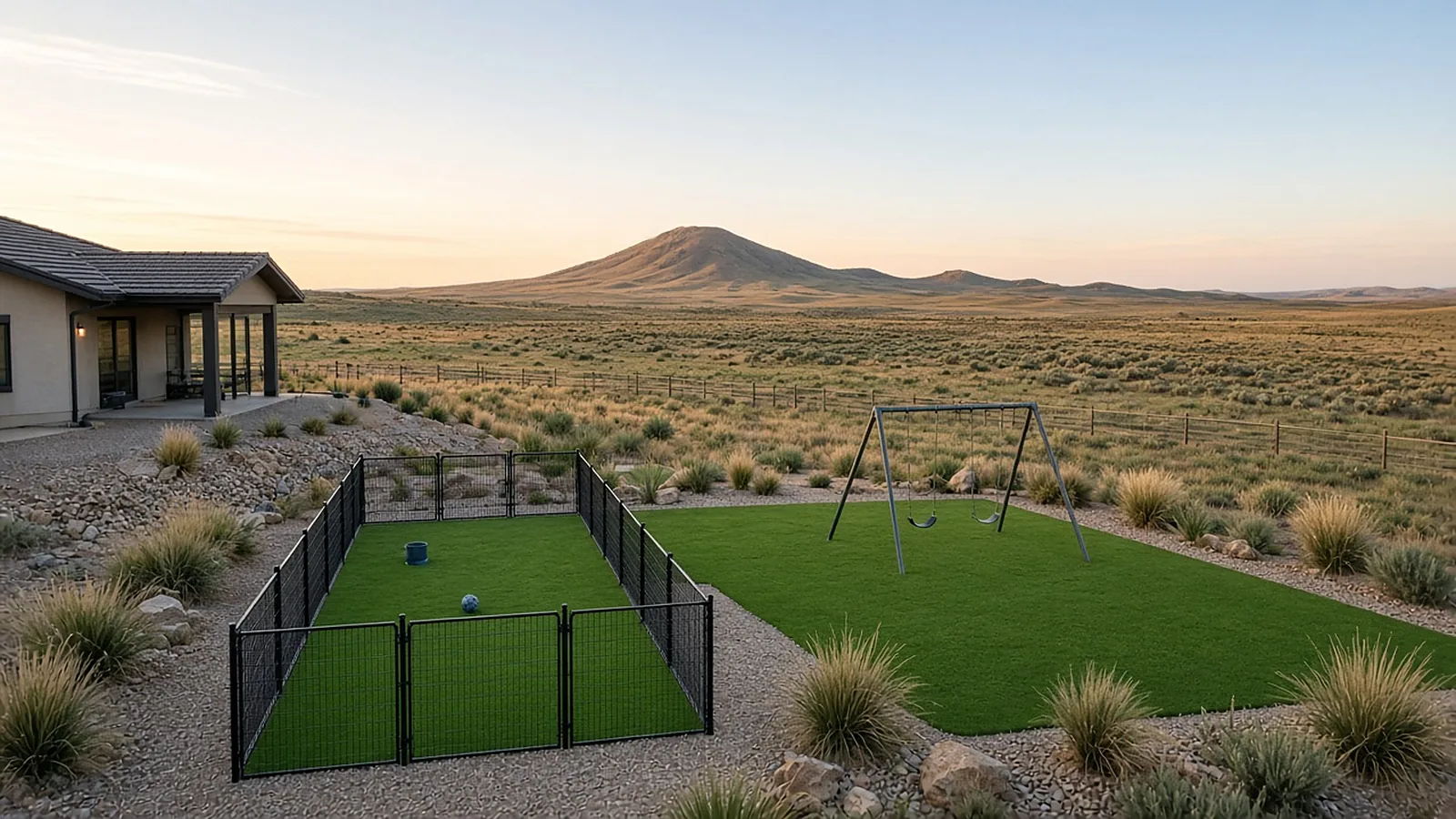
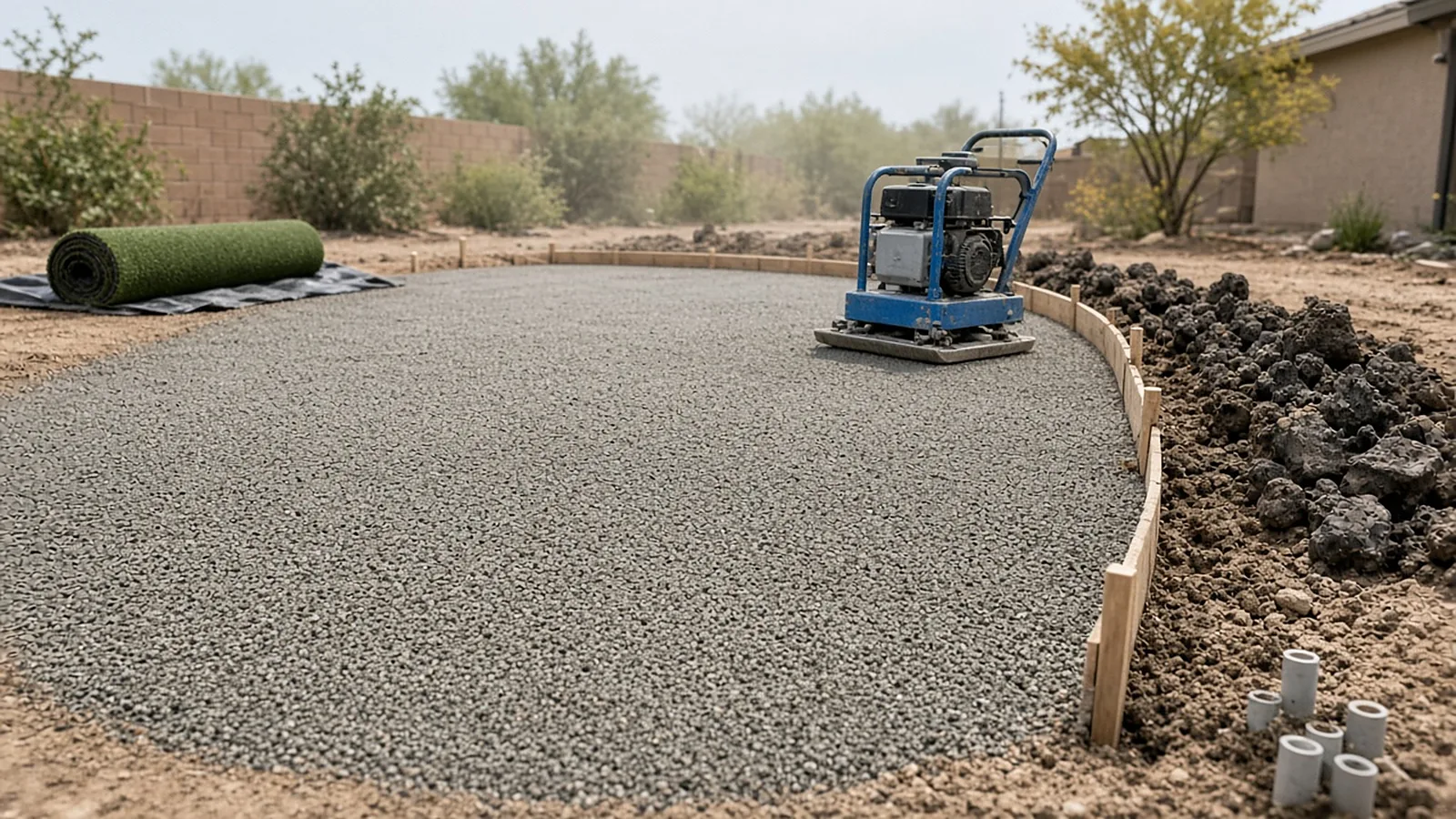
Dig into a Kuna backyard and you never quite know what the shovel will hit. Parts of the area sit on shallow basalt and rocky ground, so a standard excavation depth sometimes can't be reached without breaking rock or changing the plan. Turf laid on a thin, uneven base shows every high and low spot within a season. Water acts differently when it meets rock, too: it can sit on top and turn the base soft. We plan the dig around what is actually down there, not around an assumed soil profile.
Then there is the wind. Kuna sits at the open edge of the high desert, near the Snake River Birds of Prey area and the road out to Swan Falls. Gusts move across new subdivisions that have very few mature trees to slow them down. Wind finds loose perimeter edges and weak seams, and it carries dust that settles into the turf fibers. With so little shade, summer sun also heats the surface. Secure edging, well-glued seams, and the right infill matter more here than in a sheltered, tree-lined neighborhood.
Water is the third piece. Many Kuna subdivisions run pressurized irrigation fed by canal water from the Boise-Kuna Irrigation District. When lawn becomes turf, those zones need to be capped, rerouted to beds, or kept for trees. Older in-town lots often have settled low spots where runoff collects, so grading still matters under a synthetic surface. HOAs in newer neighborhoods may also review front-yard turf. Our Kuna irrigation and drainage work ties directly into the turf plan, so water is handled before the base goes in.
How Altavera handles it
During the on-site estimate we probe the ground, then set excavation and base depth to the conditions we find. Grading for drainage comes before the base. Irrigation lines are capped or redirected next. We choose edging, seams, and infill with Kuna's wind, dust, and pet use in mind, so the finished turf stays flat, secure, and drains well.