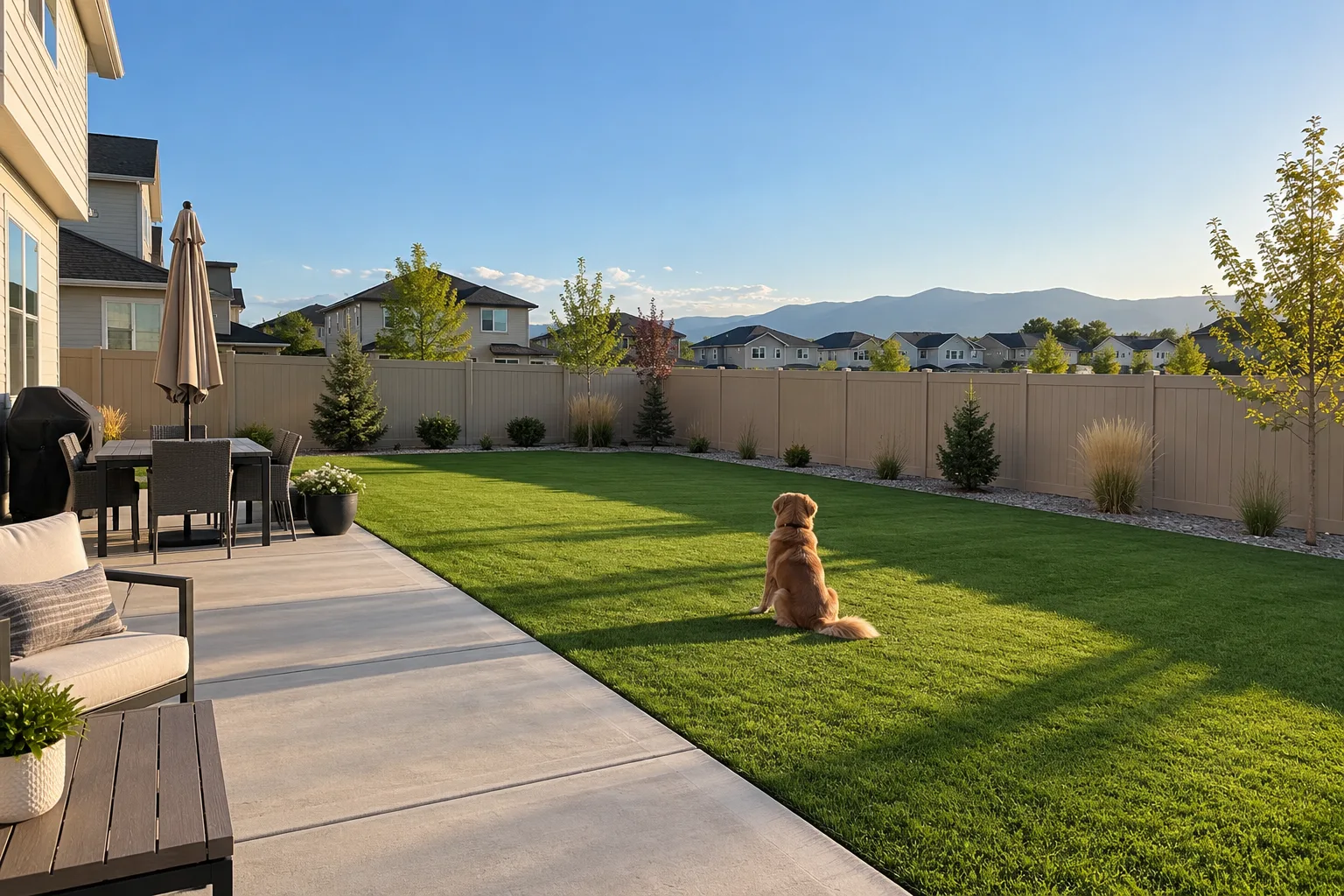
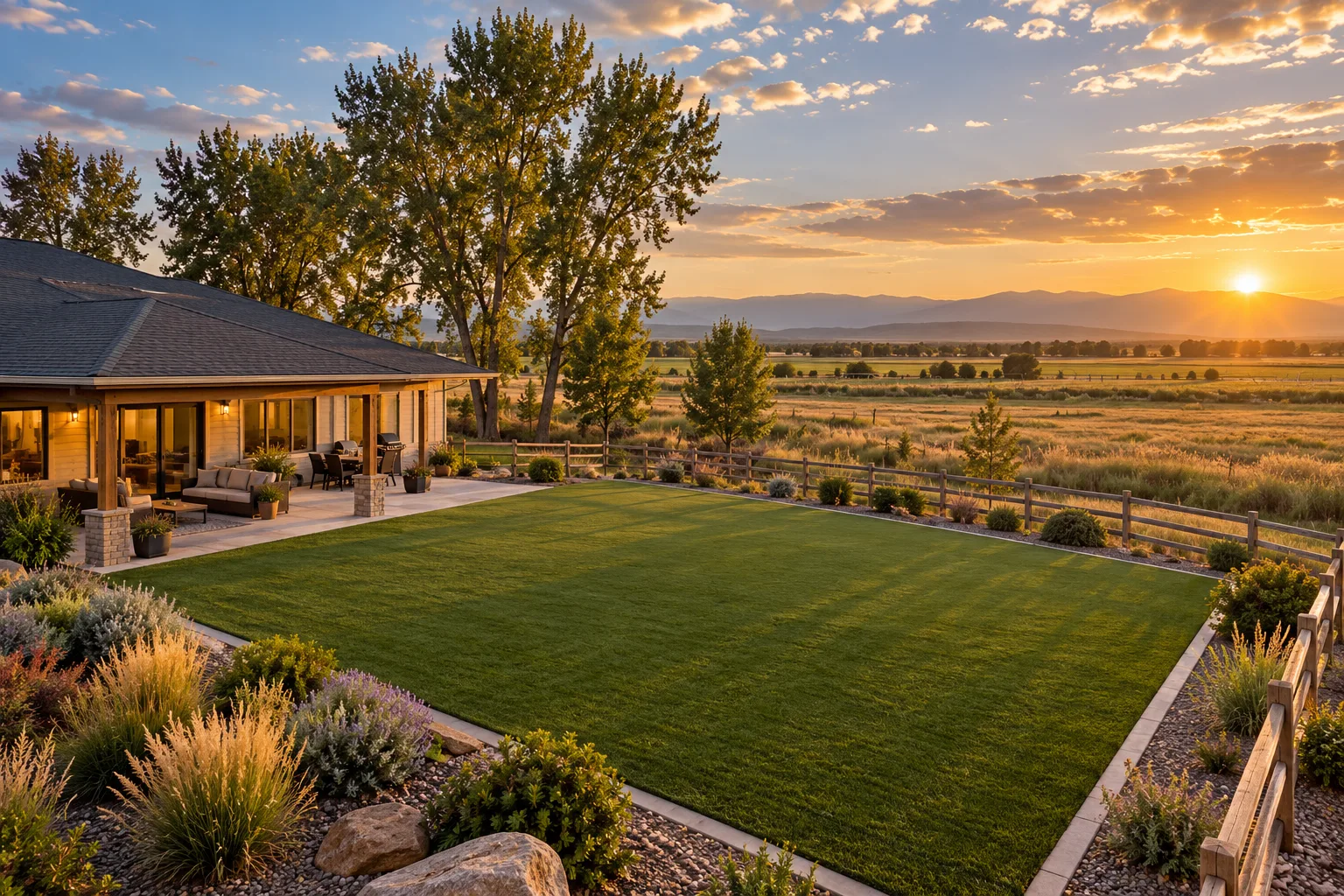
Nampa ground looks easy because it's flat, but the flatness is part of the problem. Much of the city was farm fields not long ago, and those silty soils change once a builder runs heavy equipment over them. In the newer subdivisions on the north and west edges, the subgrade is often packed so hard that water barely soaks in, and parts of town have hardpan just below the surface. Lay turf over that without a real base and rinse water, rain, and pet urine collect in a shallow layer. The result is soft spots, odor, and seams that start to lift.
Water is the second issue. Many Nampa neighborhoods are on the City of Nampa's pressurized irrigation utility, while other lots draw irrigation-district water, such as from Nampa & Meridian Irrigation District. Sprinkler zones don't disappear when a lawn becomes turf. Heads under the new turf have to be capped or removed, lines rerouted to the beds that still need water, and the controller adjusted so nothing keeps spraying synthetic grass. On flat valley lots with little natural fall, the grade also has to send runoff somewhere useful. Our Nampa irrigation and drainage work handles that in the same scope.
Wind and neighborhood differences add to the list. Open ground toward Lake Lowell and the Deer Flat National Wildlife Refuge, plus wide-open new developments, lets gusts and blowing dust cross a yard with little to slow them down, and that tests loose edges and seams. Older lots in Downtown Nampa bring different conditions: mature trees, deep shade, root zones, and leaf drop that settles into turf fibers. Builder subdivisions with HOAs may require front-yard turf to pass architectural review before work starts. A good Nampa turf install plans for whichever of these the property actually has.
How Altavera handles it
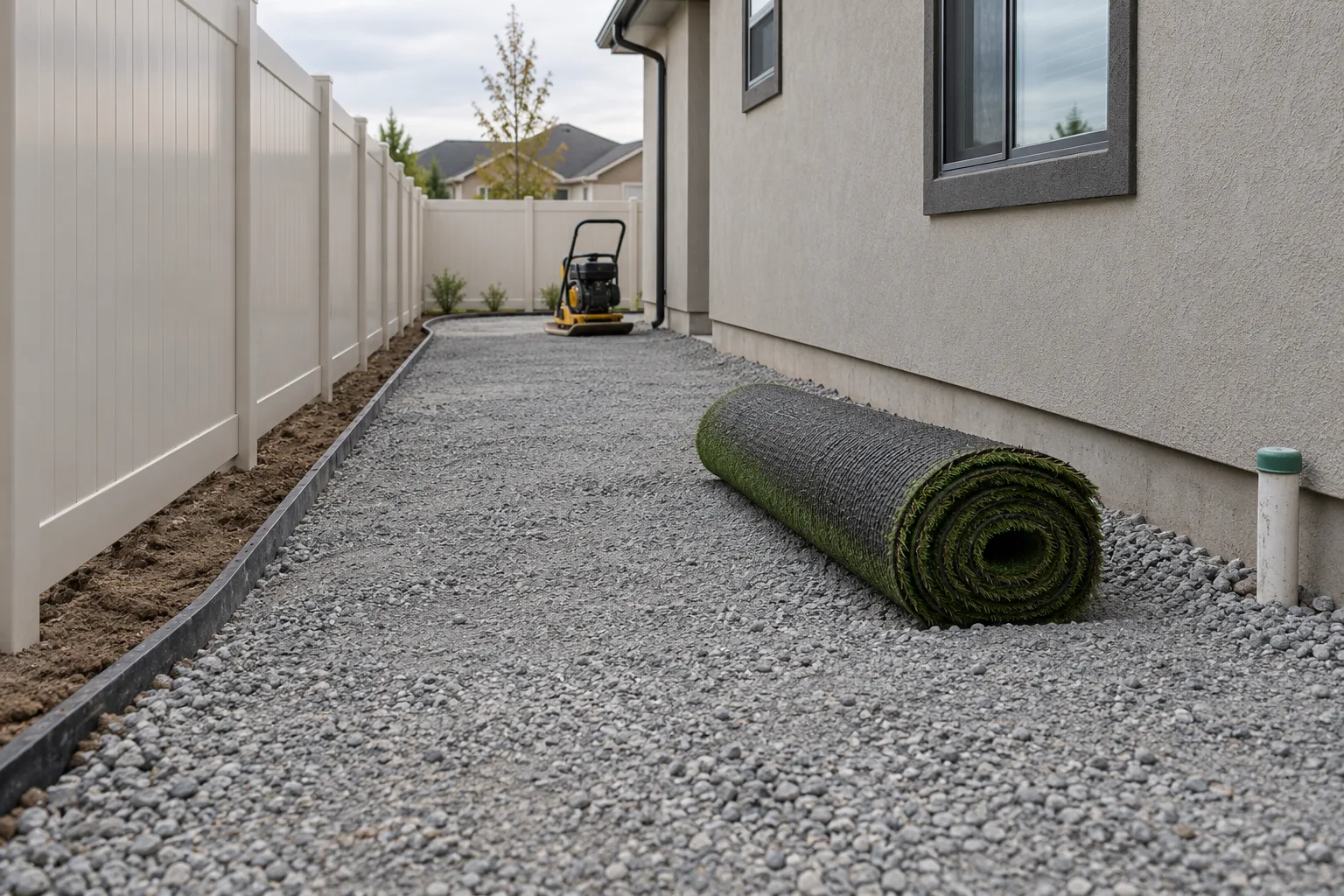
Altavera starts with what's under the yard. We dig out sod and loose fill, check for hardpan, shape the grade so water leaves the area, and compact a drainable aggregate base in lifts. Irrigation under the turf is capped or rerouted, edging is fastened securely, and seams are glued and pinned before the infill goes in.