The Nampa Court Problem
Flat Ground Is Not the Same as Court-Ready Ground
A backyard court in Nampa usually goes wrong for one of three reasons: soft subgrade, water with nowhere to go, or a layout that ignores wind, sun, and the neighbors.
Much of Nampa sits on level valley ground that was farmed for generations, and that flatness is easy to misread. A court still needs a planned cross slope so rain and sprinkler overspray leave the playing surface instead of pooling near the kitchen line. Silty soils across town hold water, and in newer subdivisions the subgrade is often builder fill compacted unevenly over loose topsoil. In some yards, hardpan a short way down keeps water from soaking in at all, so moisture stays under the slab and pushes back when it freezes.
Irrigation is the second local factor. Many Nampa neighborhoods use the City of Nampa's pressurized irrigation utility, and others draw seasonal water from irrigation districts such as Nampa & Meridian Irrigation District. Either way, lawn edges stay soaked all summer, right where a slab is about to go, and sprinkler heads aimed at the old lawn will wet a new court every evening. We move heads, reroute lines, and add drainage so lawn and court work together. If the rest of the yard needs the same attention, see irrigation and drainage in Nampa.
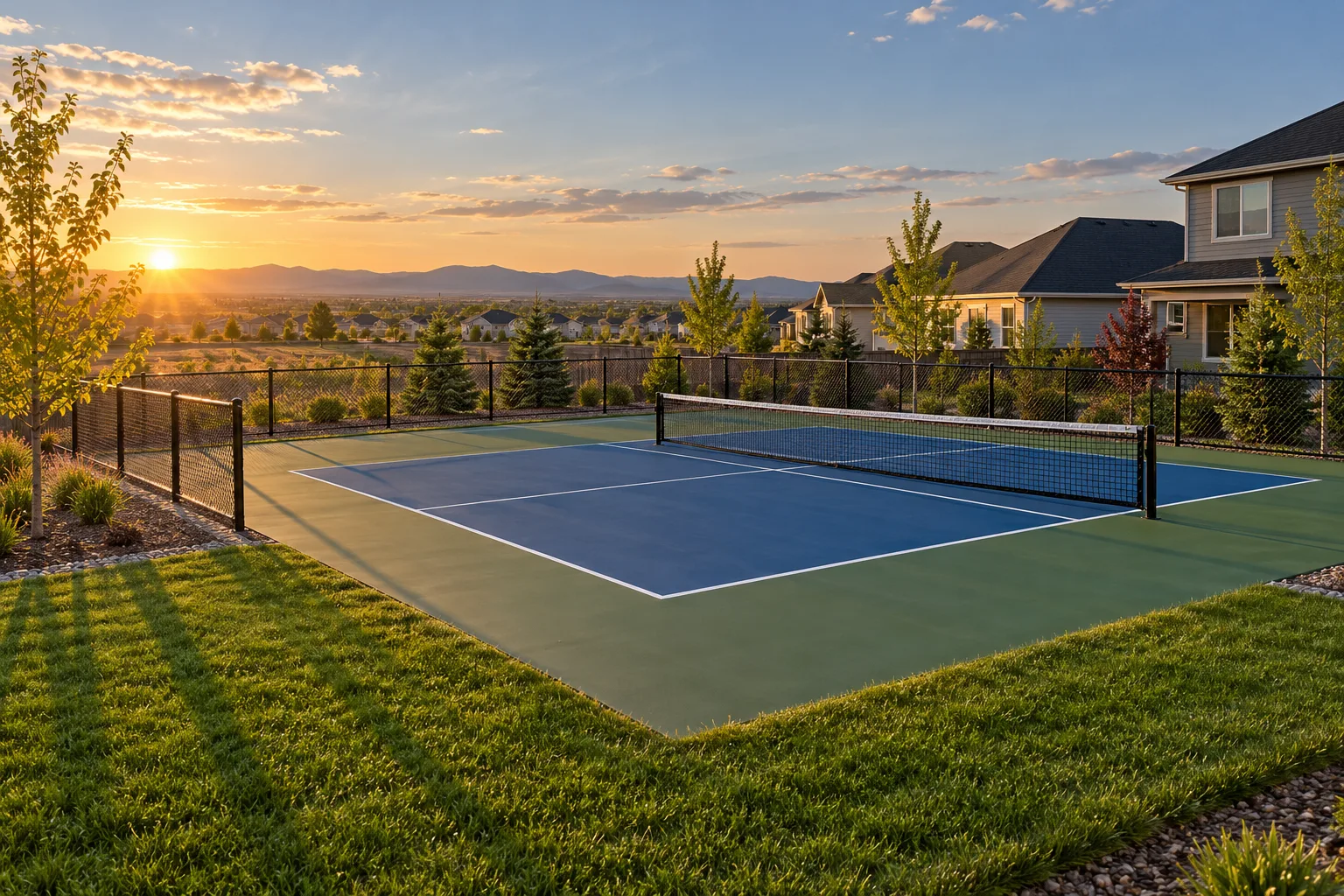
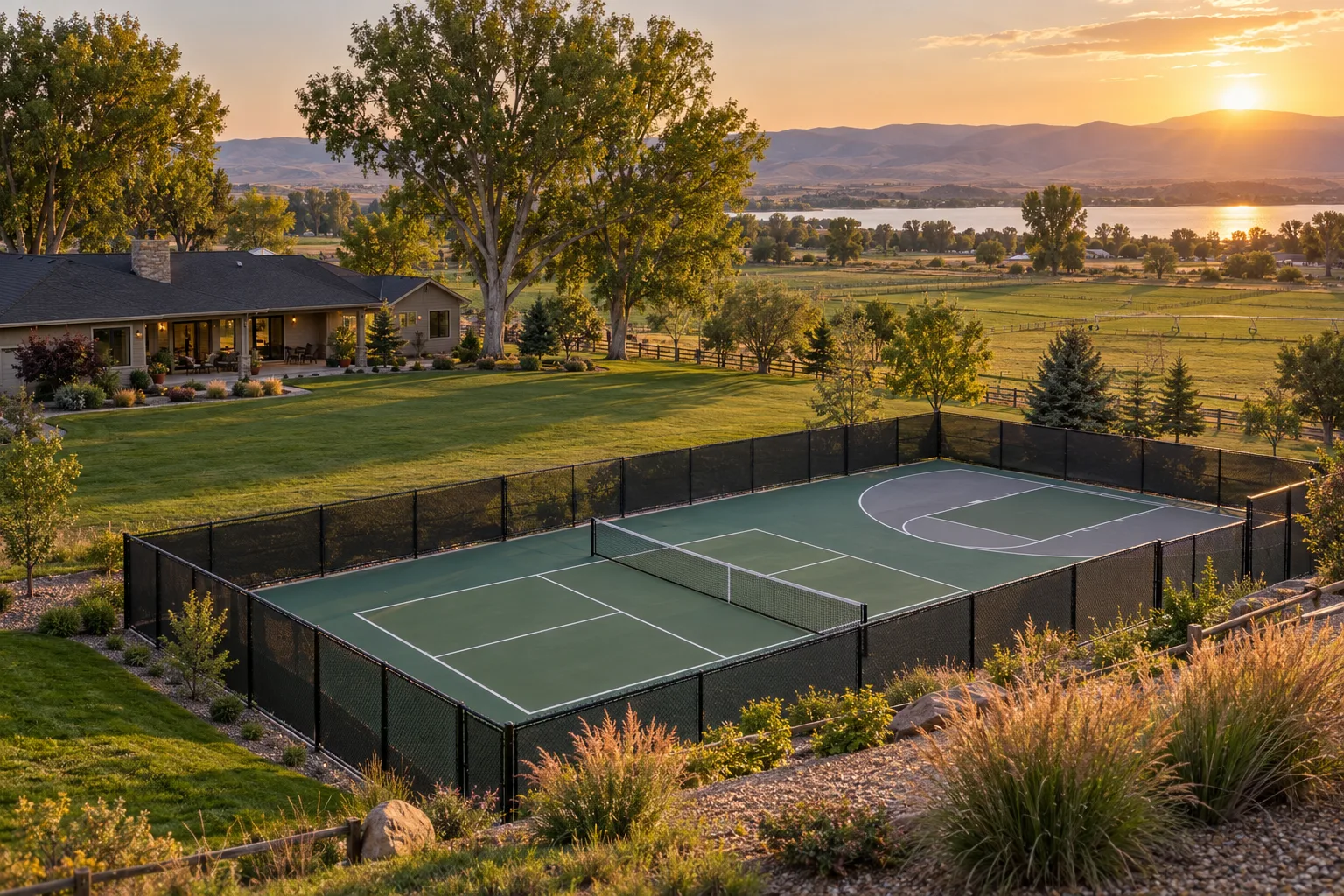
Wind, shade, and neighbors also shape the layout. Open subdivisions on Nampa's north and west edges and small acreage toward Lake Lowell catch afternoon gusts that carry balls and change play, so orientation and fence height matter. Builder neighborhoods usually have HOA design review covering fences, setbacks, and placement. Downtown lots with mature trees deal with falling leaves and partial shade on the court. Paddle sound carries between close houses, so we go over placement and distance from property lines at the start, before the design is set.
How Altavera handles it
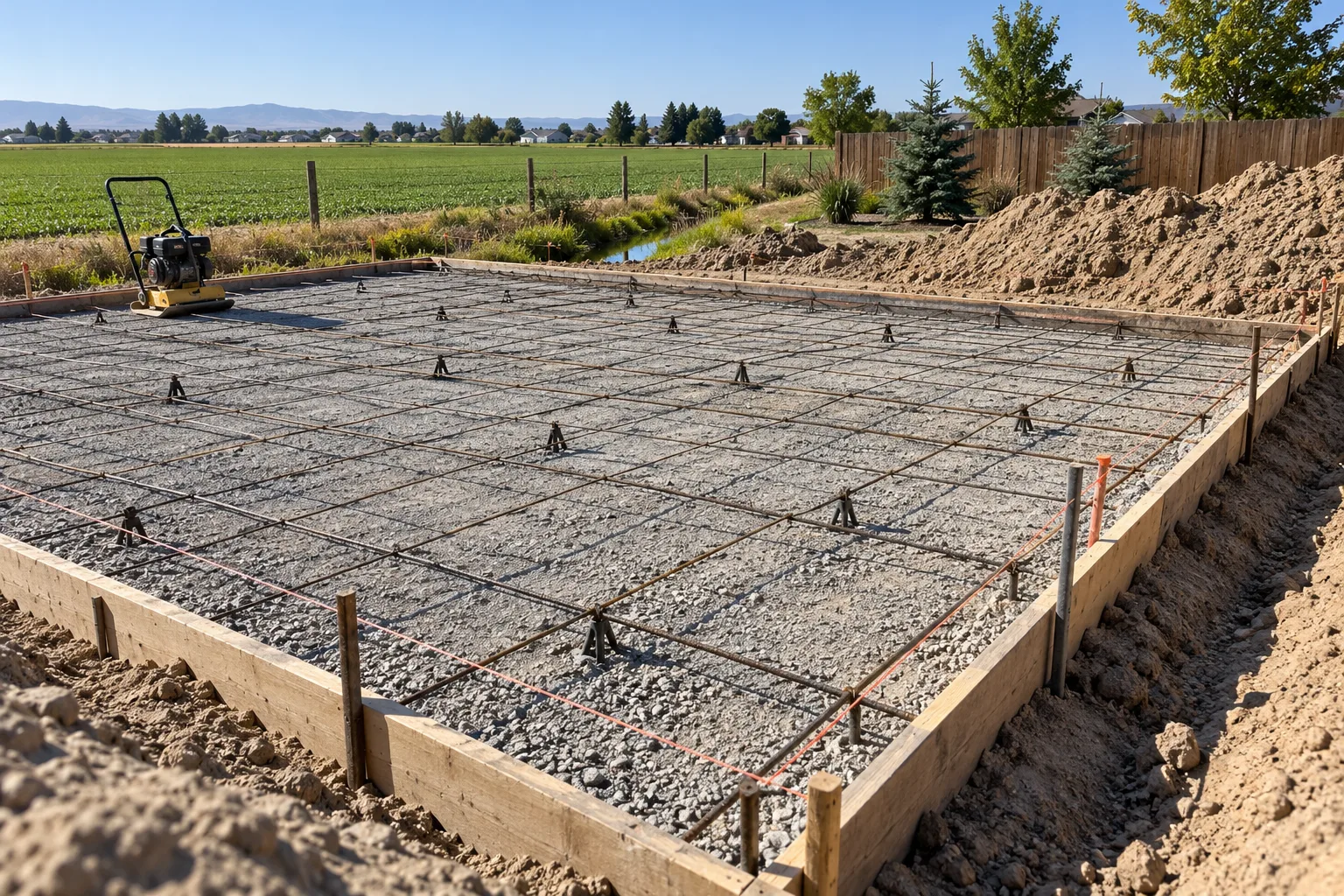
Every court starts with a site walk covering soil, existing grade, irrigation lines, and how equipment will reach the backyard. Grading and drainage come first, followed by a compacted base and a slab built for freeze-thaw. Surfacing, lines, nets, and fencing finish the job. When a permit applies, we pull it and manage it.