The Nampa Backyard Kitchen Challenge
What Nampa Soil, Water, and Wind Do to an Outdoor Kitchen
A backyard kitchen combines heavy masonry, buried utilities, and open flame, and every one of those reacts to Nampa's ground and weather.
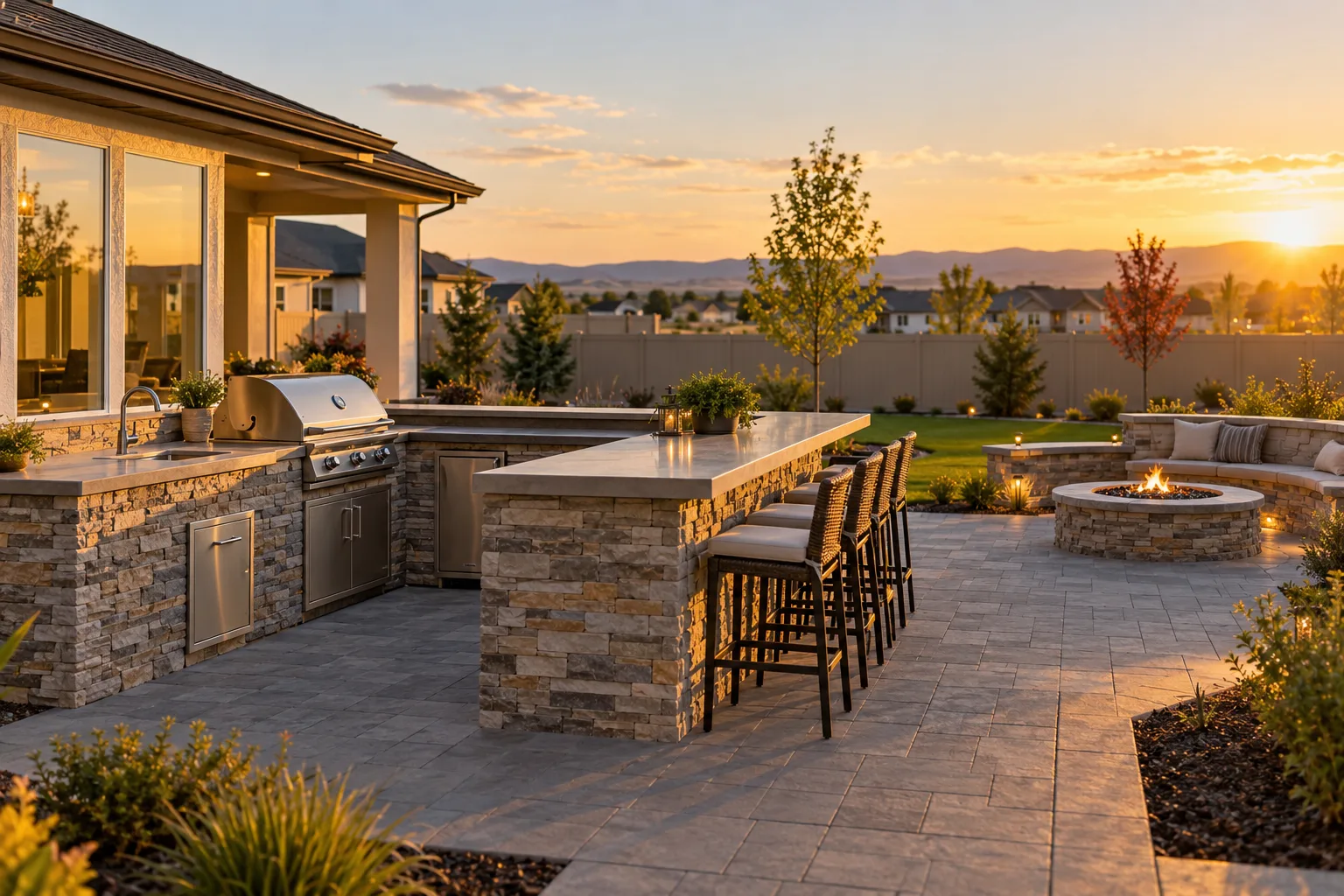
An outdoor kitchen is the heaviest thing most Nampa homeowners will ever add to a backyard. A masonry island with a stone or concrete top, a built-in grill, and a refrigerator can concentrate serious weight on a small footprint, and much of Nampa sits on silty former farmland that compresses when it gets wet. In newer subdivisions on the north and west edges, backfill around the foundation is often left loose. Set an island on that, and the first irrigation season can tip a countertop out of level or crack a veneer joint.
Water is the second issue. Many Nampa neighborhoods run on the city's pressurized irrigation system, and others draw from irrigation-district water such as Nampa & Meridian Irrigation District, so sprinkler lines often crisscross the exact spot where a patio kitchen wants to go. Those lines have to be located, rerouted, or sleeved before trenching for gas or electrical conduit begins. Where hardpan sits close to the surface, overspray and summer storm water can pool against the base of an island instead of soaking away, so the pad needs real drainage slope, the same work covered under Nampa irrigation and drainage.
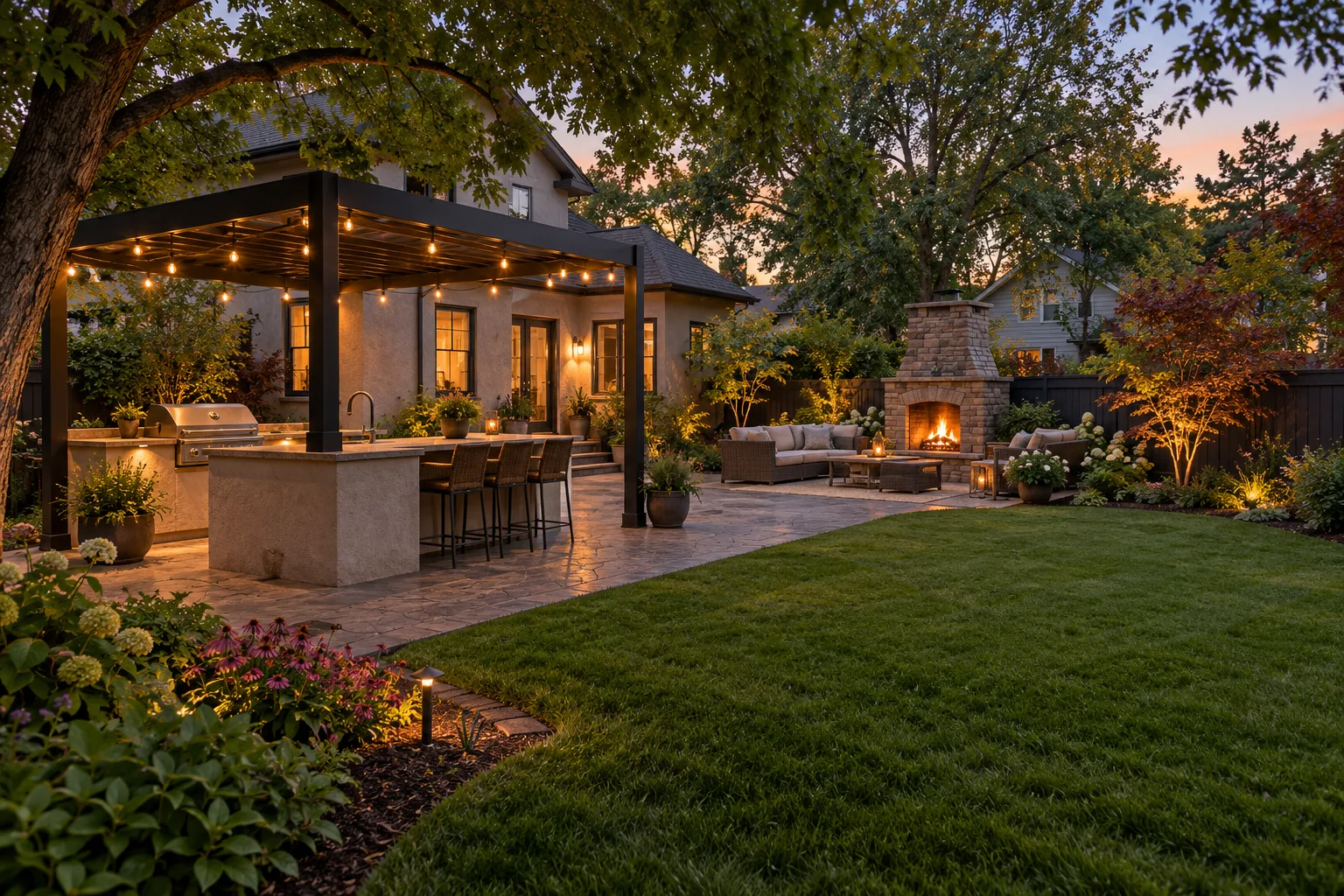
Then there is the wind. Open valley ground around Nampa lets afternoon gusts move across a yard with little to slow them, which matters for grill placement, fire pit smoke, and pergola design. Downtown lots trade that exposure for mature trees, where roots and overhanging limbs shape where a fire feature can safely sit. In HOA subdivisions, the association may want to see materials, height, and location before anything is built. Small acreage near Lake Lowell and south Nampa brings longer utility runs from the house, which changes how gas and power get planned.
How Altavera handles it
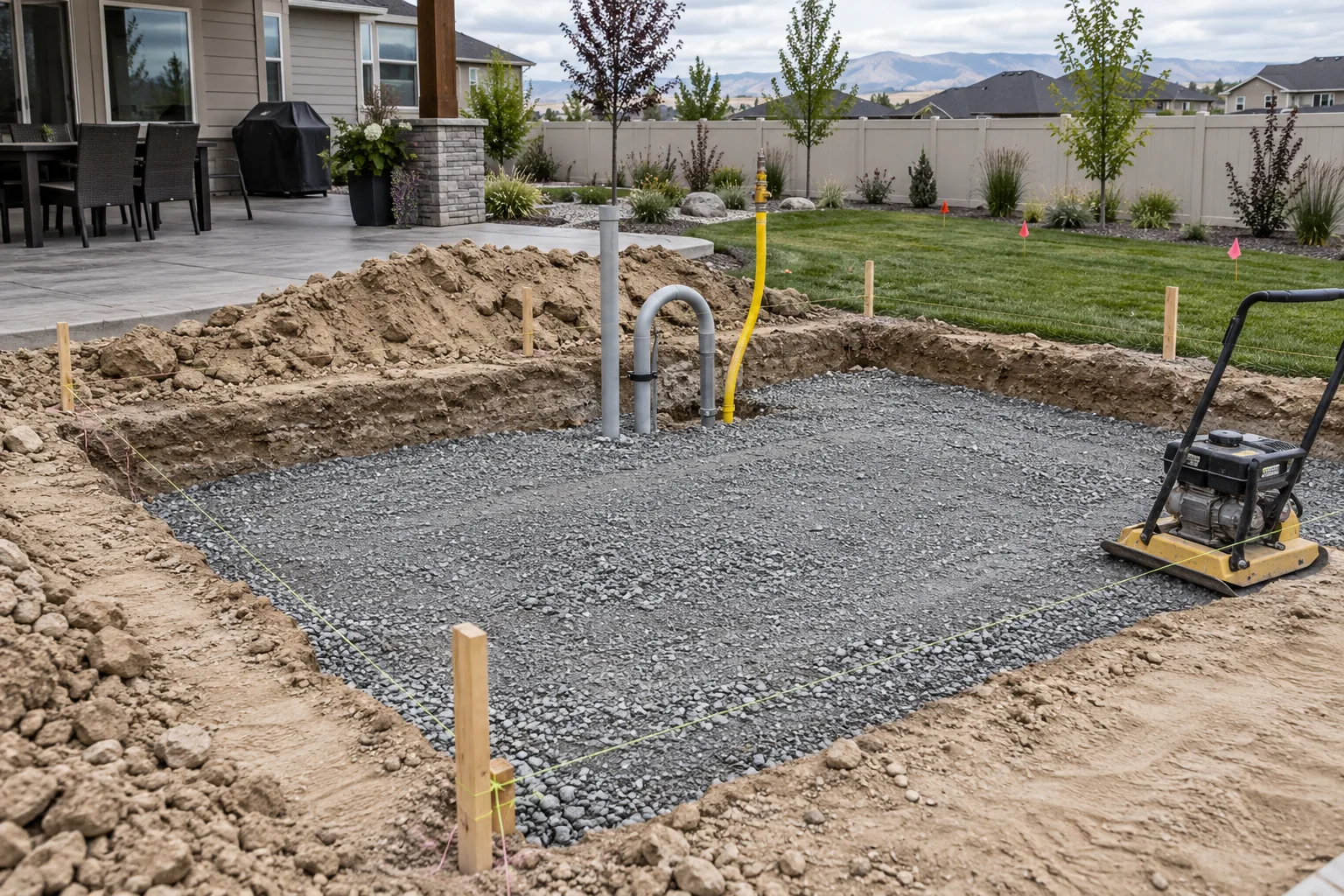
We dig out and compact the soil under every island footprint, locate existing irrigation before trenching, and lay out gas, electrical, and water routes with the licensed trades before the base goes in. HOA requirements are reviewed during planning, and permits are pulled whenever the scope calls for them.