The Nampa Drainage Problem
Why Flat Nampa Yards Hold Water and Sprinklers Miss Their Mark
On level lots carved from old farmland, small mistakes in grade and water supply show up fast.
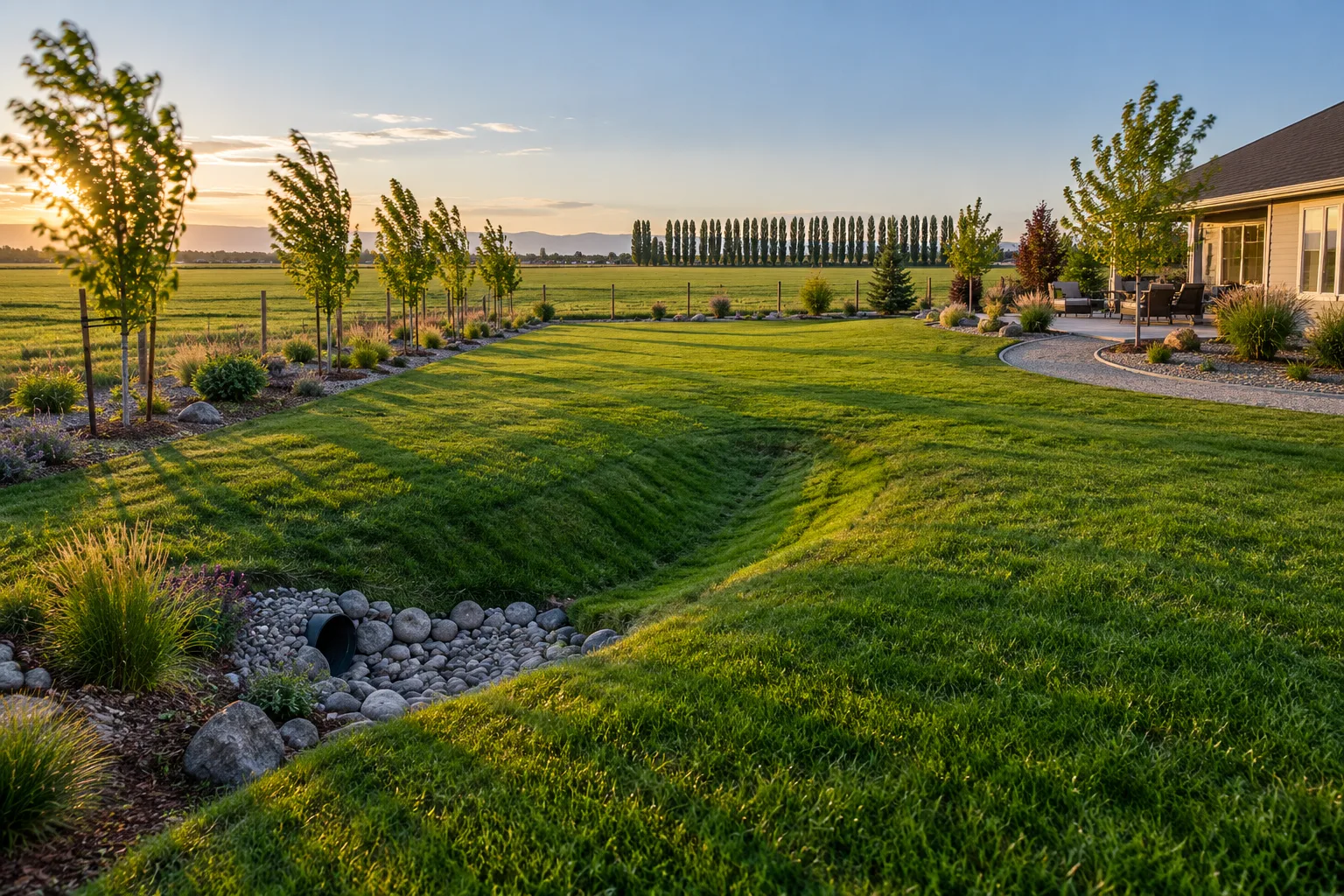
Flat ground sounds easy until it rains. Much of Nampa was irrigated farmland before it became subdivisions, and the lots that came out of it often have almost no natural fall. In newer builder neighborhoods on the north and west edges, heavy equipment compacts the silty topsoil during construction, then a thin layer of sod goes on top. Water from a summer storm or a spring melt sits on that compacted layer instead of soaking in, so you get soggy turf, mosquito puddles, and side yards that never fully dry out.
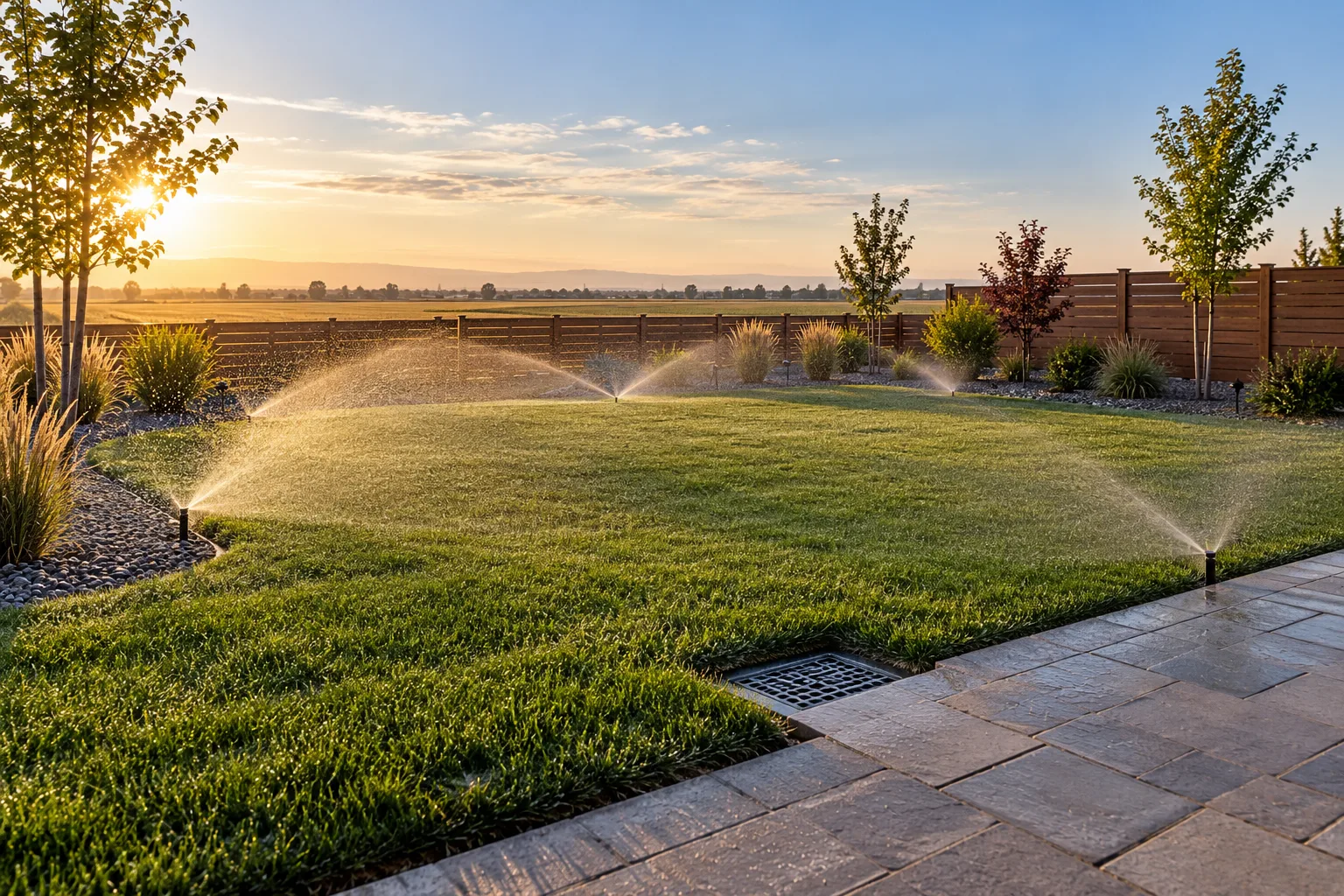
Irrigation water adds its own wrinkle. Many Nampa neighborhoods are served by the City of Nampa's pressurized irrigation utility, while other lots take water through an irrigation district such as Nampa & Meridian Irrigation District. Both are seasonal, both can carry sediment and debris that clog small emitters and nozzles, and pressure varies from one street to the next. A system designed without checking the supply at the property often ends up with weak heads at the end of a zone, dry corners, and a controller running far longer than it should.
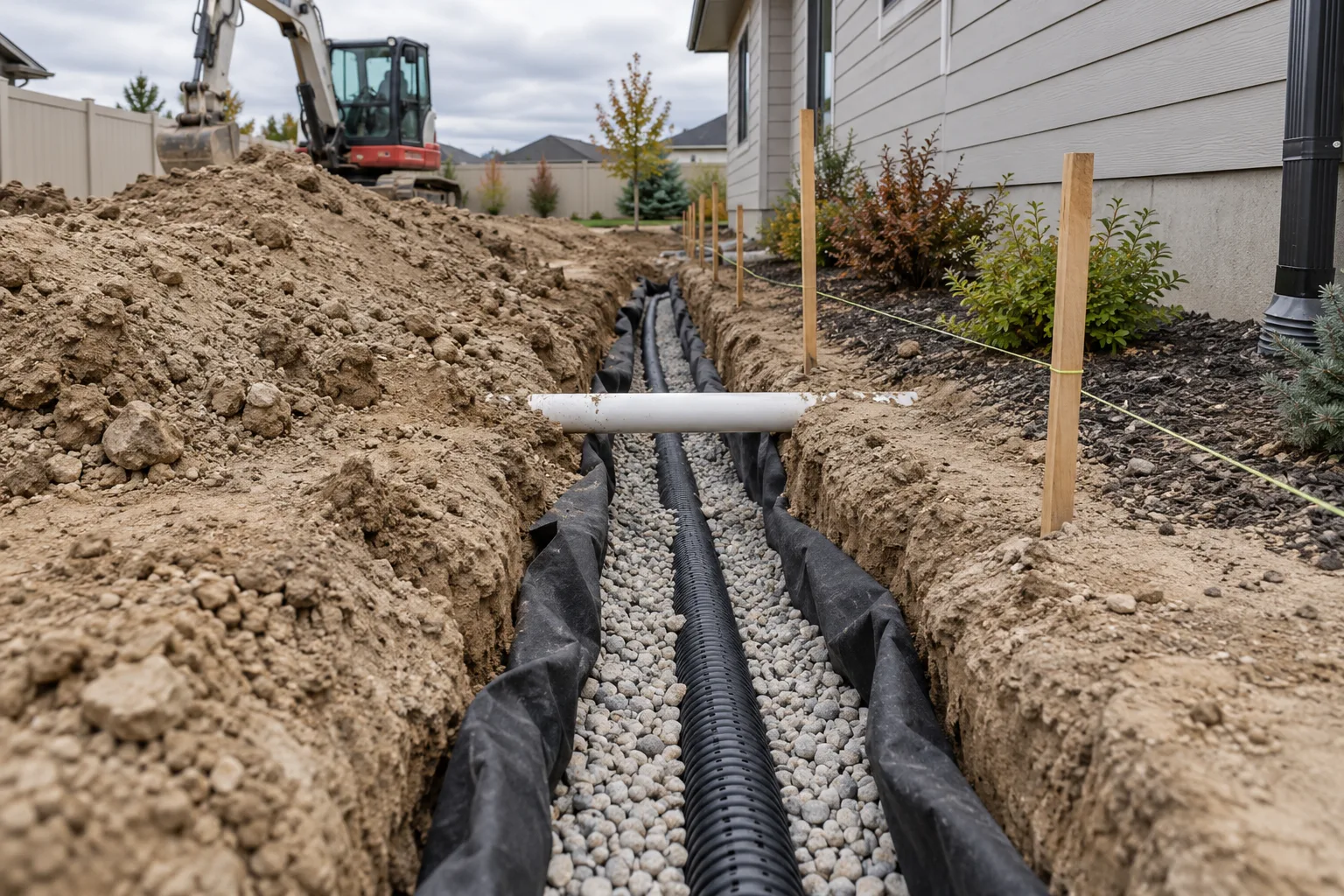
Older lots near Downtown Nampa bring different problems: mature tree roots crowding old lines, patched systems with mismatched heads, and downspouts that dump right beside the foundation. Out toward Lake Lowell and on small acreage around the edges, longer runs and hardpan layers make both watering and drainage harder to get right. Afternoon wind across the open valley pushes spray off target, which is why we favor drip in exposed beds and low-angle rotors on open lawn. If a yard needs grade held in place, a retaining wall in Nampa can be part of the same plan.
How we handle it
We start with a site walk: watching how water moves, checking supply pressure and source, and probing for compaction or hardpan. Grading and drainage get fixed first, then irrigation lines and sleeves go in before any hardscape or sod. Every zone is matched to its plants, sun, and wind exposure.