The Nampa Retaining Wall Problem
Flat Ground, Wet Soil, and Walls That Lean by Spring
In Nampa, retaining walls rarely fail because of the block itself; they fail because the water behind them has nowhere to go.
Nampa sits on old valley farmland, and the silty soils that once grew row crops behave very differently once a wall is stacked against them. Silt holds water, loses strength when saturated, and heaves when it freezes. In newer subdivisions on the north and west edges, heavy equipment often packed that silt into a dense layer during home construction, and pockets of hardpan sit below it in places. Water soaking down from lawns and beds reaches that layer and moves sideways, straight toward the back of any wall in its path.
Irrigation adds pressure. The City of Nampa runs a pressurized irrigation utility in many neighborhoods, and other lots draw from irrigation-district water such as Nampa & Meridian Irrigation District. All season long, that water keeps the soil behind a wall wetter than rain alone ever would. A wall backfilled with native dirt and no drain path ends up working as a dam. Pressure builds, winter freeze-thaw pushes on the wet soil, and block courses start to lean or bulge. Planning the wall alongside irrigation and drainage in Nampa keeps that water moving.
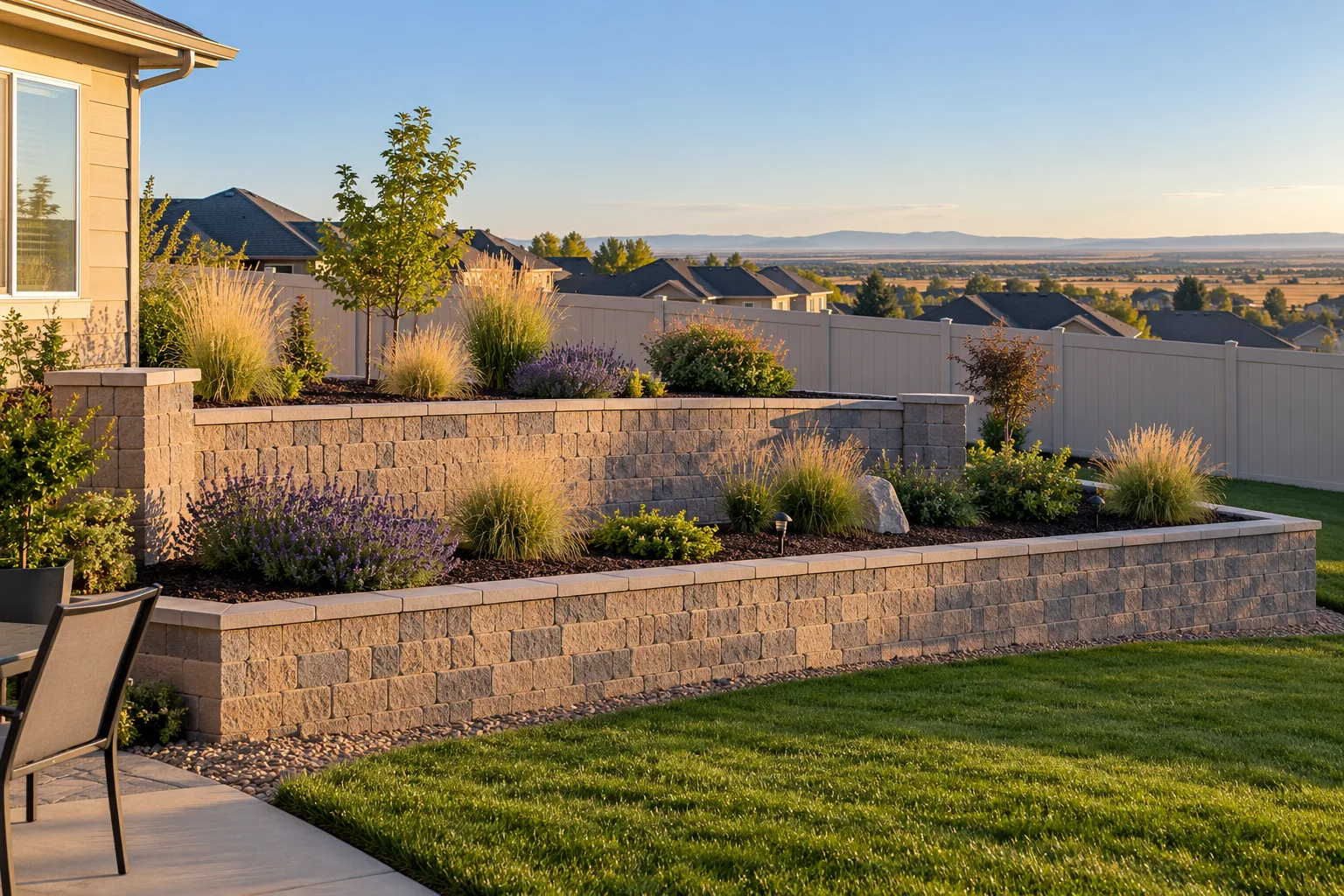
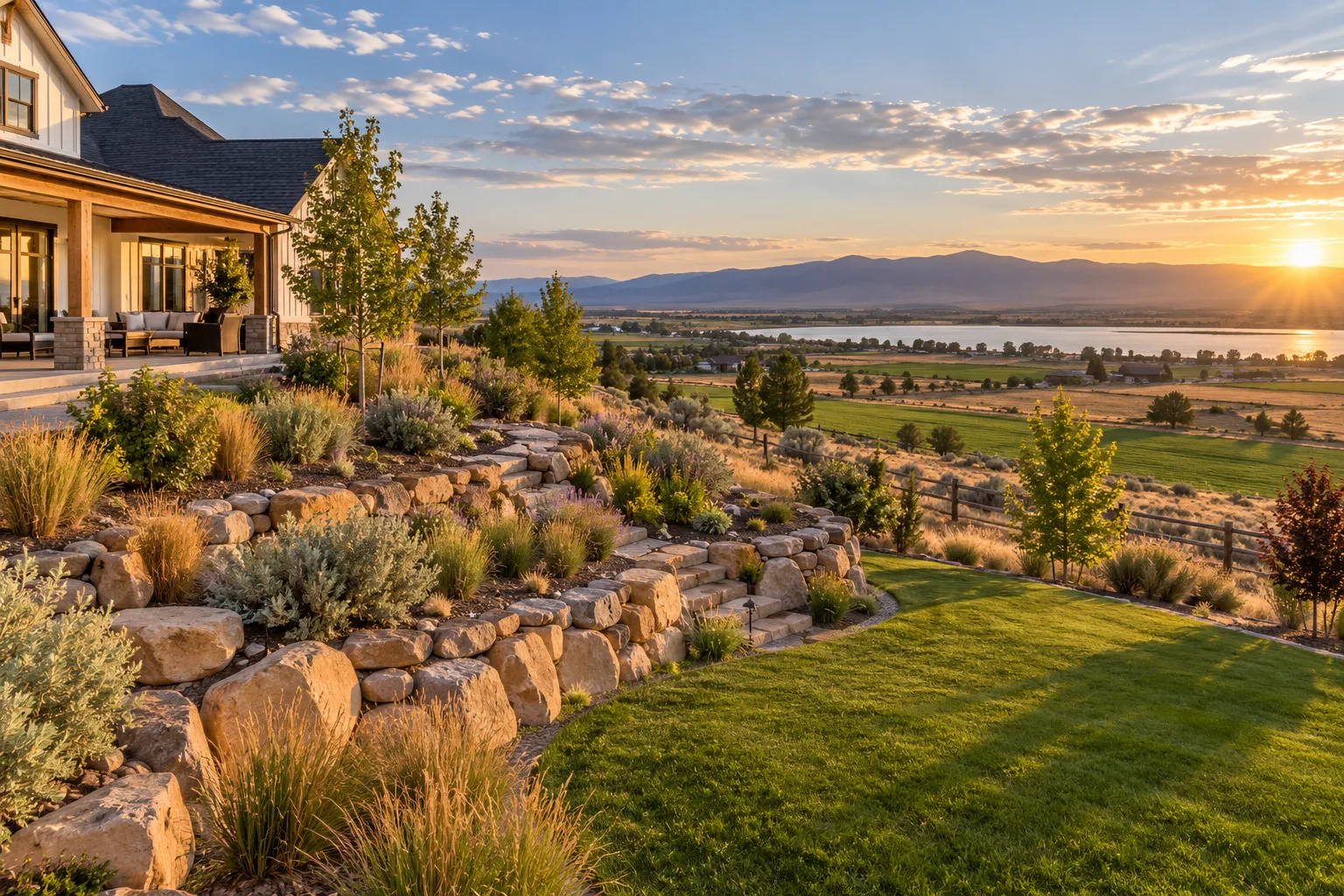
Because Nampa is mostly flat, walls here solve different problems than hillside walls do. In Downtown Nampa, mature tree roots and settled grades around older homes call for careful excavation. On small acreage near Lake Lowell and in south Nampa, low terraced walls and boulder walls shape gentle grade changes and berms. In HOA subdivisions, seat walls and raised planters often go through design review before a single block goes down. Wind across the open valley also dries and scours exposed soil, so how the area behind the wall is finished and planted matters too.
How Altavera handles it
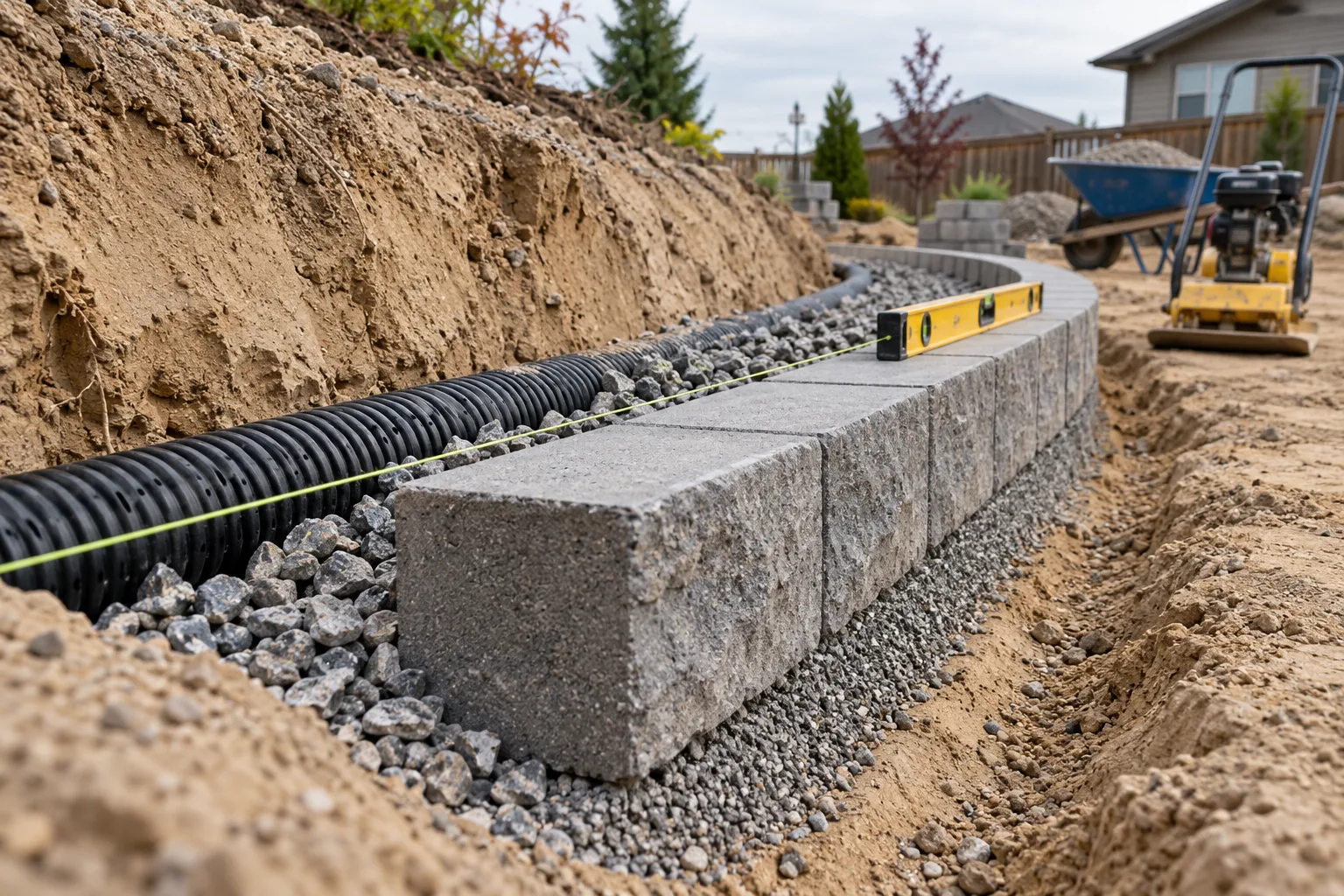
We dig to firm subgrade, compact a base built for freeze-thaw, and place drainage aggregate with perforated drain pipe behind every retaining wall, routed to a safe outlet. We reroute or sleeve irrigation lines near the wall first. If a wall's height or location calls for engineering or a permit, we confirm that for your specific project before building.