Caldwell, Idaho · Retaining & Decorative Walls

Retaining Wall Contractor in Caldwell, Idaho

Walls that keep their line when the ditch water runs and the ground freezes.

Altavera Construction builds retaining and decorative walls for Caldwell homeowners, from short block walls in north side subdivisions to boulder terraces on rural acreage south toward Lake Lowell. Caldwell's farmland silt holds water and softens when canal water seeps through it, so every wall starts with a compacted base, drain rock, and a perforated pipe behind the wall face. One team handles the grading, the wall, and the planting around it.

  • Licensed & Insured in Idaho
  • Idaho Contractor License #6971895
  • Woman-Owned Business
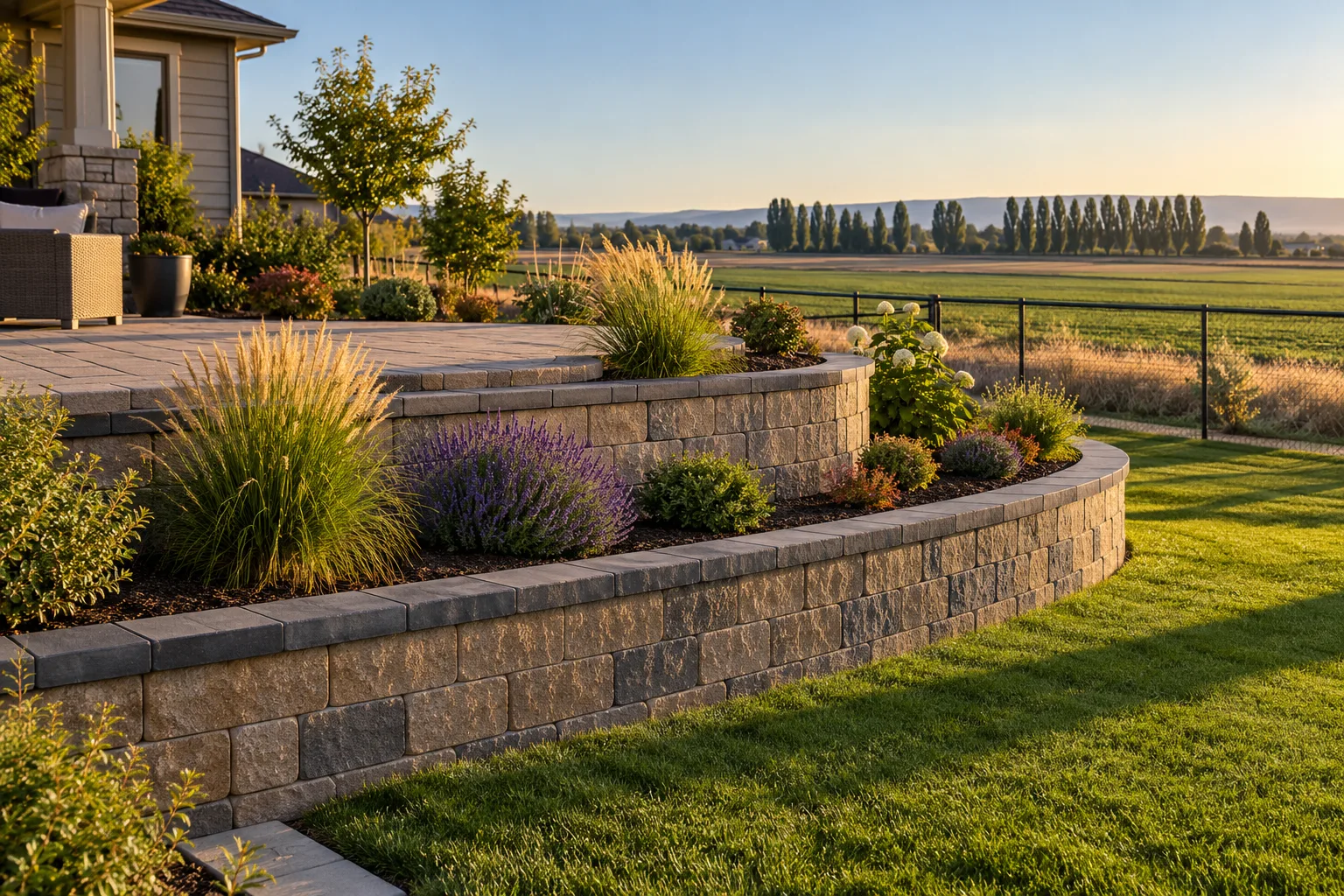
Two-tier block retaining wall with planting beds in a backyard in Caldwell, Idaho
A two-tier block retaining wall with planted terraces creates level lawn space on a sloped suburban backyard.

The Caldwell Wall Problem

Why Caldwell Walls Lean, and How to Keep Yours Plumb

Caldwell wall problems usually start in the soil and the water moving through it, not in the block.

Caldwell sits on old farm ground, and that silt behaves well under a plow but poorly behind a wall. Fine silt holds moisture, loses strength when it is saturated, and pushes harder against a wall face when it freezes. On some lots a layer of hardpan sits just below the topsoil, so water that soaks in has nowhere to go but sideways, straight toward the back of the wall. A wall stacked on loose native soil without a compacted base and drainage aggregate tends to lean, bulge, or drop at the corners after a few winters.

Water is the other half of the story. Pioneer Irrigation District canals and laterals run through and around town, many subdivisions on the north and east sides run pressurized irrigation all season, and acreage lots still flood or ditch irrigate. That means the ground behind a wall can stay wet for months, then dry out and freeze. Sprinkler overspray and flood water that collect against block need a planned exit, which is why the drain pipe and its outlet matter as much as the wall itself. More on that side of the work: Caldwell irrigation and drainage.

The terrain varies more than people expect. Older lots near the College of Idaho and along Indian Creek often have mature trees, tight side yards, and grade drops toward the creek or alley. Newer subdivisions were often graded quickly, leaving steep side slopes between neighbors or a backyard that pitches toward the house. Out toward Sunnyslope and the Snake River, benches and hillsides call for terraced walls or set boulders rather than one tall face. HOA rules in many newer neighborhoods also shape wall color, cap style, and placement near property lines.

How Altavera Builds It

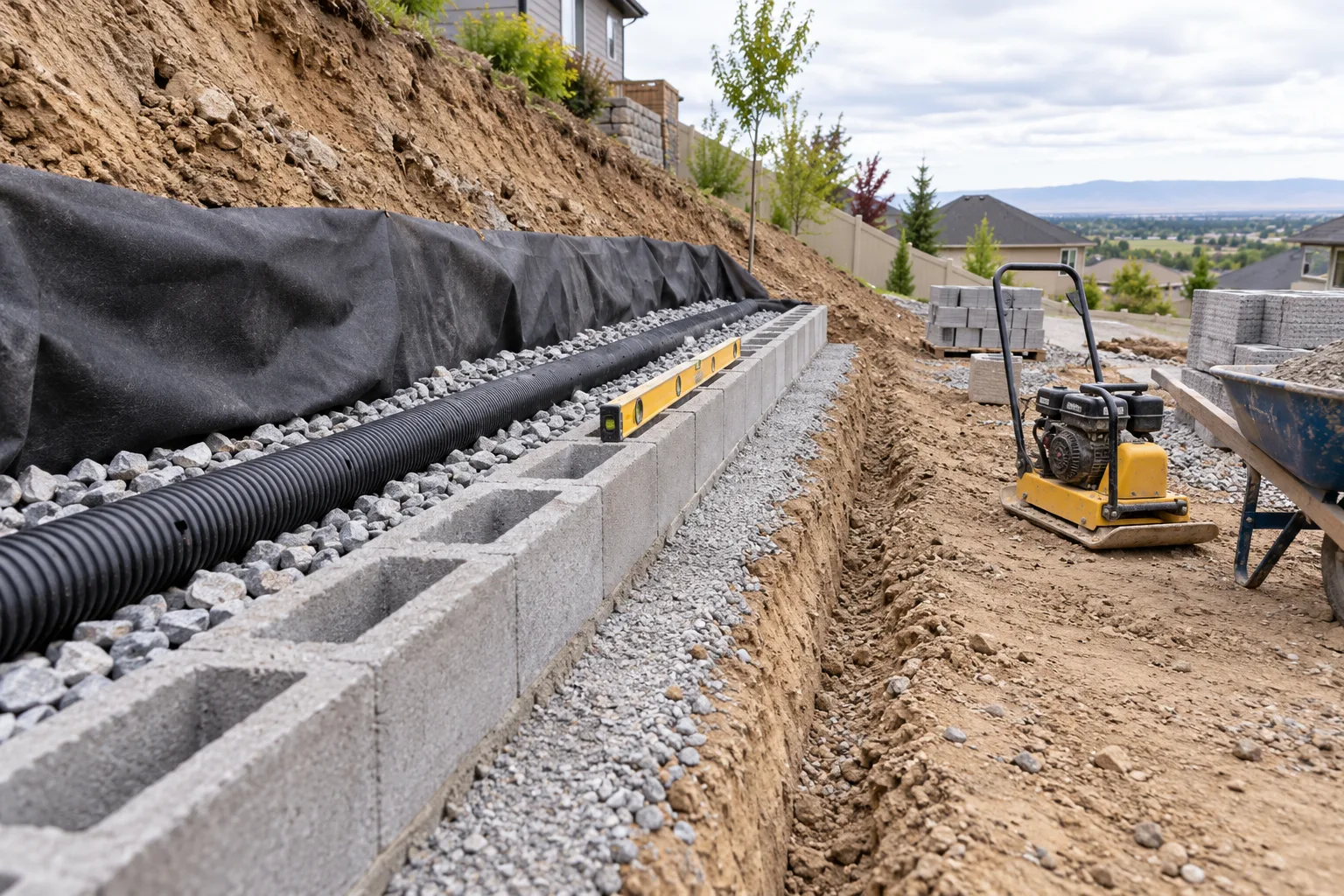
We start below the wall. The footing trench is excavated past the loose topsoil, compacted in lifts, and topped with a leveling pad. Drain rock and perforated pipe go behind the first course with a planned outlet, and backfill is compacted as the wall rises. Taller walls or walls near structures are reviewed for engineering and permit needs first.

Wall Types We Build

Retaining Wall Services in Caldwell, Idaho

01

Block Retaining Walls

Segmental block walls for grade changes in backyards, side yards, and along driveways. Each course is set on a compacted leveling pad, checked for setback into the slope, and backfilled with clean aggregate so Caldwell's silty native soil never sits directly against the block. Block colors and caps can be matched to HOA guidelines in newer subdivisions.

Includes

  • Layout and excavation
  • Compacted base
  • Leveling pad
  • Drain rock backfill
  • Perforated drain pipe
  • Wall caps

02

Natural Stone and Boulder Walls

Stacked natural stone and set boulder walls suit acreage, sloped yards near Lake Lowell, and properties that lean toward a rural or orchard feel. Boulders are placed with a buried first course, tipped back into the slope, and chinked so soil stays put. This approach works well where a long, informal wall reads better than a crisp block face.

Includes

  • Stone selection
  • Buried base course
  • Machine placement
  • Chinking
  • Backfill and compaction

03

Terraced Walls

Rather than one tall face, a slope can be broken into two or more shorter walls with planting beds between them. Terracing spreads the load, creates usable flat ground, and often fits hillside lots out toward Sunnyslope. Spacing, height, and drainage between tiers are planned together so each wall carries only its share.

Includes

  • Slope assessment
  • Tier layout
  • Drainage between tiers
  • Planting beds
  • Steps between levels

04

Wall Drainage and Footings

The part nobody sees decides how long a wall lasts. Footing trenches are dug below loose topsoil and compacted, drain rock fills the zone behind the wall, and perforated pipe carries water to a planned outlet. In Caldwell, where canal seepage and irrigation overspray keep soil wet, this layer is never optional.

Includes

  • Footing excavation
  • Compaction in lifts
  • Drainage aggregate
  • Perforated pipe
  • Outlet routing
  • Filter fabric

05

Seat Walls

Low freestanding walls finished on both sides with a cap wide enough to sit on. They frame a patio or fire pit, add seating without extra furniture, and sit on the same compacted base as a retaining wall.

06

Decorative and Planter Walls

Short walls that define beds, edge a front yard, or raise planting above heavy ground. Raised beds help in Caldwell silt, where roots struggle in compacted native soil.

07

Steps and Openings

Block or stone steps built into a wall line so you can move between levels, with treads and risers set on a compacted base and tied into the wall courses.

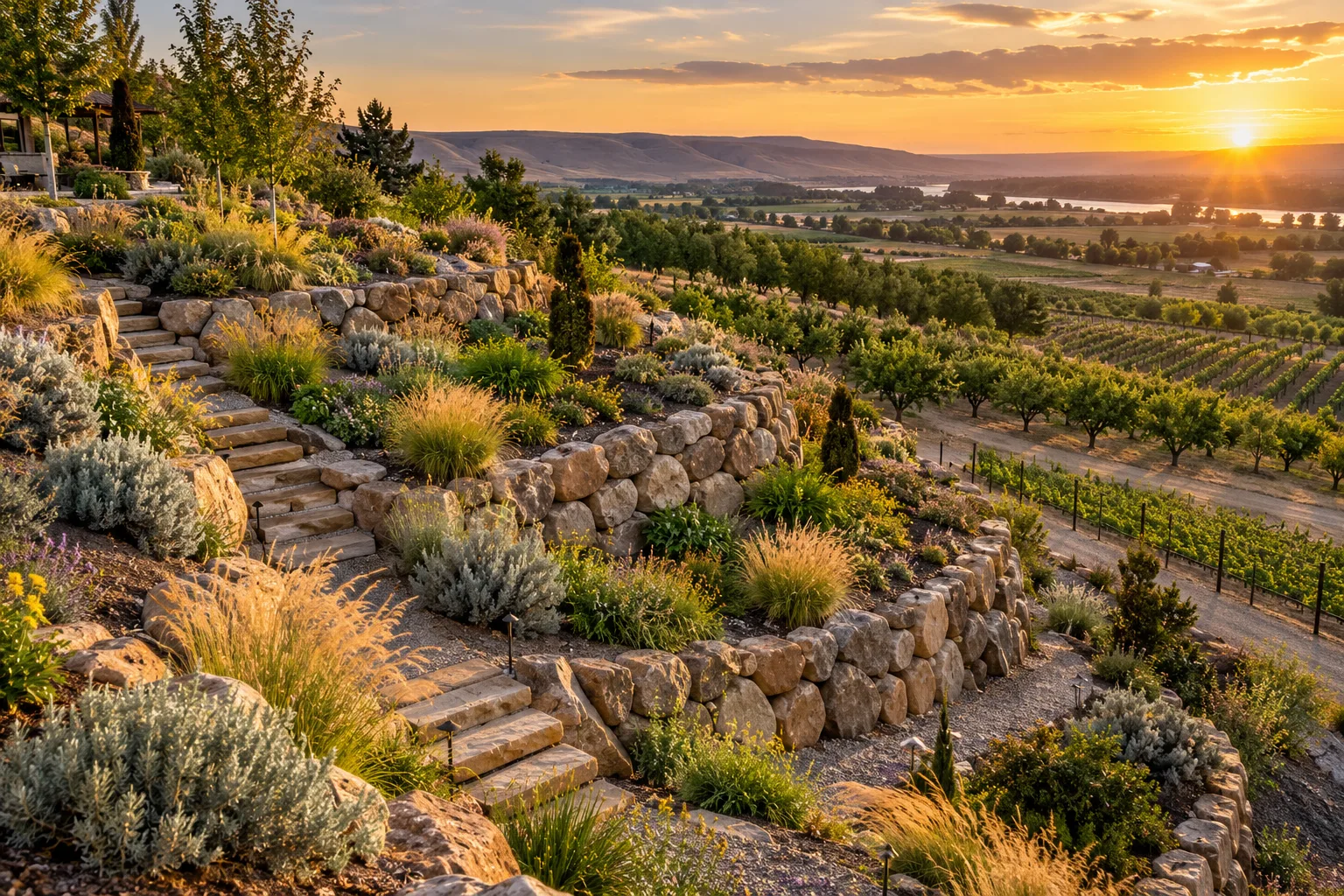
Terraced boulder retaining walls on rural acreage with orchards near Caldwell, Idaho
Terraced boulder walls hold a long hillside on rural acreage, with stone steps and orchard rows beyond.

Why Our Walls Hold Their Line

A Wall Is Only as Good as the Water Plan Behind It

A retaining wall is really a drainage project with a visible face. Altavera treats it that way, as one piece of a coordinated outdoor build.

Here is what that looks like on a Caldwell property:

  • 01

    Drainage is planned before the first block is set.

    Grading and drain lines are settled first, so water from irrigation, roof downspouts, and neighboring lots has a path away from the wall instead of building up behind it.

  • 02

    Irrigation lines are protected, not crushed.

    Many Caldwell yards have pressurized irrigation lines or ditch water connections in the dig zone. Those lines are located, then relocated or sleeved before excavation so the wall never sits on top of them.

  • 03

    Permit and engineering questions are answered early.

    Height, load from driveways or structures, and location near property lines are reviewed during planning. When a permit applies, Altavera pulls it and works it through the right office.

  • 04

    One team from footing to final planting.

    The crew that sets the wall also handles the grading, irrigation adjustments, and planting around it, so you have one point of contact and no gaps between trades. Pair it with a Caldwell paver patio on the new level ground.

Who Calls Us in Caldwell

Caldwell Properties That Need a Wall

New Subdivision Homeowners on the North and East Sides

Many newer Caldwell neighborhoods were rough graded, leaving steep side slopes, swales between lots, or backyards that tilt toward the house. A low block wall or a pair of terraces can flatten the yard enough for a patio or lawn. Block color, cap style, and placement are matched to HOA standards when the community has them.

Historic Homes Near Downtown and the College of Idaho

Older lots near the college and Indian Creek often have mature trees, narrow access, and existing walls that have started to lean. Natural stone or a carefully chosen block can fit the character of an older home, and the work is planned around roots, fences, and tight side yards.

Acreage and Rural Properties Around Caldwell

Larger lots toward Lake Lowell and the Sunnyslope area bring long slopes, ditch water, and open wind exposure. Boulder walls and terraces hold banks along driveways, shop pads, and garden areas, and drainage is routed so flood or ditch irrigation does not undercut the wall base.

Owners of Failing or Leaning Walls

If an existing wall is bulging, tipping, or shedding block, the cause is usually water trapped behind it or a base that was never compacted. The wall is assessed, removed where needed, and rebuilt with a proper footing and drainage so the same failure does not repeat.

From Slope to Finished Wall

How a Retaining Wall Project Moves With Altavera

Retaining wall footing with gravel base, drain rock, and perforated drain pipe in Caldwell, Idaho
A footing trench with a compacted gravel pad, first block course, and perforated drain pipe set in clean drain rock.
  1. Step 1: Phone Consultation

    Start with a free 15-minute phone consultation about the slope, the wall you have in mind, and how you want to use the yard once it is level.

  2. Step 2: Estimator Fit Check

    An estimator reviews what you shared and confirms the project is a good fit for Altavera before anyone schedules a trip to the property.

  3. Step 3: On-Site Estimate

    We walk the Caldwell property, check grade, soil, irrigation lines, and drainage paths, and flag height or location factors that may call for permit or engineering review.

  4. Step 4: Proposal and Deposit

    You receive a written proposal covering wall type, materials, drainage, and build sequence. A deposit secures your start on the schedule.

  5. Step 5: Grading and Drainage

    Grading comes first, then underground work: drain pipe outlets, irrigation relocation, and sleeves for future lines are placed before the wall goes in.

  6. Step 6: Wall Construction

    Footings are excavated and compacted, the base course is leveled, and each course is backfilled with drain rock and compacted as the wall rises to its cap.

  7. Step 7: Planting and Walkthrough

    Beds, sod, or plantings are finished around the wall last, then a final walkthrough confirms every detail before the project closes out.

Where We Build Walls

Retaining Walls Across Caldwell and Canyon County

Altavera Construction builds retaining, terraced, and seat walls throughout Caldwell, including downtown and the older streets near the College of Idaho, the Indian Creek corridor, the newer north side subdivisions, and rural acreage toward Lake Lowell and Sunnyslope. The same wall work is available across Canyon County and the Treasure Valley, including Nampa, Middleton, and Star.

  • Caldwell
  • Downtown Caldwell
  • College of Idaho Area
  • Indian Creek
  • North Caldwell
  • Lake Lowell Area
  • Sunnyslope
  • Nampa
  • Middleton
  • Star

If your wall requires a permit, Altavera pulls it and handles the process with the City of Caldwell's building department, or with Canyon County when the lot sits outside city limits.

Planning more than a wall? See backyard renovation in Caldwell, or compare retaining walls in Nampa and retaining walls in Middleton.

FAQ

Retaining Wall FAQs: Caldwell, Idaho

Who builds retaining walls in Caldwell, Idaho?

Altavera Construction builds block, natural stone, boulder, terraced, and seat walls across Caldwell and Canyon County. We are a licensed and insured Idaho contractor, License #6971895, and a women-owned outdoor design-build company. The wall, the drainage behind it, grading, irrigation adjustments, and planting are handled by one team with one point of contact.

How much does a retaining wall cost in Caldwell?

Cost depends on the wall's length and height, the material, equipment access, and how much drainage and base work the soil requires. A short block planter wall and a multi-tier boulder terrace on acreage are very different projects. Pricing is custom and follows an on-site estimate, and third-party financing options are available.

Does a retaining wall in Caldwell need a permit from the City of Caldwell's building department?

It depends on the wall. Height, what the wall supports, and how close it sits to a structure, driveway, or property line all affect whether the City of Caldwell's building department, or Canyon County for unincorporated lots, requires a permit. Requirements are confirmed for your specific project, and when a permit is needed, Altavera pulls it and manages it.

How does Caldwell's farmland silt and hardpan affect a retaining wall?

Silt holds water and loses strength when saturated, and hardpan below it can trap that water right behind the wall. Both raise the pressure on the wall face, especially when the ground freezes. The answer is a footing dug past loose topsoil, a compacted base, drainage aggregate behind the wall, and a perforated pipe that carries water to a real outlet.

Can Pioneer Irrigation water or pressurized irrigation damage a wall in Caldwell?

It can if the water has nowhere to go. Canal seepage, flood irrigation on acreage, and overspray from subdivision pressurized systems can keep soil behind a wall saturated through the irrigation season. We locate irrigation lines before digging, relocate or sleeve them as needed, and design drainage so that water exits instead of pooling against the block.

Do you build boulder walls on Caldwell acreage near Lake Lowell or Sunnyslope?

Yes. Boulder and natural stone walls are a strong fit for rural lots and hillside properties south and southwest of town. Boulders are set with a buried base course and tipped into the slope, and long banks are often split into terraces. Wind exposure on open lots is considered when planning the planting beds above the wall.

Does my Caldwell HOA need to approve a retaining wall?

Often, yes. Many newer Caldwell subdivisions have architectural guidelines covering walls, especially in front yards or near shared property lines. Requirements vary by community, so review your HOA documents early. We can provide wall materials, colors, and a layout to include with your submittal so the design lines up with the rules before the build.

Does a taller wall near a Caldwell home or driveway need engineering?

Some do. Walls over certain heights, or walls carrying load from a driveway, a slope above, or a nearby structure, may require an engineered design. That need is identified during planning and confirmed for your specific project before construction, so the wall is built to whatever the site and the permit office require.

Start Your Caldwell Project

Ready to Level Out That Caldwell Slope?

Tell us about the grade change, the leaning wall, or the terrace you have in mind. We will walk your Caldwell property, check the soil and water paths, and deliver a written proposal for a wall built to hold.

Prefer to talk? Call 208-314-9967 or try our instant quote.

Licensed & Insured · Idaho Contractor License #6971895 · Serving Caldwell & the Treasure Valley

Altavera Construction logo

We elevate outdoor spaces with professional planning, expert execution, and quality craftsmanship — because your outdoor space is an extension of your home, not an afterthought.

Elevated standards. Real integrity.

Idaho Contractor License ID #6971895  ·  Women-Owned Business

CONTACT

FOLLOW US

© Copyright 2026. Altavera Construction. All Rights Reserved.

3313 W Cherry Lane Suite 1053 Meridian, ID 83642