The Caldwell Pool Site Problem
A Pool Is Only as Good as the Ground and Water Around It
Most trouble around a Caldwell pool starts with soil and irrigation water that nobody planned for before the excavator showed up.
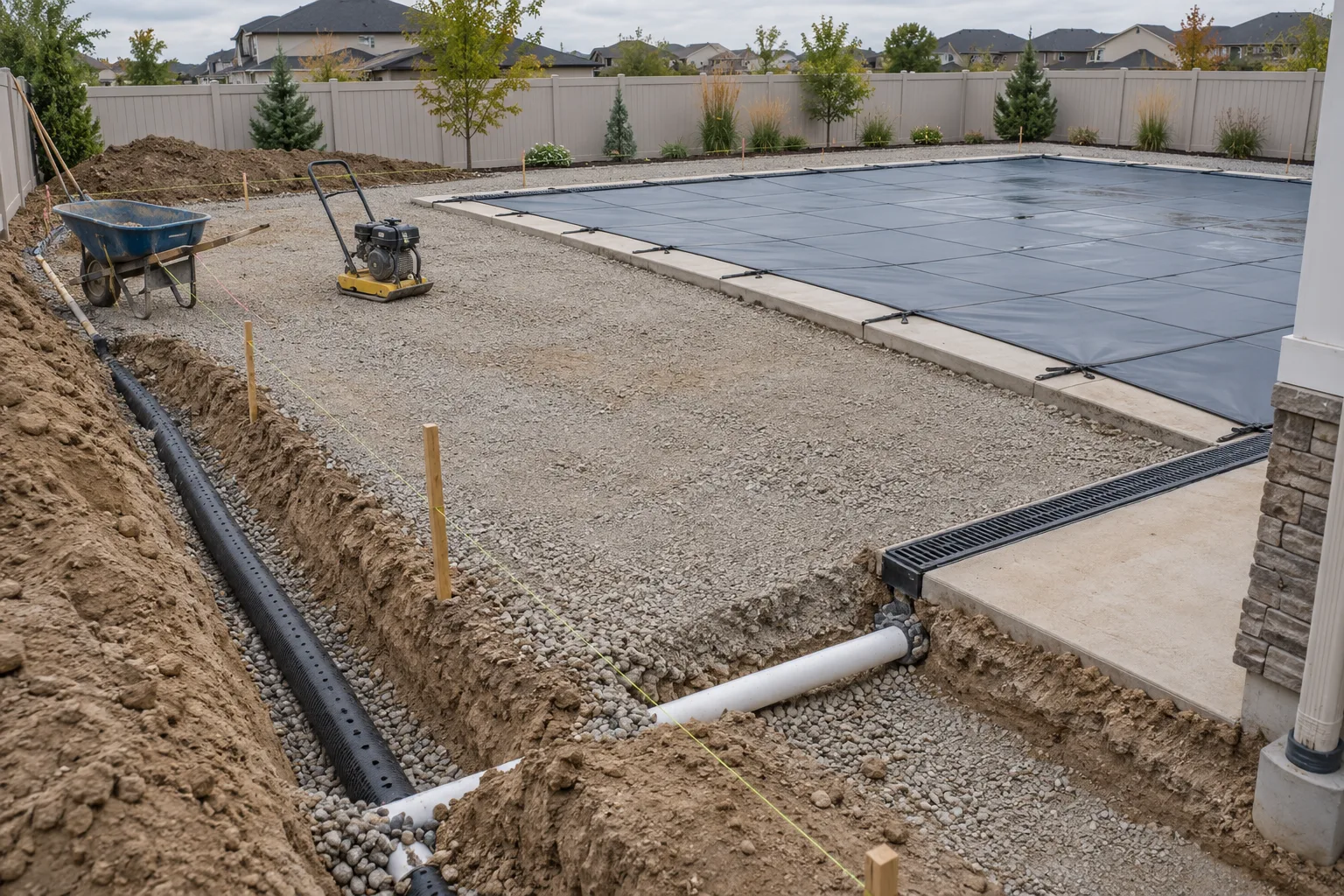
Much of Caldwell was farmland long before it was subdivisions, and the ground still shows it. Fine silt left from decades of cultivation compacts unevenly, softens when it gets wet, and can settle under a deck surface if the base is not built with that in mind. Dig a little deeper on some lots and you hit hardpan, a cemented layer that stops water from soaking down. Splash-out, rain, and snowmelt collected by a pool deck over silt and hardpan have nowhere to go unless the grading gives them a route.
Water arrives from more directions here than many homeowners expect. Pioneer Irrigation District canals and laterals thread through town, newer subdivisions on the north and east sides run pressurized irrigation lines through backyards, and acreage parcels often take ditch water on a seasonal schedule. Any of those can put moisture beside a pool excavation or under a future deck. Before a pool builder digs, irrigation mains, valves, and drainage paths need to be mapped and, where needed, rerouted so the pool area stays dry once the season's water comes on.
Open lots around Caldwell catch steady wind, and that wind carries dust, chaff from nearby fields, and leaves right into the water. Deck layout, fence placement, and planting choices can help break it up. Older homes near the College of Idaho and the historic downtown blocks bring a different puzzle: tighter yards, mature trees, and side yards too narrow for large equipment. Where a sloped corner needs holding back to create a flat pool pad, a retaining wall in Caldwell is often part of the plan.
How Altavera handles it
We treat the pool as one piece of a larger site plan. Grading and drainage come first, irrigation and utility routes are settled with your pool builder before digging, then the deck base and surface go in, with fencing and landscaping last. One team carries the outdoor scope from the first site walk to the final walkthrough.