Caldwell Water, Soil, and Wind
Why Caldwell Yards Flood in One Spot and Go Thirsty in Another
In Caldwell, most irrigation and drainage trouble comes from the water source and the soil, more than from the sprinkler heads.
Irrigation in Caldwell rarely runs on culinary water alone. Many subdivisions on the north and east sides are plumbed for pressurized irrigation fed by Pioneer Irrigation District and other canal sources, and acreage around town often takes ditch water. That water is seasonal, and it carries silt and debris that city water does not, so filters, valves, and drip emitters have to be chosen for it. A system designed around clean municipal pressure can clog, lose a zone, or simply sit idle once the canal season shuts off in fall.
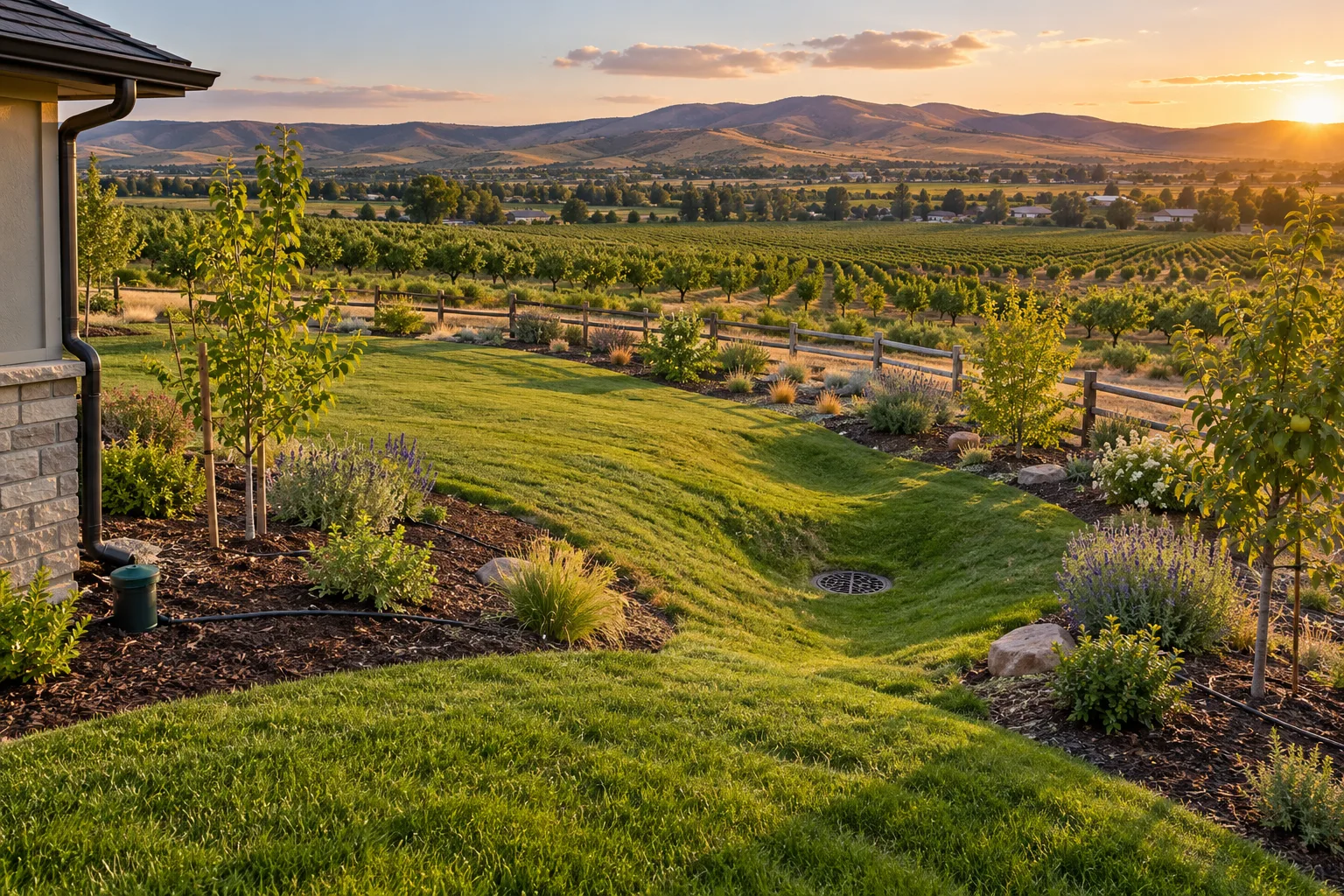
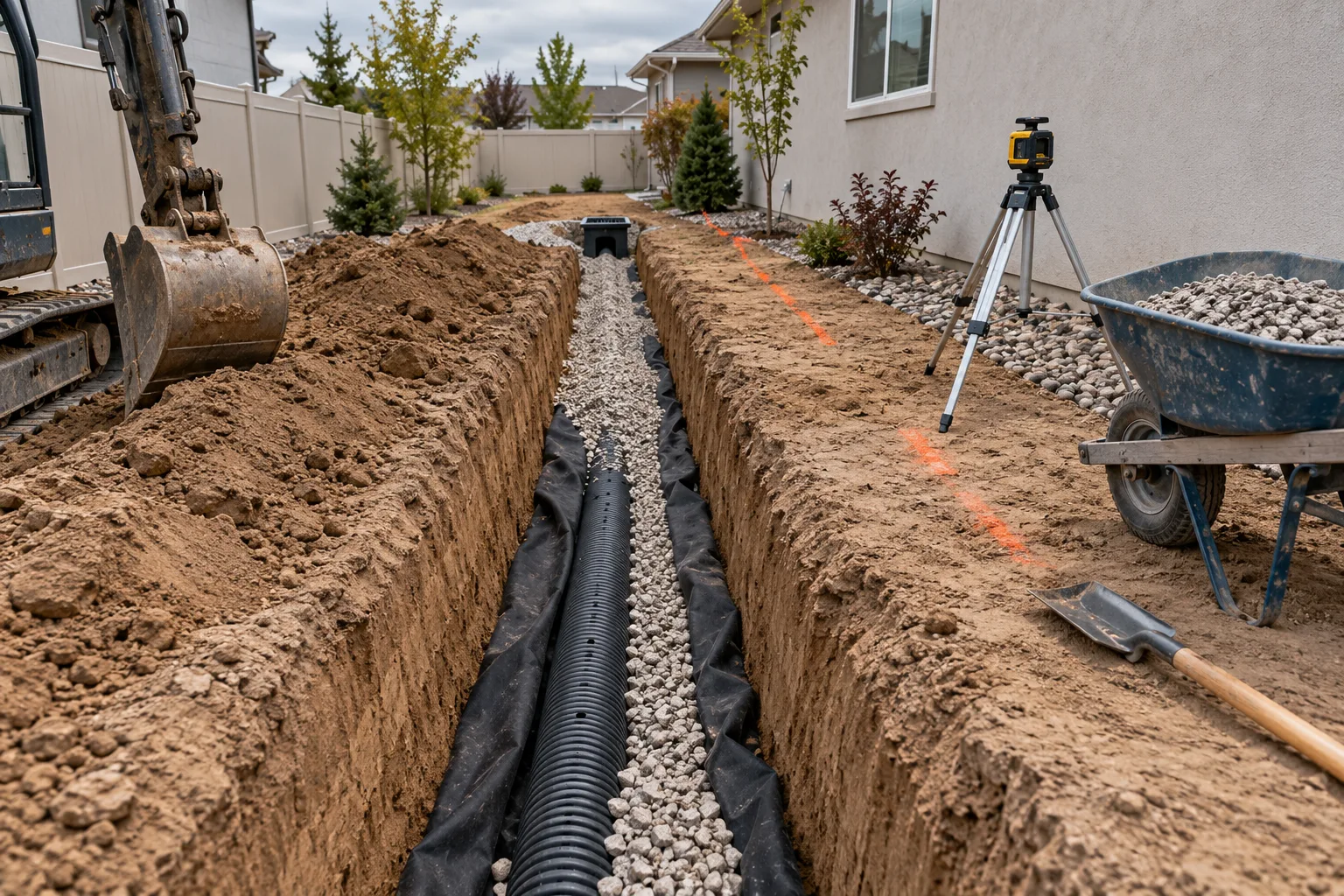
The ground is the other half of the story. Much of Caldwell was farmland not long ago, and that fine silt packs tight under construction equipment. In places a hardpan layer sits below the surface, so water that seems to soak in is actually perched just under the sod, souring roots and softening the lawn. Newer lots graded close to flat give roof runoff nowhere to go, and downspouts that empty beside the foundation or into a narrow side yard turn that strip into mud every spring.
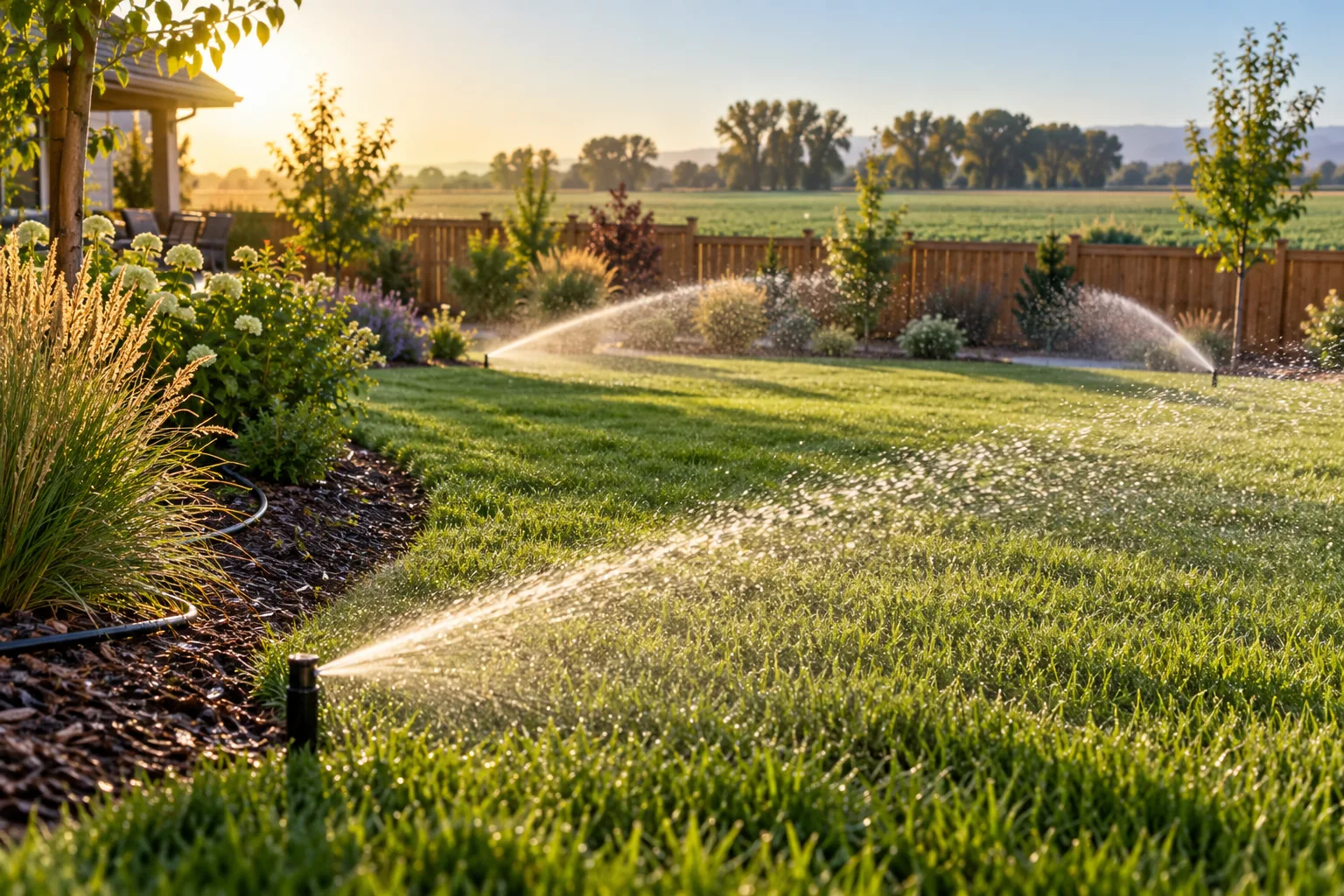
Older homes near the College of Idaho and around the revitalized downtown along Indian Creek bring their own issues: worn spray heads, lines with no sleeves under old walks, and yards regraded piece by piece over decades. On open lots, wind sweeping across former fields pushes spray off target and dries soil quickly, which is why drip and low-angle rotors often outperform fixed spray there. When drainage is part of a bigger planting plan, our Caldwell landscaping and sod installation is laid on the same finished grade.
Our approach in Caldwell
We walk the lot to see where water comes from, where it sits, and where it should leave, then confirm whether you run on pressurized irrigation, ditch water, or city water. Grading and drainage are set first, lines and sleeves go in next, and each zone is matched to its plants, sun, and wind exposure.