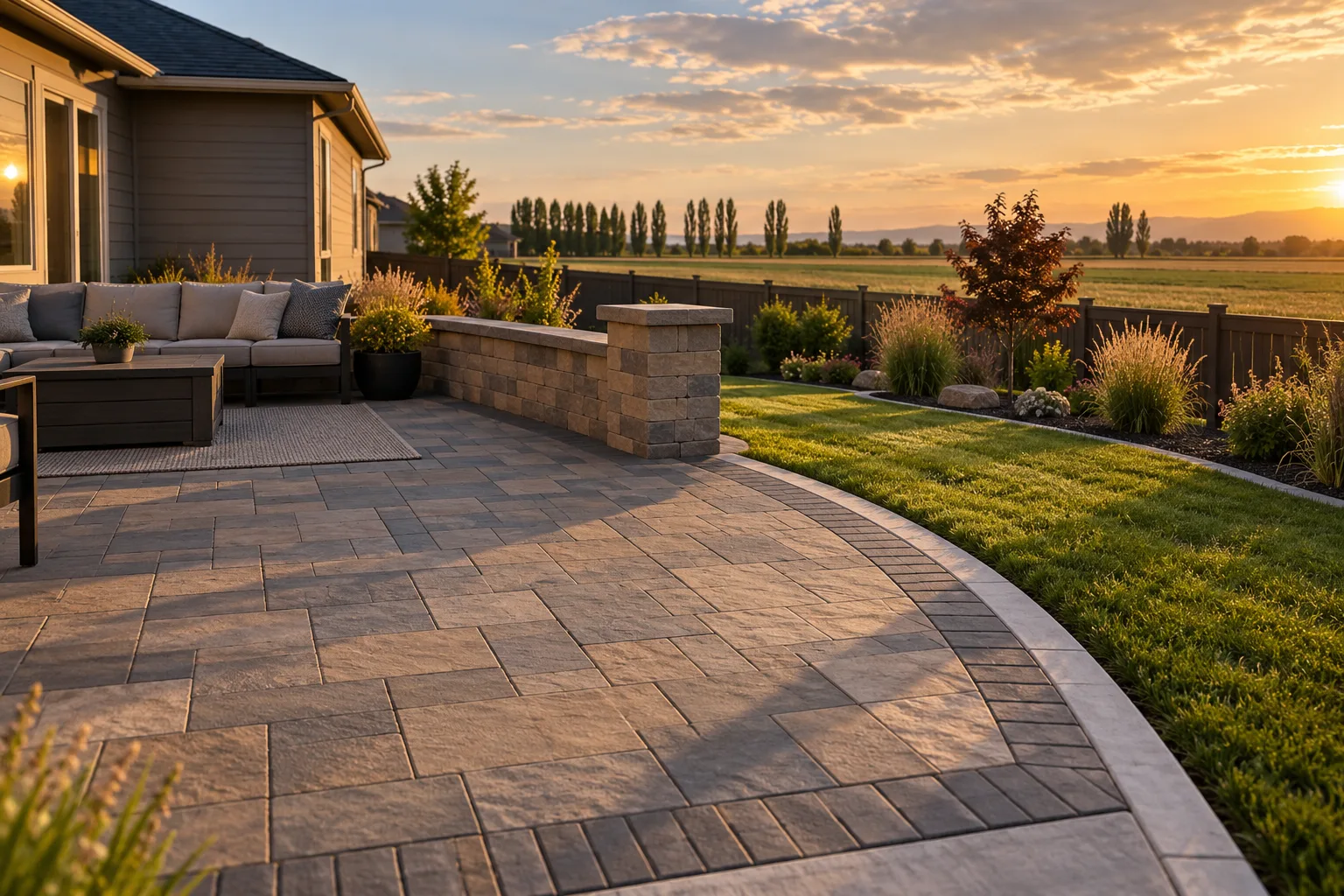
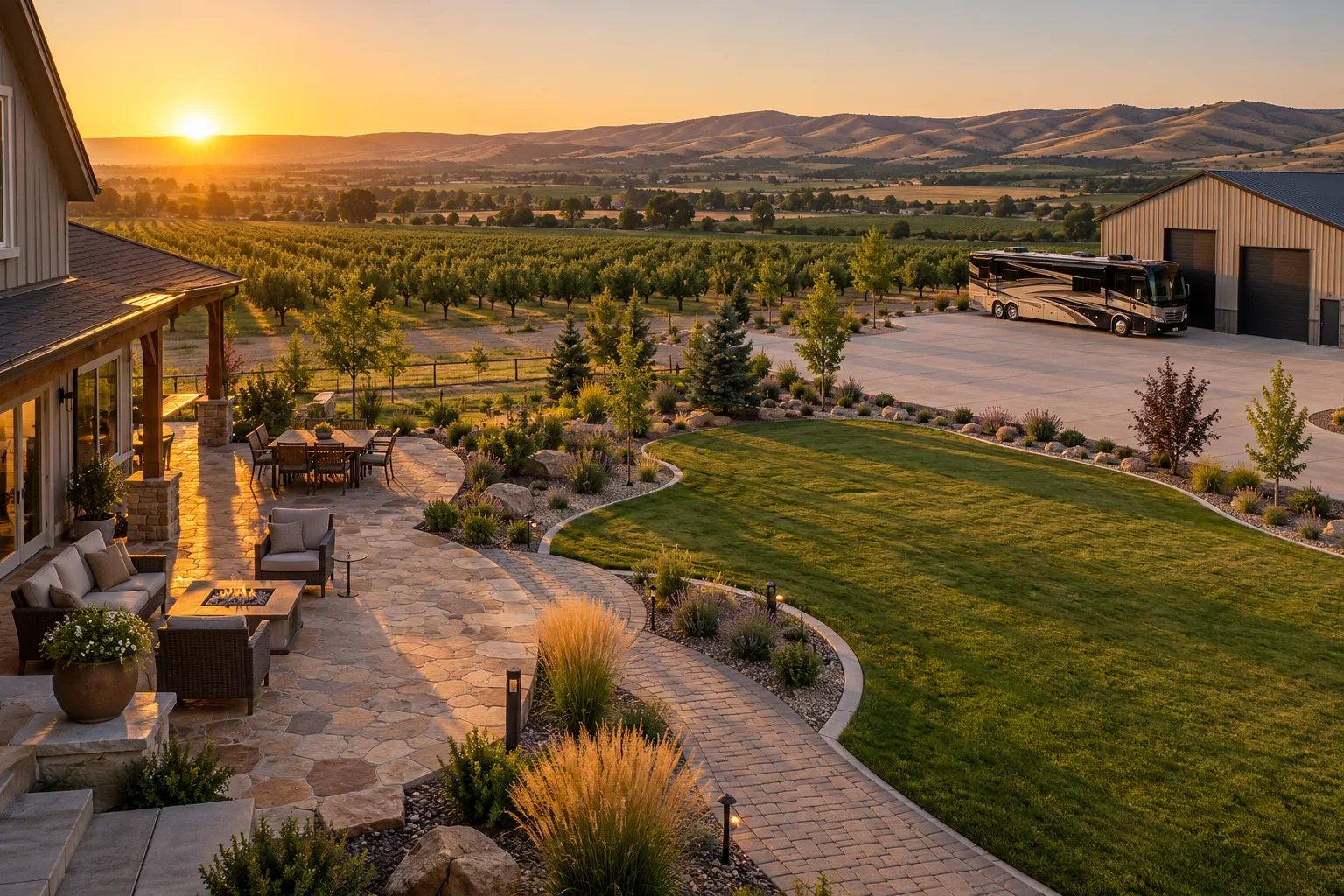
Why Caldwell Patios Settle
What Farm Ground and Canal Water Do to a Patio
In Caldwell, the soil and the irrigation schedule cause more patio problems than the pavers themselves.
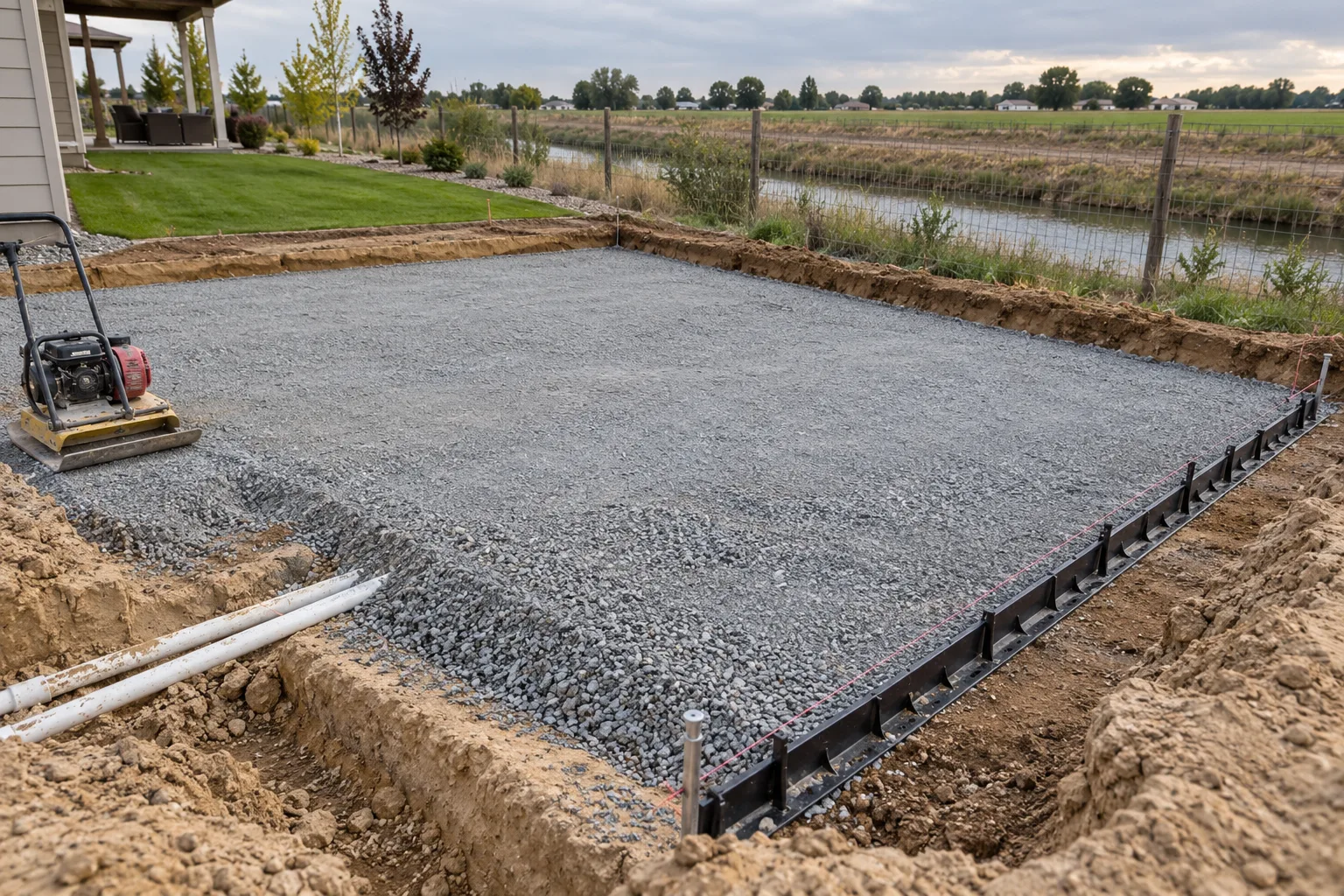
Much of Caldwell was farmed before it was subdivided, and the ground still shows it. Fine silt left from generations of cultivation loses strength when it gets saturated and compacts poorly if it is worked wet. Below that silt, some lots run into a hardpan layer that stops water from soaking down at all. A patio placed on that profile without real excavation and a compacted aggregate base tends to settle unevenly, leaving low spots that hold puddles and joints that open up after a winter of freezing and thawing.
Water is the other half of the story. Pioneer Irrigation District and other canal systems supply pressurized irrigation to many newer subdivisions on the north and east sides of town, and acreage parcels often run ditch water through the season. Those systems put far more water on a yard than rain does. When a new patio sits lower than the turf beside it, or tilts back toward the house, every watering cycle pushes runoff under the pavers and against the foundation. Grade and sprinkler layout have to be planned together. More on that side of the work: Caldwell irrigation and drainage.
Each part of Caldwell brings a different starting point. Older homes near the College of Idaho and the historic downtown blocks along Indian Creek often have aging slabs, mature tree roots, and narrow side yards that limit equipment access. Newer subdivisions usually come with a builder pad, fresh fill, and sometimes HOA design guidelines to follow. Out on rural acreage, open lots take steady wind that scours joint sand from paver seams and drives dust across the surface, so joint material and edge restraints matter more there than on a sheltered city lot.
How Altavera handles it
Every Caldwell patio starts with a close read of the site: soil type, slope, where the irrigation water lands, and how wind crosses the lot. Grading and drainage are resolved first, excavation goes down to stable ground, and the aggregate base is compacted in layers before any paver or pour goes in.