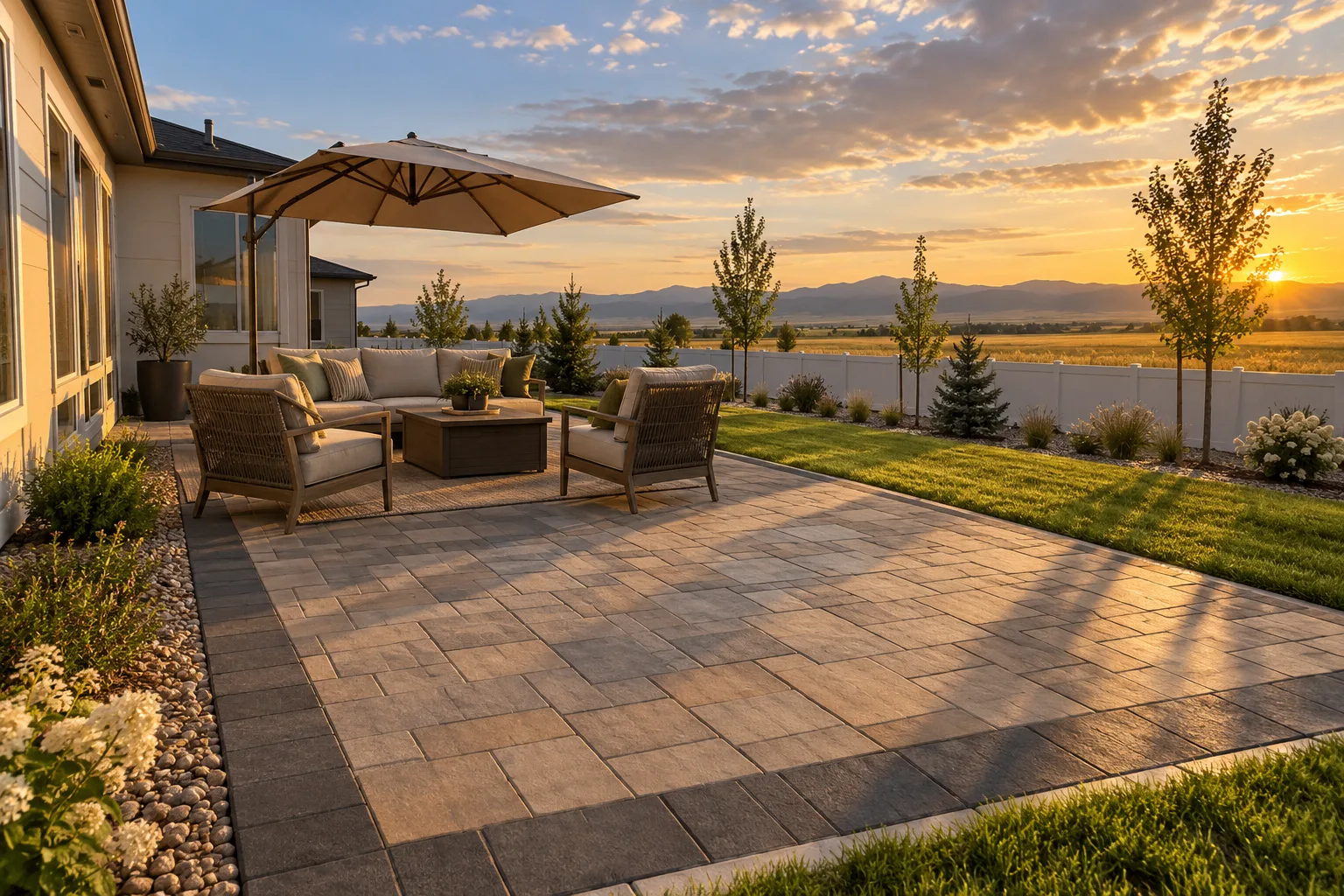
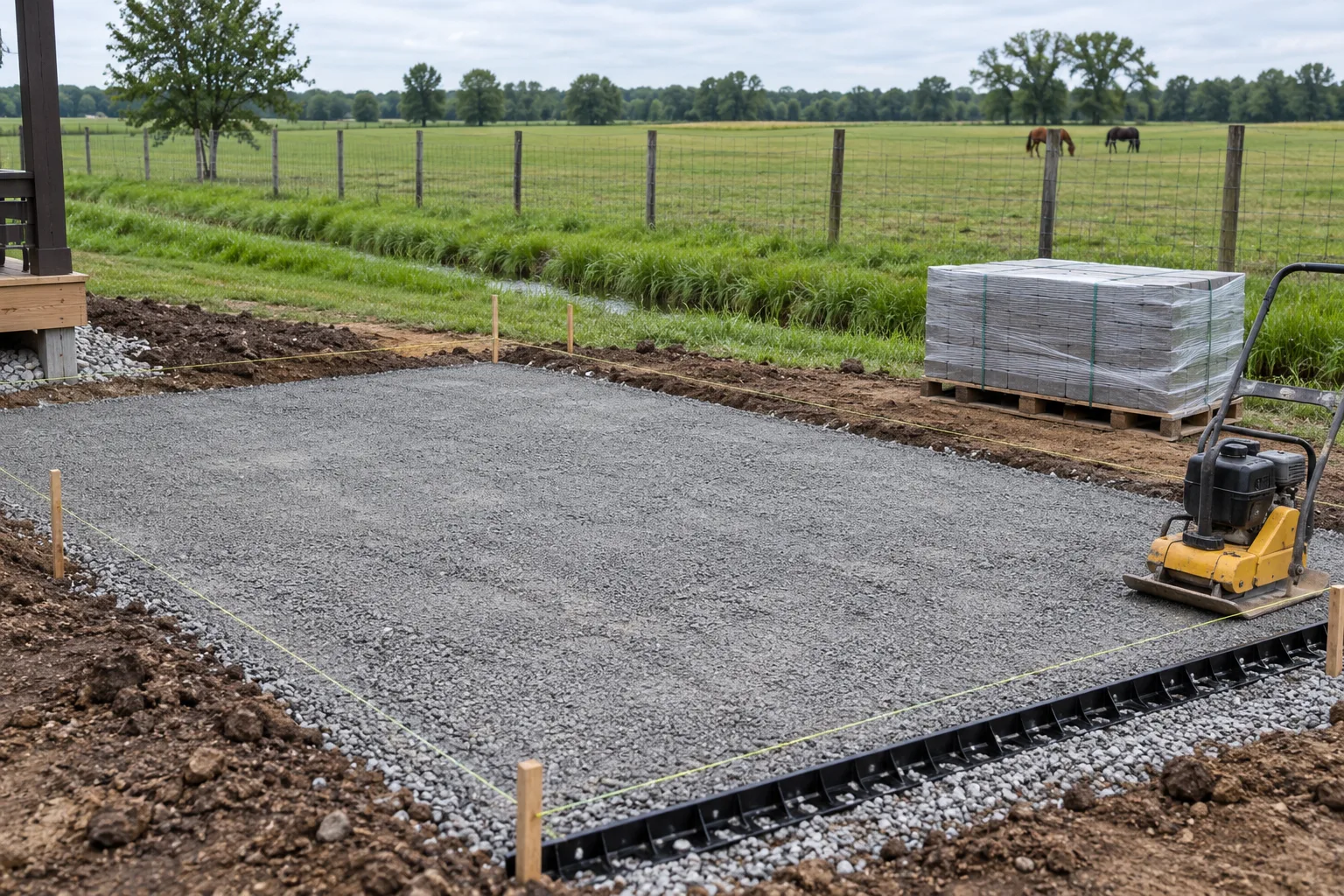
A lot of the land between Highway 44 and Highway 16 was hay ground or pasture not long ago. When a field turns into a subdivision, topsoil gets pushed around, old ditch lines get filled, and finish grade is usually set for the house, not for the backyard you plan to build later. That leaves soft pockets and flat stretches where water has no clear exit. A patio set on that without checking compaction and fall tends to sink at the low corner, open its joints, and heave once freeze and thaw get to work.
Water is the other variable. Star subdivisions run pressurized irrigation all season, and many acreage lots still take canal or ditch water across the property. A patio dropped into that path becomes a dam or a puddle. Before any digging, we map where sprinkler overspray lands, where ditch flow runs, and how runoff will leave the hardscape. When the yard needs more than a patio can fix, we fold in irrigation and drainage work in Star so the whole site sheds water together.
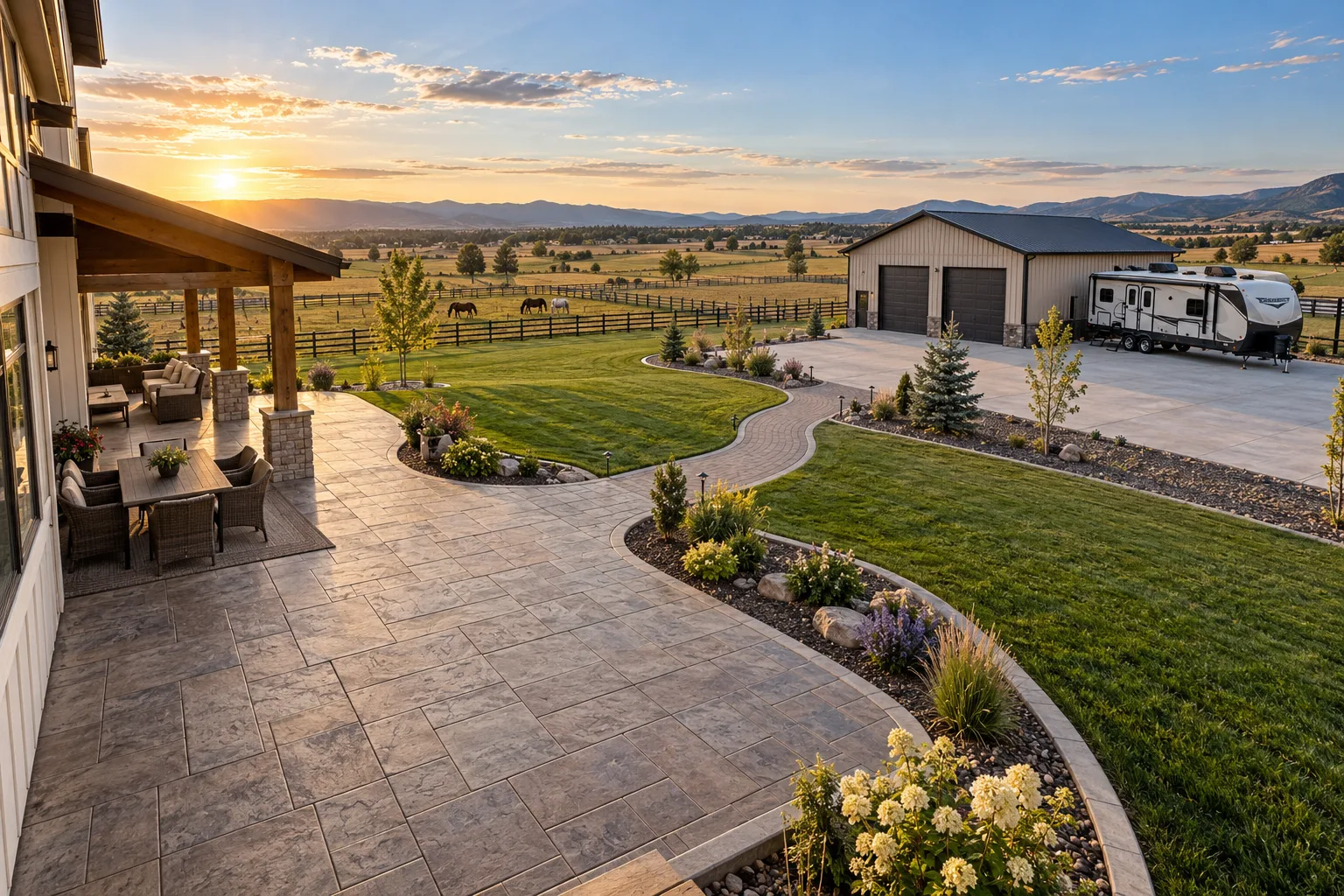
Then there is the wind. Newer Star neighborhoods have few mature trees, and open fields surround much of town, so gusts carry dust and grit across patios and pull loose sand out of fresh paver joints. Larger lots add scale too. A back patio on acreage may tie into a shop apron, an RV pad, and a long walkway out to the barn, and every piece needs consistent slope and edges that hold up under trailers, tractors, and hooves.
Our approach in Star
Altavera walks the lot with grade and water in mind first. We check elevations, trace where irrigation and ditch flow actually travel, and correct drainage before base material arrives. Base is compacted in lifts, edges are restrained, and joints are filled with wind exposure in mind, so the surface stays flat across Star's open ground.