The Middleton Ground Under Your Patio
What Middleton Soil and Water Do to a Patio and How We Plan Around It
In Middleton, how a patio holds up has more to do with the water under it than the pavers on top.
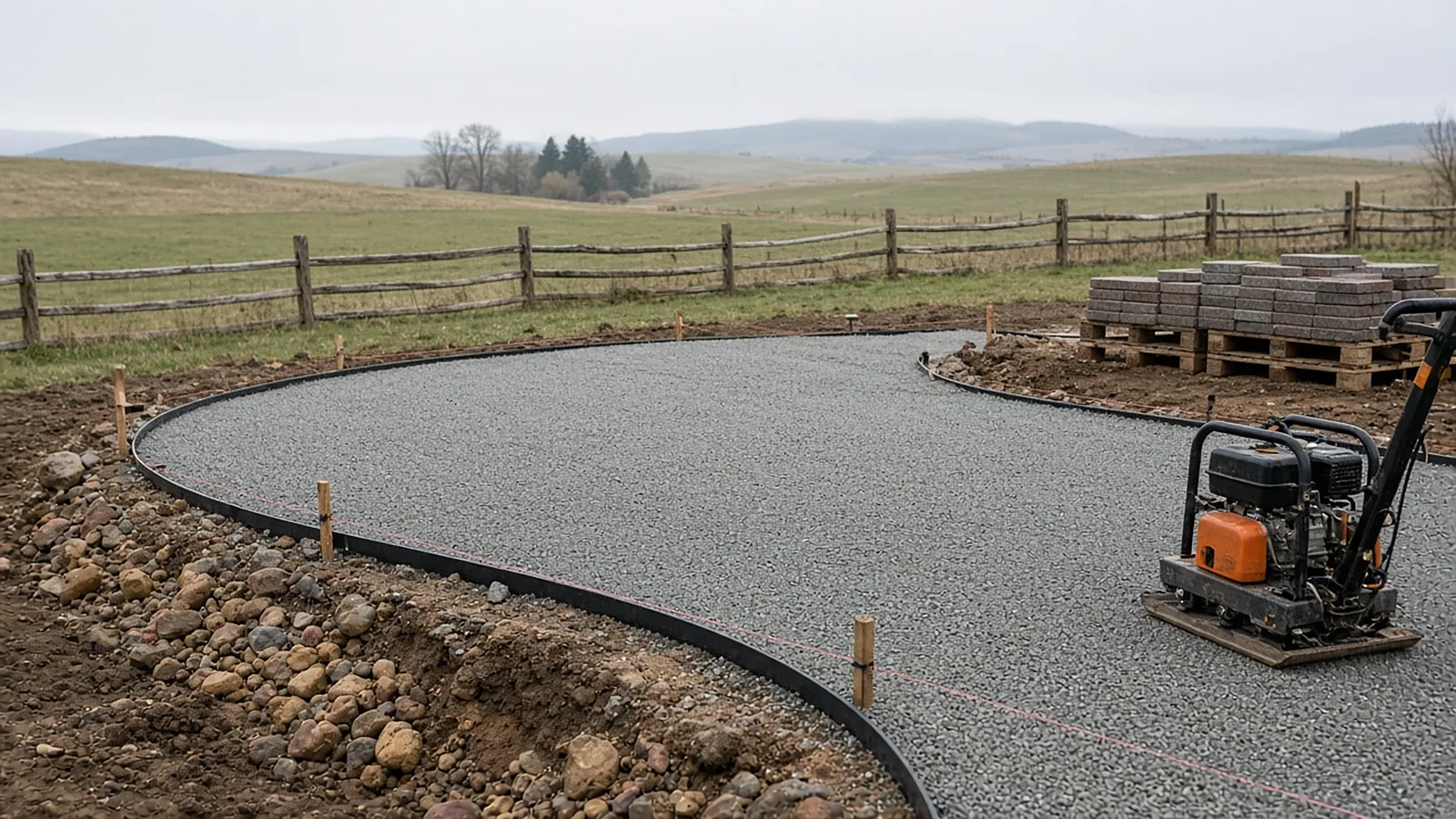
Middleton sits between the Boise River on the south and Willow Creek running through town, and that geography shapes the dirt. Lots nearer the river often reveal river rock and gravel a short way down, and in summer the water table can rise as canals and ditches carry irrigation water through the area. Gravel drains well until groundwater climbs into it. Then a base that seemed dry in April holds water through the season, and a winter freeze can heave a patio that was never built to handle it.
Most new Middleton subdivisions went in on former farm fields. That ground was tilled for decades, then graded quickly for homes, so the backyard you inherit may be a mix of native soil, loose fill, and compacted construction traffic. Builder grading usually takes water off the foundation and stops there. A new patio can easily cut across that drainage path, which is why we look at the full lot before a paver gets ordered. When drainage needs real work, our Middleton irrigation and drainage team is the same team pouring your patio.
Pressurized irrigation in many Middleton neighborhoods, plus older canal and ditch systems on rural parcels, means sprinkler spray and runoff are part of daily life for a patio. Young landscapes and open lots also let wind push dust and grit across hard surfaces and pull loose sand from paver joints. Those conditions determine where we set slope, how we lock edges, and which joint material makes sense for your exposure.
Our approach in Middleton
Before we design anything, we check where water comes from and where it goes: roof lines, irrigation heads, neighboring grades, and any sign of high groundwater. Base depth and drainage then fit those findings. Sleeves for future irrigation or lighting go in early, so the finished surface never has to be torn up to add them.