The Middleton Turf Ground Problem
Why Turf Fails on Middleton Lots, and What Has to Happen Underneath
Synthetic grass only drains as well as the base and soil beneath it, and Middleton ground varies more than its flat look suggests.
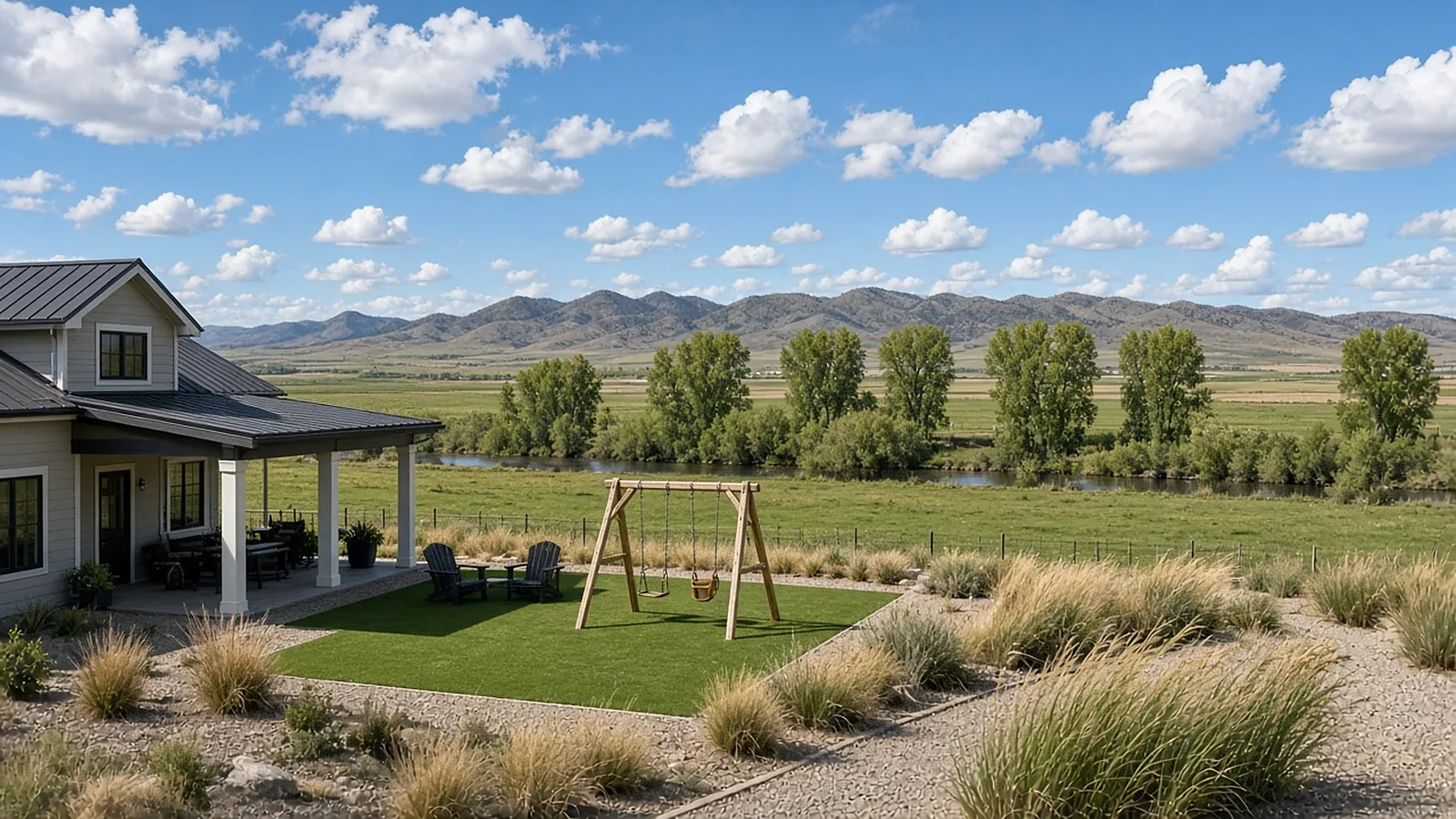
Middleton sits just north of the Boise River, with Willow Creek winding through the area, and much of the land close to that water is gravelly with a seasonal water table that rises in spring and through irrigation season. Turf lets water pass straight through its backing, which is the point, but that water still needs somewhere to go. When the base sits on saturated ground with nowhere to shed, the surface turns spongy, odors linger in pet areas, and low spots start to show. On these lots we look closely at grade and outlet before choosing base depth.
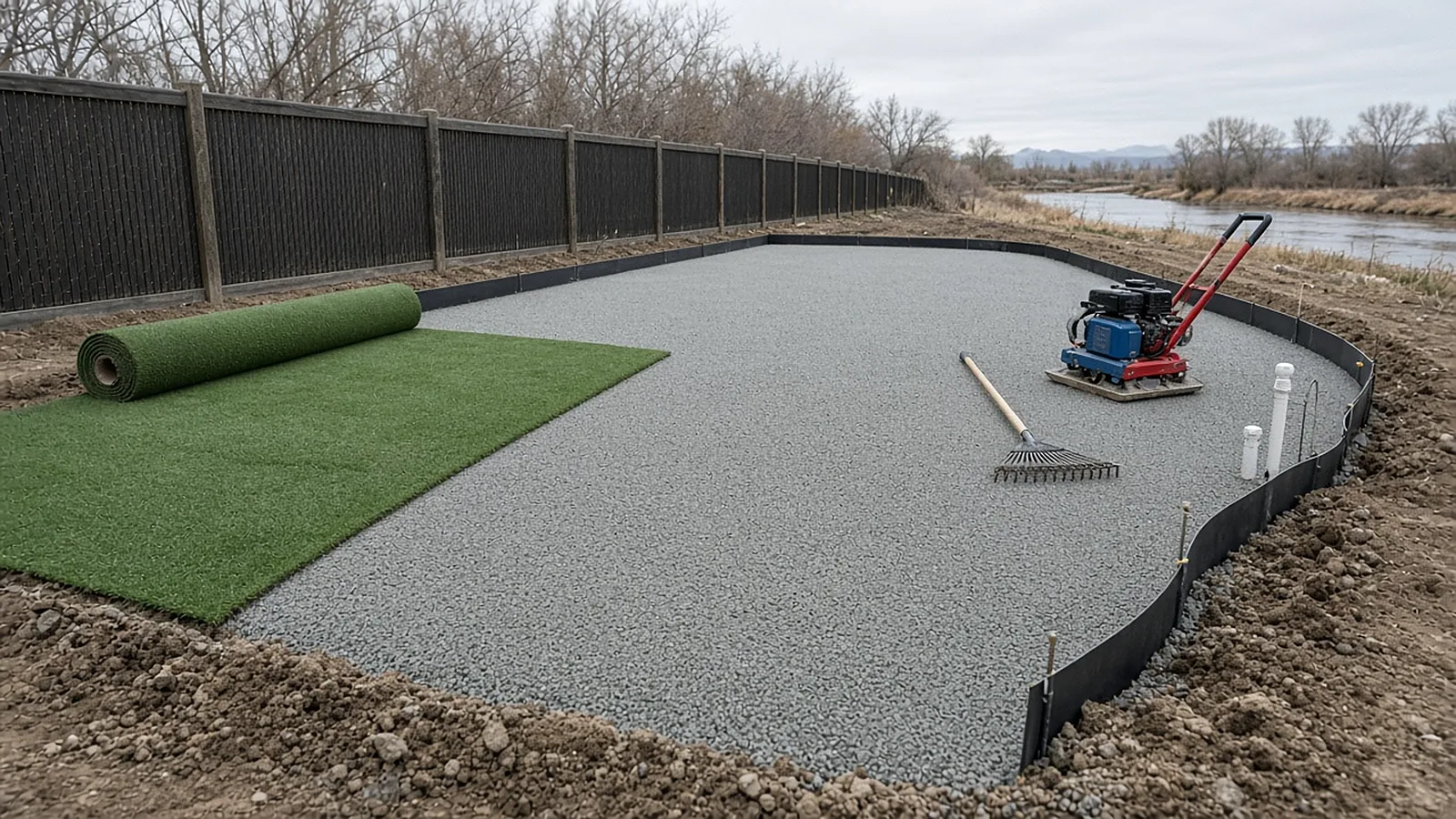
Many of the newer Middleton subdivisions were built on former farm fields along the Highway 44 corridor. Builders often leave a thin layer of loose topsoil over uneven construction fill, and that combination settles unevenly under foot traffic, dogs, and seasonal wet and dry cycles. Field soil that grew crops for decades can also hold organic material that breaks down over time and leaves dips. Our crews excavate past the loose layer and build up a compacted aggregate base so the finished surface stays flat across the whole yard, not just near the patio.
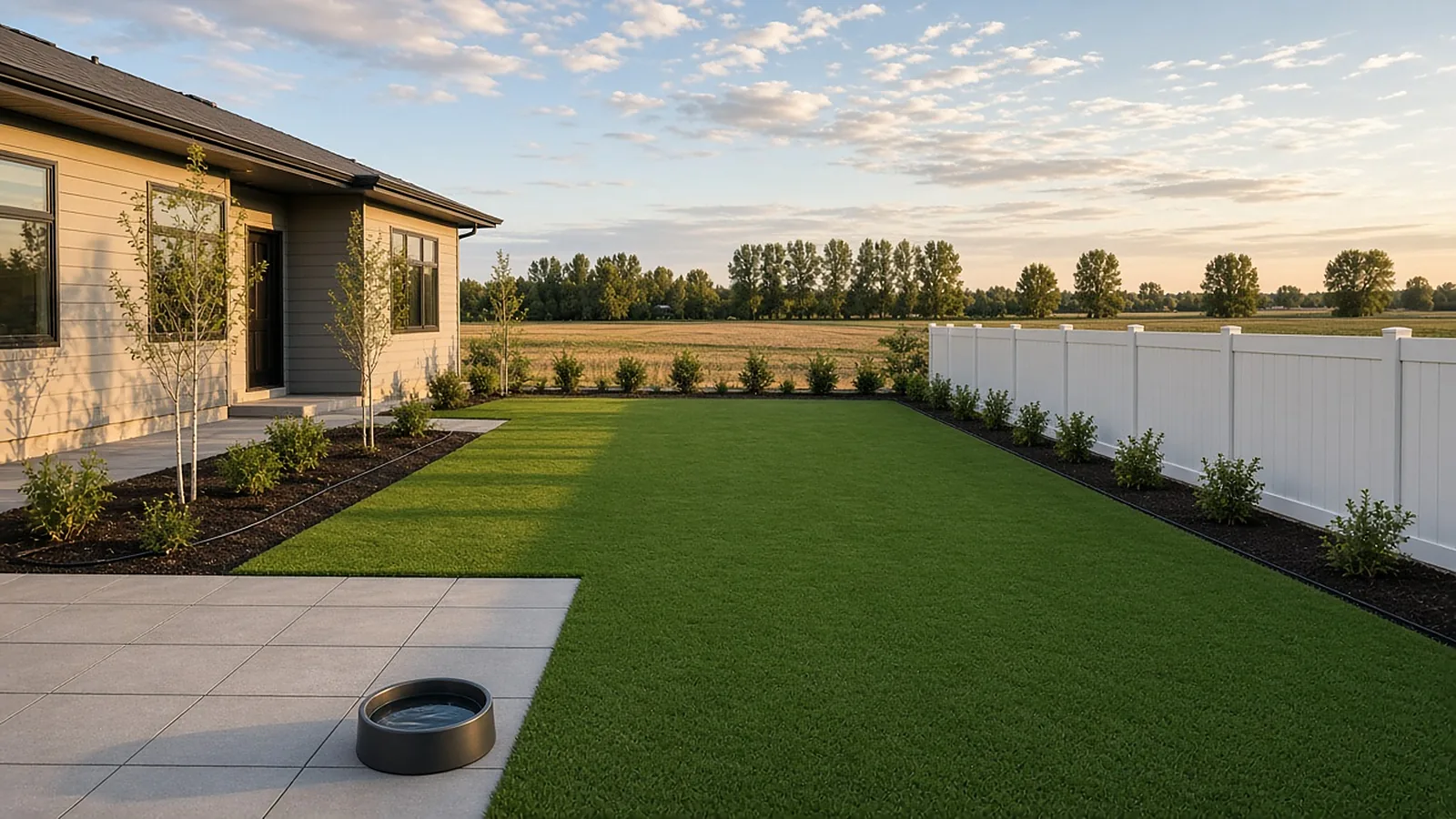
Open lots on the edge of town catch steady wind, and young landscapes with little screening let dust, seed heads, and field debris drift onto turf. Tight seams and secure perimeter edging keep gusts from lifting edges, and a sensible infill depth helps hold the blades upright. Water is the other piece. Subdivisions here typically run pressurized irrigation, while acreage often relies on canal or ditch water, so existing heads or flood paths have to be capped, rerouted, or kept clear of the turf area. For living lawn or planting beds around the turf, see landscaping and sod in Middleton.
Our approach on Middleton ground
We walk the lot first to read grade, soil, and where water collects, then set drainage and grading before any base goes in. Irrigation lines in the turf area get capped or rerouted next. Base compaction, edging, seams, and infill follow in that order, so the finished turf drains and stays anchored.