The Middleton Landscaping Problem
Why Middleton Lawns Struggle and What Fixes Them at the Root
In Middleton, the trouble with a new lawn usually starts in the soil left behind after construction, not in the sod itself.
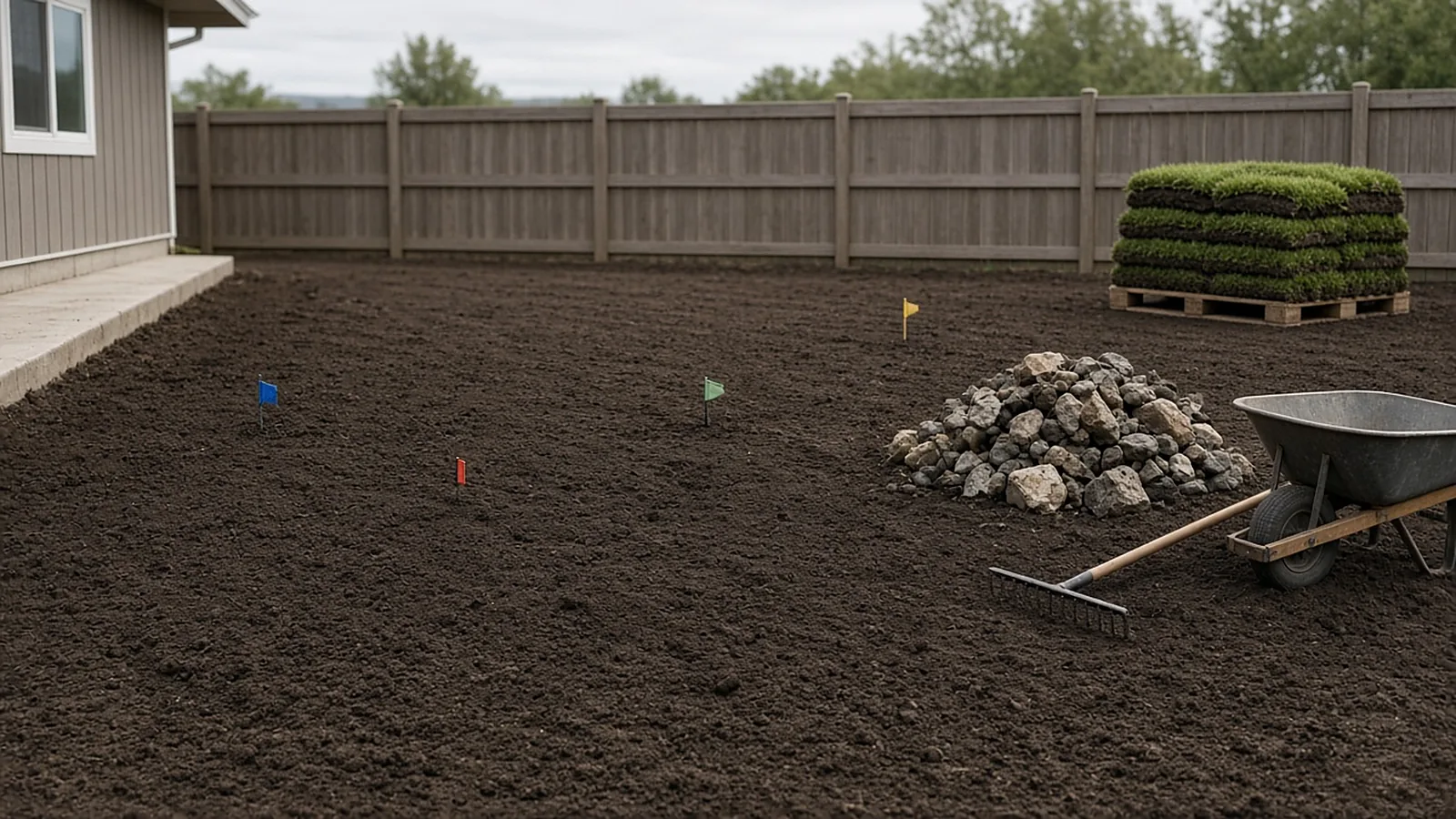
A lot of new Middleton homes were built on ground that grew crops not long before. Builders often strip and rough grade those lots, but what is left is frequently compacted subsoil mixed with construction debris, with the original topsoil pushed elsewhere. Sod rolled over that surface may green up for a while, then roots stall in the hardpan and the lawn thins in summer heat. Fixing it means ripping or tilling the compacted layer, removing rock and debris, bringing in quality topsoil where it is missing, and fine grading so water sheds away from the foundation instead of pooling along the back fence.
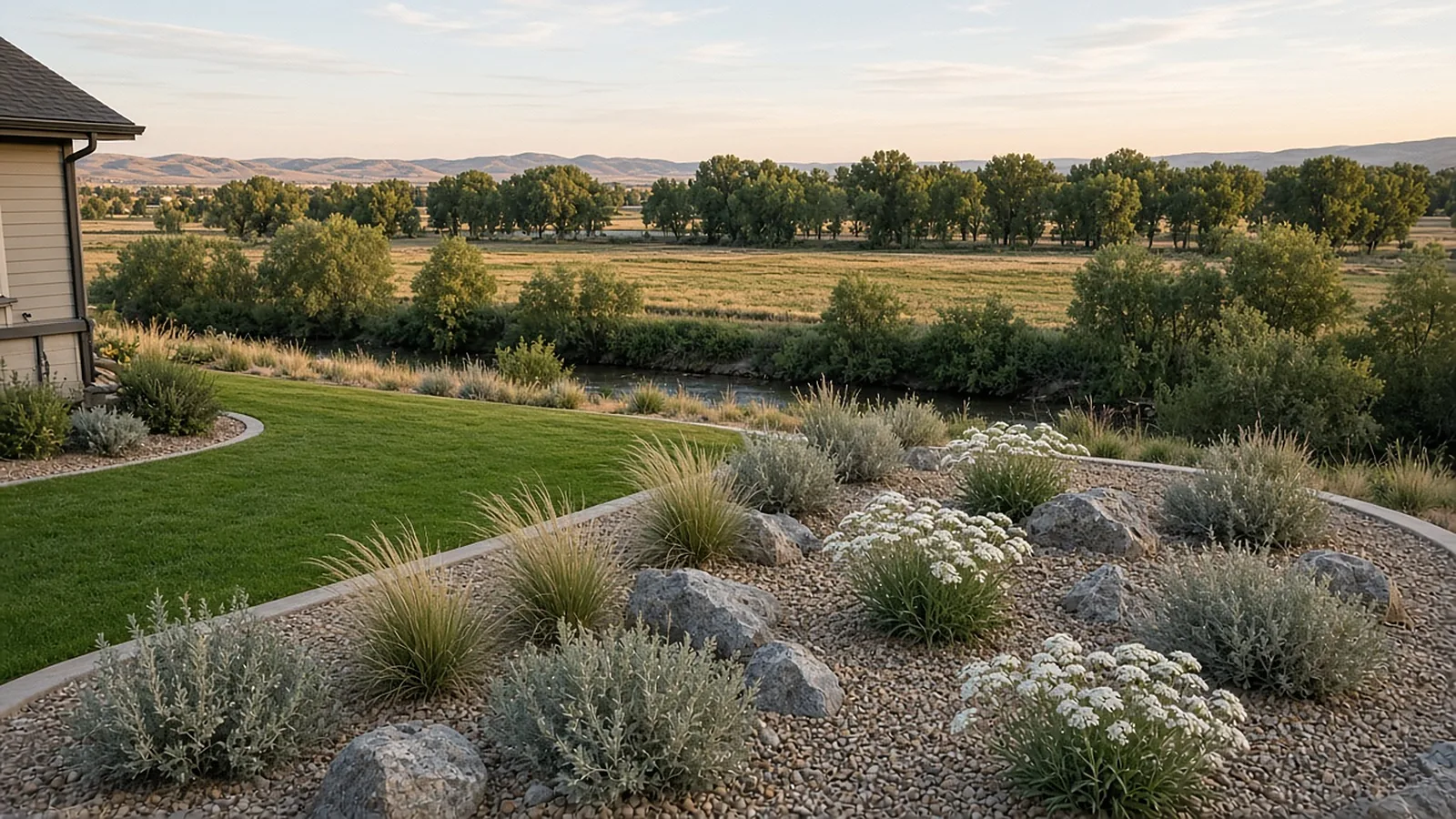
Closer to the Boise River on Middleton's south side, the problem flips. River-adjacent ground can be gravelly and fast draining near the surface, with higher seasonal groundwater than many homeowners expect. Gravel pockets dry out sod roots in July, while low spots near Willow Creek or old ditch lines can stay soggy well into the growing season. Plant choice matters here as much as soil. Trees that resent wet feet get placed on higher ground, beds in gravelly zones get amended and mulched to hold moisture, and the grading plan accounts for where water already wants to go.
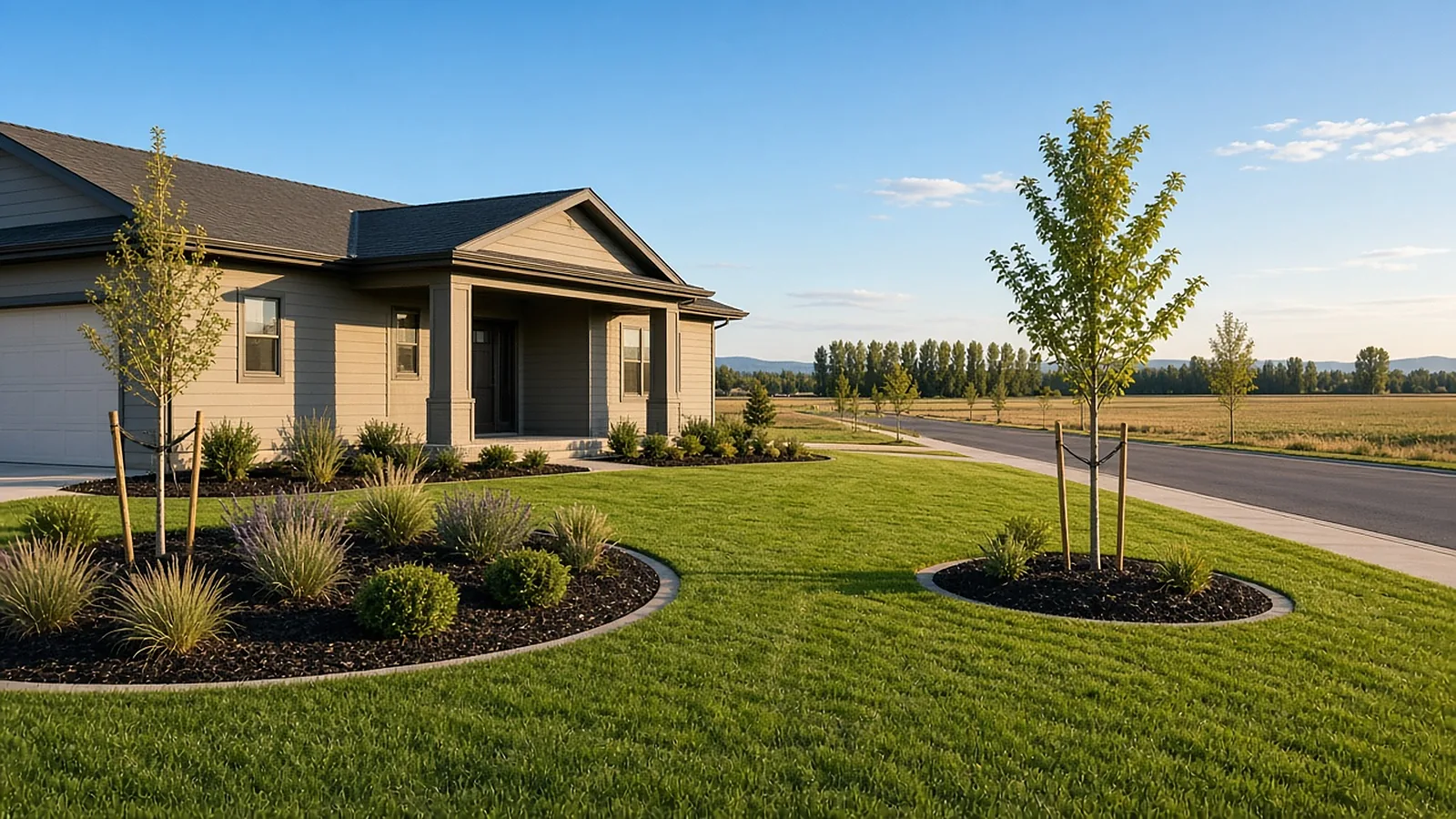
Then there is wind and water. Open lots on the edge of town catch steady wind across former fields, which dries new sod and stresses young trees before they root in. Water comes from canal and ditch systems on rural parcels and pressurized irrigation in many subdivisions, and both run on a seasonal schedule. That means sod and plantings have to be timed and zoned around when irrigation water is actually available, with a plan for the shoulders of the season. Subdivision lots may also need HOA review of plant lists, rock, and front yard layouts before work begins.
How Altavera handles it
We dig into the soil before anything is ordered, correct grading and drainage first, and confirm the irrigation layout and water source before sod or plants arrive. Plant lists are chosen for the wind, gravel, or wet ground on your specific lot, and HOA submittals are prepared when your subdivision requires them.