The Eagle Landscape Challenge
Two Very Different Grounds, One Town Name
An Eagle lawn near the river and an Eagle lawn in the foothills fail for opposite reasons, and a good landscape plan starts by knowing which one you have.
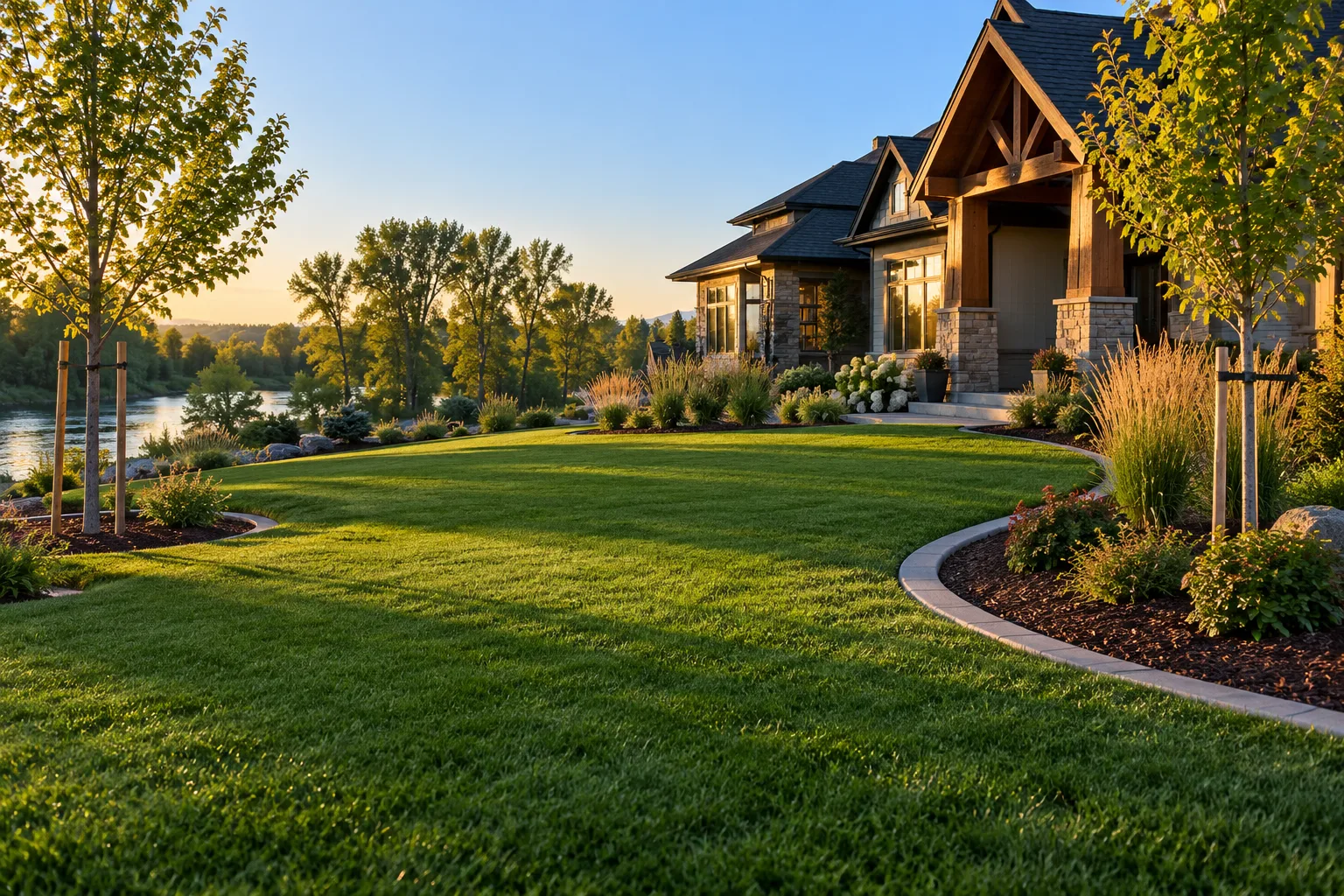
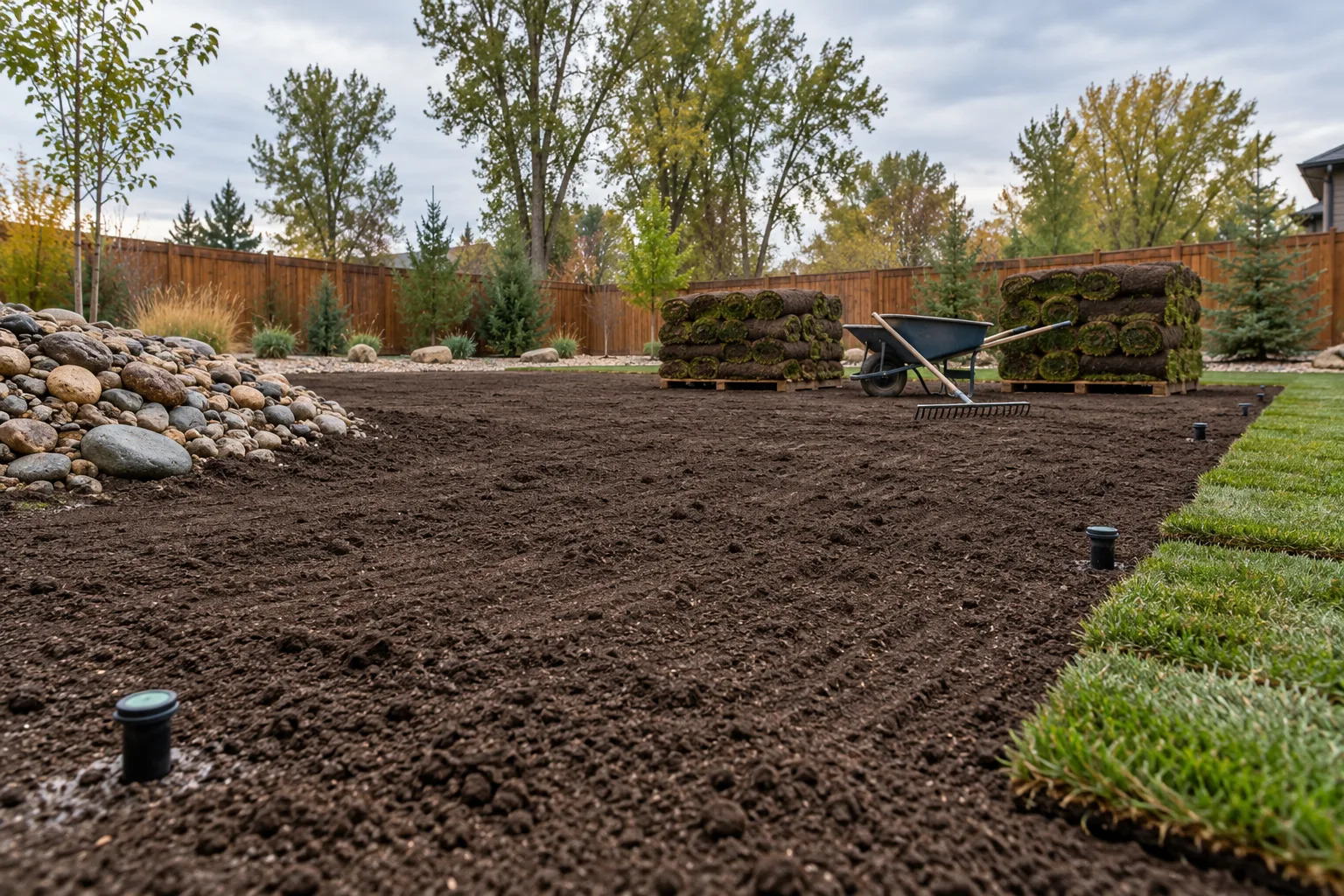
Toward the Boise River, much of Eagle sits on alluvial ground the river deposited: sand, gravel, and rounded cobble with little organic matter holding it together. Around Eagle Island and the river-bottom subdivisions, that profile drains fast near the surface, then meets higher seasonal groundwater further down. Sod rolled straight onto it browns at the seams in July, while low pockets stay soggy every spring. Getting turf and beds to root here means pulling out cobble, bringing in amended topsoil, and shaping a finish grade that sends water where it should go.
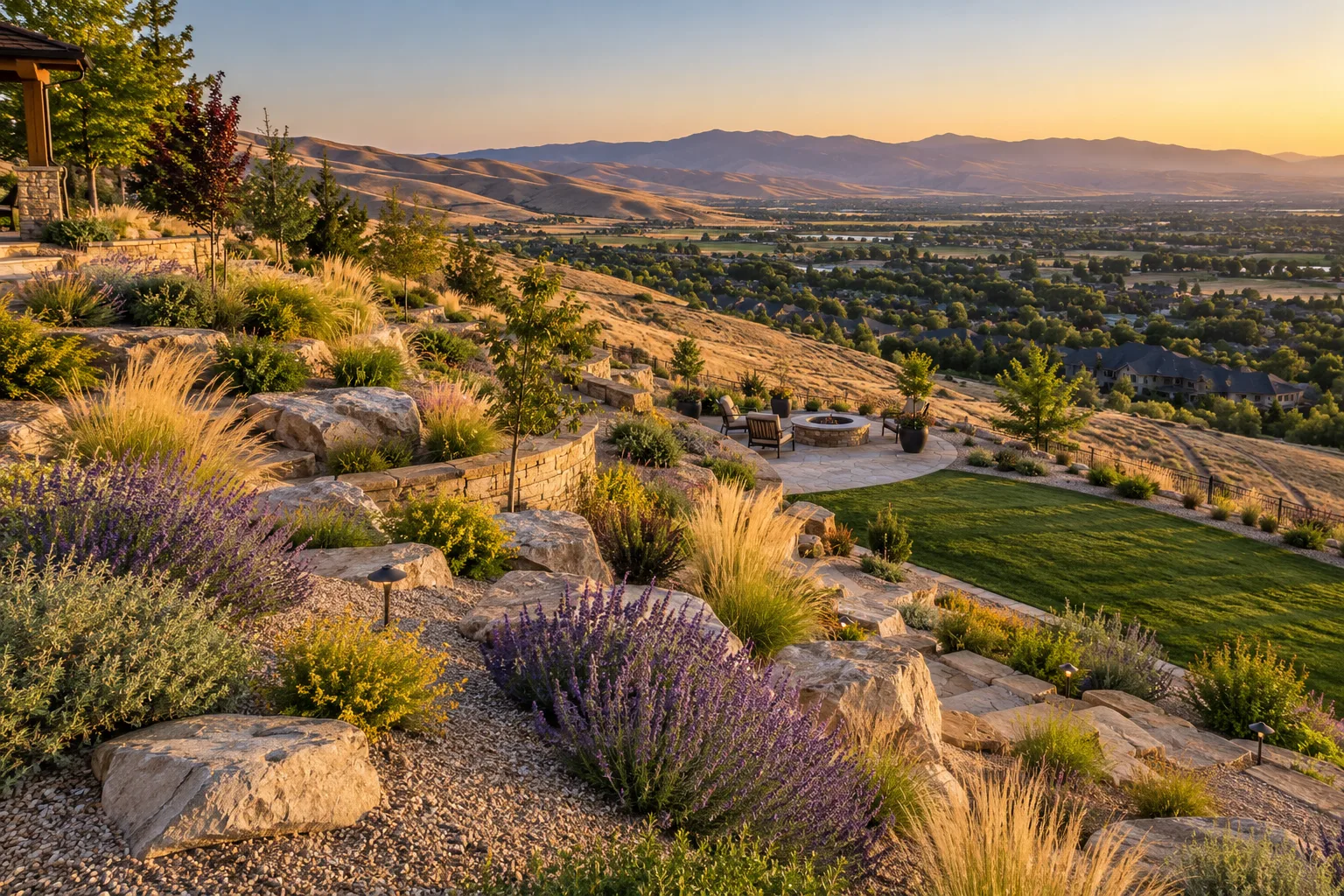
North of town, the Eagle Foothills flip the problem around. Estate lots and view properties sit on slopes where sprinkler water runs off before it soaks in, bare soil washes in the first hard storm, and afternoon wind pulls moisture out of new sod and fresh plantings. Deer move through these neighborhoods and browse anything tender. On these lots, plant selection, rock and mulch coverage, and how beds step with the grade matter as much as the lawn. Steeper areas often suit low-water planting over turf, with retaining walls in Eagle where the slope needs holding.
Then there is the approval and water side. Many Eagle subdivisions, from Banbury and Two Rivers to Legacy, run design review on landscape plans, which can touch turf area, rock color, and plant choices. Water usually arrives through canal and ditch-company deliveries or pressurized subdivision systems that shut off for the winter, so new sod has to line up with when water is actually running. A plan that ignores the HOA packet or the irrigation season is a plan that tends to get torn out and redone.
How Altavera approaches it
We read how the site drains, correct the finish grade, and amend or import soil before anything is planted. Irrigation coverage is checked zone by zone, plants and rock are chosen for slope, wind, and deer pressure, and we prepare the landscape details your HOA's design review will expect to see.