The Meridian Lawn and Soil Problem
Why New Meridian Lawns Thin Out, and What Has to Happen Underneath
A Meridian yard usually looks finished long before the soil under it is ready to grow anything.
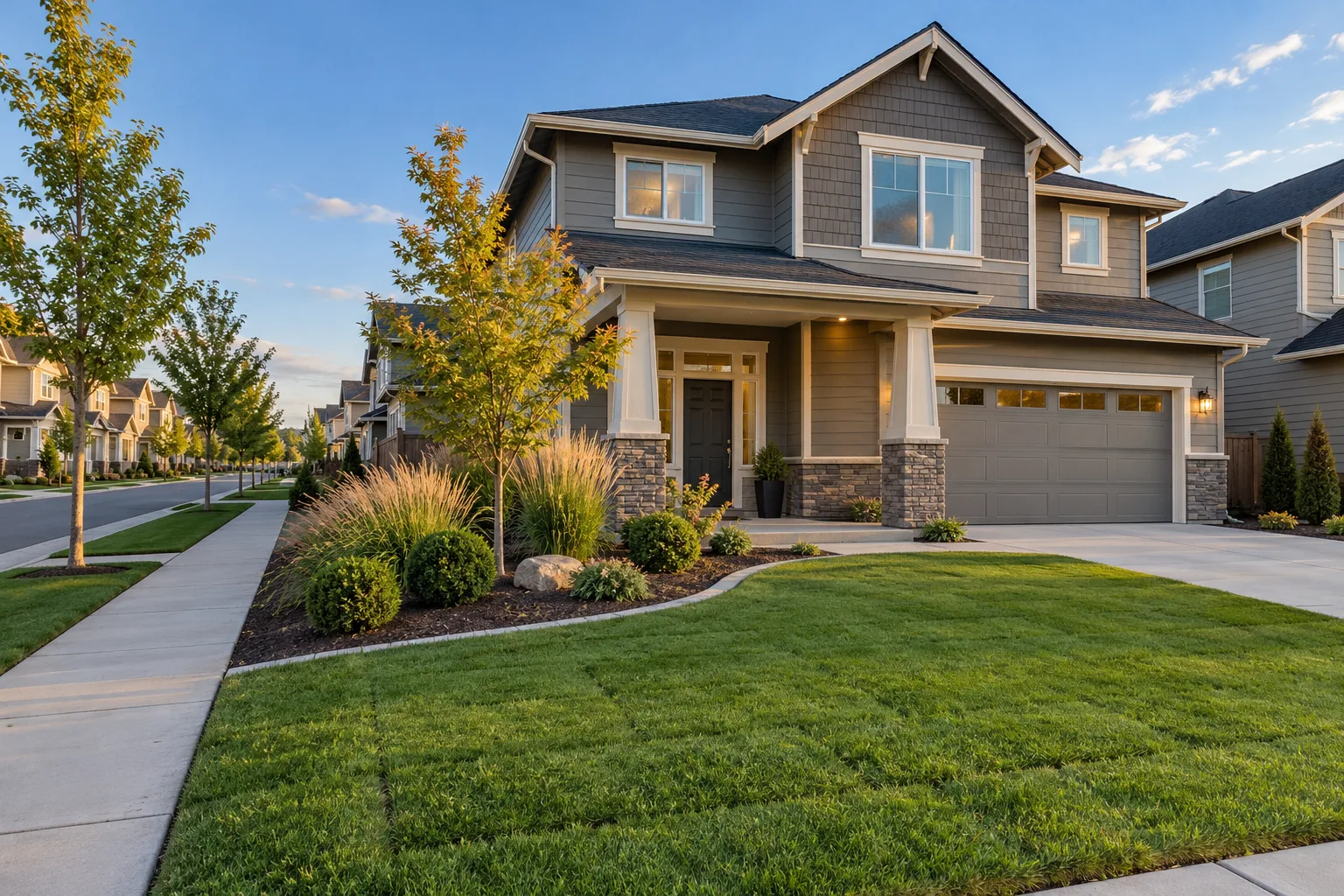
Drive through Paramount, Bridgetower, or the newer streets around Ten Mile and you are looking at ground that was farm and dairy land not long ago. That farm silt can make decent soil, but subdivision work changes it. Grading crews strip the topsoil, heavy equipment packs the subsoil, and builder fill gets spread across the surface. Some lots also hit pockets of hardpan or caliche below the surface. Sod rolled over that layer can look fine for a season, then roots stay shallow, water runs off instead of soaking in, and brown patches show up once summer heat arrives.
The flatness is the other half of the problem. Meridian subdivisions were graded close to level, so the only thing steering water away from a foundation is the slight slope left between your house and the one next door. Tight side yards make that margin thin. When a landscaper adds a raised bed, a deep layer of rock, or extra soil without checking that grade, water can pool along the house or spill onto the neighbor's lot. Planting has to respect the drainage plan, not bury it. If the grade is already off, drainage and irrigation work in Meridian comes first.
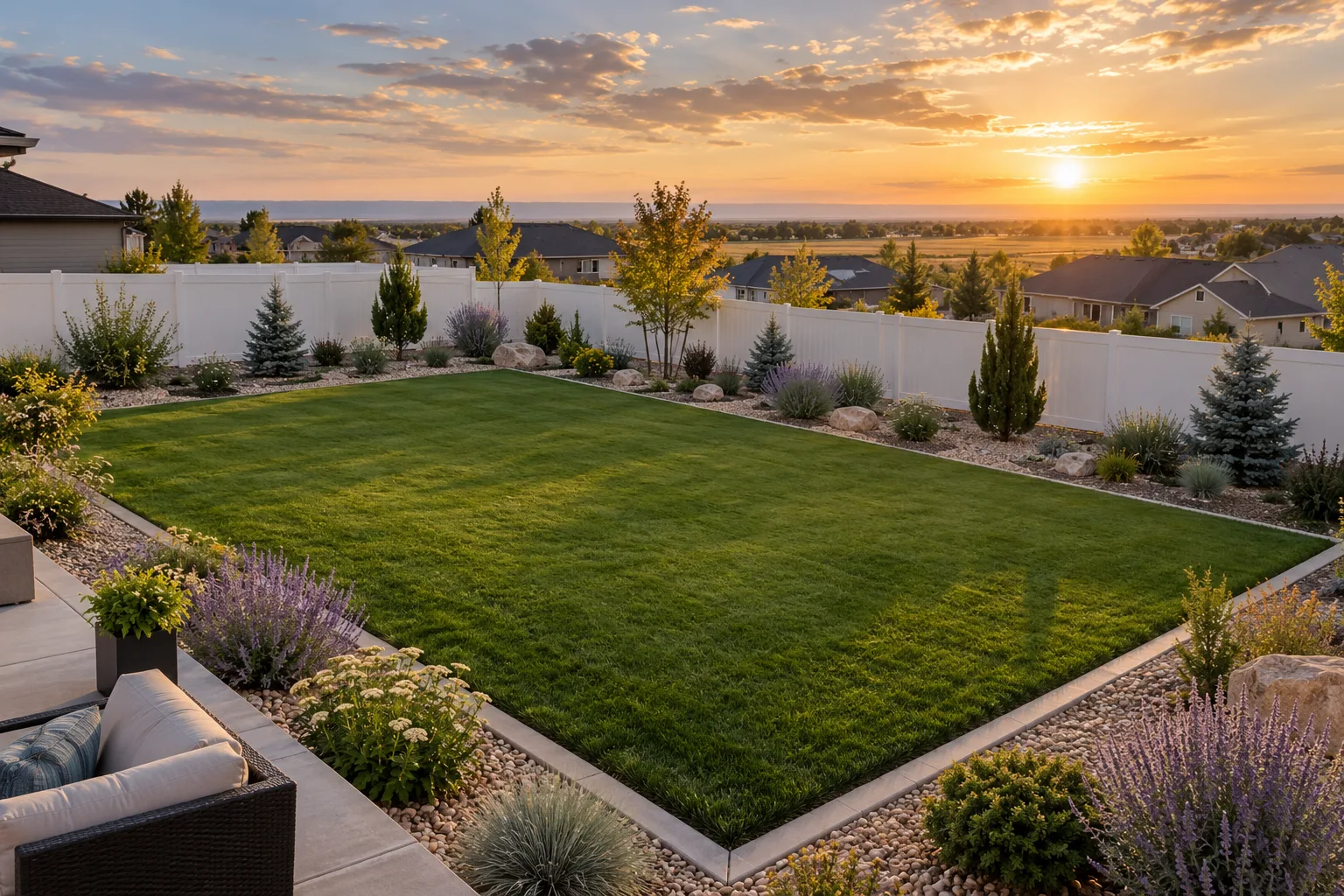
Water and rules shape the design too. Many Meridian homes keep their lawns green with pressurized irrigation fed by canal water, delivered through your irrigation district or HOA system, and that water shuts off for winter. New sod needs a plan that fits the months the water is running. Front yards in most newer subdivisions also fall under CC&Rs, and architectural review may weigh in on lawn coverage, rock, trees, or how much of the yard can go low-water. Older ranch-style homes near downtown have fewer rules but often bring tired soil, aging trees, and decades of patchwork beds.
How we handle it
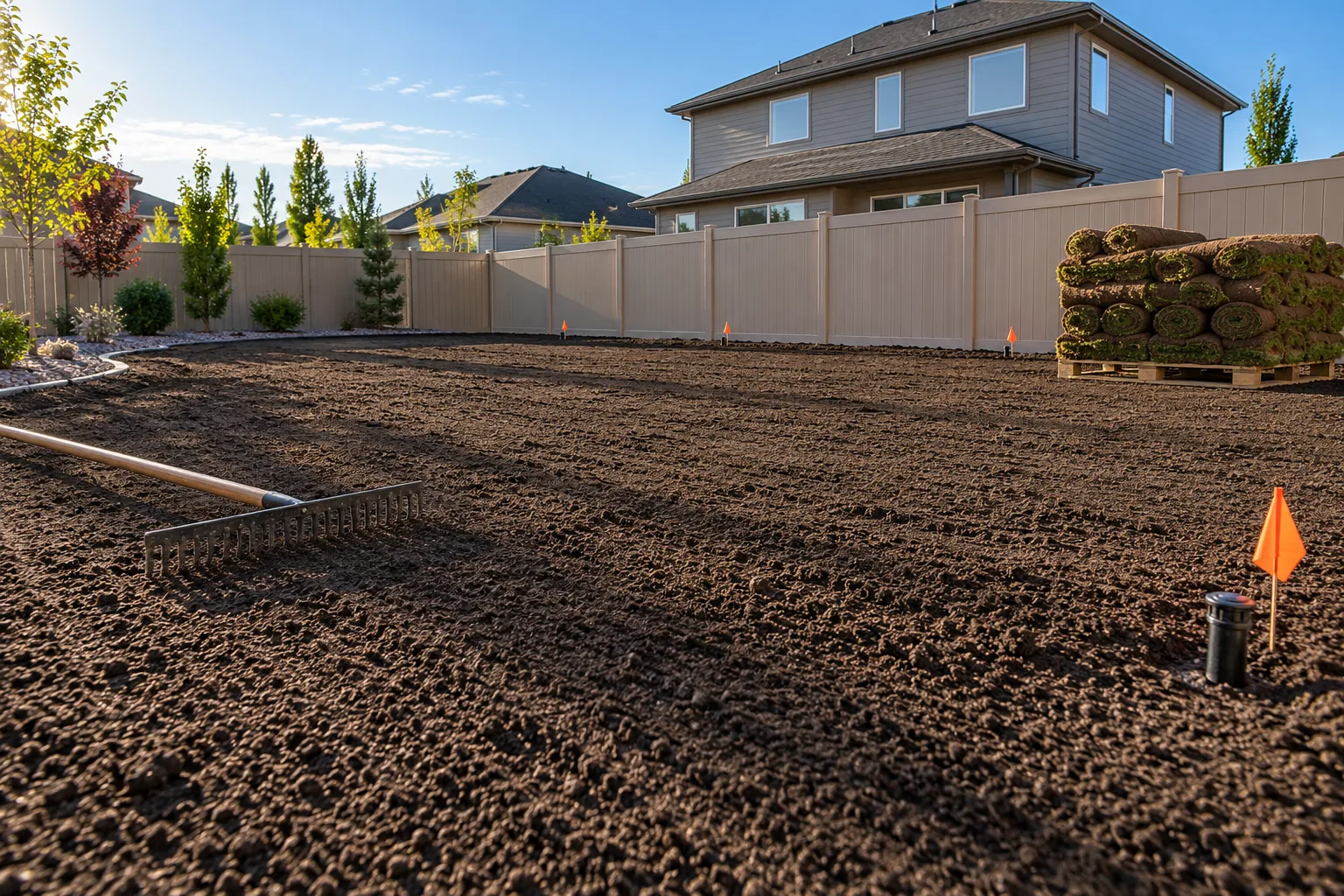
We probe and loosen compacted ground, pull debris and builder fill where it gets in the way, and amend the root zone before sod or plants go in. Finish grades are checked against the drainage plan so beds and lawn shed water away from the house. Layouts are drawn with your HOA's review and seasonal irrigation in mind.