The Meridian Retaining Wall Problem
Flat Lots Still Need Walls, and the Water Behind Them Needs Somewhere to Go
In Meridian, walls rarely hold back hillsides; they manage the inches of grade that decide where runoff ends up.
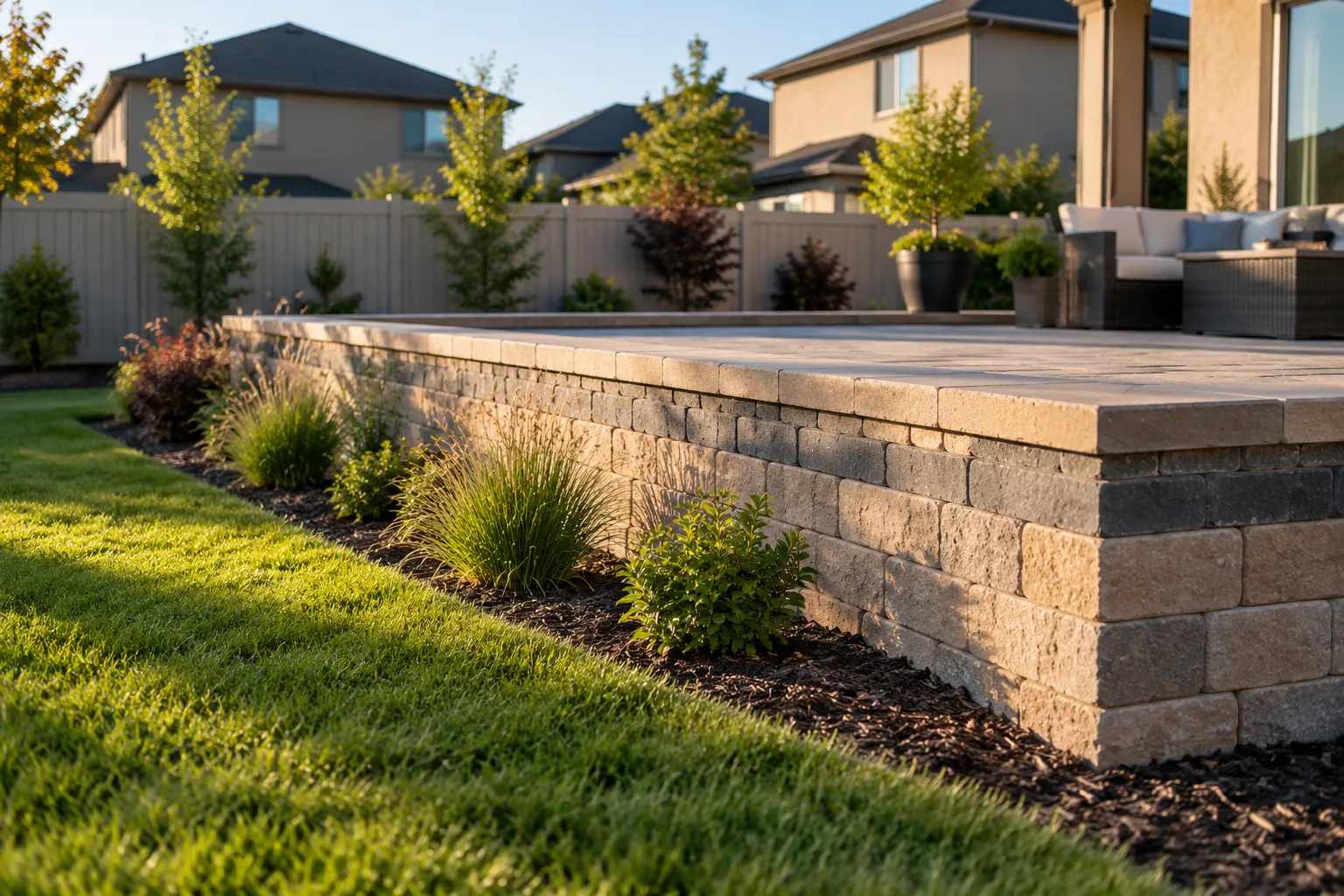
Meridian looks flat, and mostly it is. Much of the city was farm and dairy ground before it became subdivisions, and builders graded those lots to shed water toward the street or a shared swale between homes. So retaining walls here deal less with steep slopes and more with modest grade changes that matter: a raised back patio, a planter bed against the fence, a side yard where your lot sits higher than the neighbor's. Change that grade carelessly and runoff heads onto the house next door or back toward your own foundation.
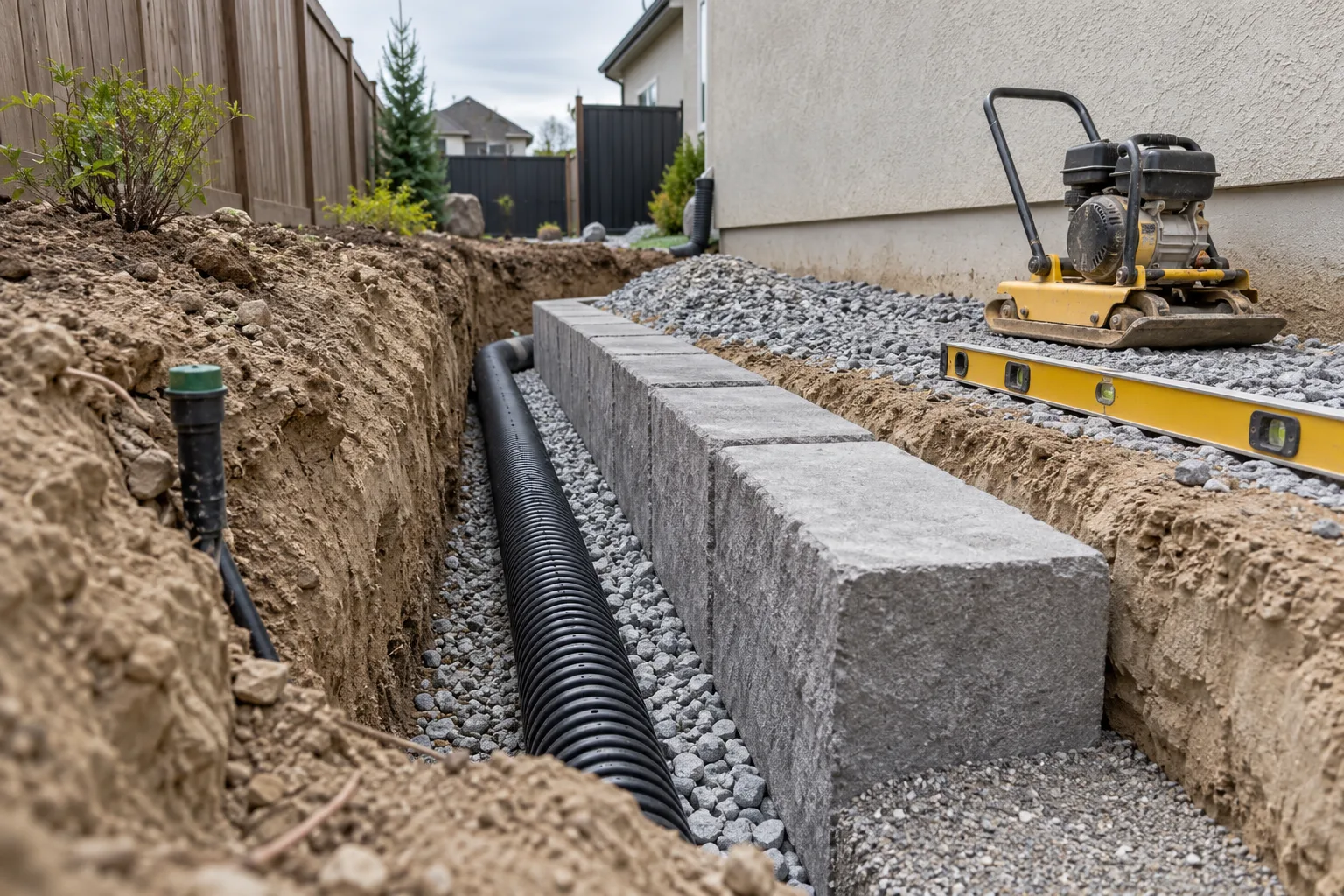
The ground behind a Meridian wall is rarely native topsoil. New construction usually strips the topsoil and leaves compacted subsoil and builder fill, sometimes with hardpan or caliche a short dig down. Former farmland silt holds moisture and loses strength when saturated, and winter freeze-thaw cycles push hard on anything sitting in wet soil. A wall stacked on loose fill with site dirt packed behind it can lean or bulge after a few winters. Digging to firm subgrade, compacting a gravel base, and backfilling with clean drainage stone takes that pressure off the block.
Snowmelt is only part of the water story. Pressurized irrigation from your irrigation district or HOA system runs steadily through the growing season, and spray heads near a wall can soak the backfill week after week. Then there is review: in Paramount, Bridgetower, the Ten Mile area, and most newer subdivisions, CC&Rs and architectural committees may weigh in on wall material, color, and height, especially out front. Older ranch-style homes near downtown usually have fewer rules but settled, uneven grading. If your wall also needs a drain line or regrading, see irrigation and drainage in Meridian.
How Altavera handles it
We start with the water, not the block. Before design, we look at how runoff leaves your lot and your neighbor's, find irrigation lines near the wall path, and dig to firm ground. Then the base, buried first course, drain pipe, and clean aggregate go in, and the wall follows the plan your HOA approves.