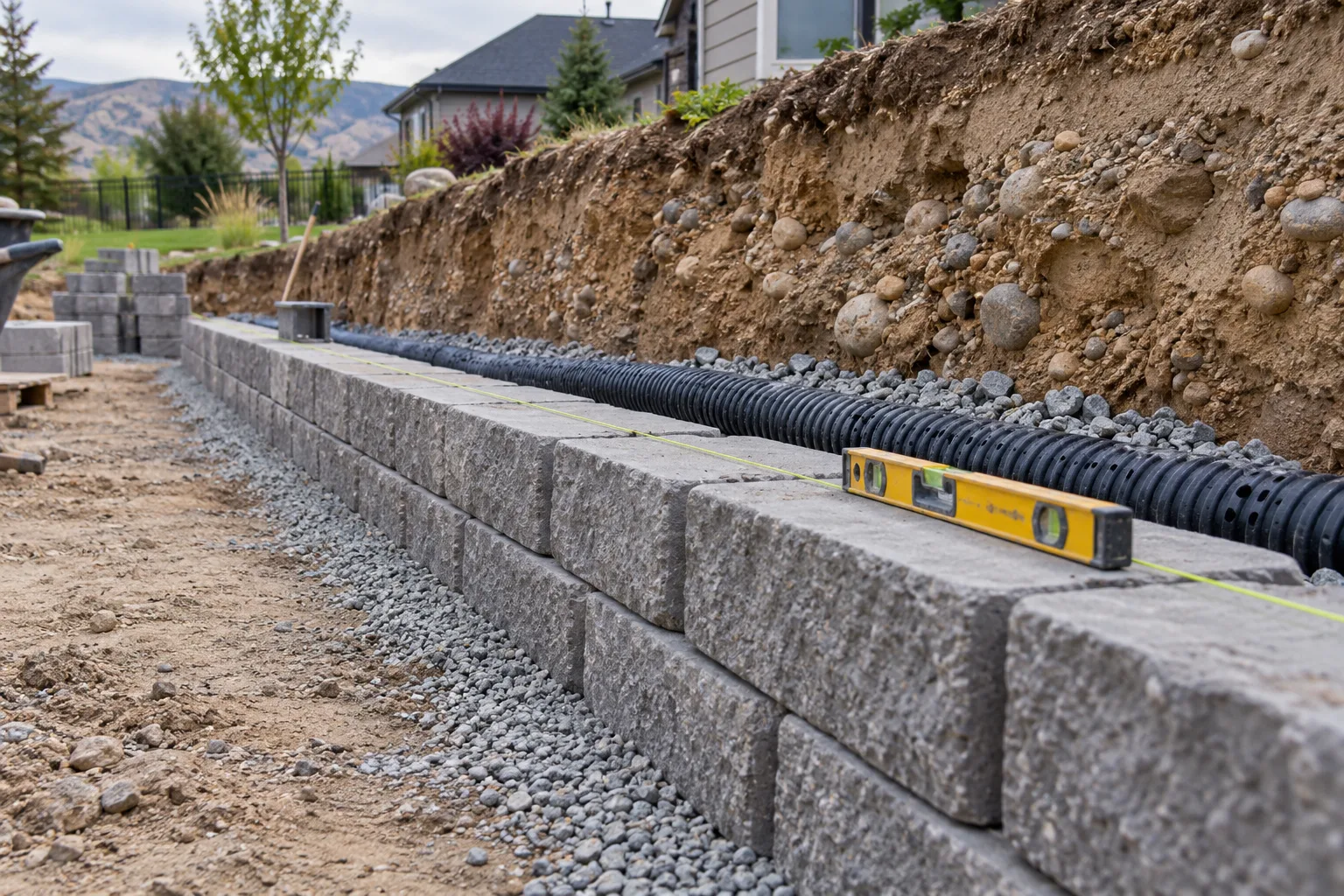
Eagle has two very different kinds of ground for a wall to stand on. South of State Street, toward the Boise River and Eagle Island, many lots sit on river-bottom alluvium: layers of sand, gravel, and rounded cobble that can drain quickly in one spot and hold water a few feet away. Seasonal groundwater can climb in these areas once irrigation water is flowing, and a canal or ditch along the property line adds to it. A wall built here needs a base that will not wash out or settle and a drain path that actually carries water somewhere useful.
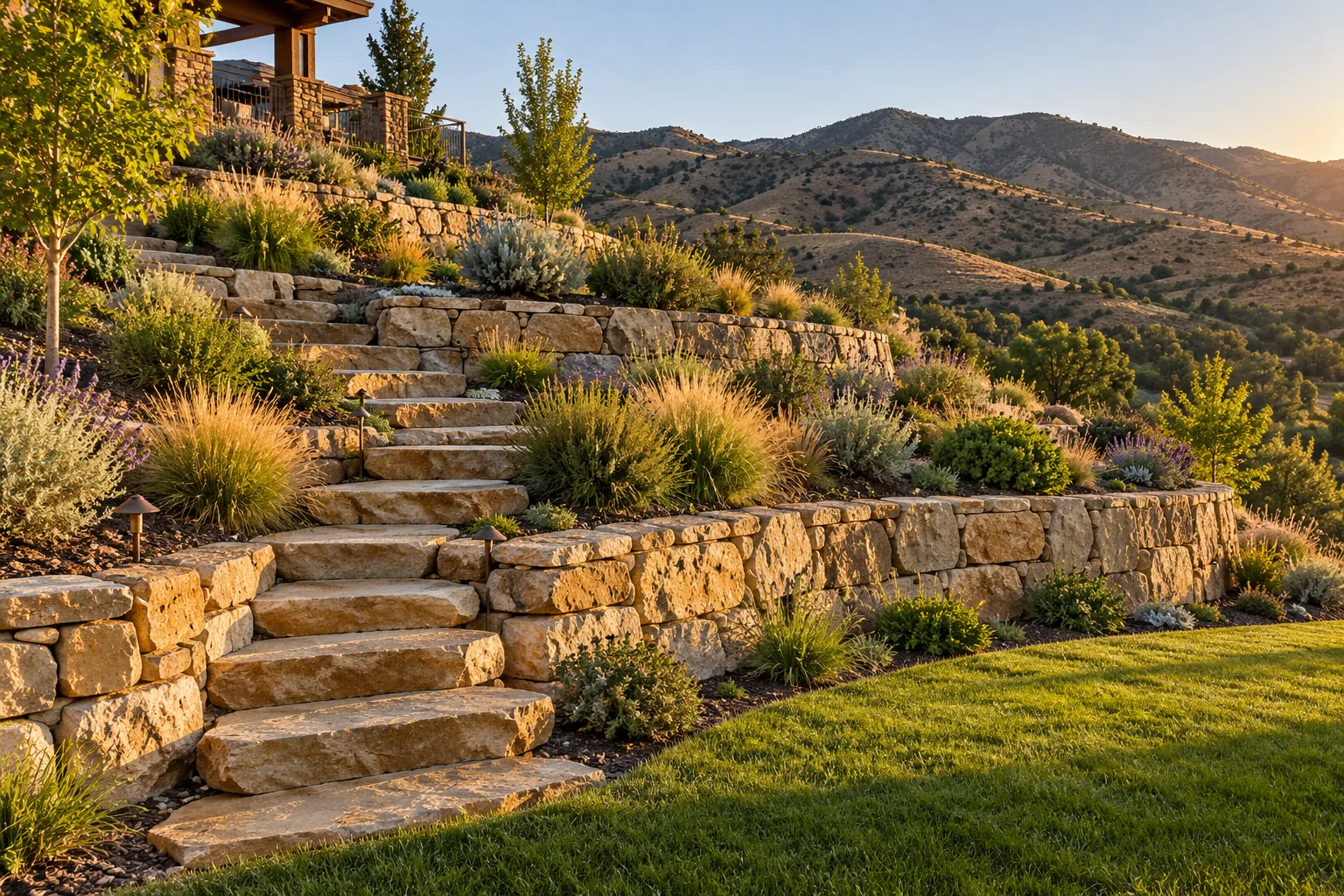
North of Highway 44, the picture flips. In the Eagle Foothills and out toward Avimor along Highway 55, sloped estate lots and view properties call for walls that hold back real soil, often stepped into terraced tiers that turn a hillside into usable yard. Foothills wind dries exposed soil fast, deer browse whatever gets planted in the terraces, and freeze-thaw cycles work on every joint that holds water. Walls up here tend to be taller and closer to homes, driveways, and pools, which is exactly where engineering review or a permit may come into play.
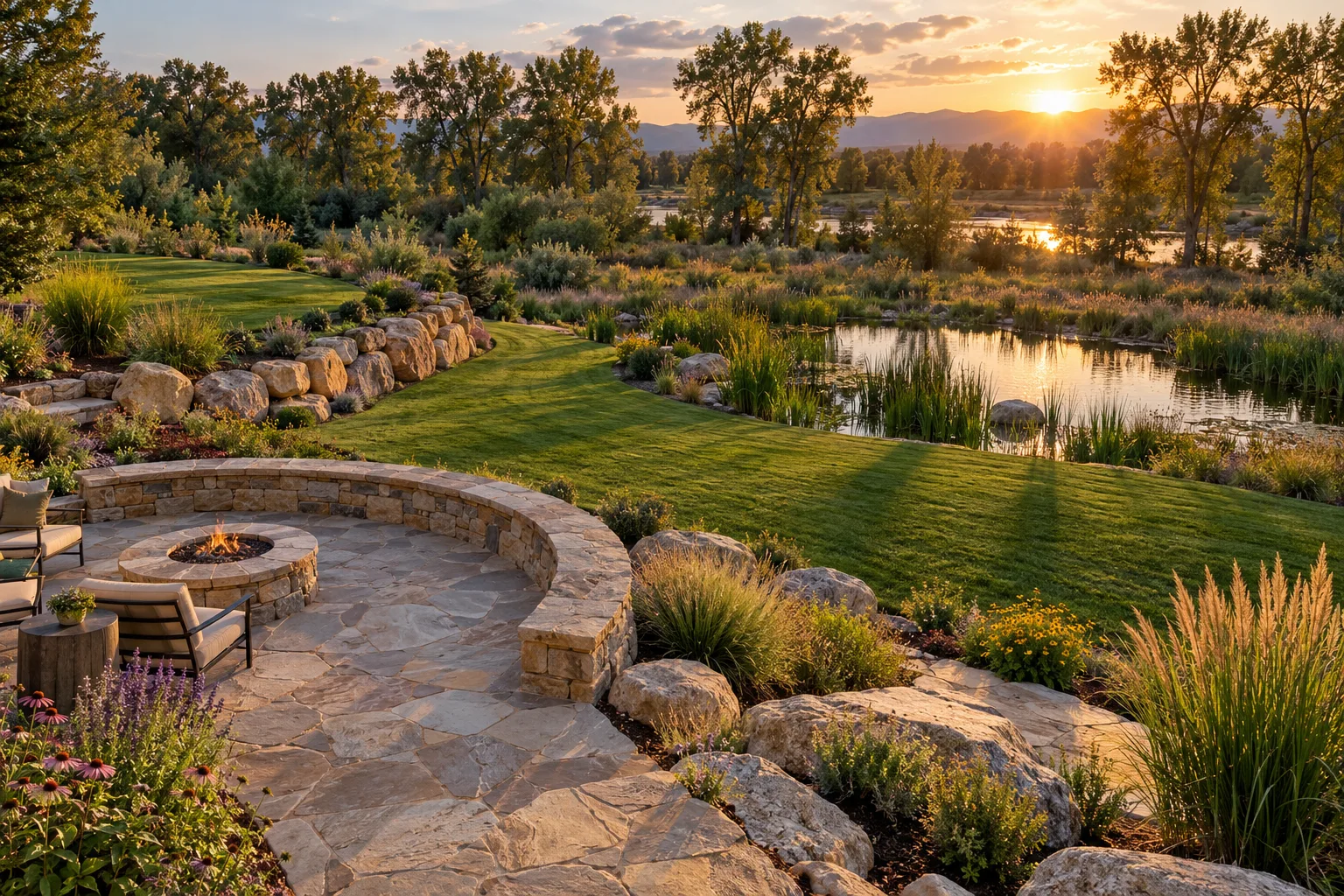
Then there is design review. Banbury, Two Rivers, Legacy, and many other Eagle subdivisions have HOAs that weigh in on wall material, color, height, and how a wall meets a neighbor's lot line. Natural stone and boulders often suit the estate character of Eagle properties, while segmental block gives a cleaner line and tighter curves. Either way, the wall has to work with pressurized irrigation lines, the drainage plan for the rest of the yard, and the planting that will eventually sit above and below it.
How Altavera handles it
We read the site before we choose the wall. That means checking soil and water conditions, locating irrigation lines, and setting base depth, drain pipe, and drainage aggregate for the ground we actually find. Where wall height or nearness to a structure suggests engineering or a permit, we raise it early and confirm it for your specific project.