Eagle, Idaho · Pickleball & Sport Courts

Pickleball & Sport Court Contractor in Eagle, Idaho

From the river bottom to the foothills, a court that plays true starts with the ground beneath it.

Altavera Construction designs and builds pickleball and multi-use sport courts for homeowners in Eagle, Idaho, handling the grading, drainage, slab, surfacing, lines, nets, and fencing as one scope. Eagle lots run from river-bottom ground near the Boise River, where gravelly alluvial soil and higher seasonal groundwater shape the base, to sloped foothills parcels where a level playing surface takes real earthwork. We plan for both before the first stake goes in.

  • Licensed & Insured in Idaho
  • Idaho Contractor License #6971895
  • Woman-Owned Business
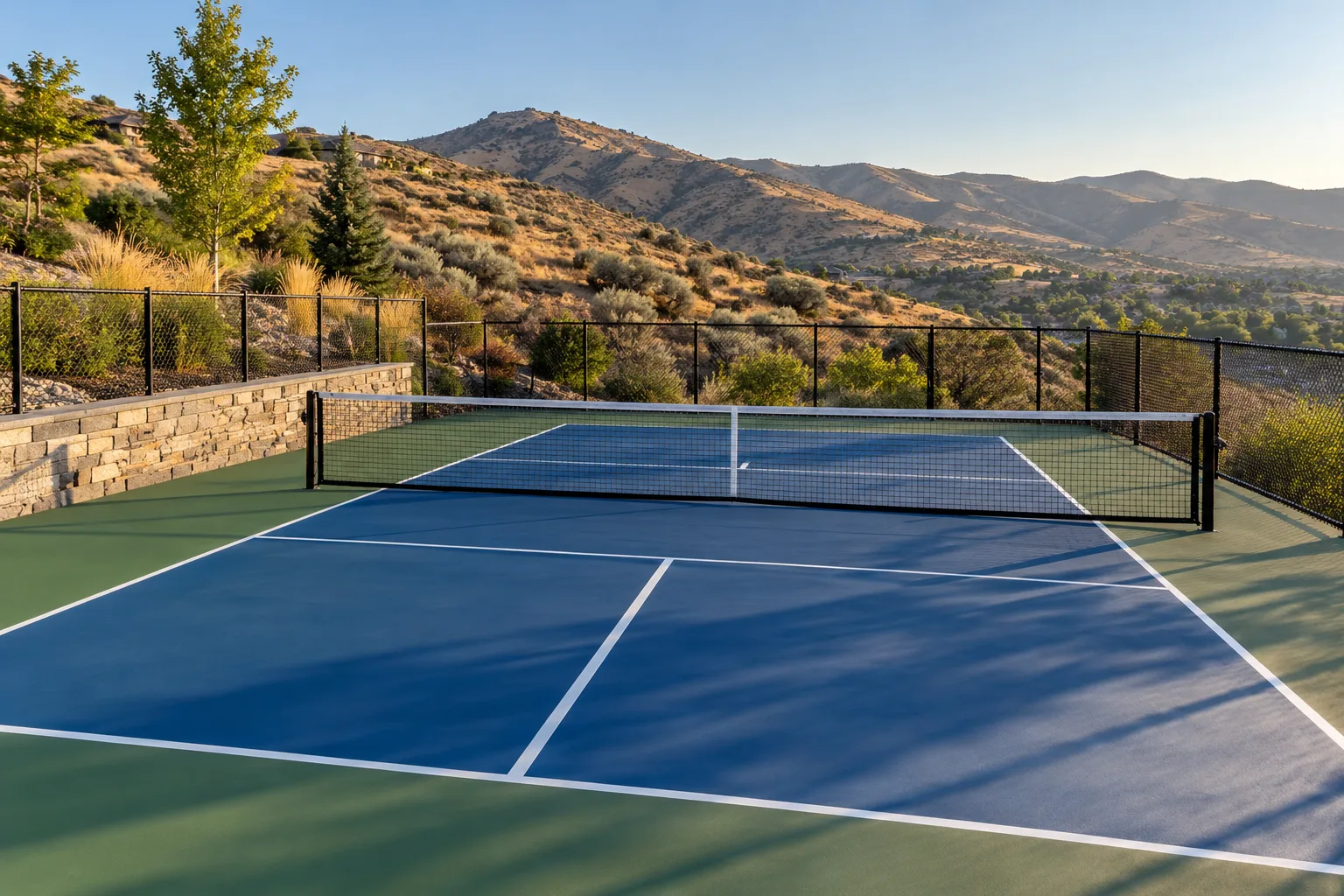
Backyard pickleball court with net and perimeter fencing on a foothills estate lot in Eagle, Idaho
A finished pickleball court set into a terraced foothills lot, with perimeter fencing and a low stone wall on the upslope side.

The Eagle Court Problem

What Eagle Ground Does to a Sport Court and How to Plan Around It

Between the river bottom and the foothills, Eagle properties hand a court builder very different problems, often within a few miles of each other.

A sport court is a large, flat, impermeable surface, and that is exactly why Eagle's ground deserves attention first. Along the Boise River and around Eagle Island, many lots sit on sandy, gravelly, cobbly alluvial soil that drains fast in one corner and holds seasonal groundwater near the surface in another. Cobble has to come out or be worked around so the subgrade compacts evenly, and a high spring water table changes how deep the base should go. Skip that homework and a slab that looked perfect in August can heave or settle after the first hard winter.

North of State Street the picture flips. In the Eagle Foothills and up toward Avimor along Highway 55, estate lots and view properties often slope, so a full-size pickleball court means cutting into the hill, filling the low side, or both. That earthwork may call for a retaining wall on one edge and careful drainage so runoff from above does not sheet across the playing surface. Foothills wind matters as well: it pushes balls around during play and loads tall perimeter fencing, so post depth and fence placement deserve as much thought as the slab.

Then there are the neighbors and the paperwork. Banbury, Two Rivers, Legacy, and many other Eagle subdivisions run design review, and an HOA may want to see court location, fence height and color, and setbacks before approving anything. Pressurized irrigation lines and canal or ditch-company water often cross these lots, so mains and laterals must be located and rerouted where a slab will sit, work that ties into irrigation and drainage in Eagle. Paddle sound carries, so court placement relative to the homes next door is a fair early conversation, along with how equipment will reach a backyard behind a finished house.

How we handle it

We start with a site walk that looks at soil, groundwater signs, slope, irrigation lines, sun angle, and wind. Grading and drainage are set first so water leaves the court on a planned slope. The base is prepared for freeze-thaw, HOA submittals are supported with the details reviewers ask for, and permits are pulled when the scope requires one.

Court Work We Handle

Pickleball & Sport Court Services in Eagle, Idaho

01

Dedicated Pickleball Courts

A full-size court built for pickleball alone, with the playing area and runout space sized so players are not stepping off the slab onto turf or gravel. We set the long axis with Eagle's sun and wind in mind, slope the surface just enough to shed water, and finish with surfacing, painted lines, a net system, and perimeter fencing.

Includes

  • Layout and staking
  • Excavation
  • Compacted base
  • Concrete slab
  • Court surfacing
  • Lines and net

02

Multi-Use Backyard Sport Courts

One slab that handles pickleball games, a basketball half court, and open play for kids. Multi-use courts take more planning up front because line sets overlap and a hoop location changes where the fence and runout belong. We lay the court out around how your household actually plays, then build the whole thing as a single scope.

Includes

  • Use planning
  • Multiple line sets
  • Half court layout
  • Slab and surfacing
  • Net system
  • Perimeter fencing

03

Grading, Drainage & Court Base

The part nobody sees decides how the court ages. On Eagle's river-bottom lots that can mean pulling cobble and accounting for seasonal groundwater; in the foothills it usually means cut, fill, and sometimes a wall, covered on our Eagle retaining wall page. Either way the base is compacted in lifts and water is directed away from the slab.

Includes

  • Site grading
  • Cut and fill
  • Subgrade compaction
  • Aggregate base
  • Drainage slope
  • Drain lines where needed

04

Perimeter Fencing & Nets

Fencing keeps balls on the court and out of the neighbor's yard, the ditch, or the sagebrush below a foothills lot. We size fence height and gate locations to the court, set posts for Eagle's wind exposure, and coordinate fence style and color with HOA design guidelines where they apply.

Includes

  • Fence layout
  • Post setting
  • Fence panels
  • Gates
  • Net posts and nets

05

Court Surfacing & Lines

Once the slab is ready, the playing surface goes on and the lines are measured and painted. We help you choose a surface color that suits the house and any HOA palette, without pushing a single product.

06

Orientation & Site Planning

Before design, we study where the afternoon sun sits, which way foothills wind tends to blow, how equipment will reach the backyard, and where setbacks and easements limit placement.

07

Courtside Finish Work

A court looks finished when the ground around it does. Turf, sod, walkways, or a shaded seating spot can tie the court into the rest of the yard as part of the same build.

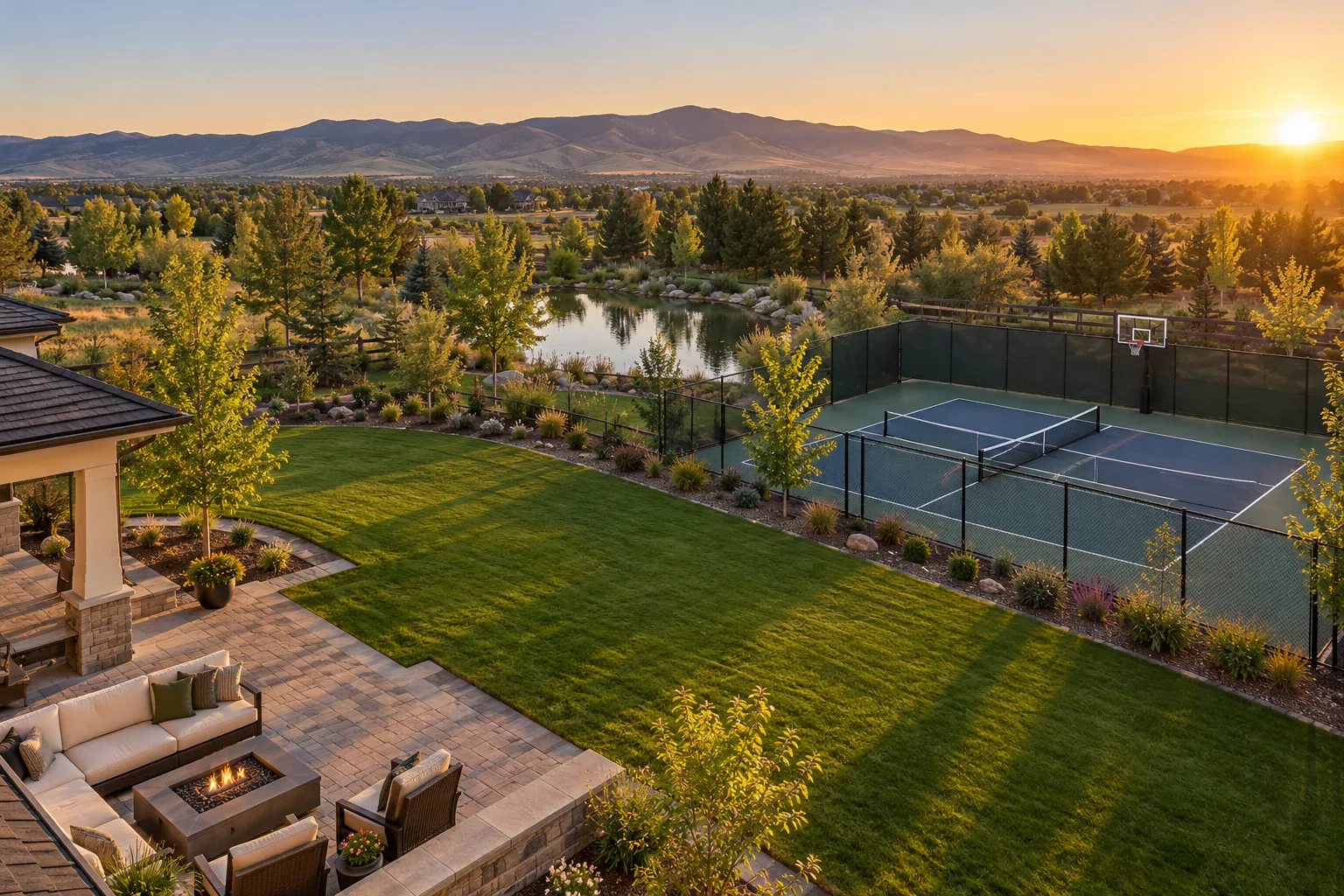
Multi-use backyard sport court with pickleball lines and fencing beside lawn and patio in Eagle, Idaho
A wide view of a large backyard with a fenced multi-use sport court beside a lawn, paver patio, and young shade trees.

Why One Contractor

Why Eagle Homeowners Hand Altavera the Whole Court

A court is only as good as the ground and planning under it, and Eagle properties ask a lot of both.

Here is what changes when one contractor owns the entire build.

  • 01

    One team handles the court from dirt to net.

    Grading, drainage, base, slab, surfacing, lines, nets, and fencing are one scope with one point of contact, so nothing falls into a gap between separate concrete, fence, and surfacing trades.

  • 02

    Water has a plan before concrete is placed.

    Every court is sloped to shed water off the surface, and on Eagle lots with upslope runoff or seasonal groundwater, drainage is built in during the grading phase rather than patched later.

  • 03

    Pipes under the court are dealt with first.

    Pressurized irrigation, ditch-water lines, and other underground runs are located and rerouted before the slab goes in, and sleeves can be placed for future irrigation or utility needs.

  • 04

    HOA review and permits are part of the job.

    We help assemble the details Eagle HOAs ask to see, and when the court needs a permit, we pull it and manage it with the City of Eagle or Ada County.

Who Builds Courts in Eagle

Who We Build Courts For Across Eagle

Foothills and view-lot owners

Estate properties in the Eagle Foothills often have room for a court but not the flat ground to hold one. These owners need earthwork, drainage that catches runoff from upslope, and fencing that stands up to wind, all placed so the court does not block the view that drew them to the lot.

River-bottom homeowners in south Eagle

Homes near the Boise River and Eagle Island sit on alluvial soil that can be sandy, gravelly, or full of cobble, with groundwater that rises seasonally. A court here needs a base prepared for those conditions and drainage that keeps water off the slab through freeze-thaw winters.

HOA neighborhood households

In Banbury, Two Rivers, Legacy, and other Eagle subdivisions with design review, a court has to look like it belongs. We plan placement, fence style, color, and setbacks with the HOA's guidelines in mind and help prepare the details a review committee usually wants to see.

Families planning a multi-use yard

Parents in newer Eagle communities, including Avimor along Highway 55, often want one slab that serves pickleball for adults, a half court for kids, and open play. We fit that court into a larger yard plan alongside turf, patios, and shade so the whole space works together.

From Call to Court

How a Sport Court Build Moves With Altavera

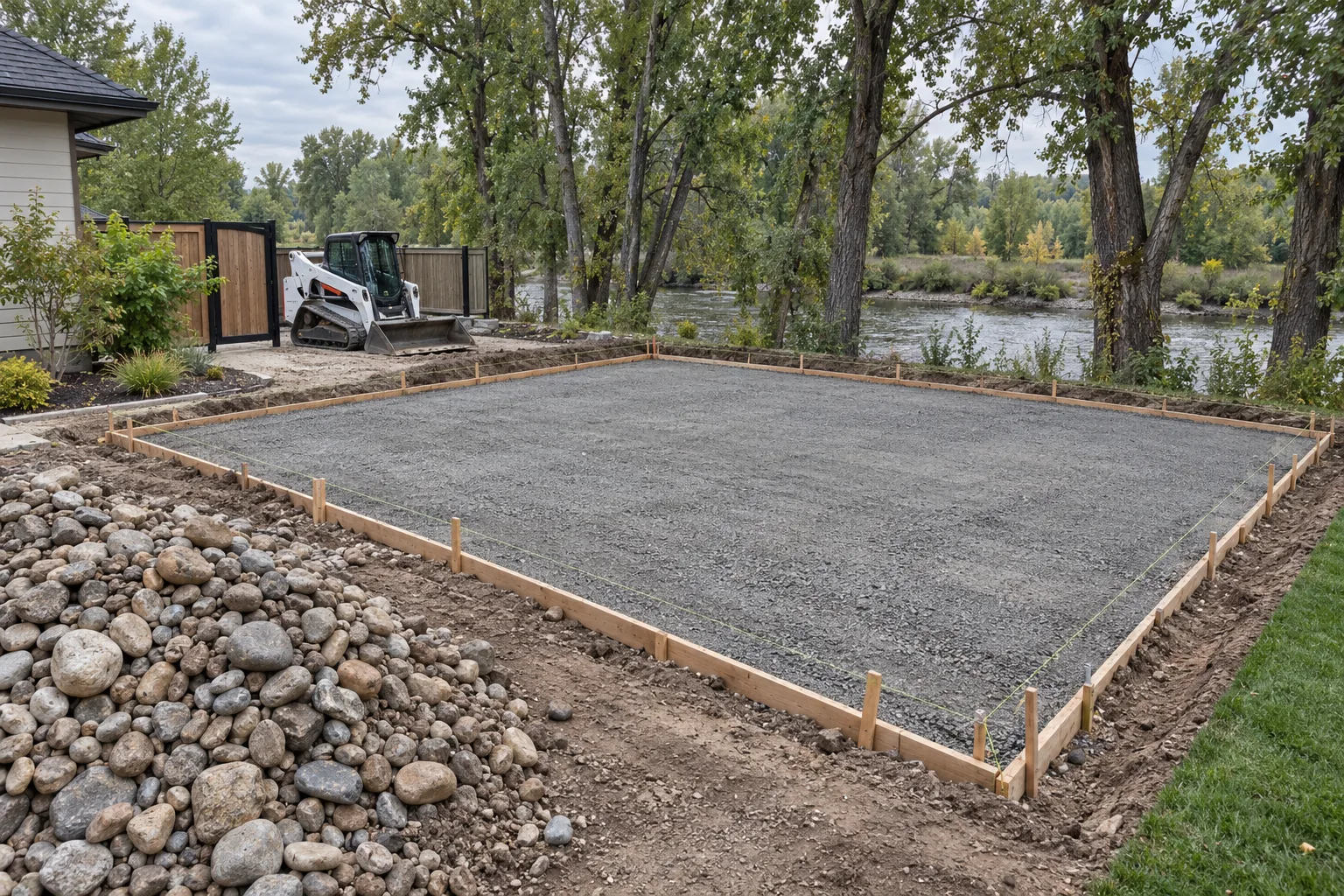
Sport court base preparation with compacted aggregate and slab forms on a river-bottom lot in Eagle, Idaho
A sport court pad under construction, with compacted aggregate base, edge forms, string lines, and removed river cobble piled to one side.
  1. Step 1: Free Phone Consult

    A free 15-minute call to talk through how you want to play, rough court size, and what you already know about your Eagle lot, HOA, and access.

  2. Step 2: Fit Confirmation

    An estimator reviews what you shared and confirms the court fits our scope before anyone drives out to see the property.

  3. Step 3: On-Site Estimate

    We walk the yard to check slope, soil, groundwater signs, irrigation lines, sun angle, wind, setbacks, and the path equipment will take to reach the court.

  4. Step 4: Written Proposal

    You receive a written proposal covering grading, drainage, base, slab, surfacing, lines, nets, and fencing, plus any HOA or permit steps the project requires.

  5. Step 5: Deposit and Scheduling

    Once the proposal is signed, a deposit reserves your start on the schedule while we prepare materials, HOA submittals, and any permit the court needs.

  6. Step 6: Build in Sequence

    Drainage and grading go first, then underground work like irrigation reroutes and sleeves, then the base, slab, surfacing, lines, nets, and fencing, with landscaping and finish work last.

  7. Step 7: Final Walkthrough

    We walk the finished court with you, check lines, net, gates, and drainage, and resolve any punch list items before the project closes.

Where We Build Courts

Sport Court Construction Across Eagle and the Treasure Valley

Altavera builds pickleball and multi-use sport courts throughout Eagle, including Downtown Eagle, Banbury, Two Rivers, Legacy, the Eagle Foothills, the State Street and Highway 44 corridor, and Avimor to the north. We also build courts in nearby Treasure Valley cities such as Star, Boise, Meridian, Middleton, and Garden City.

  • Eagle
  • Downtown Eagle
  • Banbury
  • Two Rivers
  • Legacy
  • Eagle Foothills
  • Avimor
  • Star
  • Boise
  • Meridian

If your court requires a permit, Altavera pulls it and handles it with the City of Eagle's building and planning offices, or with Ada County when the lot is unincorporated.

Fencing a court is often part of a bigger perimeter plan, so see fence installation in Eagle, or compare sport courts in Star and sport courts in Boise.

FAQ

Pickleball & Sport Court FAQs: Eagle, Idaho

Who builds backyard pickleball courts in Eagle, Idaho?

Altavera Construction builds complete backyard pickleball and sport courts in Eagle, from grading and drainage through the slab, surfacing, lines, nets, and perimeter fencing. One team manages the whole project, so you are not lining up separate concrete, fencing, and surfacing companies. We are licensed and insured in Idaho under Contractor License #6971895 and serve Eagle along with the rest of Ada, Canyon, and Gem counties.

How much does a pickleball court cost in Eagle?

Cost depends on your site, so we price every court after an on-site visit rather than quoting a number over the phone. Court size, how much cut and fill a foothills slope needs, cobble or groundwater on a river-bottom lot, fence height, multi-use features, and equipment access all move the budget. You receive a written proposal for the full scope, and third-party financing options are available.

Does a sport court in Eagle need a permit or HOA approval?

It depends on the scope and the property, and when a permit is needed, Altavera pulls it and manages it with the City of Eagle's building and planning offices, or with Ada County for unincorporated lots. HOA approval is a separate track. Many Eagle subdivisions, including Banbury, Legacy, and Two Rivers, have design review, so we help gather the site plan, fence details, and setbacks reviewers typically ask to see.

Can you build a pickleball court on a sloped lot in the Eagle Foothills?

Yes, sloped foothills lots can hold a court, but the earthwork comes first. We study the grade to decide between cutting into the hill, building up the low side, or a combination, and a retaining wall may be needed along one edge. Drainage is planned so runoff from the slope above is caught and routed around the slab instead of across it, and fencing is set for the wind these view lots get.

How does river-bottom soil in south Eagle affect a sport court?

It mostly changes how the base is built. Lots near the Boise River and Eagle Island can have sandy, gravelly, cobbly alluvial soil and higher seasonal groundwater. Large cobble may need to come out so the subgrade compacts evenly, and groundwater signs influence base depth and drainage choices. We assess these conditions during the site visit so the slab is prepared for freeze-thaw instead of surprised by it.

Which direction should a backyard pickleball court face in Eagle, given sun and foothills wind?

A long axis running roughly north to south is the usual starting point, because it keeps low morning and evening sun out of players' eyes. On Eagle lots the final angle also weighs foothills wind, views, the house, setbacks, and where neighboring homes sit. We look at all of it during the site visit and recommend the orientation that plays best on your specific property.

Will a new court interfere with pressurized irrigation or ditch water on my Eagle property?

It can if lines are not found first, which is why irrigation and utility locating happens before excavation. Many Eagle subdivisions run pressurized irrigation, and some properties take canal or ditch-company water. Lines under the planned slab are rerouted, and sleeves can be placed for future runs. We also plan court drainage so it does not empty into a ditch or pond in a way that creates new problems.

Can one court work for both pickleball and basketball?

Yes, a multi-use court can carry pickleball lines and a basketball half court on the same slab. Planning matters more here: overlapping line sets need clear color choices, a hoop location changes where runout space and fencing belong, and the slab size has to suit both uses. We lay the court out around how your household plays before anything is formed.

Start Your Eagle Project

Ready to Put a Court Where the Weeds Are?

Request a quote, tell us how your household wants to play, and we will walk your Eagle property to read the slope, soil, water, and wind before writing a proposal for the complete court.

Prefer to talk? Call 208-314-9967 or try our instant quote.

Licensed & Insured · Idaho Contractor License #6971895 · Serving Eagle & the Treasure Valley

Altavera Construction logo

We elevate outdoor spaces with professional planning, expert execution, and quality craftsmanship — because your outdoor space is an extension of your home, not an afterthought.

Elevated standards. Real integrity.

Idaho Contractor License ID #6971895  ·  Women-Owned Business

CONTACT

FOLLOW US

© Copyright 2026. Altavera Construction. All Rights Reserved.

3313 W Cherry Lane Suite 1053 Meridian, ID 83642