Why Eagle Patios Settle
What Eagle Ground Does to a Patio and How We Build Around It
In Eagle, the soil under a patio can change from one end of town to the other, and so can the reasons a patio fails.
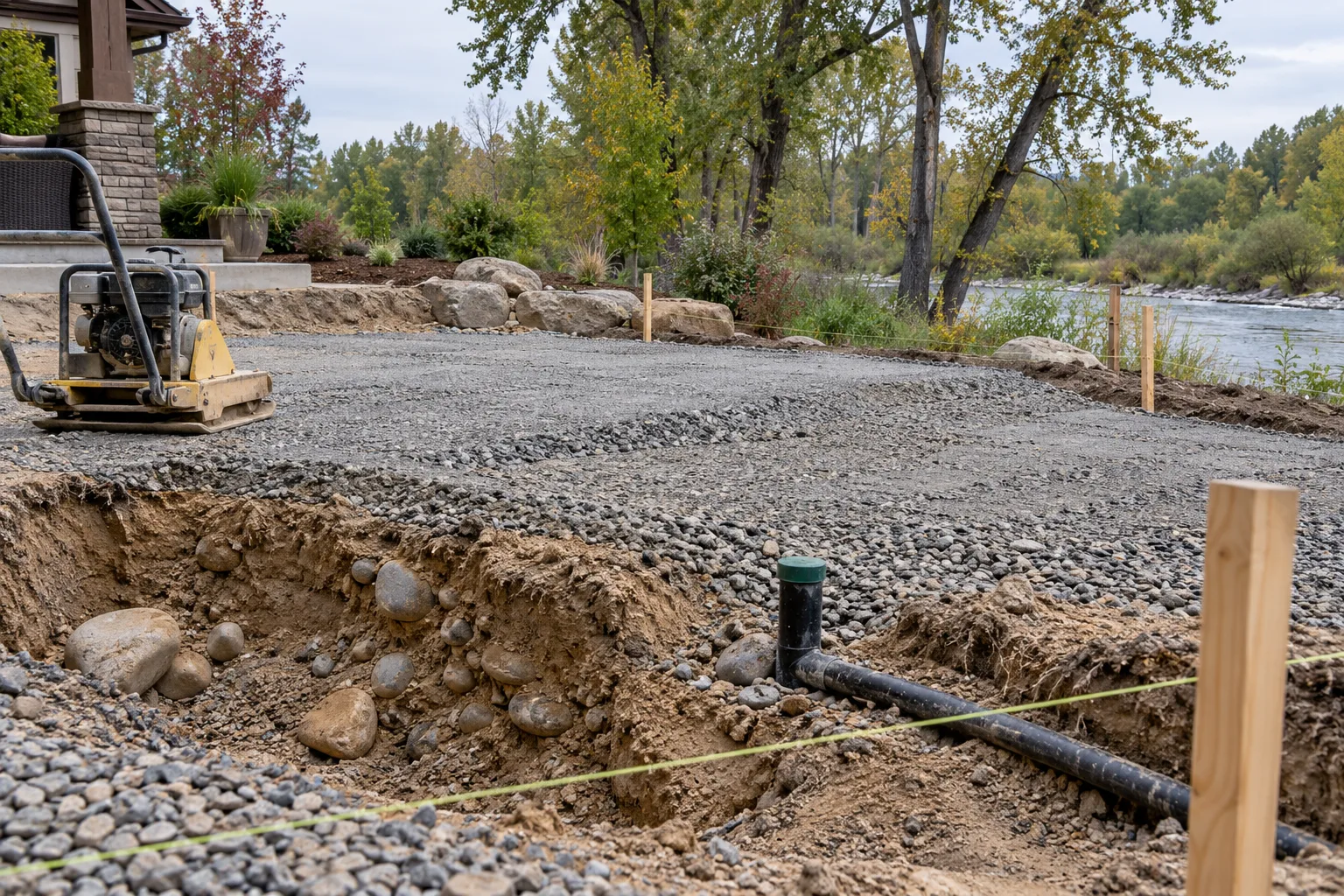
South of State Street, much of Eagle sits on ground shaped by the Boise River. Dig into a yard in Two Rivers or near Eagle Island and you may find sand, rounded gravel, and river cobble close to the surface, sometimes with a seasonal water table that climbs once canal and pressurized irrigation water starts flowing. That mix drains quickly in one spot and holds moisture a few feet away. A paver field laid over uneven subgrade like that tends to settle in patches, and the low spots reveal themselves as puddles after the first round of spring freeze and thaw.
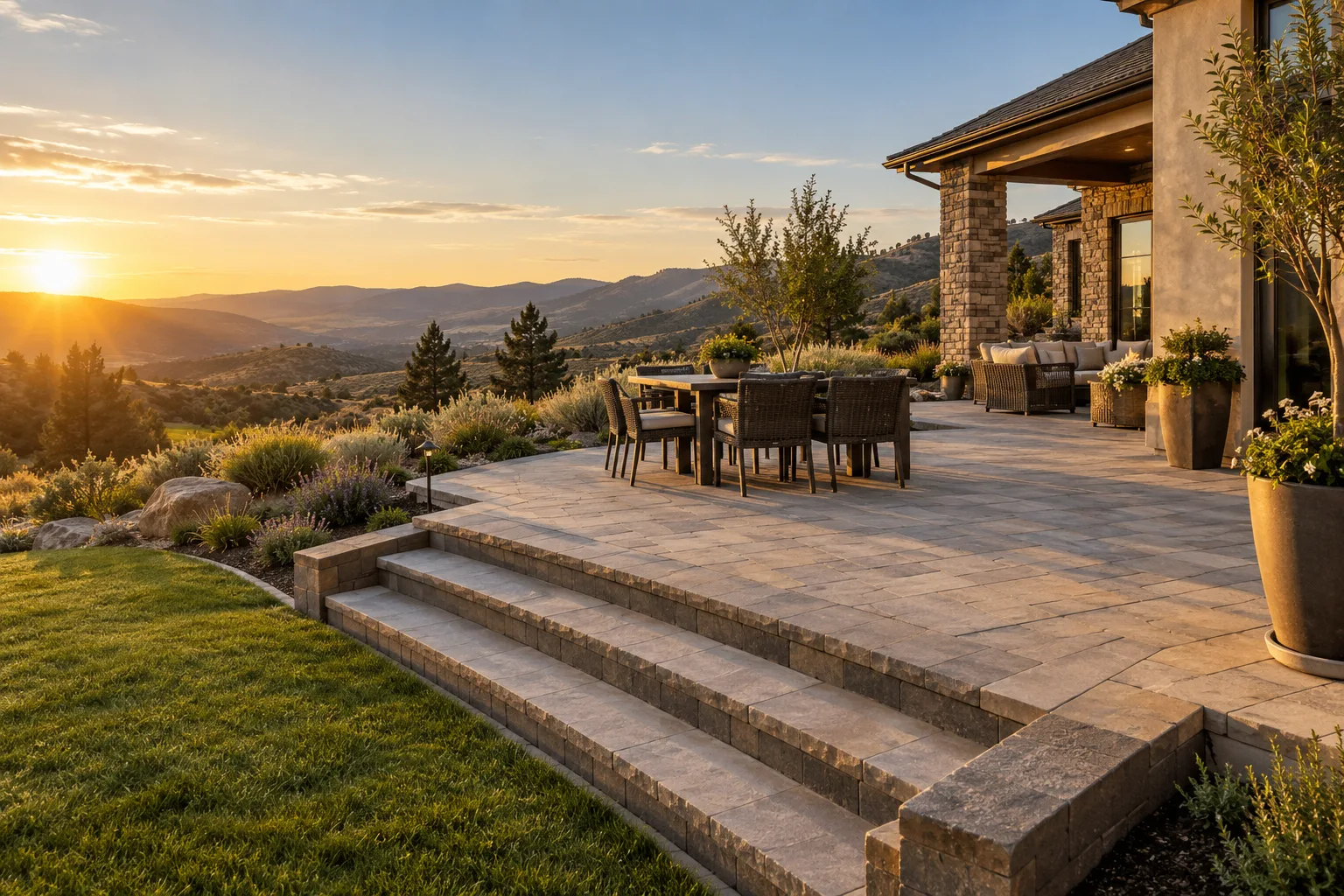
North of town, up into the Eagle Foothills and out toward Avimor along Highway 55, the challenge flips. Estate and view lots there often fall away from the house, so a patio that looks level on paper needs cut, fill, steps, or a retaining wall to actually function. Runoff from the slope above wants to cross the patio on its way down. Wind off the foothills can scour loose joint sand, and open native ground with deer moving through means borders and edges have to be detailed to sit naturally against the hillside.
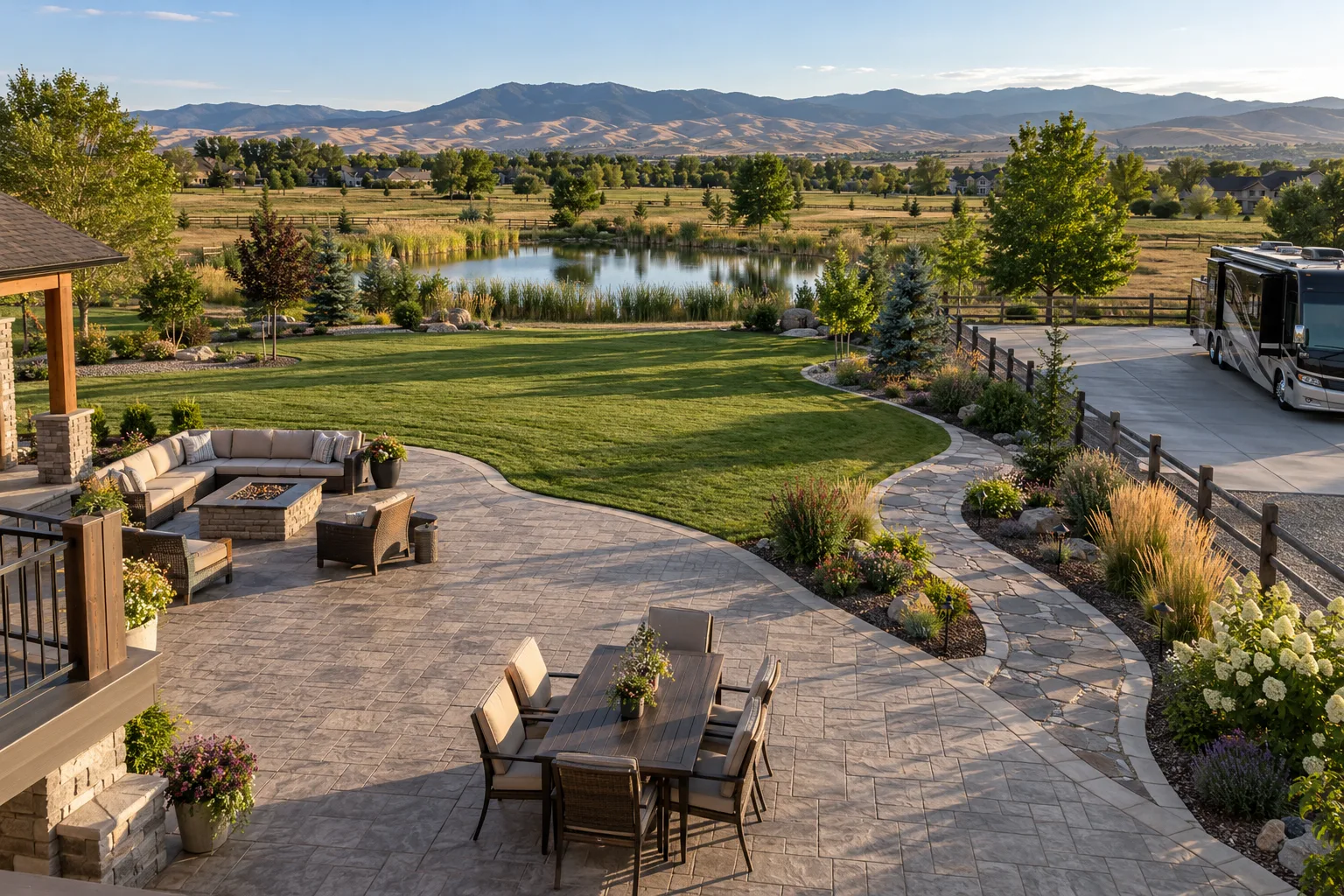
Then there is design review. Many Eagle subdivisions, from established neighborhoods like Banbury and Legacy to newer communities, have HOAs that weigh in on exterior materials, colors, and how hardscape relates to the street and neighboring lots. Larger custom homes also carry a material palette that a new patio should complement, whether that is stone veneer, stucco tones, or the color of the driveway. Settling the layout, the paver or stone selection, and the drainage approach before anything is submitted keeps the approval moving and avoids redesign once the yard is already open.
How Altavera handles it
Every Eagle patio starts with a site walk that looks at soil, slope, irrigation lines, and where water goes. Drainage and grading are set first, irrigation sleeves and other underground work go in second, then the base is excavated, compacted in lifts, and checked for slope before pavers, stone, or concrete go down.