Where Eagle Land Meets the Green
The Surface Follows the Decisions Underneath
A backyard green in Eagle needs a site plan that accounts for both putting and the way water moves through the property.
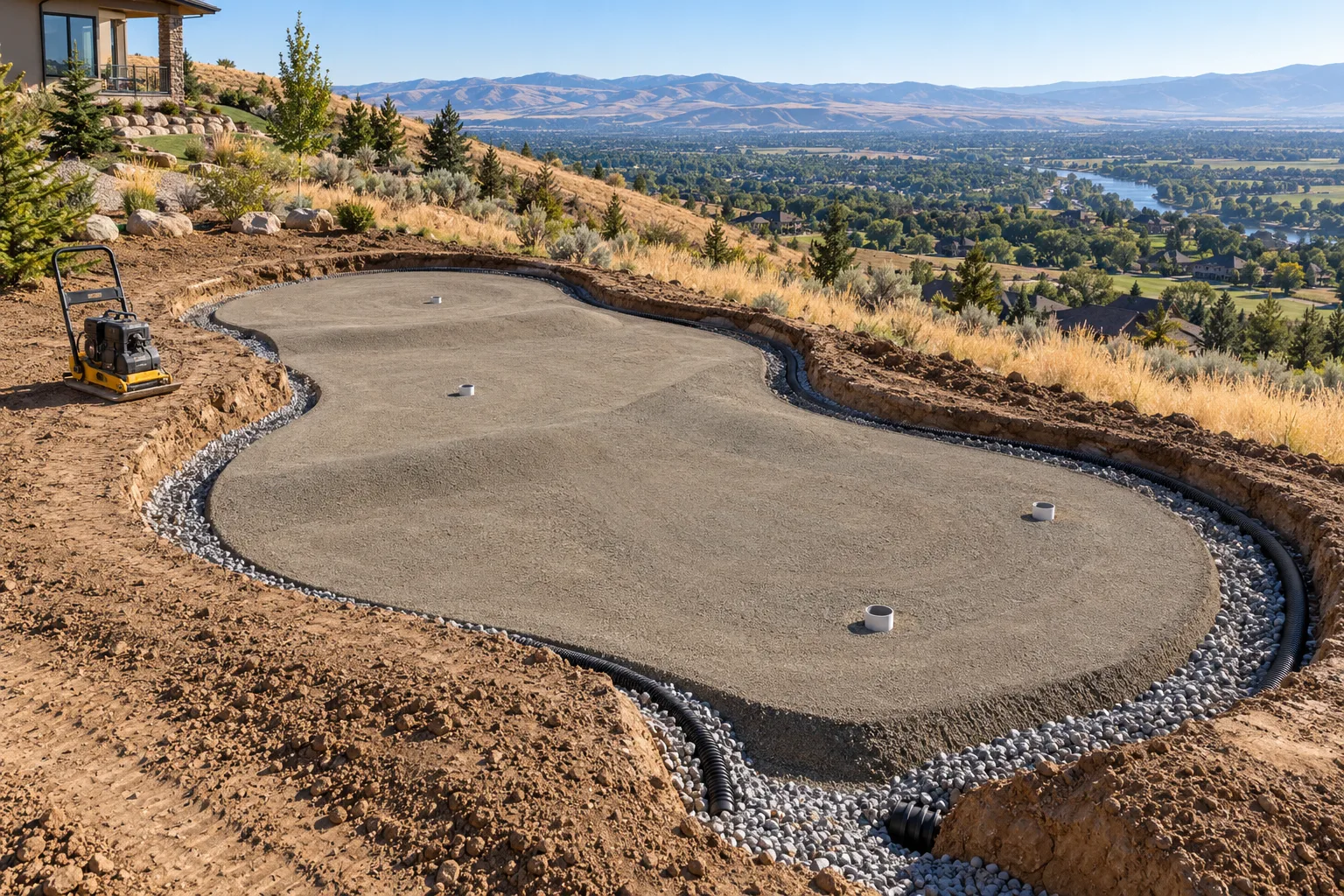
Near the Boise River and Eagle Island, river-bottom ground can contain sand, gravel, and cobbles, with higher seasonal groundwater on some properties. Those conditions deserve a closer look before choosing the green's elevation or drainage approach. A surface that looks level from the patio still needs a reliable path for water beneath and around it. Altavera evaluates the proposed location, excavation conditions, and surrounding grades, then plans a firm, compacted, drainable base to resist settling and movement during Eagle's freeze-thaw winters.
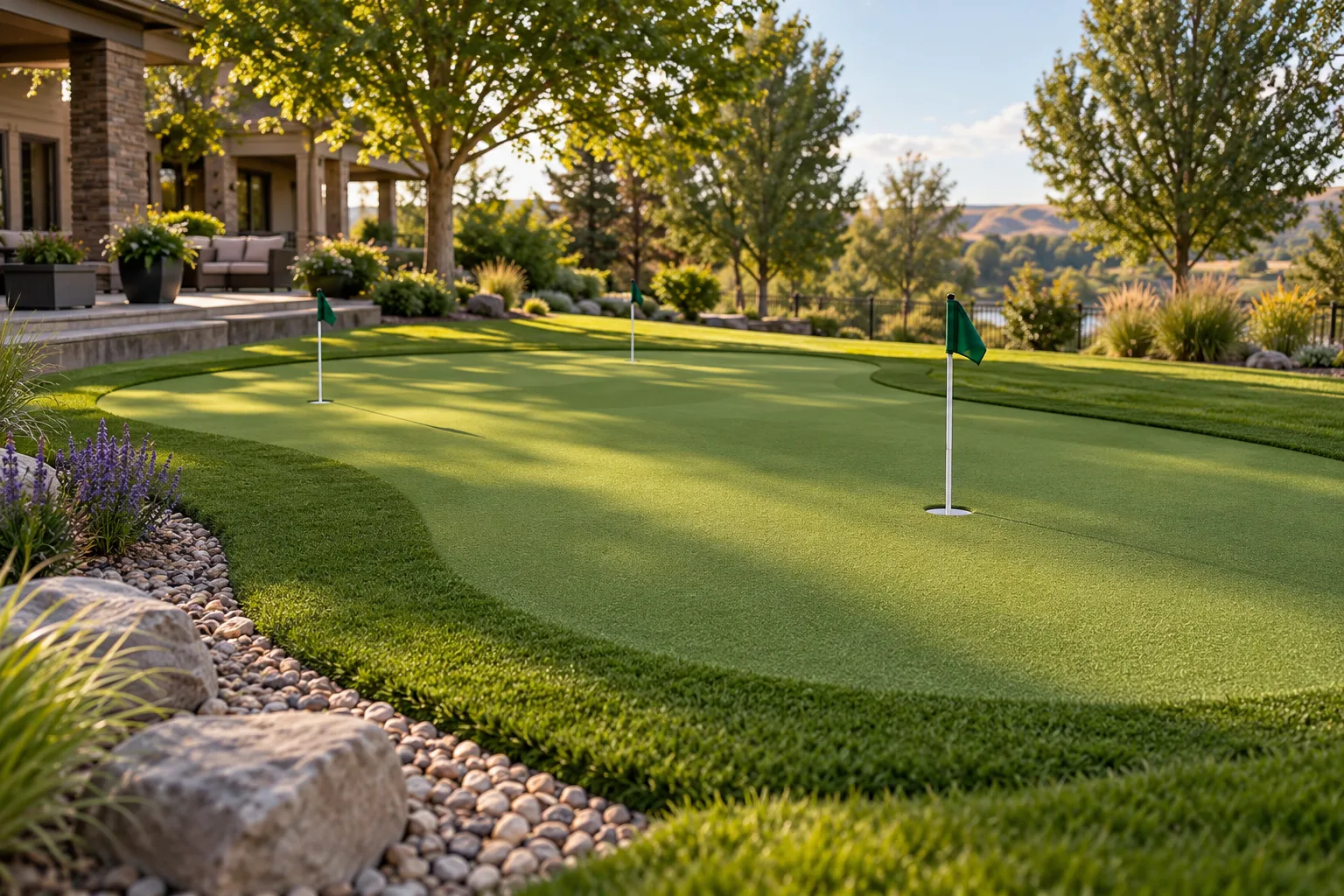
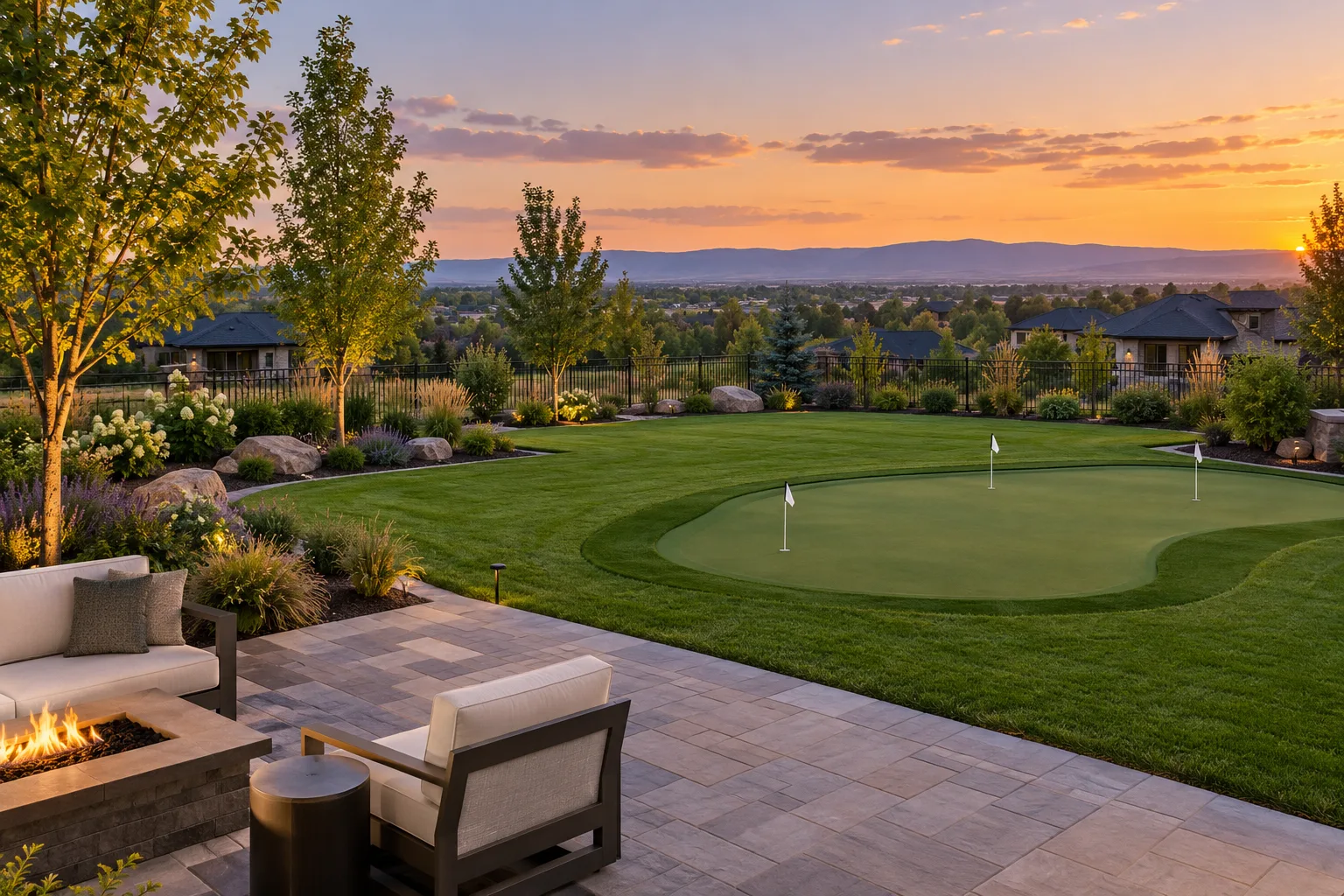
On Eagle Foothills estate lots, the available view may point toward a location that also catches wind or receives runoff from higher ground. Mature trees introduce another set of choices: shade, falling debris, and room around roots. Larger yards offer flexibility, but the green still needs a practical relationship to the patio, walking routes, and existing irrigation. We consider sprinkler heads and overspray at the edges, then shape breaks that give putts variety while allowing surface water to leave without collecting in low pockets.
In communities such as Two Rivers, Banbury, and Legacy, HOA design review may influence the green's placement, visible edges, and relationship to the rest of the landscape. We discuss those requirements alongside equipment access and the space needed for excavation. A defined collar can separate the putting surface from planting beds, rock, lawn, or paving. When the plan includes a larger synthetic yard, artificial turf installation in Eagle can be coordinated with the green while preserving a distinct putting surface and fringe.
Start With the Site
Altavera connects green design with grading, drainage, and irrigation planning. We assess the location before setting contours, cup positions, or finished edges. That keeps the putting layout tied to the property's actual conditions, including runoff, seasonal water, equipment access, and transitions into the surrounding landscape.