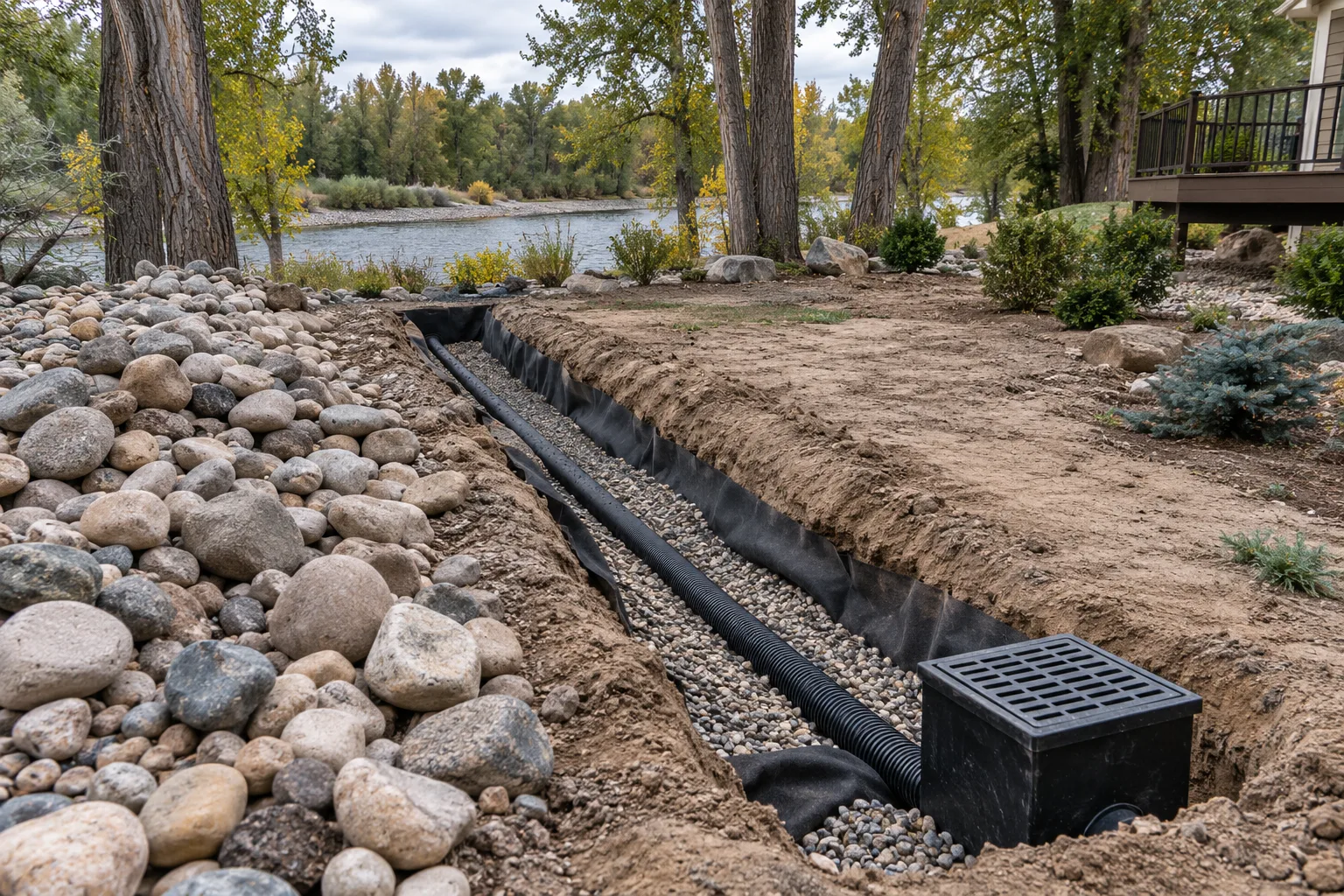
Along the south side of Eagle, near the Boise River and Eagle Island, many lots sit on alluvial ground: sand, gravel, and river cobble left behind by old channels. That soil drains quickly at the surface, so spray zones dry out fast in July and drip lines need careful emitter placement. The catch is groundwater. In some river-bottom areas the seasonal water table rises, and a low corner of the yard can stay soggy no matter how well the sprinklers are tuned. Trenching through cobble also takes more effort than digging in loam.
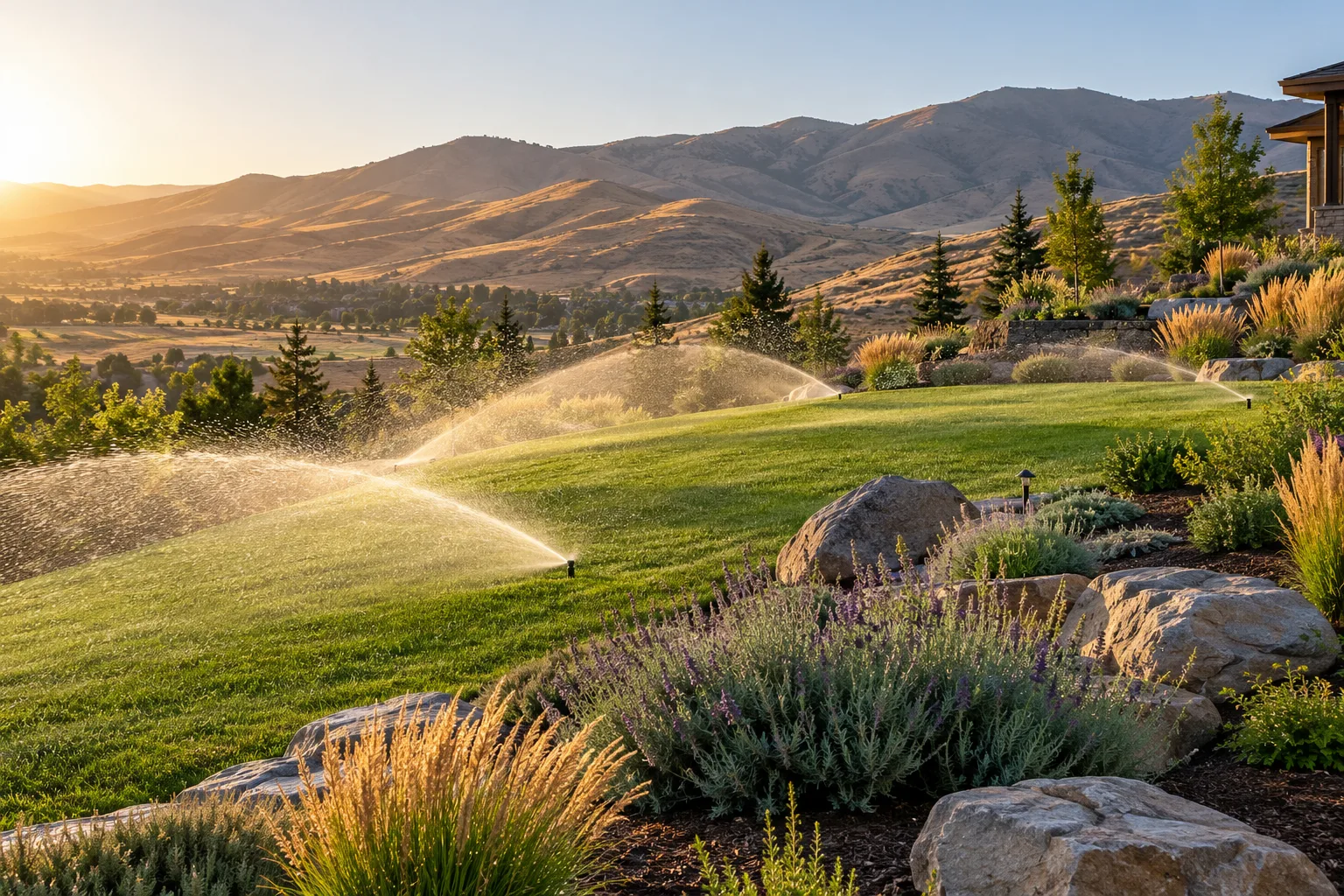
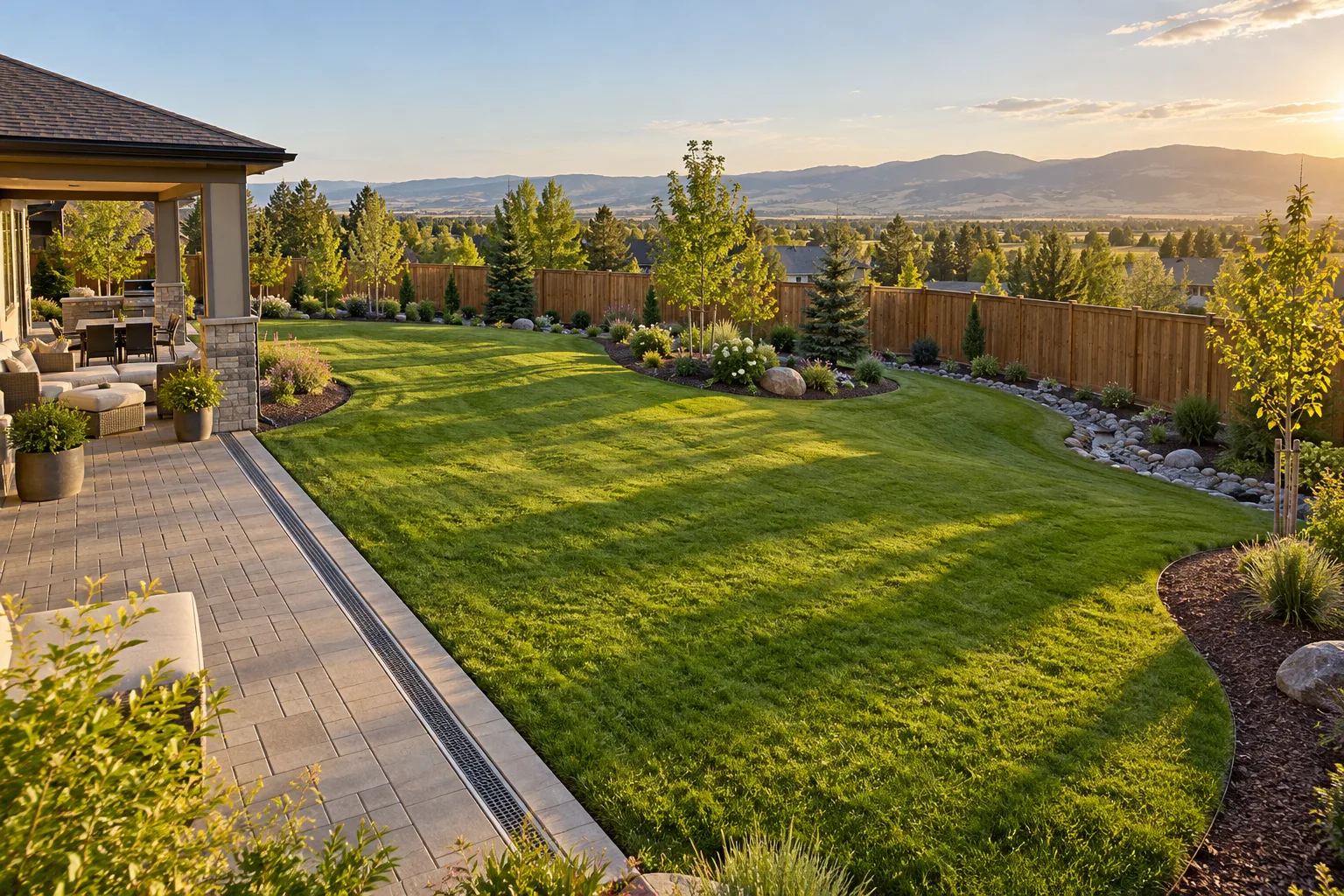
North of State Street and Highway 44, the picture flips. Estate lots in the Eagle Foothills and out toward Avimor sit on slopes, and water moves downhill fast after a summer storm or a spring melt. Without swales, catch basins, or a regraded yard, runoff cuts channels through beds, collects against patios, and pools at the bottom of the lot. Sprinkler layout matters here too: rotor heads on a hillside can push water downhill before it soaks in, and foothills wind carries fine spray onto driveways and fences.
Then there is the water itself. Many Eagle subdivisions run on pressurized irrigation, often supplied from canal or ditch systems, and that water can carry sediment that clogs drip emitters without good filtration. The supply is seasonal, and freeze-thaw winters punish lines that cannot drain or be blown out. HOA design review adds another layer when grading changes or visible drain outlets are involved. If planting is part of the plan, coordinate it early with landscaping and sod in Eagle so the zones match what goes in the ground.
How we handle it
We start with the dirt and the water source. On the site visit we look at soil type, slope, low spots, downspouts, and how your pressurized or ditch-fed supply connects. Drainage and grading are planned first, sleeves are set before any hardscape, and irrigation zones are laid out by plant type, sun exposure, and slope.