The Meridian Water Problem
Why Flat Meridian Lots Hold Water and Sprinklers Struggle
In Meridian, a yard's water problems usually start with the way the subdivision was graded, not with the sprinkler heads.
Most Meridian subdivisions sit on what used to be dairy pasture and row-crop fields. When builders convert that ground, they strip the topsoil, push in fill, compact the pad with heavy equipment, and grade the lot nearly flat to match the street and the homes on either side. The result looks tidy on closing day, but there is very little slope left to move water. Add tight side yards and shared fences on three sides, and one neighbor's downspout or overspray can end up pooling in your yard, or yours in theirs.
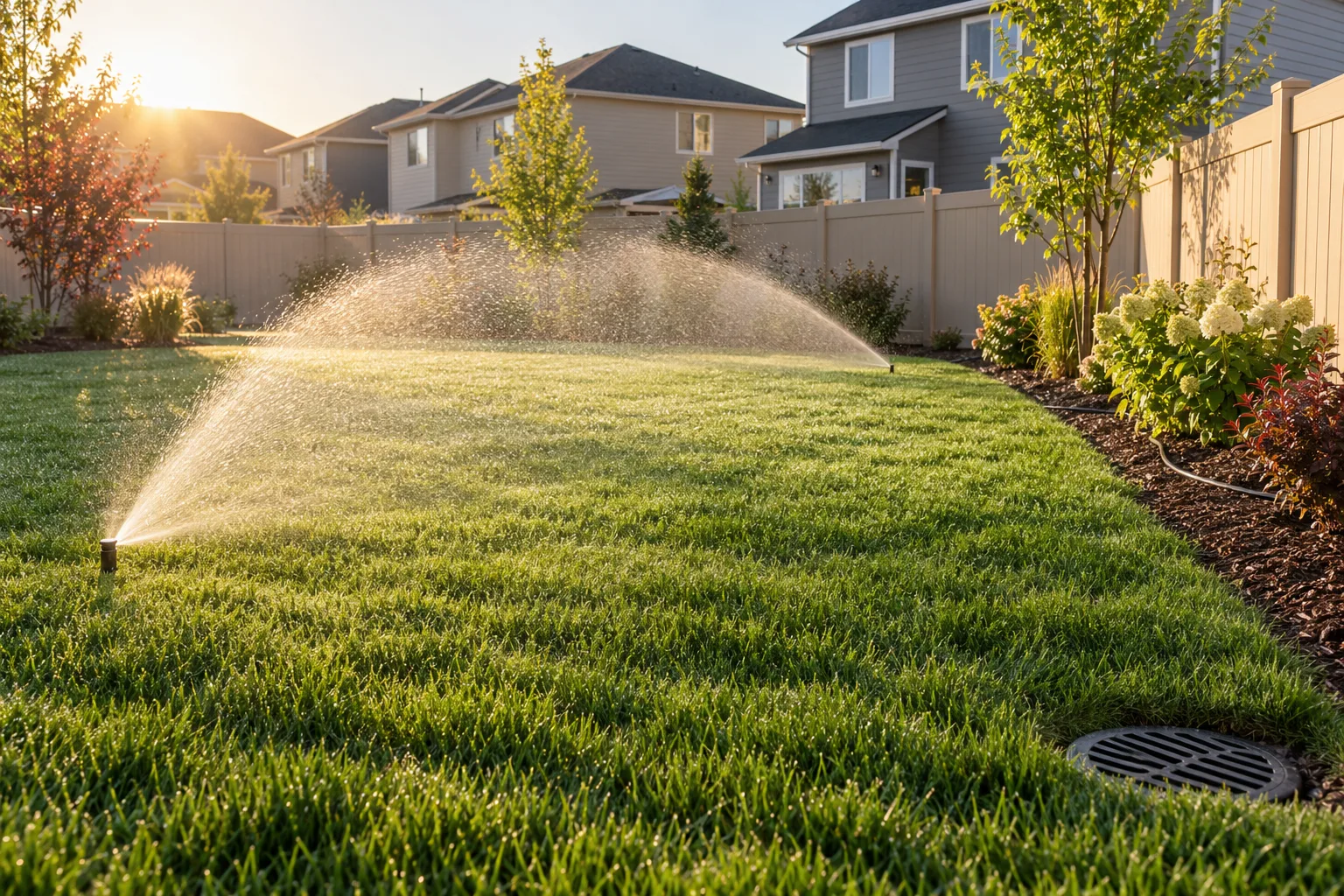
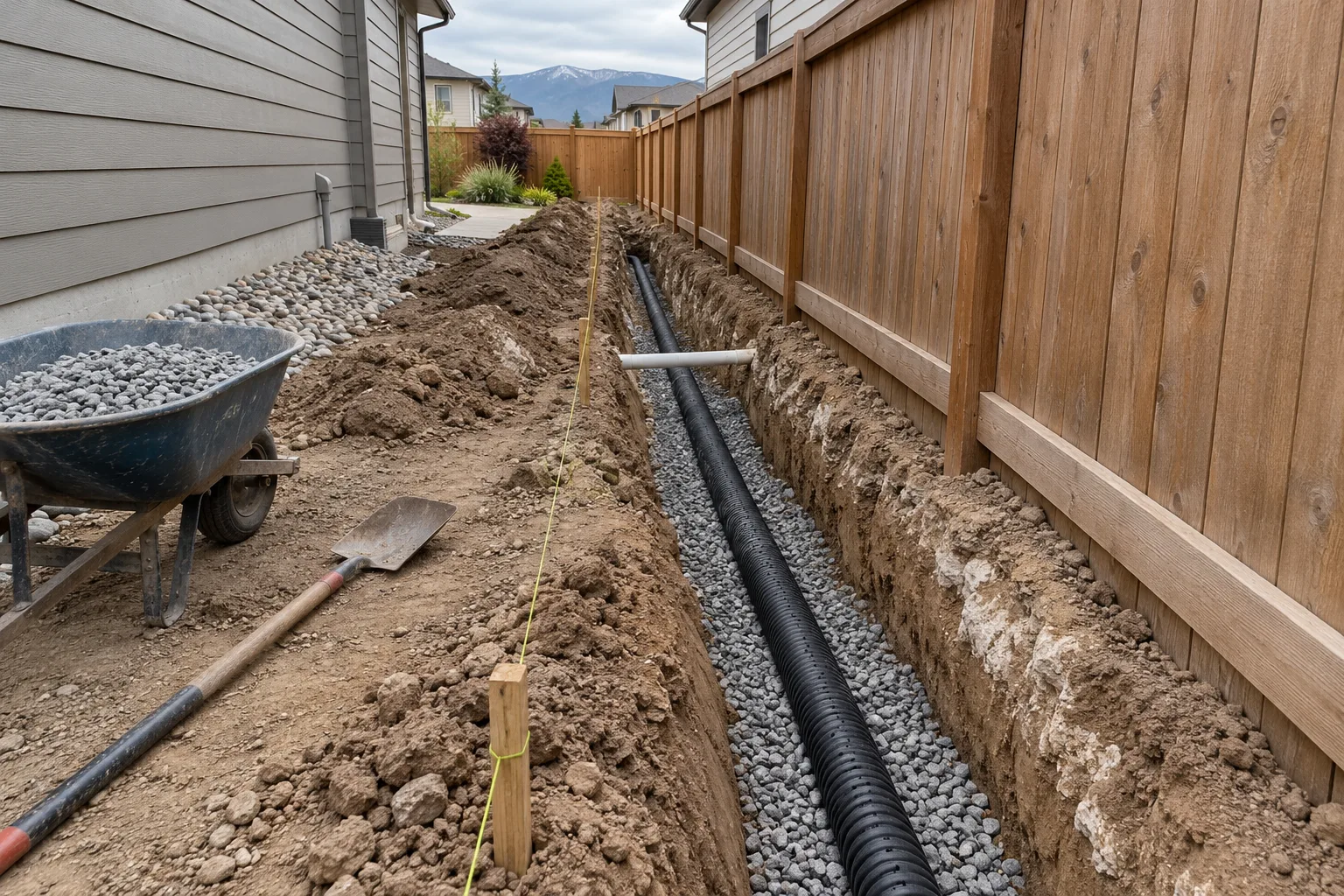
Below the sod, the soil rarely behaves like the farmland it once was. Compacted subsoil and builder fill slow infiltration, and scattered pockets of hardpan or caliche can stop water a short way down. Old farm silt soaks up water well in some spots and crusts over in others. That is why a lawn can stay soggy along one fence while the opposite corner browns out, even on the same controller schedule. Spray heads running on top of that compaction tend to shed water before it soaks in, and a French drain dug into hardpan needs somewhere real to discharge.
Water supply adds its own wrinkle. Many Meridian homes irrigate with pressurized canal water delivered through your irrigation district or HOA system, which runs seasonally and shuts off for winter. That water carries more sediment than city drinking water, so filters, valve choice, and drip design matter. Newer areas like Paramount, Bridgetower, and the Ten Mile area often route front-yard changes through HOA architectural review, while older ranch homes near downtown may be running aging systems with no sleeves under the walks. If a bigger rebuild is on the table, a full backyard renovation in Meridian lets the water plan lead.
How Altavera handles it
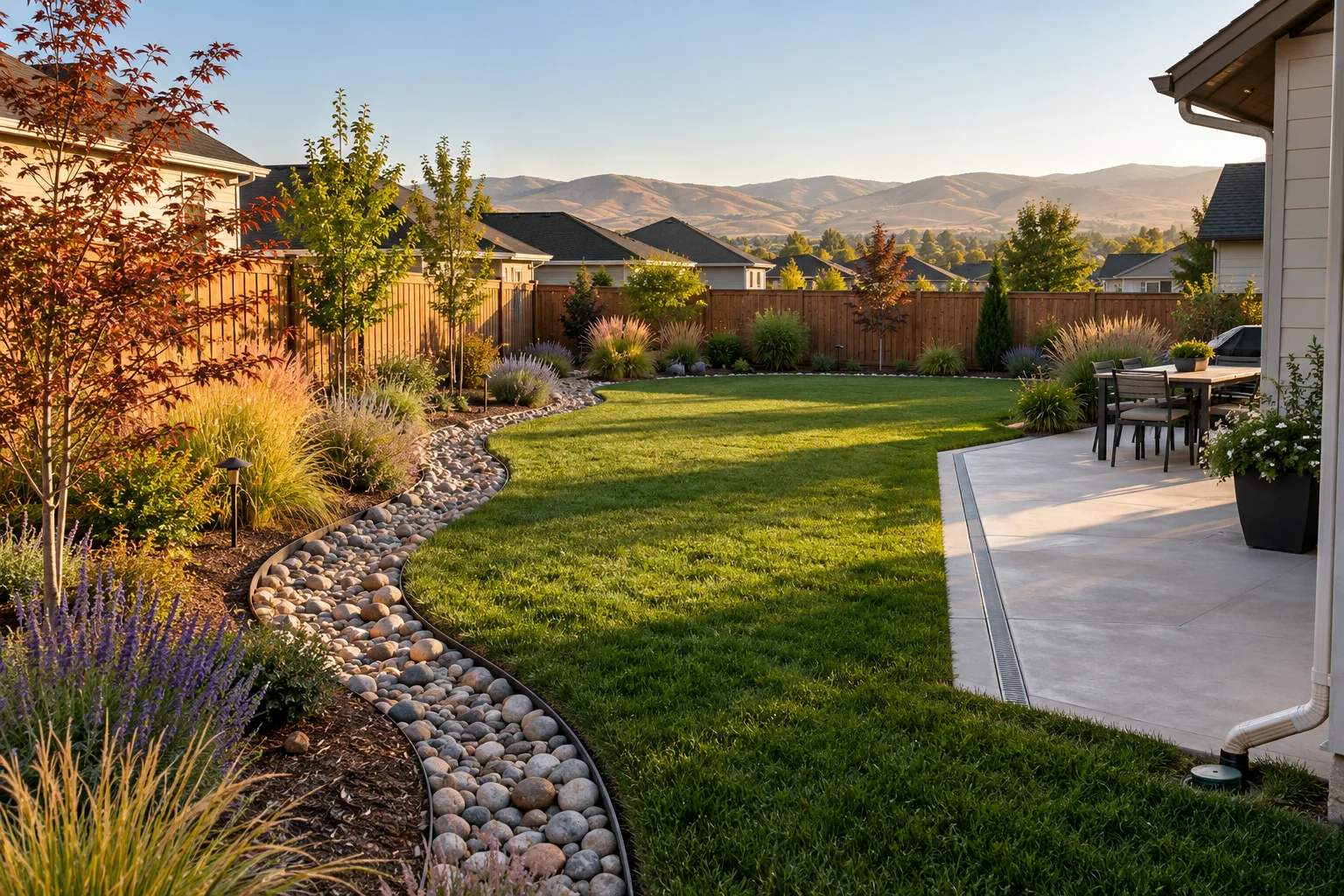
We shoot grades across the whole lot, including where your neighbors' yards and downspouts drain, before designing anything. Drainage and regrading go in first, then mainlines, sleeves, and zones sized for your district or HOA water. Filters and controllers are set up for seasonal canal water, and we plan around HOA review where it applies.