The Meridian Backyard Court Challenge
Why a Court on a Meridian Lot Takes More Than a Level Slab
Flat ground, close neighbors, and silty former farmland make a backyard court in Meridian a grading and drainage project first and a game surface second.
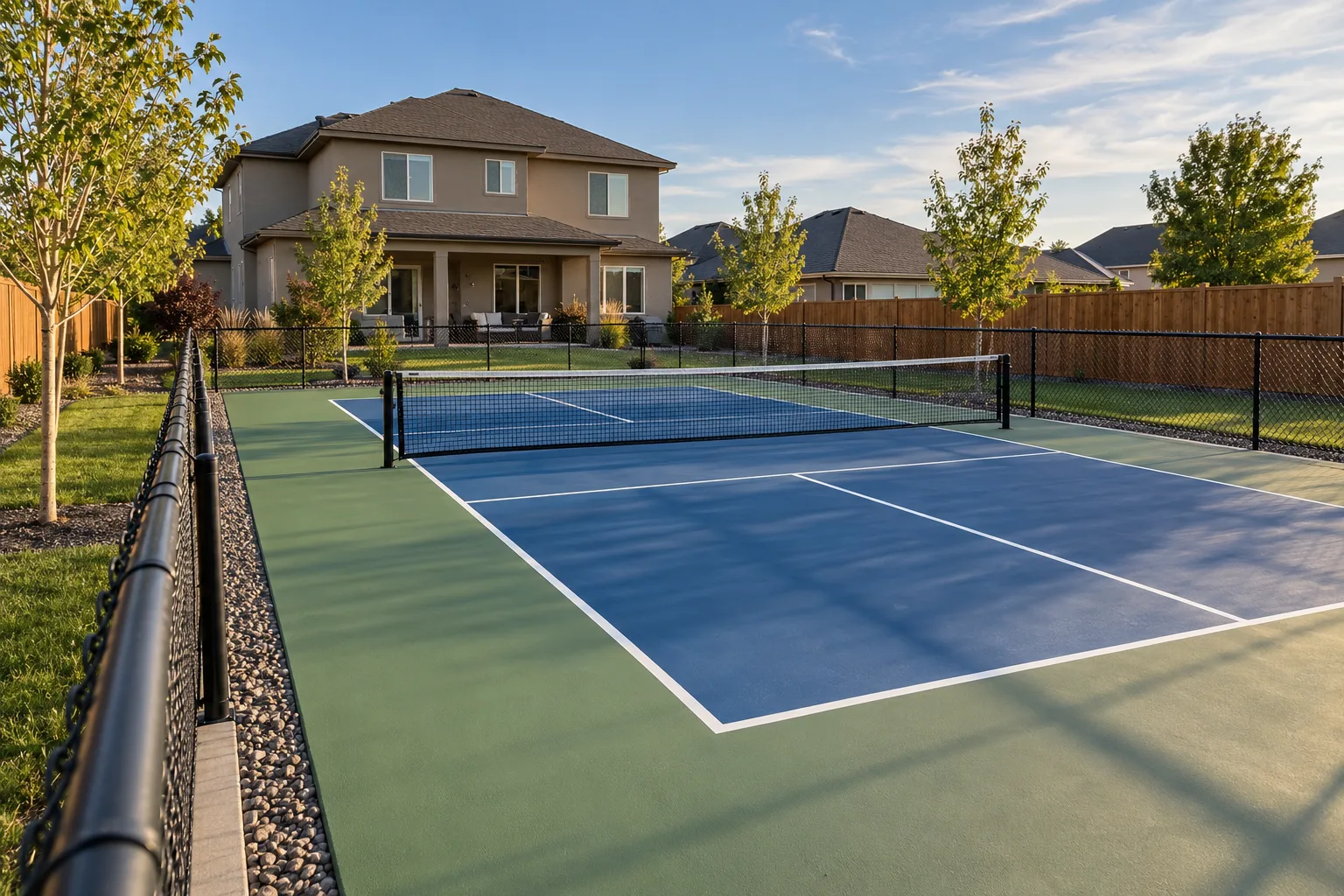
A court is one of the largest hard surfaces you can add to a Meridian backyard, and that size is exactly what makes it tricky. Most subdivisions in Paramount, Bridgetower, and the Ten Mile area were built on former farm and dairy ground that was graded nearly level, with shallow swales between lots quietly moving water toward the street. Lay a slab across that pattern without a plan and rain or irrigation overspray has nowhere to go. The court needs a slight, deliberate fall to one side, and that runoff has to land somewhere your own lot can handle it, not along the neighbor's fence line.
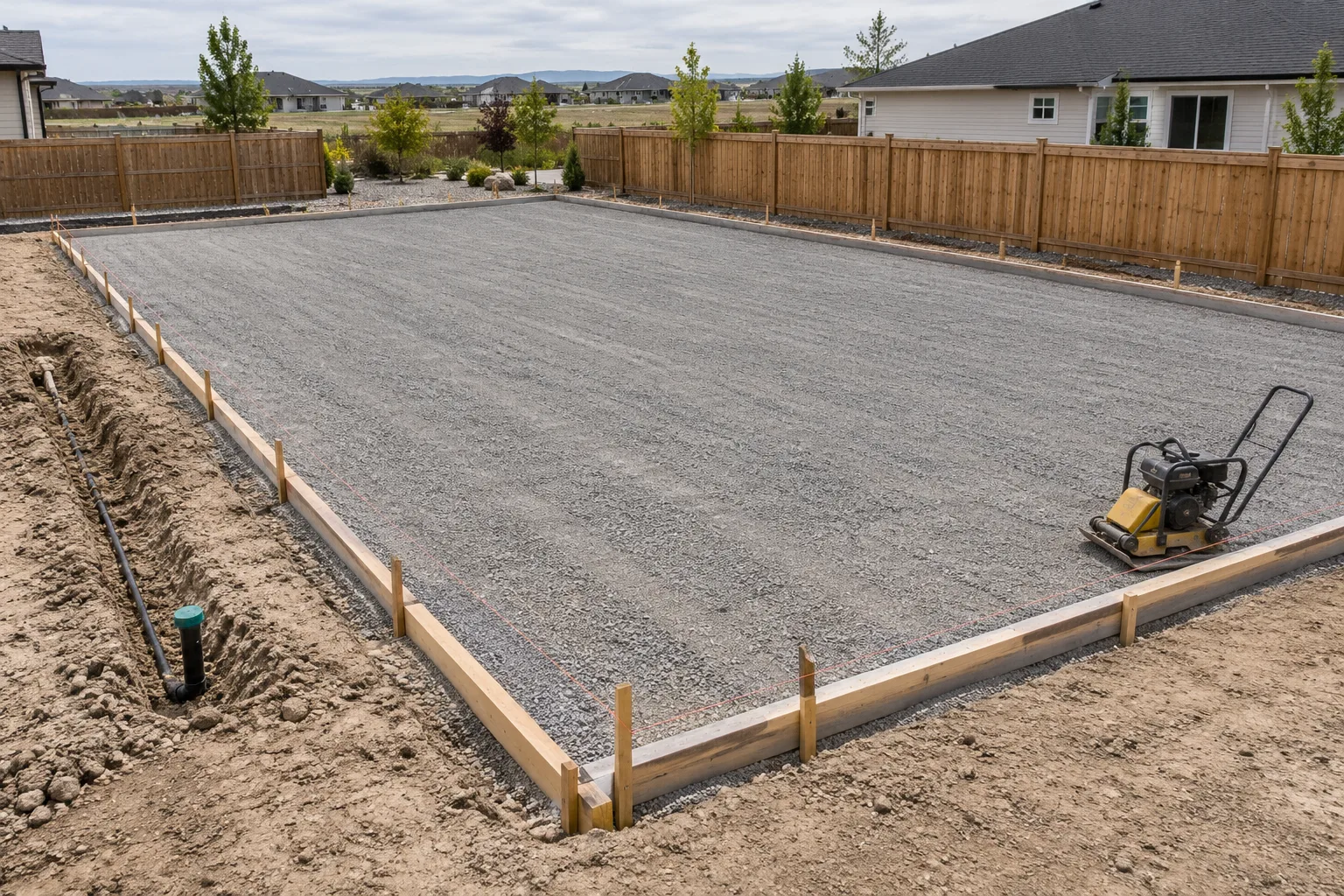
What sits under the court matters as much as what goes on top. Builders here usually strip the topsoil, compact the subsoil, and leave a mix of fill and old farmland silt, sometimes with pockets of hardpan or caliche a short dig down. Silt holds water, and when that water freezes under a slab through a Treasure Valley winter, the ground can lift and crack a court that looked perfect in August. A compacted base that drains, set on a properly prepared subgrade, is what keeps the lines true and the playing surface flat from one spring to the next.
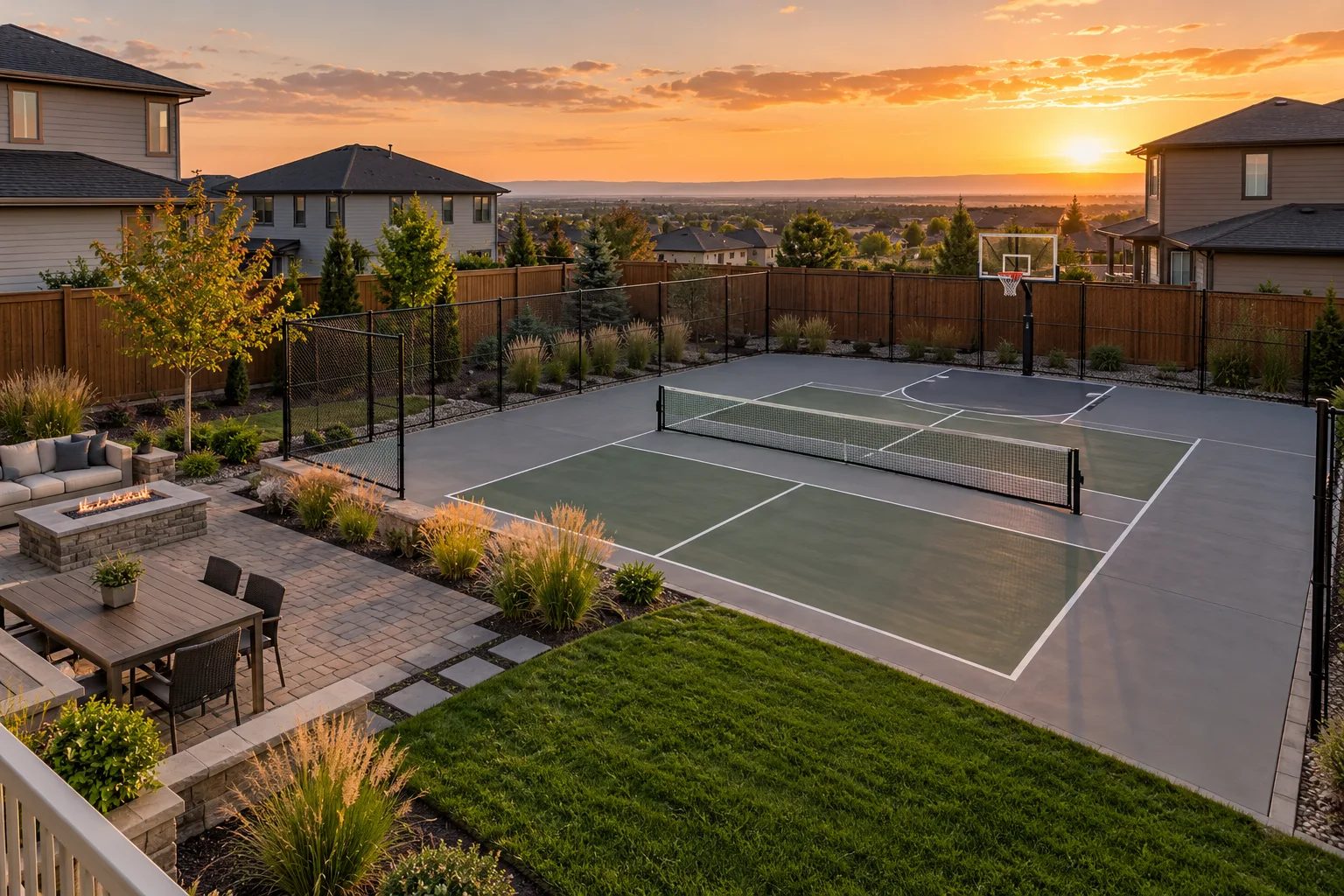
Then there are the neighbors. Lots in South Meridian and the newer subdivisions run small to mid-sized with tight side yards, so a court often sits within view and earshot of several homes. Most of these neighborhoods carry CC&Rs and architectural review for fences and structures, and setbacks shape where a court can fit. Pressurized irrigation from your irrigation district or HOA system usually crosses the backyard, and those lines and heads need to be moved or protected, often alongside irrigation and drainage work in Meridian. Even getting a compactor and concrete through a narrow side gate takes planning.
How Altavera handles it
We walk the lot with the court footprint in mind: where water will travel, how sun and afternoon wind cross the yard, where irrigation lines run, and how equipment gets in. Grading and drainage go first, the base is built and compacted for freeze-thaw, and HOA and permit paperwork are handled along the way.