Boise, Idaho · Pickleball & Sport Courts

Pickleball & Sport Court Contractor in Boise, Idaho

From the first grade stake to the last net post, one crew builds the whole court.

Altavera Construction builds pickleball and sport courts in Boise from the dirt up: grading, drainage, the slab, surfacing, lines, nets, and perimeter fencing, all under one team. That matters here, because caliche under much of the valley floor holds water beneath a slab, and Boise's freeze-thaw winters punish any court that sheds water poorly. We plan orientation, slope, and fence height around your lot, whether it sits on the Bench or below the Foothills.

  • Licensed & Insured in Idaho
  • Idaho Contractor License #6971895
  • Woman-Owned Business
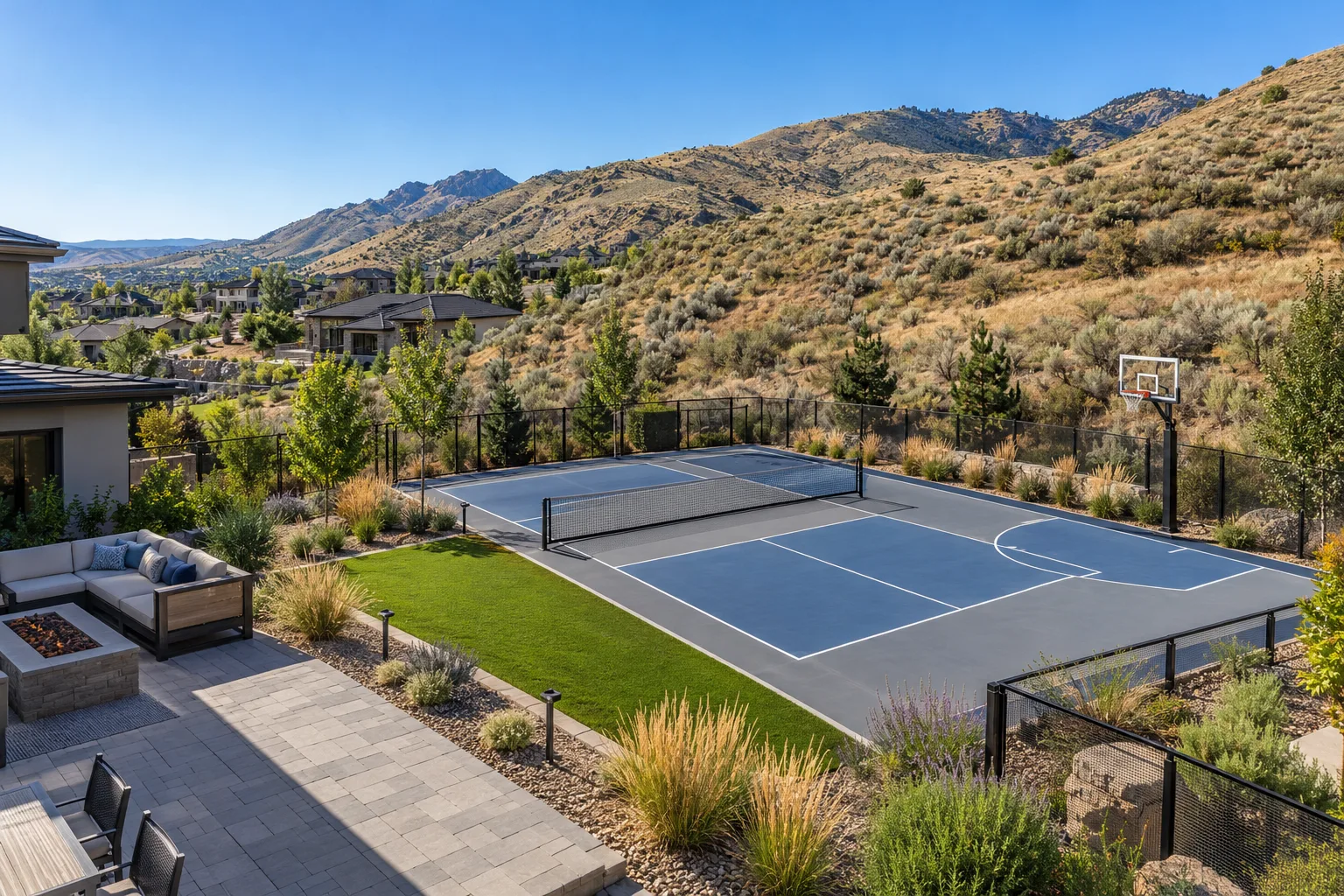
Finished backyard pickleball court with net and perimeter fencing in Boise, Idaho, with foothills in the distance
A fenced backyard pickleball court with a centered net, set below dry foothills on a late afternoon.

What Boise Ground Does to a Court

Why Backyard Courts Struggle in Boise, and What Has to Happen First

A court only plays well if it stays flat, dry, and pointed the right way, and Boise lots challenge all three.

Court orientation is the first decision on a Boise lot, and it is usually set by the house rather than the ideal. A long axis running roughly north to south keeps the low sun of early mornings and summer evenings out of players' eyes. Open lots in Barber Valley and newer West Boise subdivisions can also catch steady afternoon wind, which pushes a light pickleball around and decides where fencing needs the most height. We site the court against both before any layout paint goes down.

Below the surface, a court is a large, flat slab that has to stay flat, and Boise ground makes that harder than it looks. Much of the valley floor carries caliche, a cemented hardpan that stops water from soaking down. Newer neighborhoods often sit on compacted fill that can settle unevenly, while Foothills lots near Hidden Springs and Warm Springs bring sandy, decomposed-granite soil that erodes fast on a slope. Add cold winters with repeated freeze-thaw, and any water trapped under or beside the slab becomes a heaving problem by spring.

Water and neighbors shape the rest. Many older lots on the Bench and in the North End still run canal or irrigation-district water, and some flood irrigate, so a court has to sit high enough and slope cleanly so seasonal irrigation water drains away from it rather than across it. Sprinkler heads near the edge need to be moved or redirected, often alongside irrigation and drainage work in Boise. Harris Ranch and other planned communities often require HOA review, and narrow North End lots with alley access raise setback, equipment access, and sound questions worth talking through with neighbors early.

How Altavera handles it

We grade and plan drainage first, set the slab on a compacted base built for freeze-thaw, and slope the surface so water runs off the court and away from the house. Fencing, surfacing, lines, and nets follow. If the court needs a permit, we pull it and manage it with the right office.

Court Scope

What We Build: Pickleball and Sport Courts in Boise

01

Dedicated Pickleball Courts

A full pickleball court sized with room to move behind the baselines and along the sidelines, oriented for sun and wind on your lot. We handle the grading, the slab, the surface, painted lines, a net system, and perimeter fencing so the finished court plays true and keeps balls out of the neighbor's yard.

Includes

  • Layout and orientation
  • Site grading
  • Court slab
  • Court surfacing
  • Pickleball lines
  • Net system
  • Perimeter fencing

02

Multi-Use Backyard Sport Courts

One slab, several games. A multi-use court can carry pickleball lines alongside a basketball half court and open space for general play, with line colors chosen so each layout reads clearly. We size it to the yard, the kids, and the way the family actually plays, then build it with the same base and drainage as a dedicated court.

Includes

  • Multi-use layout
  • Pickleball lines
  • Half-court markings
  • Court slab
  • Court surfacing
  • Perimeter fencing

03

Grading, Drainage & Court Slab

Every court starts with dirt work. We cut and grade the pad, address caliche or soft fill, run drain lines or swales where the yard needs them, then place a compacted base and slab with a gentle slope so rain and snowmelt leave the playing surface instead of pooling on it.

Includes

  • Site grading
  • Caliche and fill correction
  • Drainage
  • Compacted base
  • Court slab
  • Surface slope

04

Perimeter Fencing & Nets

Fencing keeps balls on your side and gives the court a finished edge. We plan fence height, gate placement, and access around the court together with setbacks and any HOA standards, then install the net system centered and tensioned. For property-line fencing beyond the court, see Boise fence installation.

Includes

  • Perimeter fencing
  • Gates
  • Fence height planning
  • Net posts
  • Net system

05

Court Surfacing & Lines

A textured court surface goes over the cured slab, followed by measured, crisp line work for pickleball or multi-use layouts, in colors chosen to read clearly under bright summer sun.

06

Permits & HOA Review

When a court needs a permit, we pull it and manage it with the City of Boise's permitting office, or Ada County for unincorporated lots. We also help you gather the layout details an HOA review usually asks for.

07

Finishing Around the Court

Walkways, turf, shade, and planting tie the court back into the yard once the heavy work is done, so the space feels finished rather than dropped onto the lawn.

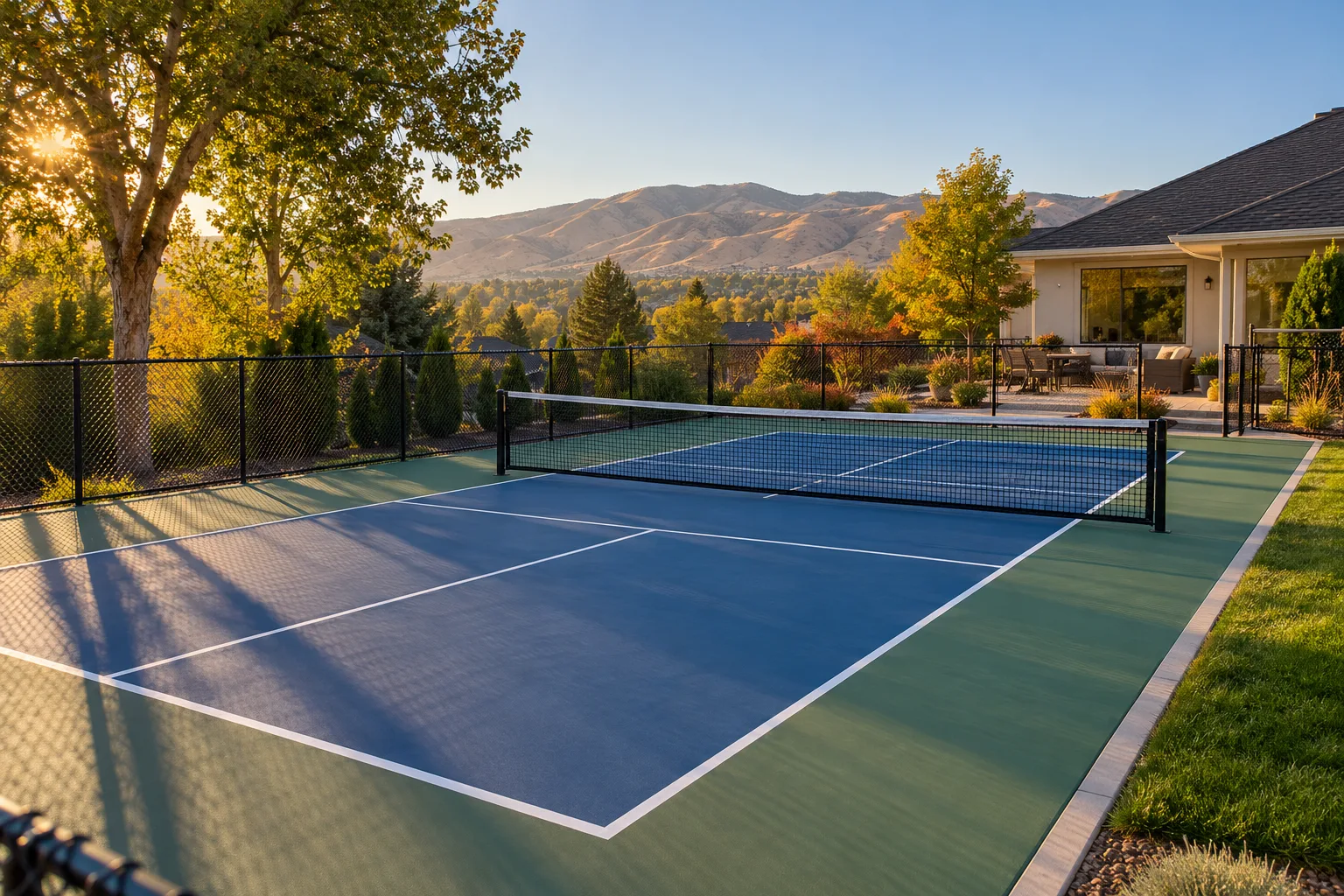
Wide view of a multi-use backyard sport court with pickleball lines, half court, and fencing in east Boise, Idaho
A multi-use backyard court with pickleball and half-court markings, framed by turf, walkways, and drought-tolerant planting.

Why One Team

A Court Is a Drainage Project First, Then a Place to Play

Most of what makes a backyard court last happens before anyone picks up a paddle. Altavera treats the court as part of the yard's grading, water, and access plan.

Here is what that looks like on a Boise build.

  • 01

    Drainage gets solved before the slab is poured.

    We set grades, drain paths, and any underground lines first, so the slab is never left fighting Boise caliche or flood irrigation runoff after it is already in place.

  • 02

    One crew owns the court from dirt to nets.

    Grading, slab, surfacing, lines, nets, and fencing sit in a single scope with one point of contact, so you never coordinate a concrete company, a coatings company, and a fence company separately.

  • 03

    Permits are pulled and handled for you.

    When your court needs a permit, we pull it and work it through the City of Boise's permitting office or Ada County, keeping the paperwork moving while you plan the first game.

  • 04

    The court fits the whole yard, not just one corner.

    Because we also handle irrigation, landscaping, turf, and hardscape, the court is planned with sprinkler coverage, walkways, and planting around it instead of being set into the lawn as an afterthought.

Who Builds Courts in Boise

Boise Homeowners Ready to Play at Home

Harris Ranch and Barber Valley homeowners

Planned communities on Boise's east edge often have design standards and HOA review for anything this visible. We plan the layout, fence style, and placement with those rules in view, and size the court to newer lots where compacted fill and runoff from the Foothills both need attention before the slab goes in.

North End and Bench lots with mature trees

Older Boise lots bring narrow side yards, alley access, big root systems, and canal or flood irrigation water. We look at how equipment gets in, how roots and leaf drop affect the surface, and how irrigation water moves before recommending a court size that genuinely fits.

Families in West and Southwest Boise wanting a multi-use court

Larger yards in West and Southwest Boise often have room for a court that does more than pickleball. A multi-use layout with a basketball half court and open play space gives kids and adults one shared surface, built on a base designed for valley-floor caliche.

Foothills-edge homes in Hidden Springs and Dry Creek Ranch

Sloped lots near the Foothills need cut, fill, and erosion control before a flat court is possible, and some need a retaining wall as well. We plan the pad, drainage, and slope stabilization together, and keep the planting around the court lean and low with the wildland edge in mind.

From Call to First Serve

How a Court Project Moves With Altavera

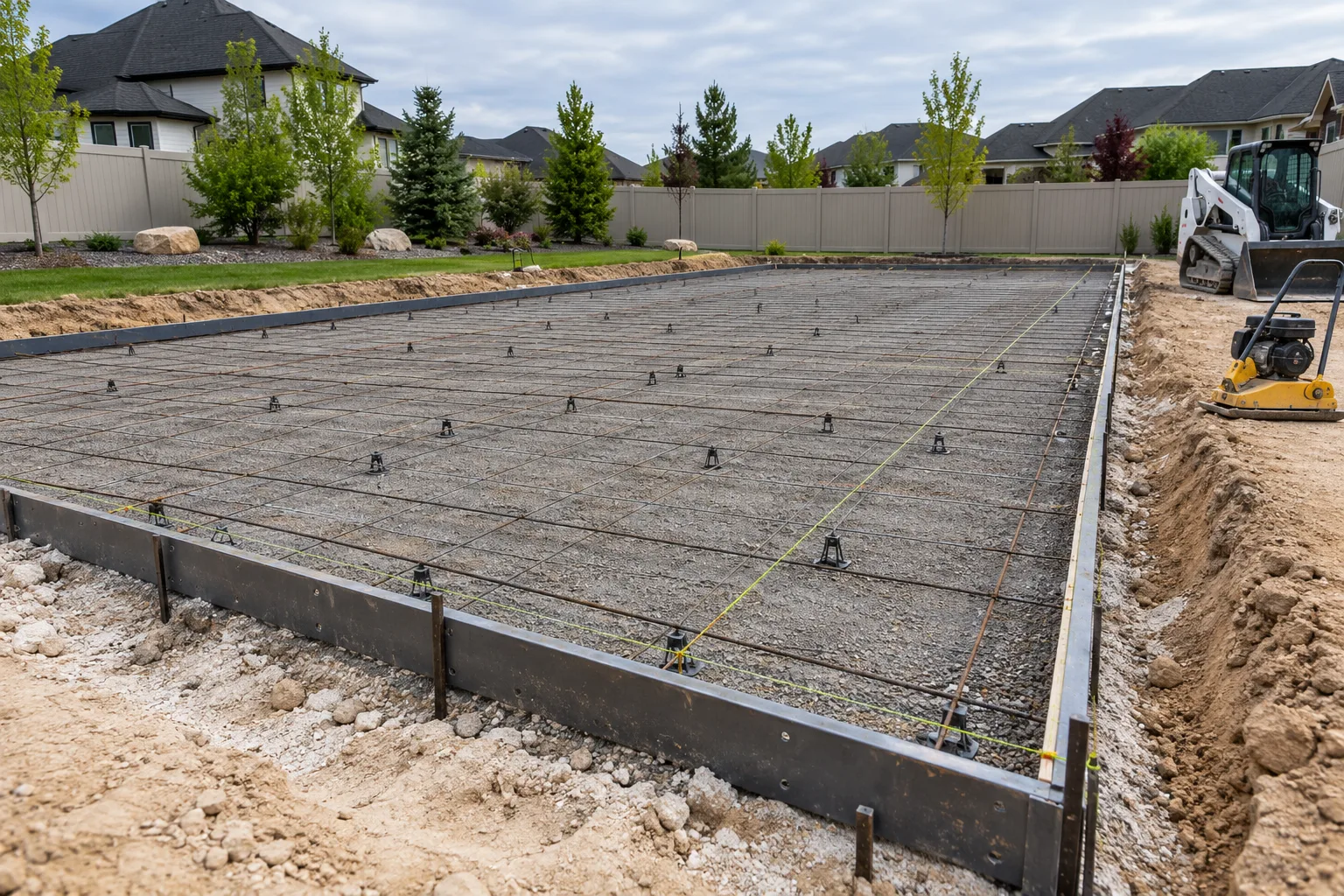
Sport court base graded and compacted with forms and reinforcement set in a Southeast Boise, Idaho backyard
A graded and compacted court pad with forms and reinforcement in place before the slab pour.
  1. Step 1: Free Phone Consult

    A free 15-minute call covers what you want to play, rough yard size, HOA status, and whether the lot runs on canal or pressurized irrigation water.

  2. Step 2: Estimator Confirms Fit

    An estimator reviews your notes to confirm a court makes sense for the property and the scope before an on-site visit gets scheduled.

  3. Step 3: On-Site Court Walk

    We walk the Boise property, check grade, soil, sun and wind exposure, setbacks, and equipment access, and measure the space the court and fencing need.

  4. Step 4: Written Proposal

    You receive a written proposal covering grading, drainage, slab, surfacing, lines, nets, and fencing, with any permit needs identified for your scope.

  5. Step 5: Deposit and Permits

    A deposit reserves your start on the schedule. If the court needs a permit, we pull it and manage it with the City of Boise or Ada County.

  6. Step 6: Build in Sequence

    Grading and drainage go first, underground lines second, then the slab, surfacing, lines, nets, and fencing, with landscaping and finish work around the court last.

  7. Step 7: Final Walkthrough

    We walk the finished court with you, check drainage, lines, net height, and gates, and close out any punch items before handing it over.

Where We Build Courts

Building Courts Across Boise and the Treasure Valley

Altavera builds pickleball and sport courts throughout Boise, including the North End, the Bench, Southeast Boise, Harris Ranch, Barber Valley, West Boise, Southwest Boise, Warm Springs, and Hidden Springs. We also build courts in nearby Treasure Valley cities such as Garden City, Meridian, Eagle, Star, Kuna, and Nampa.

  • Boise
  • North End
  • The Bench
  • Harris Ranch
  • Southeast Boise
  • West Boise
  • Hidden Springs
  • Garden City
  • Meridian
  • Eagle

If your court requires a permit, Altavera pulls it and handles it with the City of Boise's permitting office, or with Ada County when the lot is unincorporated.

Planning more than a court? See backyard renovation in Boise, or compare pickleball courts in Meridian and sport courts in Eagle.

FAQ

Pickleball & Sport Court FAQs: Boise, Idaho

How much does a backyard pickleball court cost in Boise?

Cost depends on court size, how much grading and drainage the lot needs, the slab and surfacing scope, and how much fencing surrounds the court. A flat West Boise yard and a sloped Foothills lot can price very differently for the same court. We do not quote prices without seeing the site, so pricing comes in a written proposal after the on-site estimate. Third-party financing options are available.

Will my Boise court need a permit from the City of Boise?

It depends on the scope, including slab size, grading, fencing, and where the court sits on the lot. When a permit is required, Altavera pulls it and manages it with the City of Boise's permitting office, or with Ada County for unincorporated property. We identify permit needs during the on-site estimate so they are accounted for in the written proposal.

Will caliche under my Boise yard cause a court slab to crack?

It can if water is allowed to collect above it. Caliche is a dense hardpan common across the Boise valley floor, and it keeps water from draining down. When that water freezes under a slab, it lifts and cracks concrete. We grade and drain the site first, build a compacted base, and slope the court so water runs off and away instead of sitting underneath.

Can I build a pickleball court in a Boise HOA like Harris Ranch?

Often yes, but the HOA usually gets a say first. Planned communities in Harris Ranch and Barber Valley commonly review fencing, placement, colors, and setbacks for visible improvements. We lay out the court, fence, and surroundings with your HOA standards in view, help you gather the details a review usually asks for, and build once approval is in hand.

Which direction should a backyard court face with Boise's summer sun and afternoon wind?

A long axis running roughly north to south is usually preferred, because it keeps rising and setting sun out of players' eyes on long Boise summer evenings. Real lots rarely line up perfectly, so we balance orientation against the house, setbacks, trees, and exposure to afternoon wind on open lots, then place fencing to help where the site cannot be ideal.

My North End or Bench lot uses flood irrigation. Can I still add a court in Boise?

Yes, with careful planning around the water. Flood and canal-fed irrigation on older Boise lots can move a lot of water across a yard during the irrigation season. We set the court high enough, shape grades and swales so irrigation water flows around it, and adjust sprinkler heads near the edges so spray does not soak the playing surface.

How do you handle noise and neighbors for a Boise backyard court?

We talk it through during the site visit and plan placement with it in mind. Pickleball has a distinct sound, and on narrow North End lots or tighter newer subdivisions the court may sit close to a property line. Placement, setbacks, fencing, and planting around the court all factor into the layout, and HOA rules may apply. Many homeowners find it helps to talk with neighbors early.

Can a sport court be built on a sloped lot near the Boise Foothills?

Yes, though the slope adds work before the court itself can start. Foothills lots in areas like Hidden Springs and Dry Creek Ranch often have sandy, decomposed-granite soil that erodes easily, so we plan cut, fill, compaction, drainage, and sometimes a retaining wall together. Planting around the court can be kept lean and low with the wildland-urban interface in mind.

Start Your Boise Project

Let's Find the Right Spot for Your Court

Tell us what you want to play and how you use the yard. We will walk your Boise property, check grade, drainage, sun, and access, and put together a written quote for a court built to stay flat and dry.

Prefer to talk? Call 208-314-9967 or try our instant quote.

Licensed & Insured · Idaho Contractor License #6971895 · Serving Boise & the Treasure Valley

Altavera Construction logo

We elevate outdoor spaces with professional planning, expert execution, and quality craftsmanship — because your outdoor space is an extension of your home, not an afterthought.

Elevated standards. Real integrity.

Idaho Contractor License ID #6971895  ·  Women-Owned Business

CONTACT

FOLLOW US

© Copyright 2026. Altavera Construction. All Rights Reserved.

3313 W Cherry Lane Suite 1053 Meridian, ID 83642