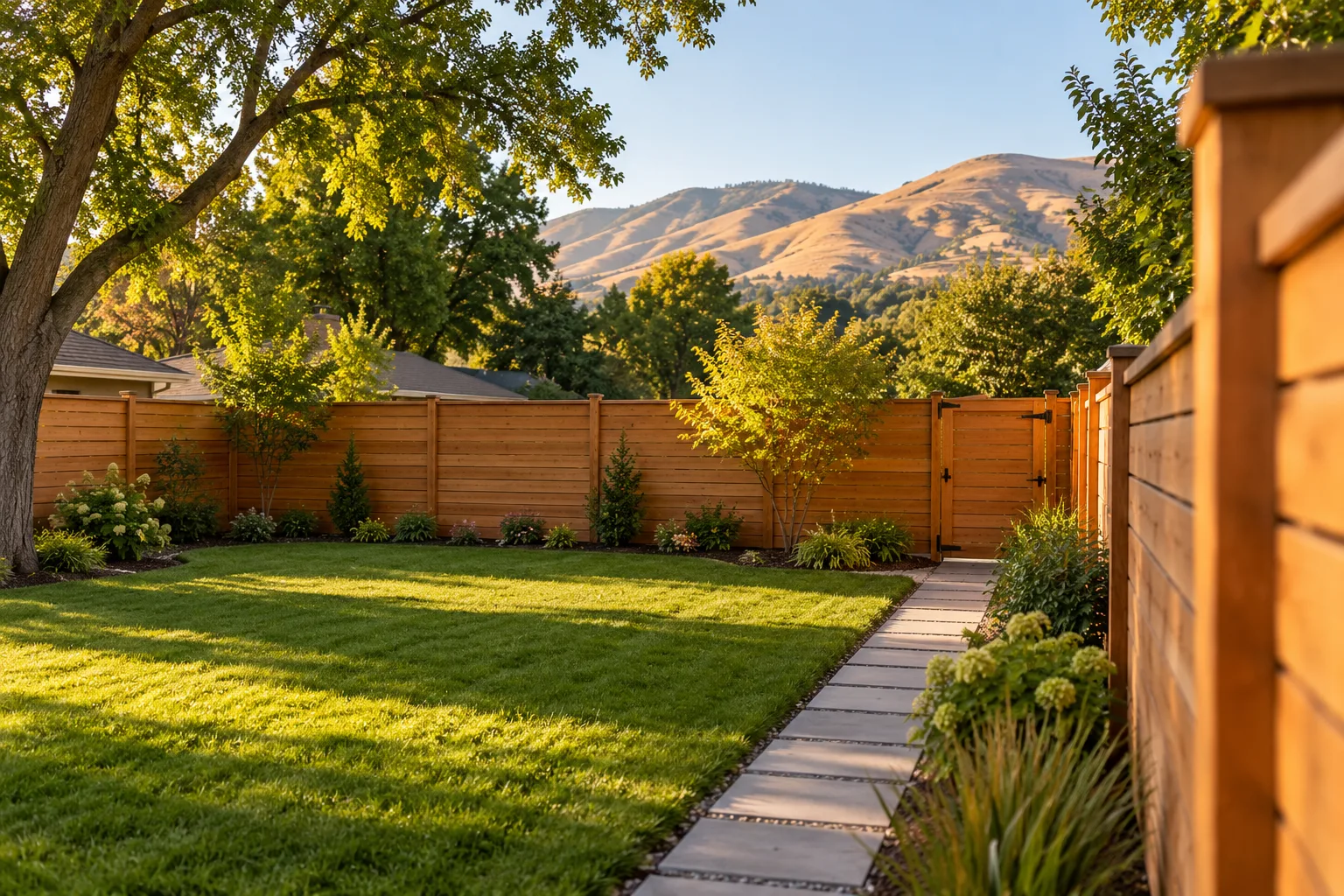
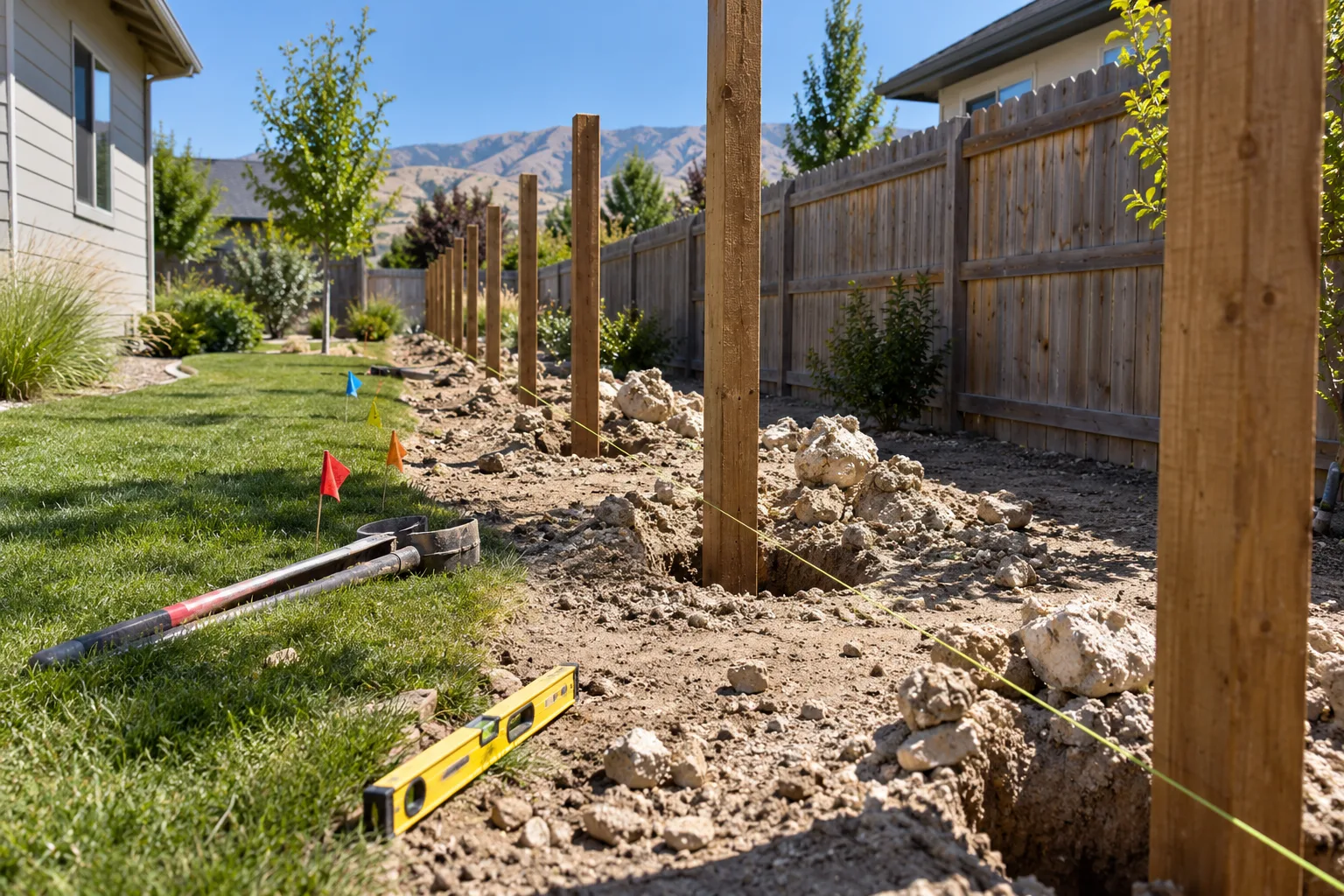
A fence post in Boise has to deal with what is underneath it. Across much of the valley floor, from West Boise to Southwest Boise, augers run into caliche, a cemented hardpan that resists digging and holds water around the base of a post. Water trapped there freezes and expands through the winter, and over several seasons posts heave, lean, or loosen in their footings. Newer subdivisions add another variable: compacted fill that can settle unevenly beneath a long run of panels and pull a straight line out of true.
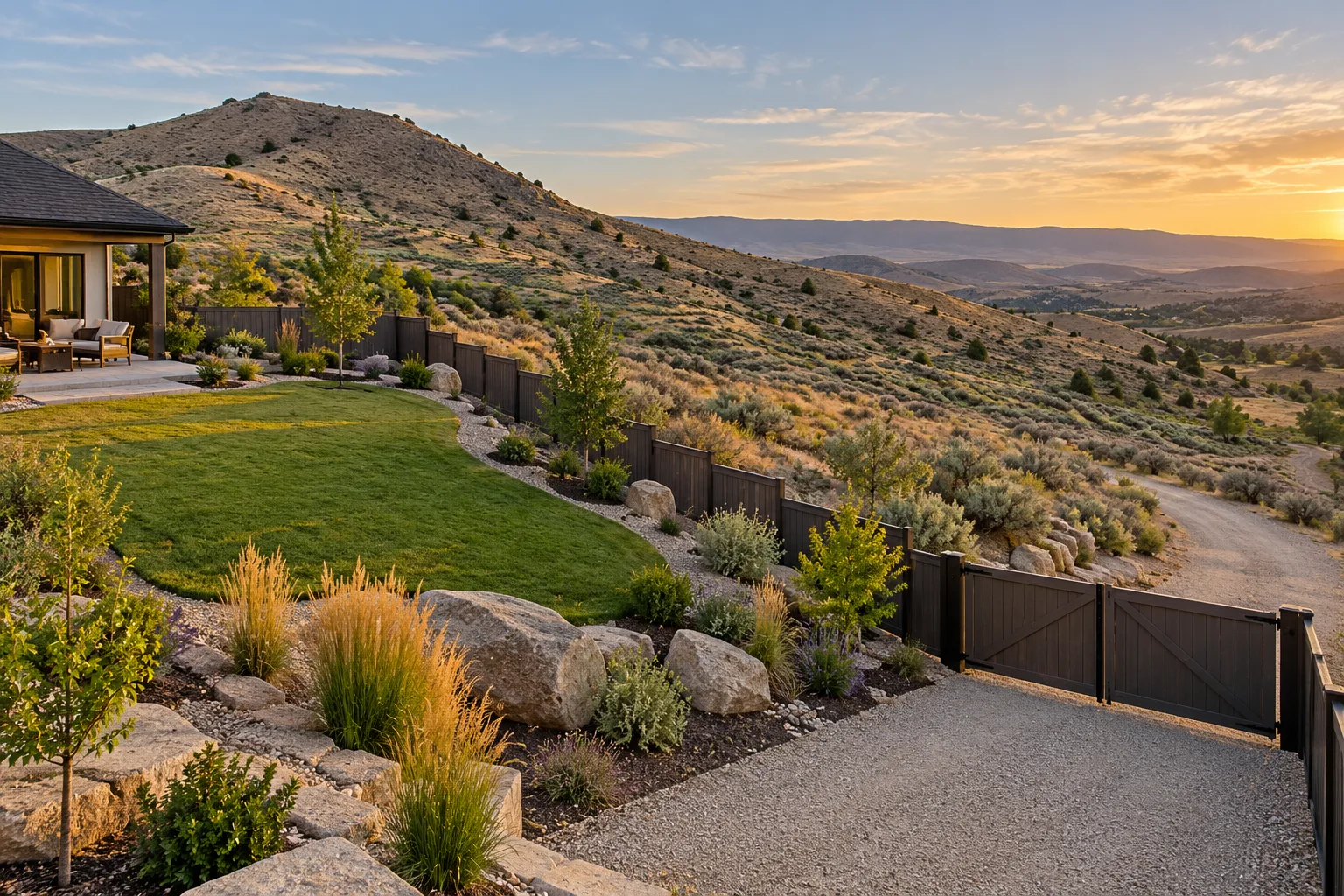
The Foothills edge brings a different set of conditions. In Harris Ranch, Barber Valley, Warm Springs, and Hidden Springs, lots climb into steep, sandy, decomposed-granite slopes that erode once they are disturbed. Fence lines there have to step or rake with the grade, and post holes need backfill that will not wash out after a summer storm. These neighborhoods also sit at the wildland-urban interface, so the layout of the fence and what gets planted along it deserve thought before anything is built. Many of these communities also have HOAs that review fence style, height, and placement.
Older Boise neighborhoods carry their own history. North End lots are often narrow, served by alleys, and shaded by mature trees whose roots crowd the exact spots a post wants to go. On the Bench and in Southeast Boise, canals and laterals run along or near some properties, and lots on irrigation-district water or flood irrigation can see seasonally wet ground near the fence line. Old fences, pins, and plats rarely agree perfectly. Planning sprinklers at the same time? See Boise irrigation and drainage.
How Altavera handles it
We start with the boundary and the ground. Altavera reviews property lines, requests utility locates, and helps prepare HOA style submittals where a community requires them. Post depth and footing are chosen for Boise freeze-thaw and the soil we actually find, whether caliche, fill, or foothill granite, and grade or drainage issues are resolved before panels go in.