The Eagle Fence Line Problem
Why Eagle Fences Lean, Heave, or Get Moved and What Has to Happen Before the First Post
In Eagle, most fence trouble comes from the ground under the posts or the rules around the property line, and rarely from the panels.
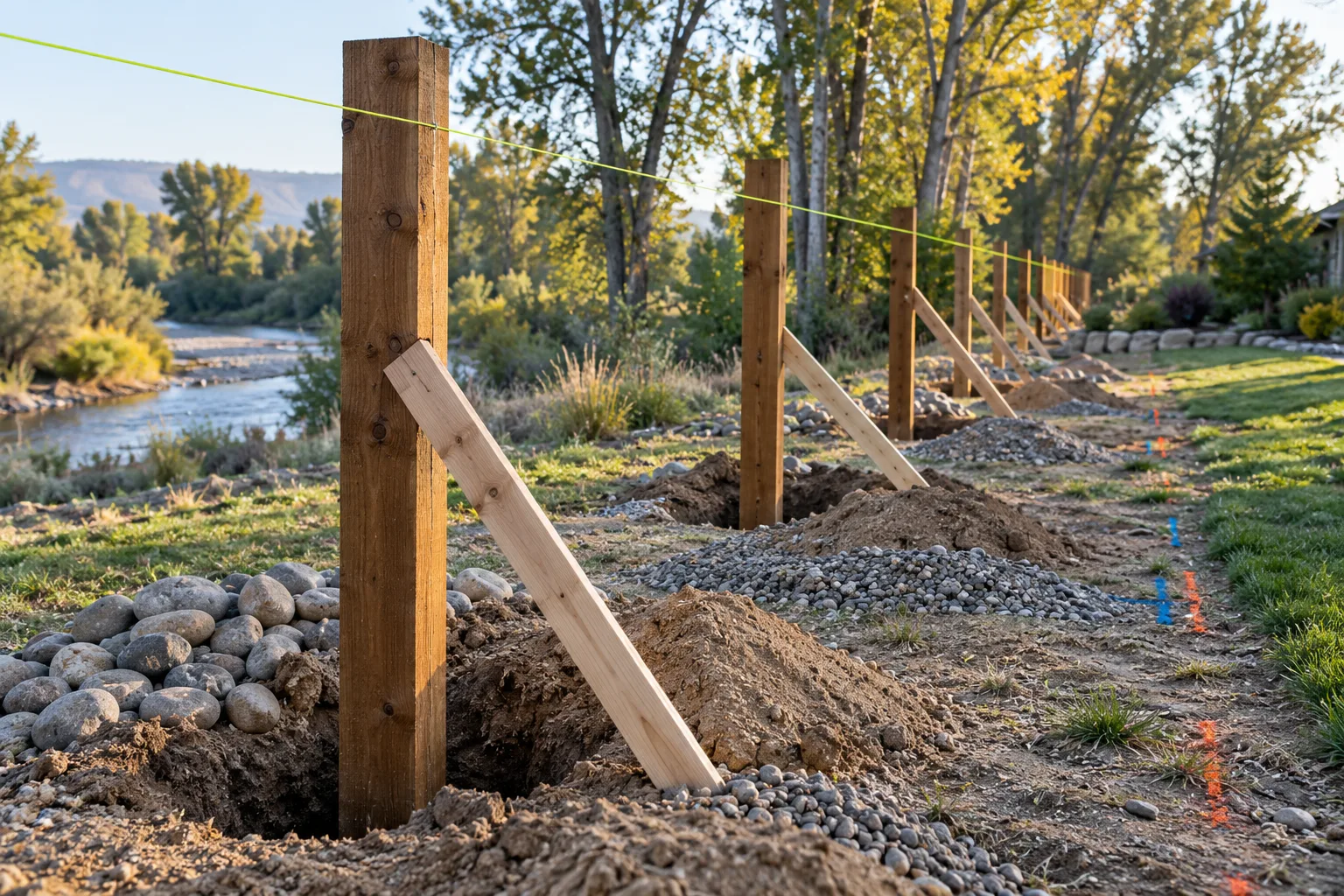
Along the south side of town, closer to the Boise River and Eagle Island, many yards sit on alluvial ground: sand, gravel, and rounded cobble the river has carried and dropped over time. Augers chatter and stall on cobble, and holes dug in loose sand can cave in before the concrete goes in. Seasonal groundwater makes it harder. Once irrigation season raises the water table, a post hole that was dry in early spring can hold standing water by midsummer. Footings set without planning for that tend to lean, lift in a freeze-thaw winter, or work loose at the gate posts, which carry the most load.
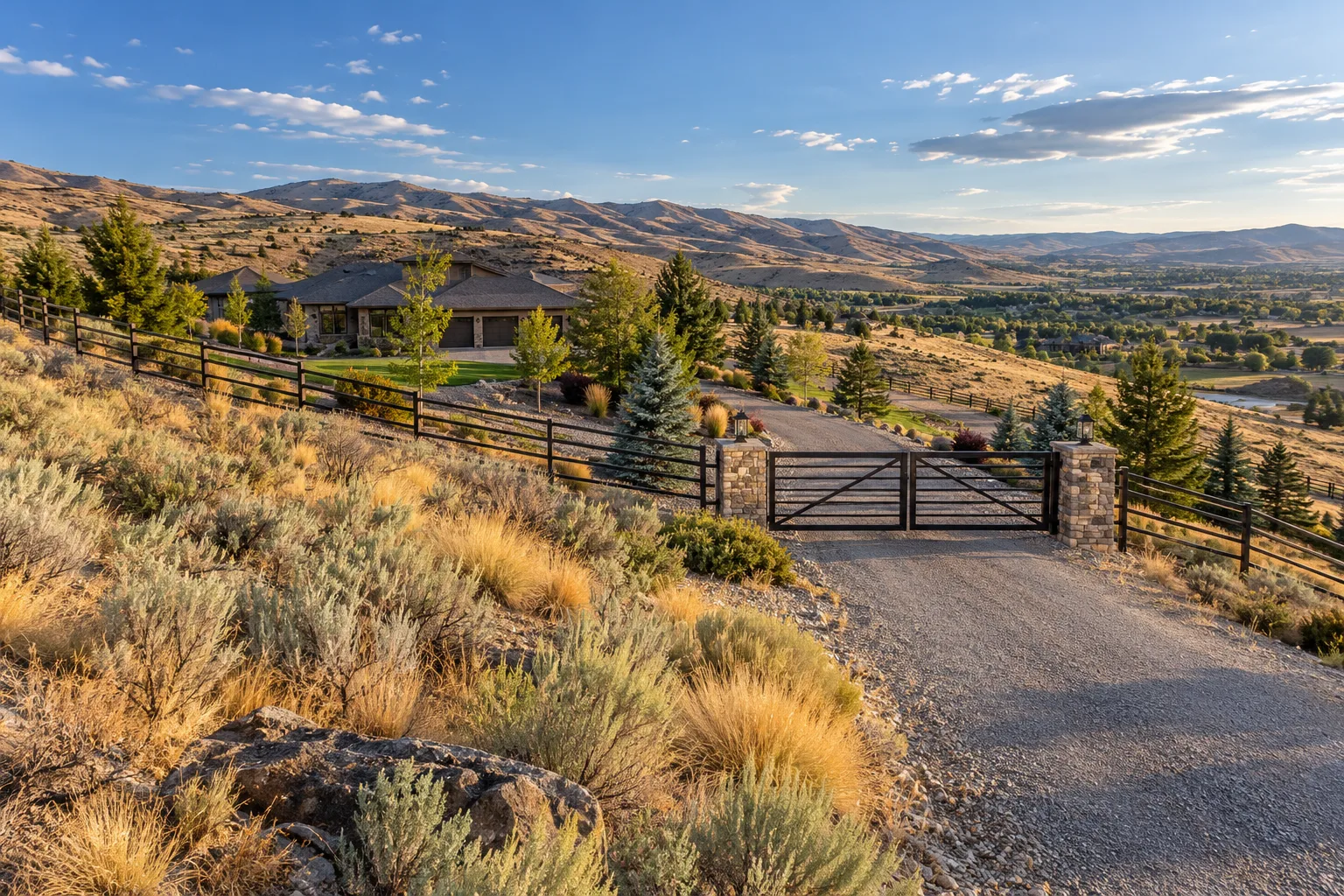
North of State Street and Highway 44, the problems change. Eagle Foothills lots and the view properties out toward Avimor bring slope, rock, and steady wind. On a hillside a fence has to either step down the grade or follow it at an angle, and each choice changes how rails, panels, and gates line up. A solid privacy panel catches wind like a sail, so post spacing and footing depth matter more on an exposed ridge than on a sheltered lot in Banbury. Deer pressure is real up here too, so height and style come up for anyone protecting gardens or new plantings.
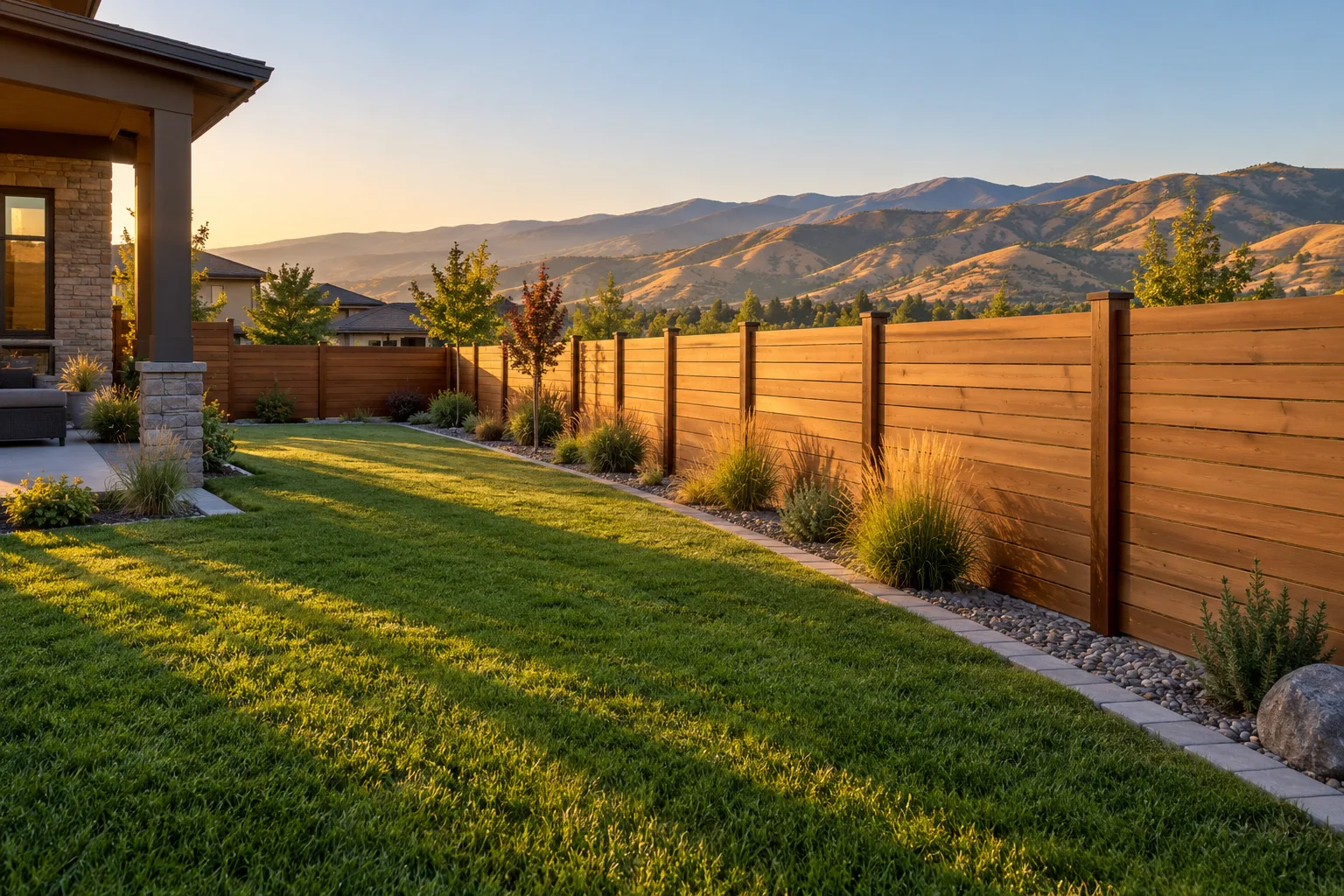
Then comes the paperwork. Legacy, Two Rivers, Banbury, and many other Eagle subdivisions have design review committees that care about fence style, height, color, and how close a fence sits to the street or common areas. Canal and ditch-company easements cross many older parcels, and pressurized irrigation lines run under most newer ones, so a fence line drawn on a plat can land right on buried pipe or a ditch access path. If lines need to move, that work can be folded into irrigation and drainage in Eagle before any posts go in.
How Altavera handles it
We start with the ground and the rules. Before layout, we confirm property lines, request utility locates, and flag any ditch or irrigation easements. Footing depth and post spacing are planned for the soil, slope, and wind exposure on your lot, and we prepare HOA submittals so style approval is in place before construction starts.