The Eagle Turf Problem
What Eagle Ground Does to Turf, and How to Build Around It
Eagle has two very different turf problems: wet, cobbly ground by the river and sloped, windy lots in the foothills.
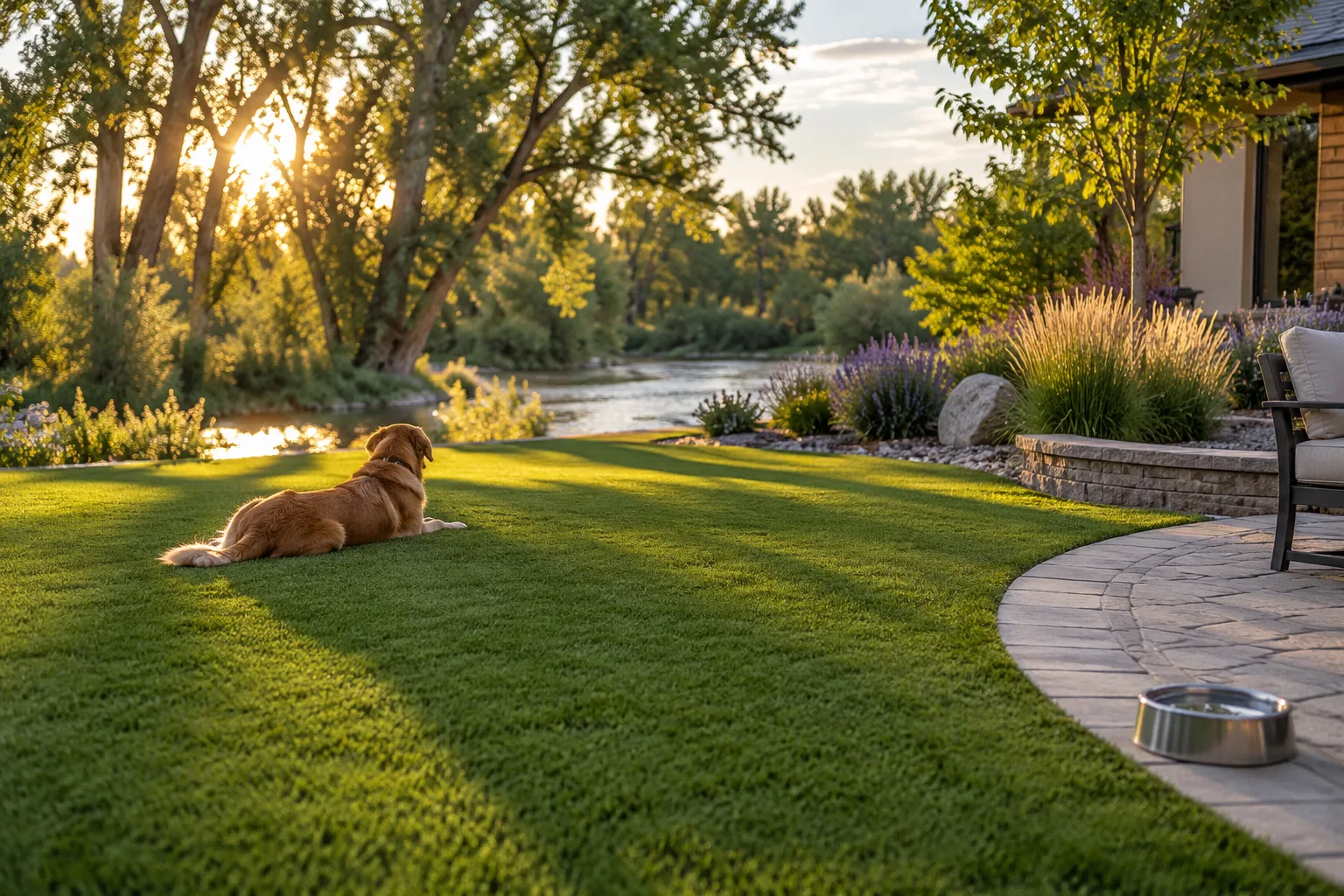
Turf in Eagle lives or dies by what happens to water underneath it. On the south side of town, near the Boise River, Eagle Island, and neighborhoods like Two Rivers and Banbury, the ground is often river-deposited sand, gravel, and cobble. That material can drain quickly in one spot and hold water in another, and seasonal groundwater can rise closer to the surface during irrigation season. A turf base that ignores those swings can stay soggy, smell in pet areas, or develop soft spots and ripples where cobble was left loose under the surface.
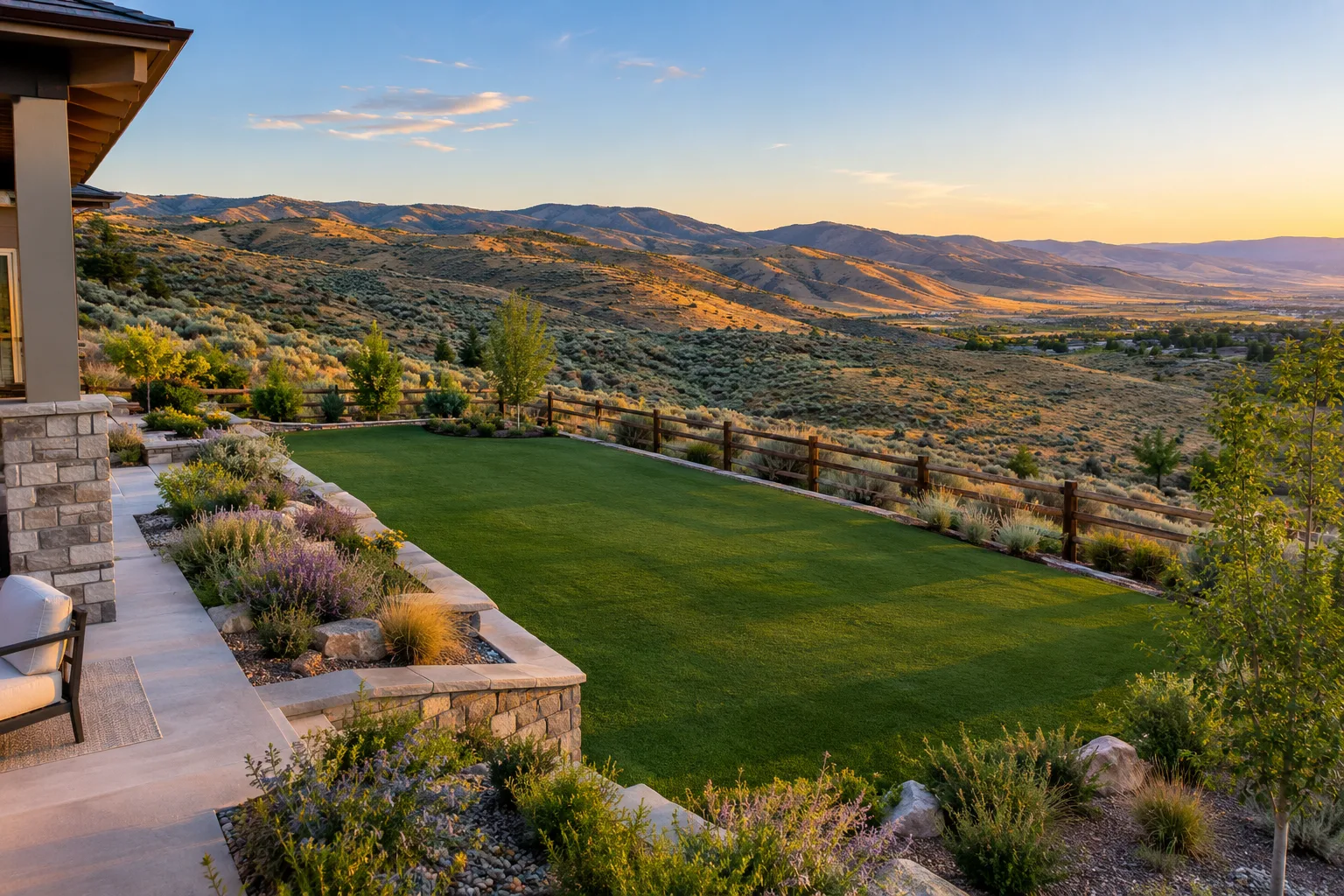
North of State Street and Highway 44, the picture flips. Eagle Foothills lots and view properties toward Avimor tend to be sloped, and water running downhill across turf can scour infill, undercut edging, and push sediment onto the surface. Foothills wind is its own problem: it lifts loose edges and tugs at any seam that was not bonded well, then blows grit into the fibers. Deer pass through many of these yards too, so turf near beds, slopes, and fence lines needs edges and seams secured well enough to take traffic that never reads the HOA guidelines.
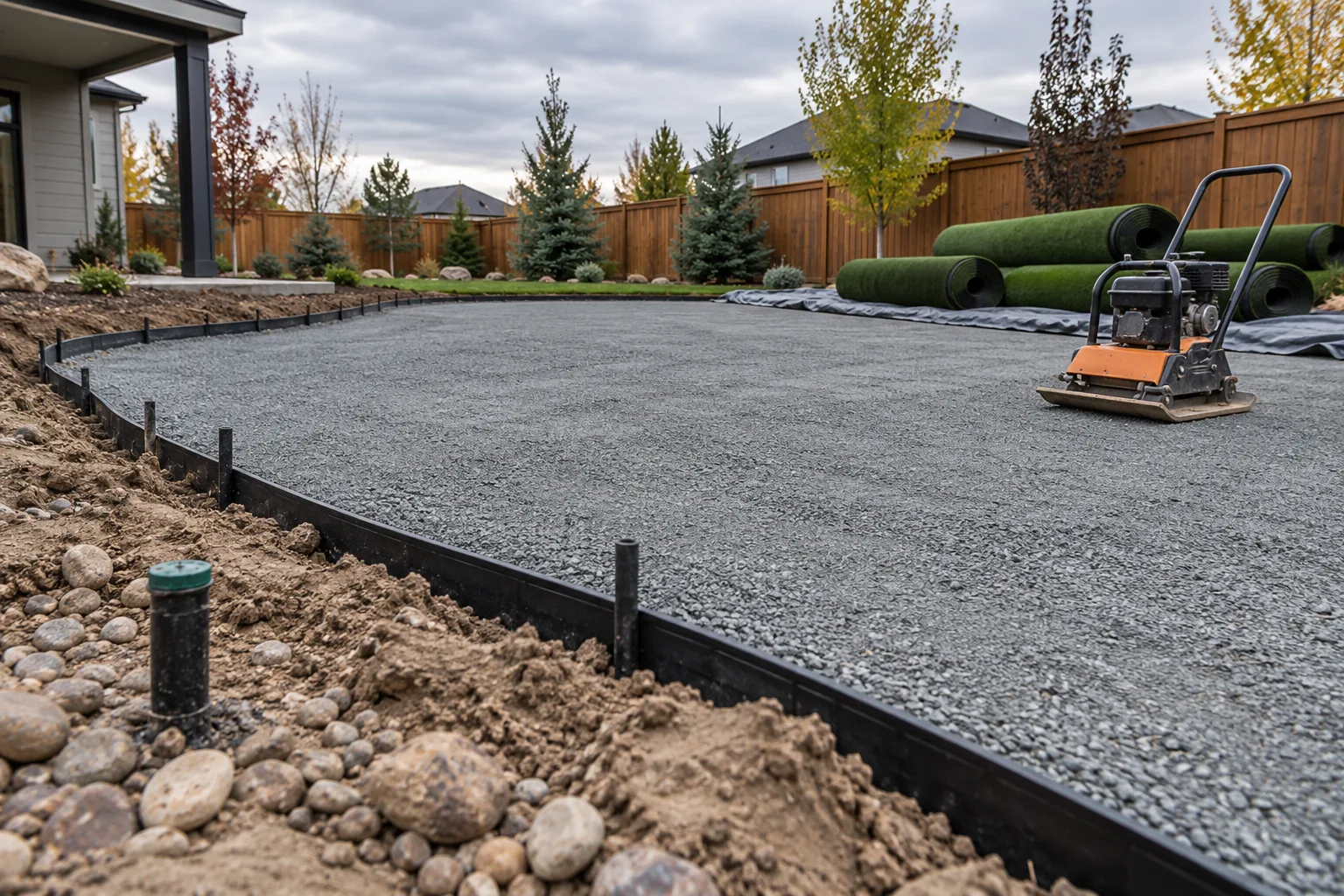
Many Eagle subdivisions, from Legacy to the estate neighborhoods along the Highway 44 corridor, have HOAs with design review that covers front yards and visible side yards, and some have their own rules for synthetic lawn. Turf also changes how a yard uses irrigation water. Pressurized irrigation lines and canal or ditch-company water still feed surrounding beds and trees, so heads have to be capped, converted, or rerouted rather than left buried under the base. Plan turf by itself and the rest of the system tends to break around it, which is why it belongs in the same scope as irrigation and drainage in Eagle.
How Altavera handles it
We walk the lot first, check the soil where river cobble or groundwater is likely, and set base depth and drainage paths to what we find. Irrigation gets rerouted before excavation, slopes get grading or drainage outlets, and edges are anchored for wind and wildlife. HOA requirements are reviewed with you during planning.