The Meridian Turf Problem
Why Turf Turns Soggy on Meridian Lots, and What Has to Happen Underneath
Artificial turf only drains as well as the ground beneath it, and Meridian ground was never prepared with turf in mind.
When a Meridian subdivision goes in, the topsoil is usually stripped and the remaining ground is compacted hard enough to carry equipment. What a homeowner inherits is dense subsoil, some builder fill, and in places a layer of hardpan or caliche that water barely moves through. Artificial turf drains vertically through its backing, so whatever sits underneath decides whether rain and pet rinse water soak away or sit just below the blades. Lay turf over that ground with a thin skim of base and the result is a soft, smelly surface after heavy rain.
The other half of the problem is grading. Meridian was dairy and farm ground, and the subdivisions built on it are nearly flat, with lot drainage that relies on shallow swales shared between close neighbors. Turf that blocks one of those swales, or finishes a little high against a fence line, can push water onto the next lot in Paramount, Bridgetower, or the Ten Mile area. Pressurized irrigation adds a wrinkle too: the old lawn's spray lines carry canal water from your irrigation district or HOA system, and a line left live under turf can leak unseen and soften the base. Planning turf alongside irrigation and drainage work in Meridian keeps the yard working as one system.
HOA review is the third piece. Many newer Meridian subdivisions have CC&Rs that address front-yard landscaping, and some architectural committees want to see turf type, color, and edging before anything gets torn out. Older ranch-style homes near downtown and Old Town often have no HOA, but they bring their own surprises: mature tree roots, patched sprinkler lines, and ground that has settled unevenly. Either way, the work starts with reading the lot, not unrolling a product. If turf is part of a bigger reset, see how the pieces fit on our Meridian backyard renovation page.
How Altavera handles it
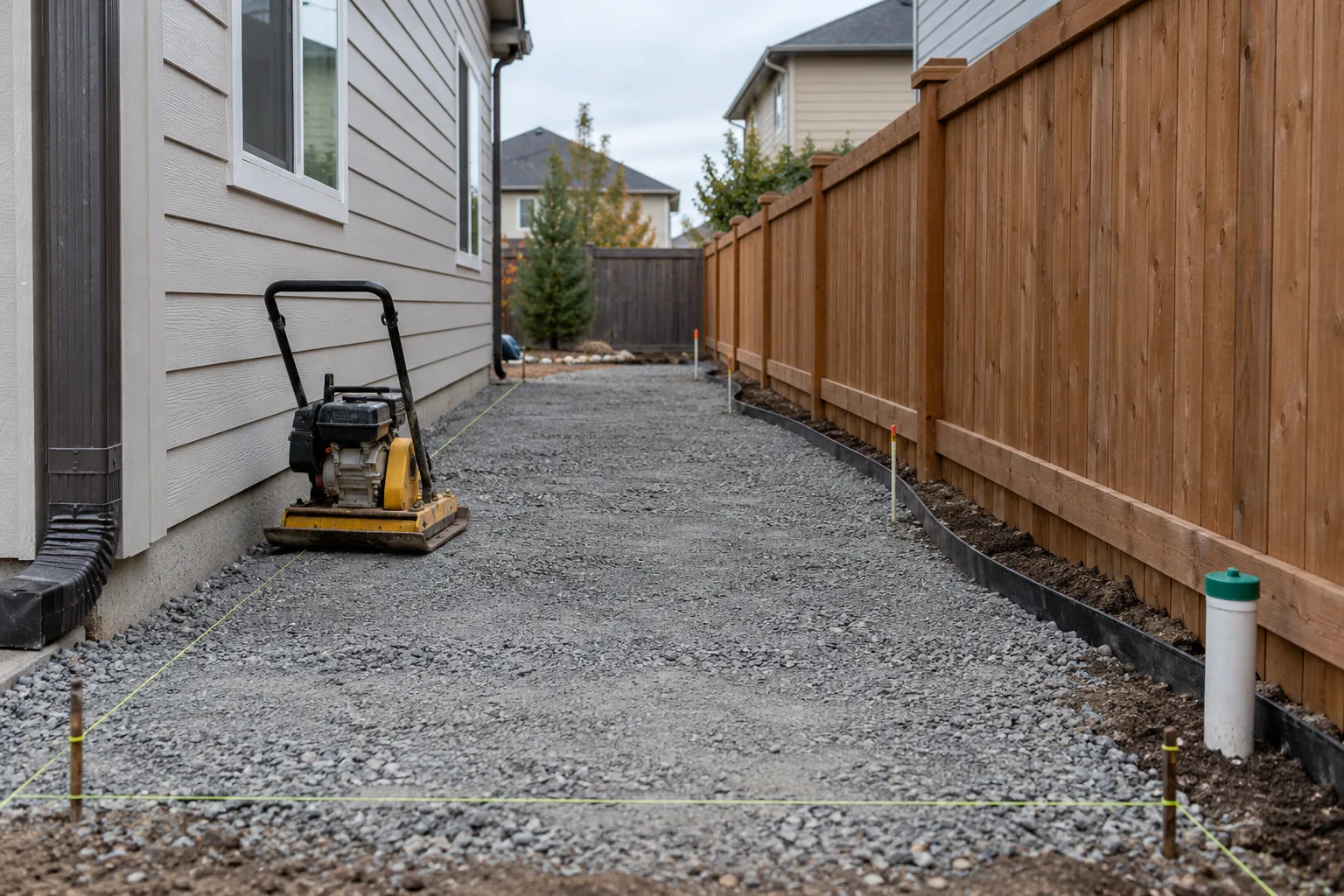
We start every Meridian turf job by checking how the lot drains to its neighbors, then excavate the old sod and loose fill, cap or reroute irrigation, address hardpan where it blocks drainage, and build a compacted, free-draining aggregate base graded to move water the way the lot was designed. Edging, seams, and infill come last.