What Boise Yards Hide
Every Boise Lot Has Its Own Starting Point, and It Is Usually Below Grade
Between canal-fed Bench lots, caliche on the valley floor, and erodible Foothills slopes, a Boise renovation has to answer to the ground before it answers to a mood board.
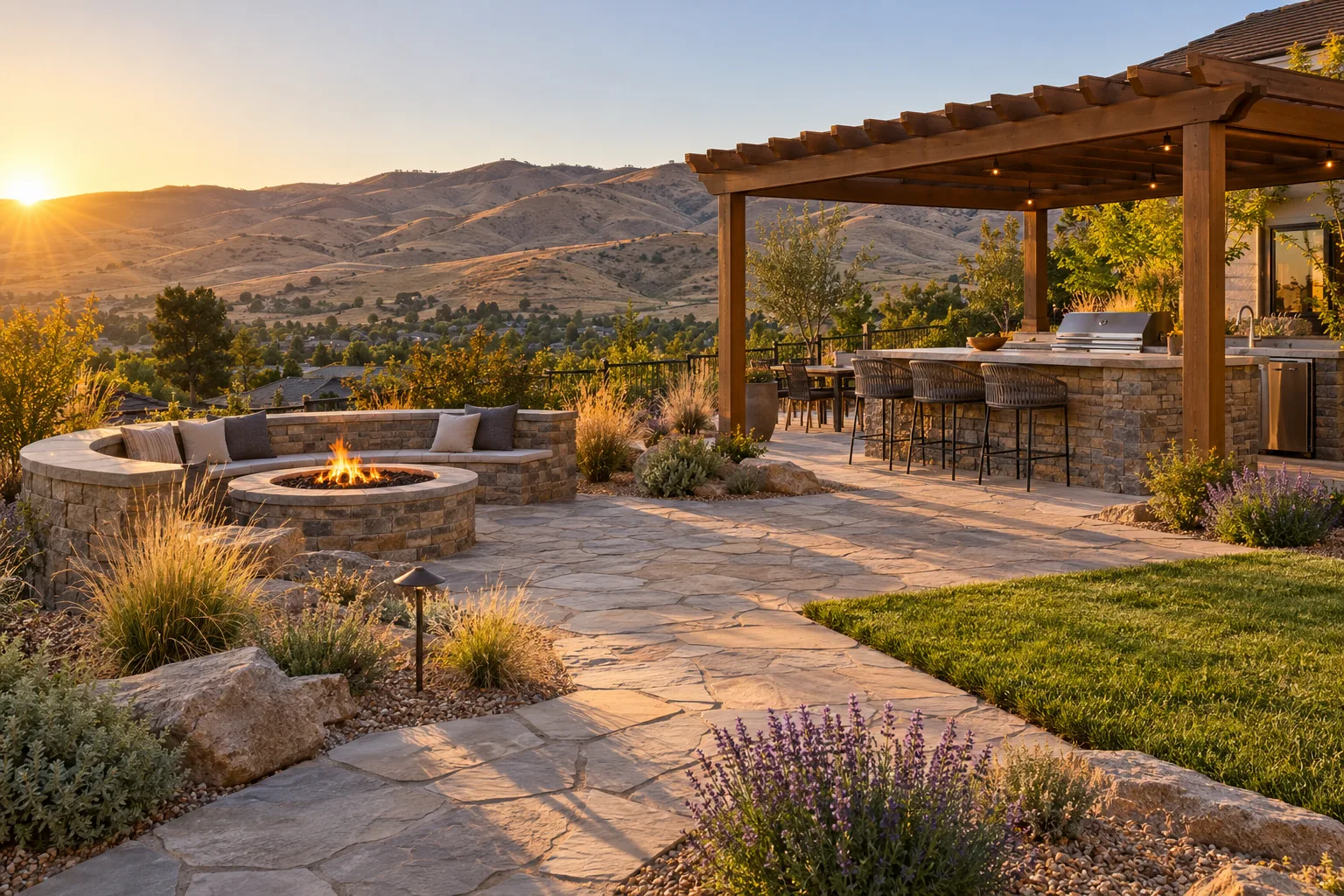
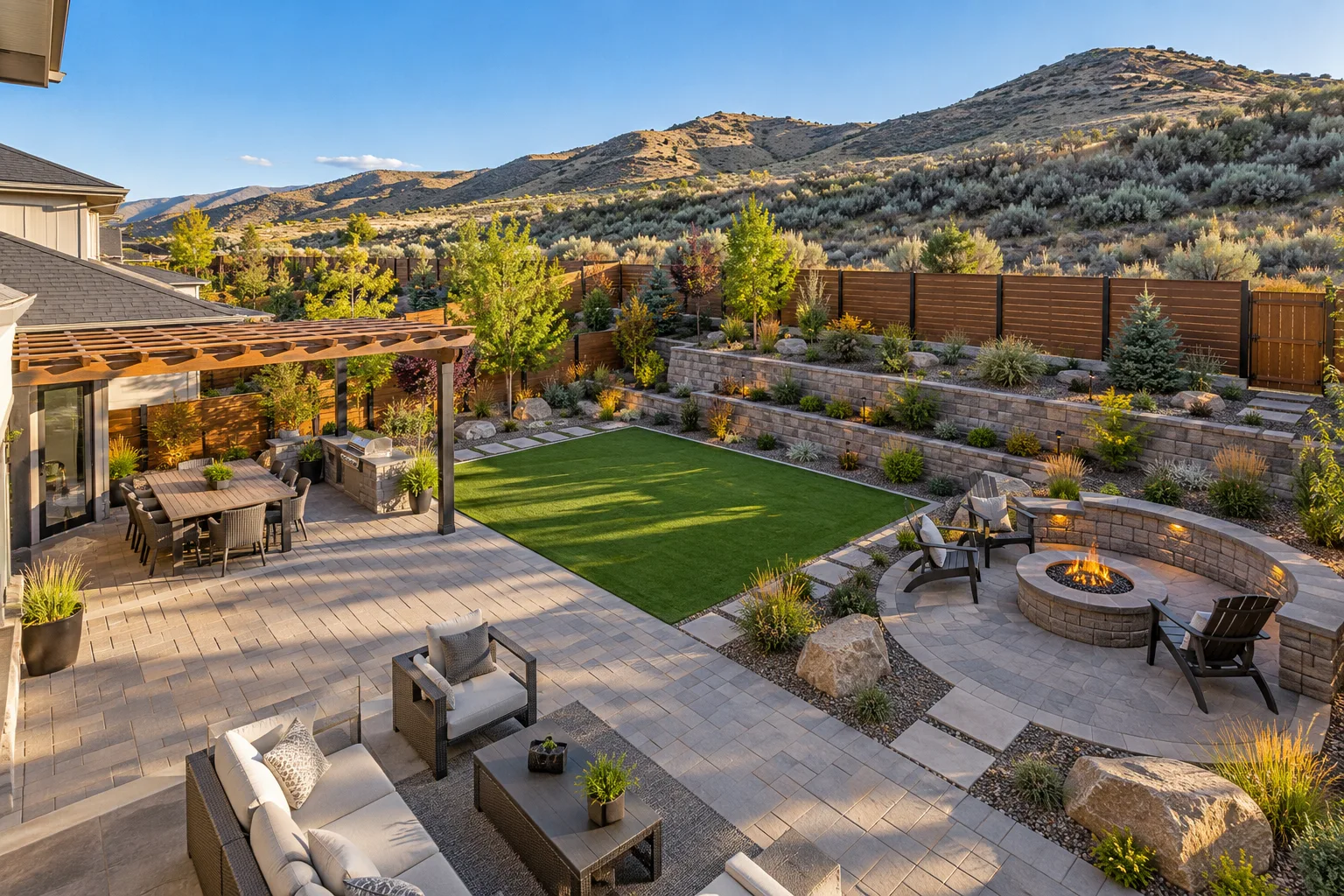
A backyard renovation in Boise rarely starts from the same ground twice. On the Bench, older lots sit along long-established canals and laterals, and many still carry irrigation-district water or a flood irrigation setup that the new design has to respect rather than bury. In the North End, mature trees, narrow lots, and alley access shape where equipment can go and where roots will fight a new patio. Up against the Foothills, sandy, decomposed-granite soils move when runoff concentrates, so a renovation there is as much about holding the slope as decorating it.
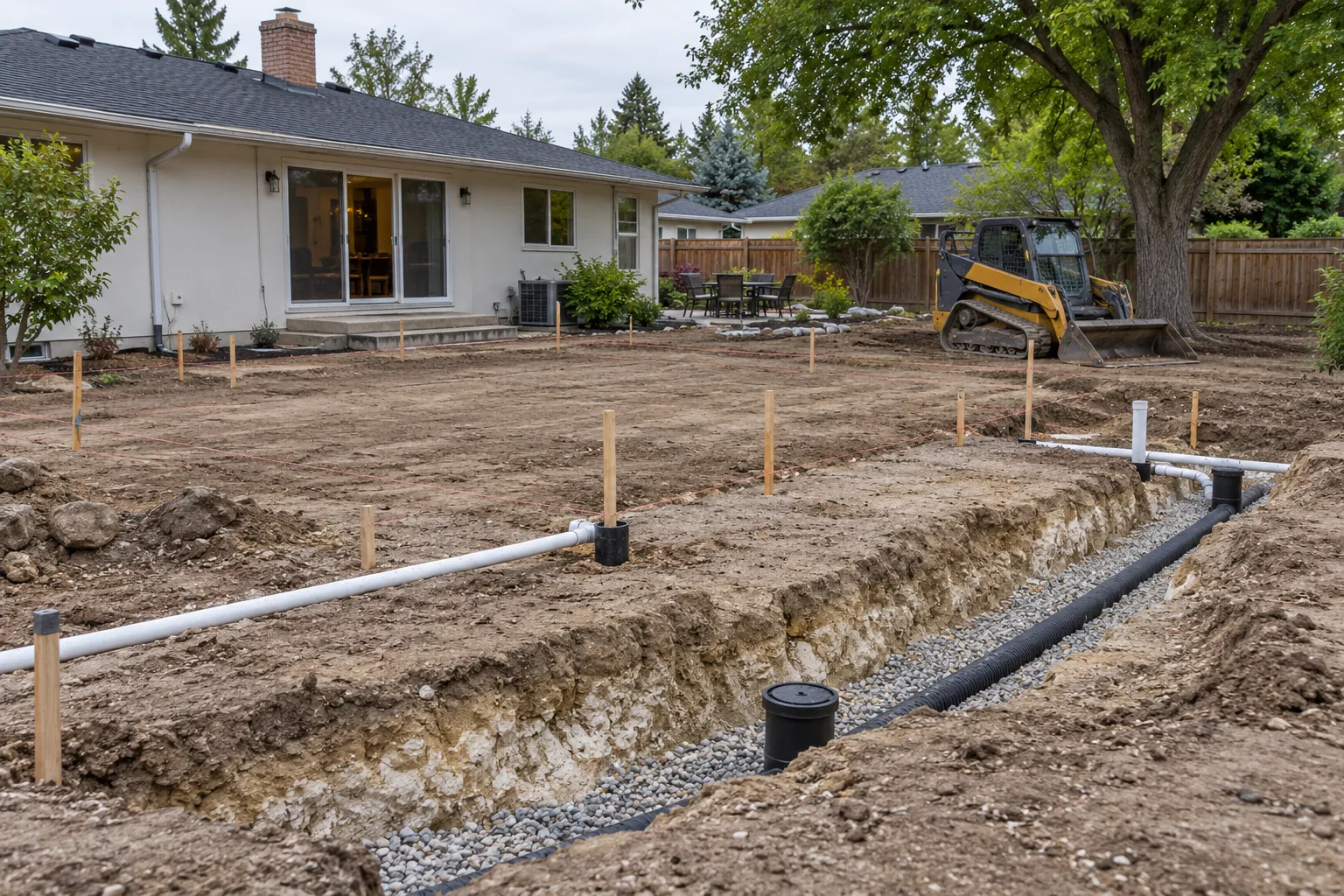
Down on the valley floor, the obstacle is usually underneath. Caliche hardpan across much of Boise stops water from soaking in, and newer subdivisions often sit on compacted fill that drains no better. Add hot, dry summers and winters that freeze and thaw repeatedly, and any spot where water lingers becomes the spot where pavers heave, sod drowns, or a wall footing shifts. That is why the grade and the drain lines get settled before anyone chooses a paver color. Our Boise irrigation and drainage work is where a full-yard scope begins.
The third Boise wrinkle is coordination. Harris Ranch, Barber Valley, and other planned communities on the east side often route exterior changes through HOA review, which affects fence styles, plant palettes, and structure placement. Irrigation water in Boise runs seasonally, roughly spring to fall, so testing and tying into a pressurized or canal-fed system has to line up with when water is actually in the lines. When one contractor owns the whole yard, those dependencies are planned together instead of discovered by three separate crews.
How we handle it
We walk the lot before designing anything: where water enters and leaves, what the soil does under a shovel, how the irrigation is delivered, and what the HOA or the city will want to see. The proposal then sequences drainage and grading, underground lines, hardscape and structures, and planting, with one point of contact throughout.