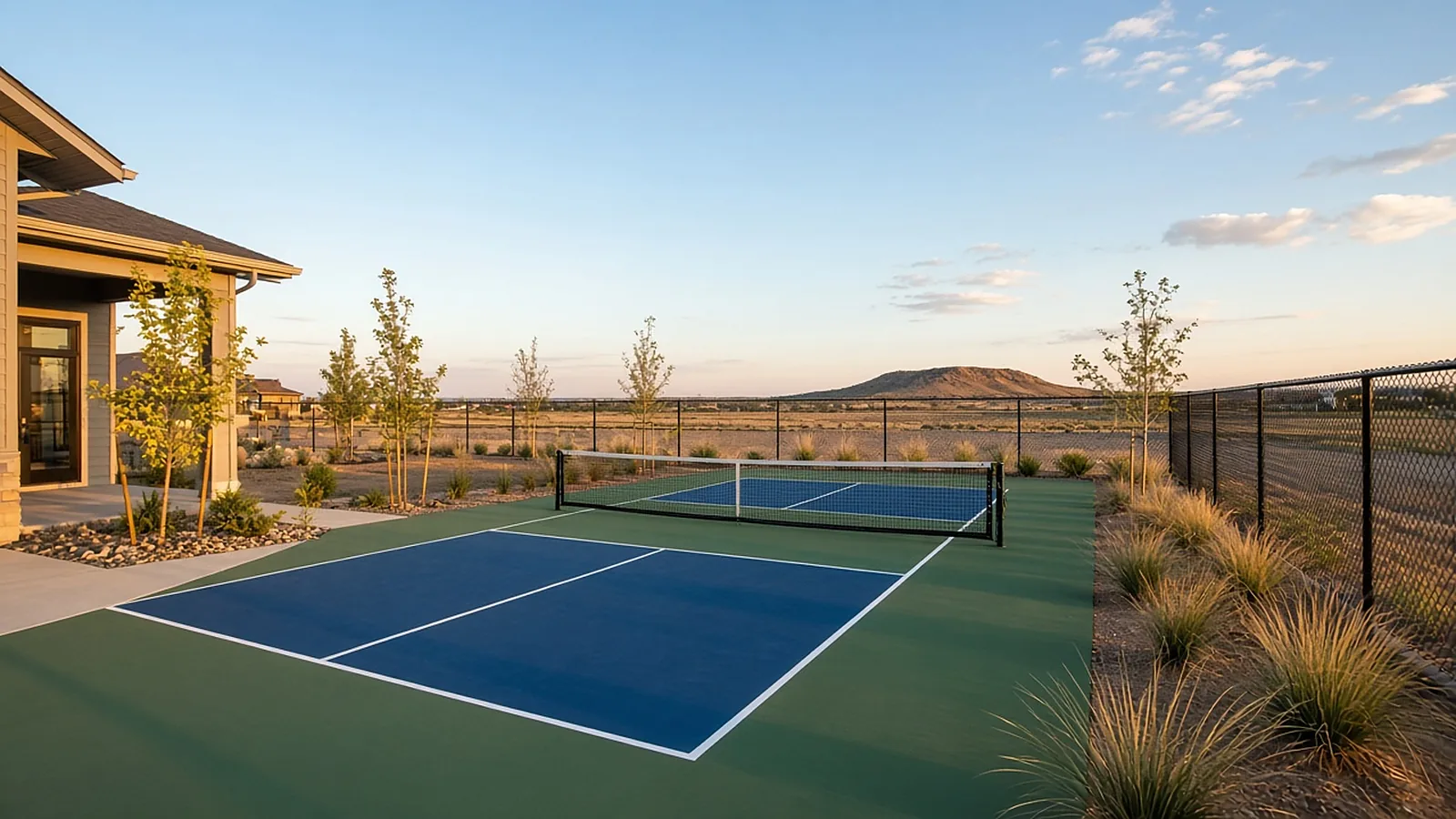
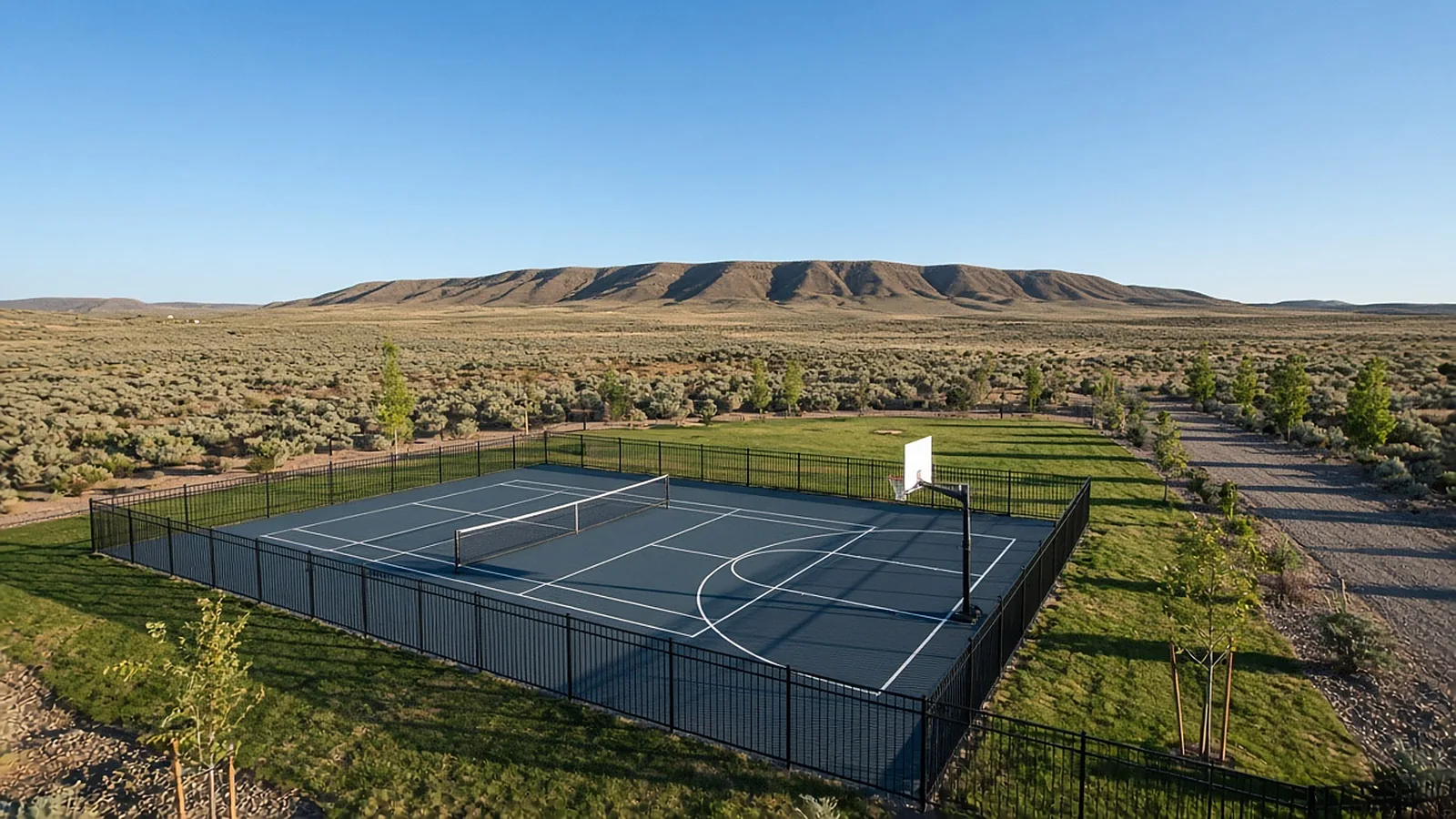
Most newer Kuna subdivisions were built on open ground with very few mature trees, so a backyard court gets the full force of every gusty afternoon. A pickleball is light and drifts badly in a crosswind, and blowing dust settles across the playing surface. Before anything is staked, we study how the lot is exposed and where the house, garage, and neighboring homes block or funnel wind. Orientation usually runs close to north and south so low sun stays out of players' eyes, and fence height and placement get planned around the prevailing wind so balls stay in your yard.
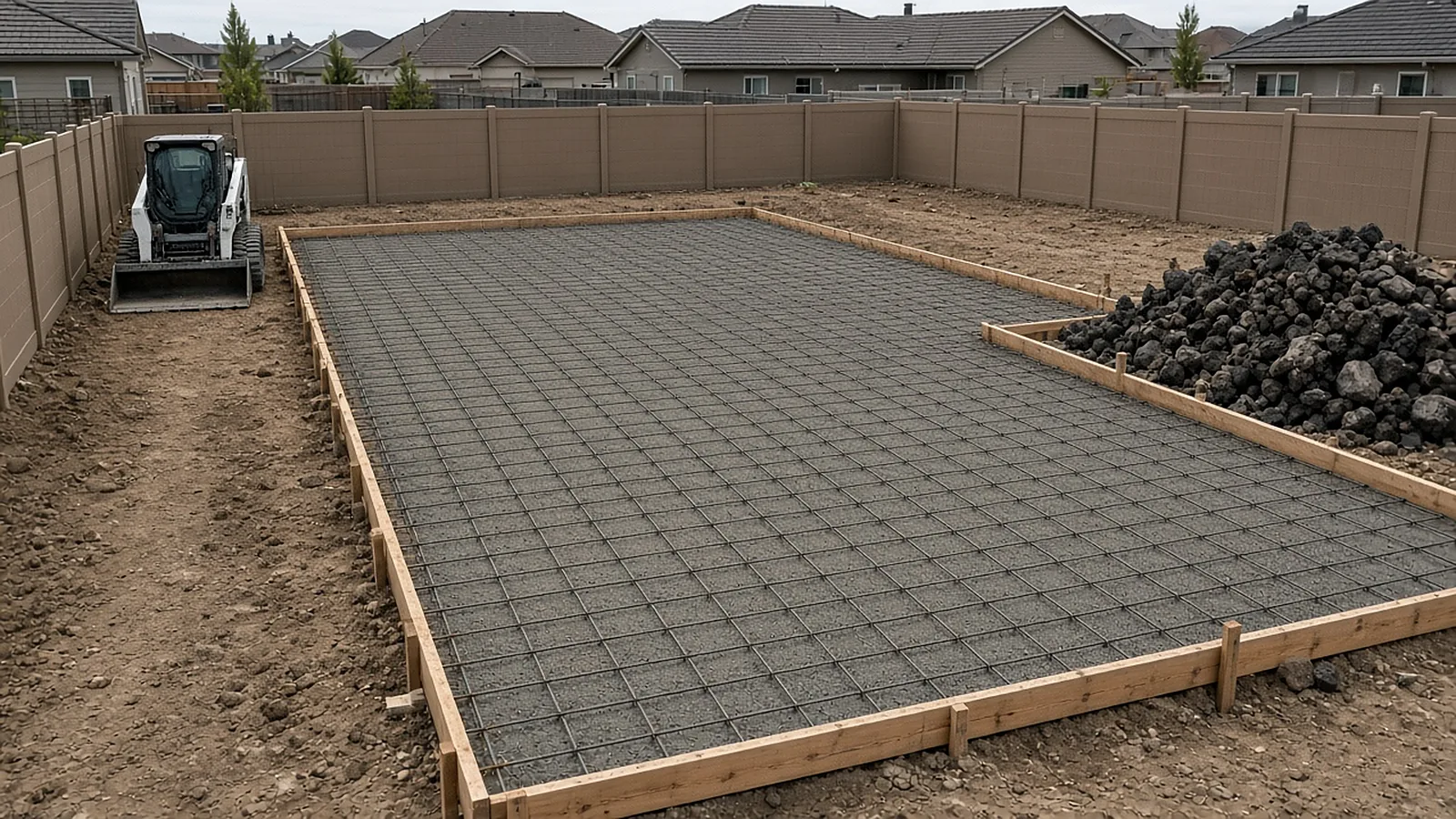
Ground conditions change quickly across the Kuna area. Some lots dig easily, while others hit shallow basalt or rocky layers that slow excavation and change how the base gets built. A court slab is a large, flat surface that freeze-thaw cycles will test every winter, so the subgrade has to be consistent from corner to corner. We excavate, remove or work around rock, and compact a base suited to what we actually find. Equipment access matters too: many subdivision backyards are fenced with narrow side yards, so we plan the route for machines and materials during the site visit.
Water is the third piece. Kuna subdivisions run on seasonal pressurized irrigation, and a sprinkler head aimed at a court leaves mineral spotting and slick patches, so heads often need to be moved or retuned. The slab itself needs a gentle slope that sheds rain and snowmelt off the playing surface and away from the house, fence posts, and any neighboring lot. Lots near Indian Creek or canal ditches deserve a closer look at where runoff goes. When irrigation needs rework, it gets folded into the same plan as our Kuna irrigation and drainage work.
How Altavera handles it
We walk the lot with the wind, the soil, and the water in mind, then sequence the build so drainage and grading come first, any irrigation changes come next, and the slab, fencing, surfacing, lines, and nets follow on a base prepared for what is actually underground.