Why Kuna Yards Are Hard to Grow
Rock, Wind, and Seasonal Water: What a Kuna Landscape Has to Handle
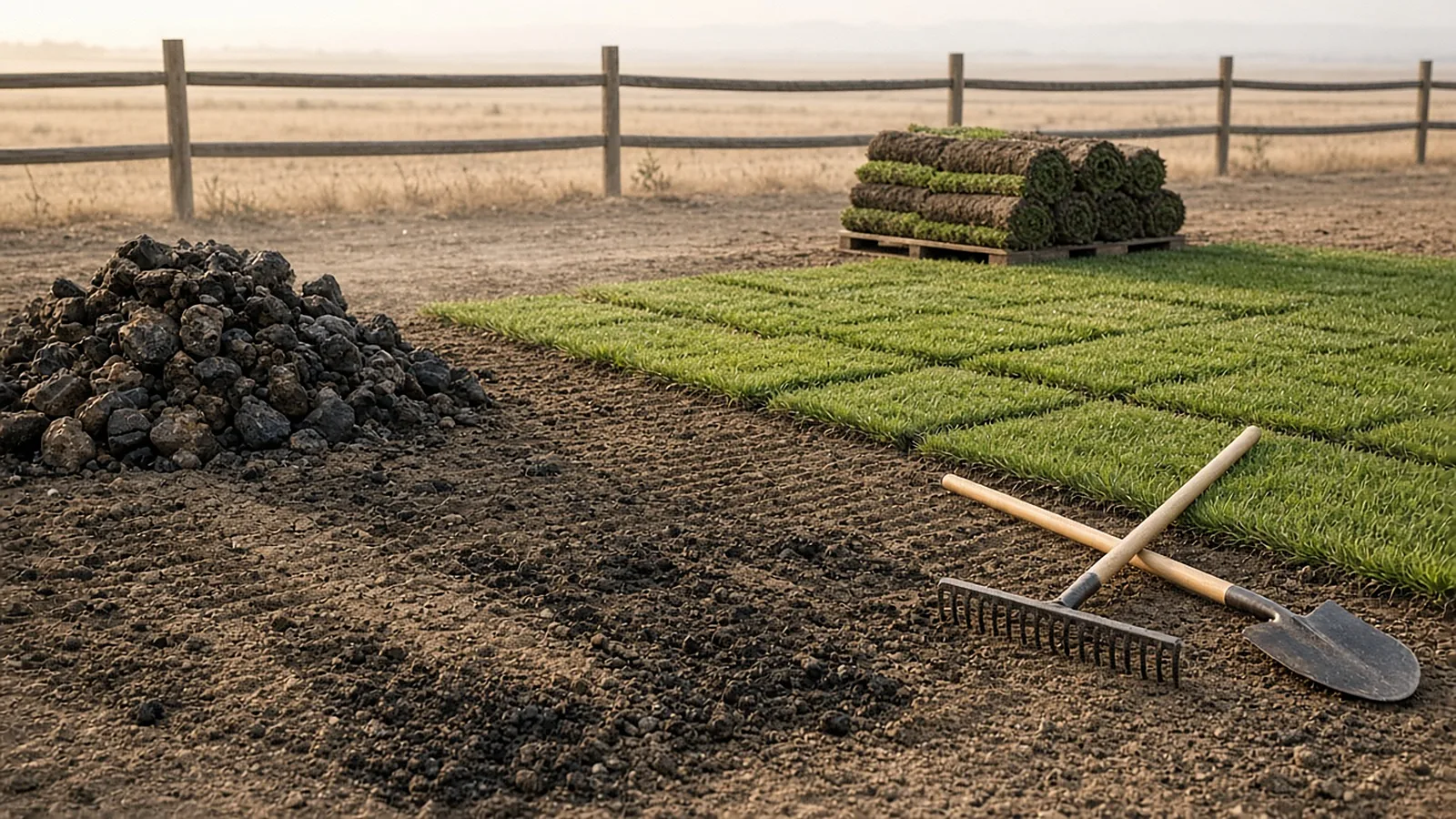
A green lawn in Kuna depends far more on what happens before the sod arrives than on the sod itself.
Plenty of Kuna lots look like easy dirt until a shovel goes in. Parts of the area have shallow basalt and rocky ground, and rough grading on new homes often leaves compacted fill, construction debris, and cobble mixed into whatever topsoil remains. Sod laid over that kind of base roots poorly, browns out at the edges, and shows every low spot. Planting holes for trees and shrubs can hit rock before they reach a useful depth, which changes where a tree can realistically go and how the hole has to be dug.
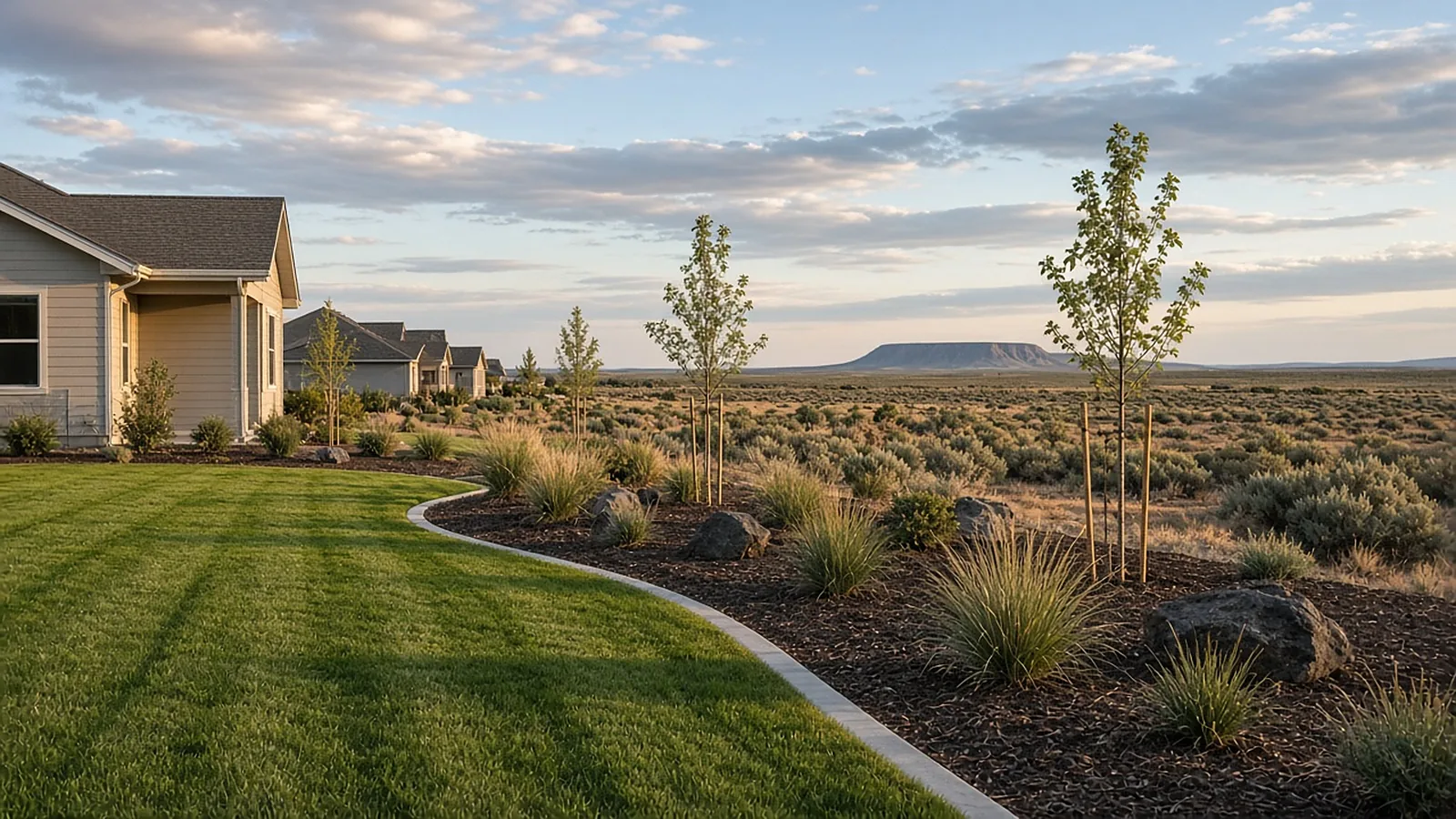
Then there is the wind. Kuna sits where the valley opens toward Kuna Butte and the Morley Nelson Snake River Birds of Prey National Conservation Area, with little to slow a gust as it crosses a new subdivision. Fresh sod seams dry quickly, loose bark blows out of beds, and young trees without support lean before they establish. Many newer neighborhoods also have HOAs with front-yard landscaping rules, and with almost no mature canopy on the street, the trees and beds you plant now will define how the yard looks for years.
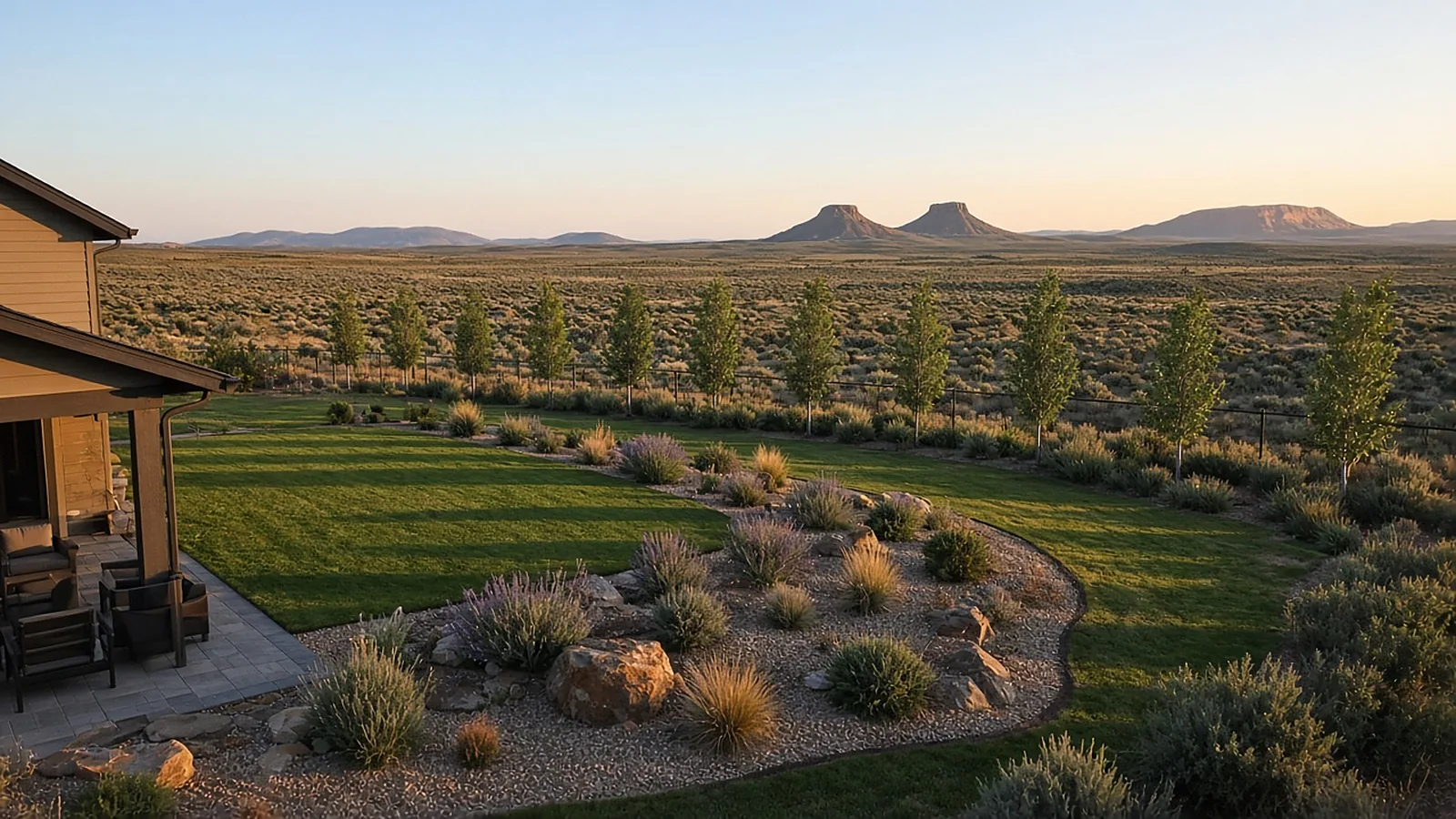
Water is the third piece. Most Kuna subdivisions run on pressurized irrigation supplied by canal water from the Boise-Kuna Irrigation District and other sources, and that supply is seasonal. Canal water can also carry sediment, so lawn and bed zones need to be designed around the system you actually have. Older in-town homes near Indian Creek and acreage parcels outside town can have very different setups. Choosing between lawn, xeriscape, and mixed beds starts with that water picture, which is why we often pair this work with irrigation and drainage in Kuna.
Our approach on Kuna lots
We walk the lot before proposing anything, probe for rock, and check how the builder left the grade. Drainage and irrigation go in first. Then we clear, amend, and finish grade the soil, and plan sod, beds, and trees around wind exposure, HOA rules, and the water your property actually receives.