The Nampa Lawn & Landscape Problem
Why New Nampa Lawns Struggle, and What Has to Happen Underneath
Most tired Nampa lawns and patchy beds trace back to soil and water decisions made before anything was planted.
Much of Nampa was irrigated farmland not long ago, and the silty soil that once grew row crops behaves differently after a subdivision is built on it. Excavators, concrete trucks, and framing crews pack the lot down, then a thin layer of topsoil gets spread across the surface. Sod laid on that layer roots shallow, dries out quickly in July heat, and stays soggy in low spots after the water runs. In some places a hardpan layer sits a short way down, and both roots and water stop when they reach it. The real fix starts in the ground under the grass.
Water is the other half of the Nampa picture. Many neighborhoods run on the City of Nampa's pressurized irrigation utility, while other properties draw from an irrigation district such as Nampa & Meridian Irrigation District. Both are seasonal, which affects when sod can be established and how new plantings get watered at the edges of the season. Untreated irrigation water can also carry sediment that clogs fine drip emitters, so filtration and zoning need attention before beds go in. Our irrigation and drainage work in Nampa is planned alongside the landscape for that reason.
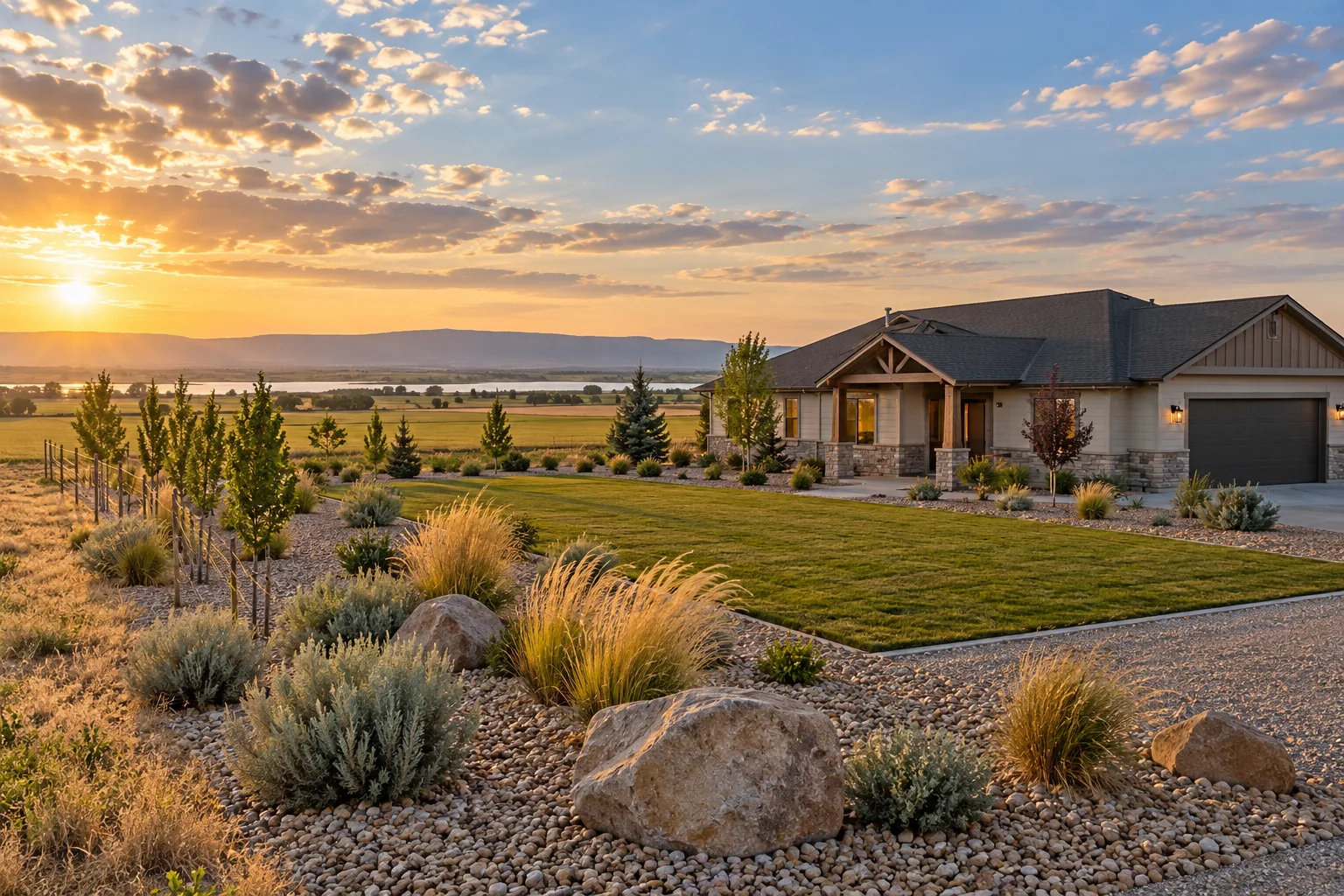
Lots also vary a lot from one part of town to the next. Older homes in Downtown Nampa sit under mature trees, and their roots and shade change what grows well and where sod makes sense at all. Newer subdivisions on the north and west edges often have HOA landscape requirements that call for a plan before work begins. Out toward Lake Lowell and on small acreage near the edge of town, open ground catches steady wind that dries new sod and scatters light mulch. That is one reason rock, heavier mulch, and windbreak plantings come up so often there.
How Altavera handles it
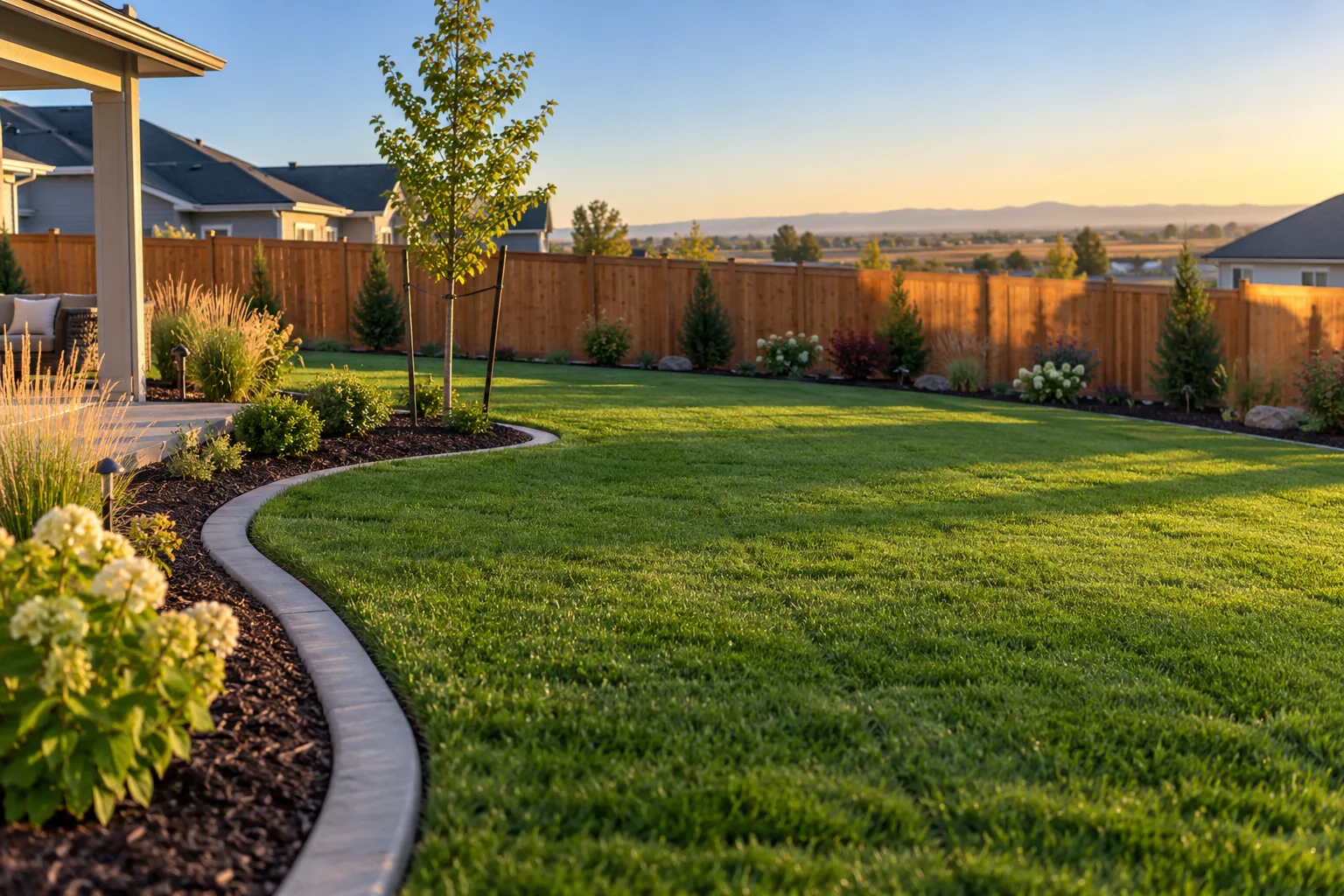
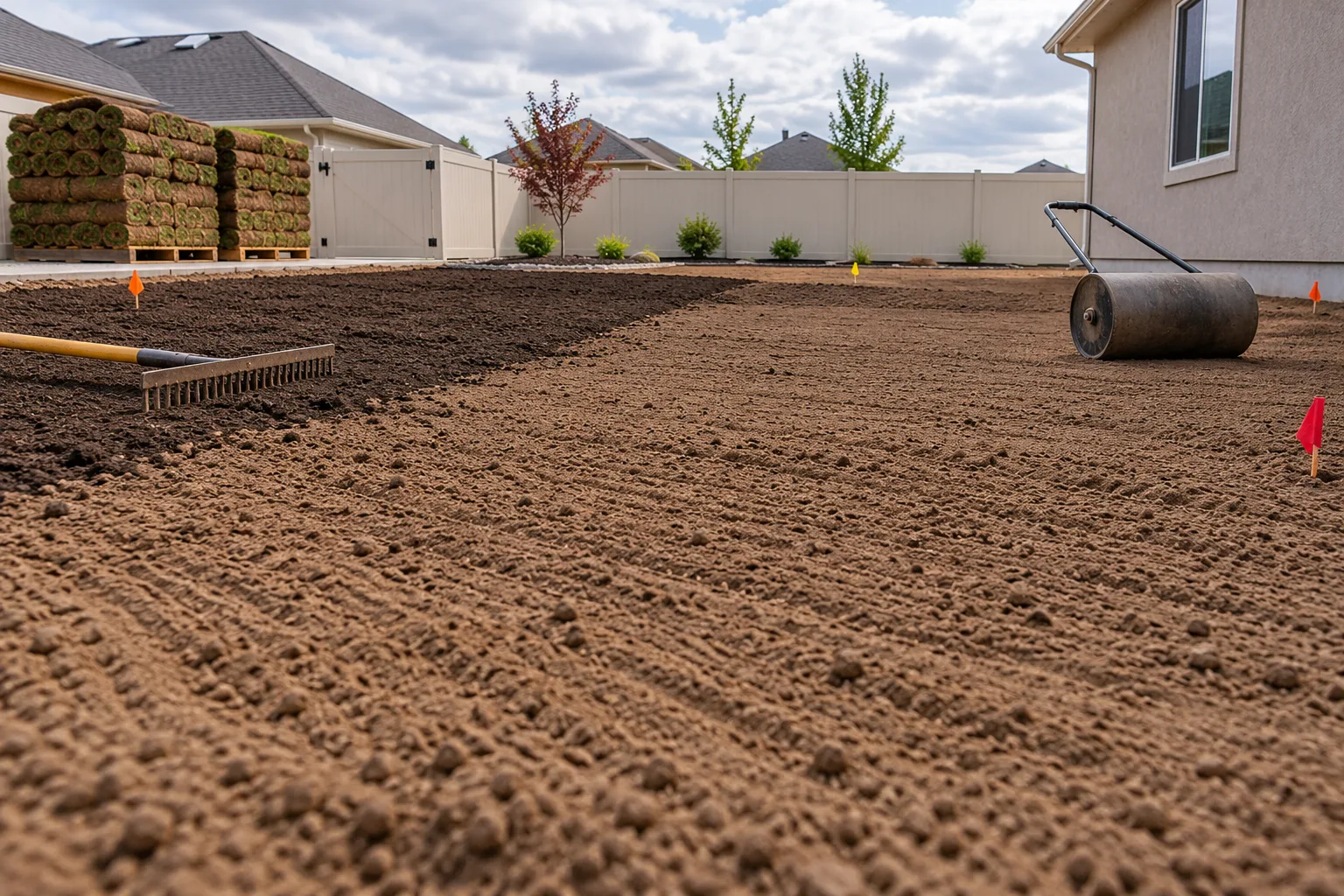
We find out how the ground behaves before designing anything on it. Compacted subsoil gets ripped and amended, grades are set to carry water away from the house, and irrigation is zoned for the lawn and beds it actually serves. Sod, plants, rock, and curbing go in last, onto soil ready to take them.