Why Nampa Yards Fight Back
What Makes a Nampa Backyard Renovation Tricky, and How We Plan Around It
Nampa's flat farmland, mixed water sources, and wide range of lot types mean a full yard redo succeeds or fails underground.
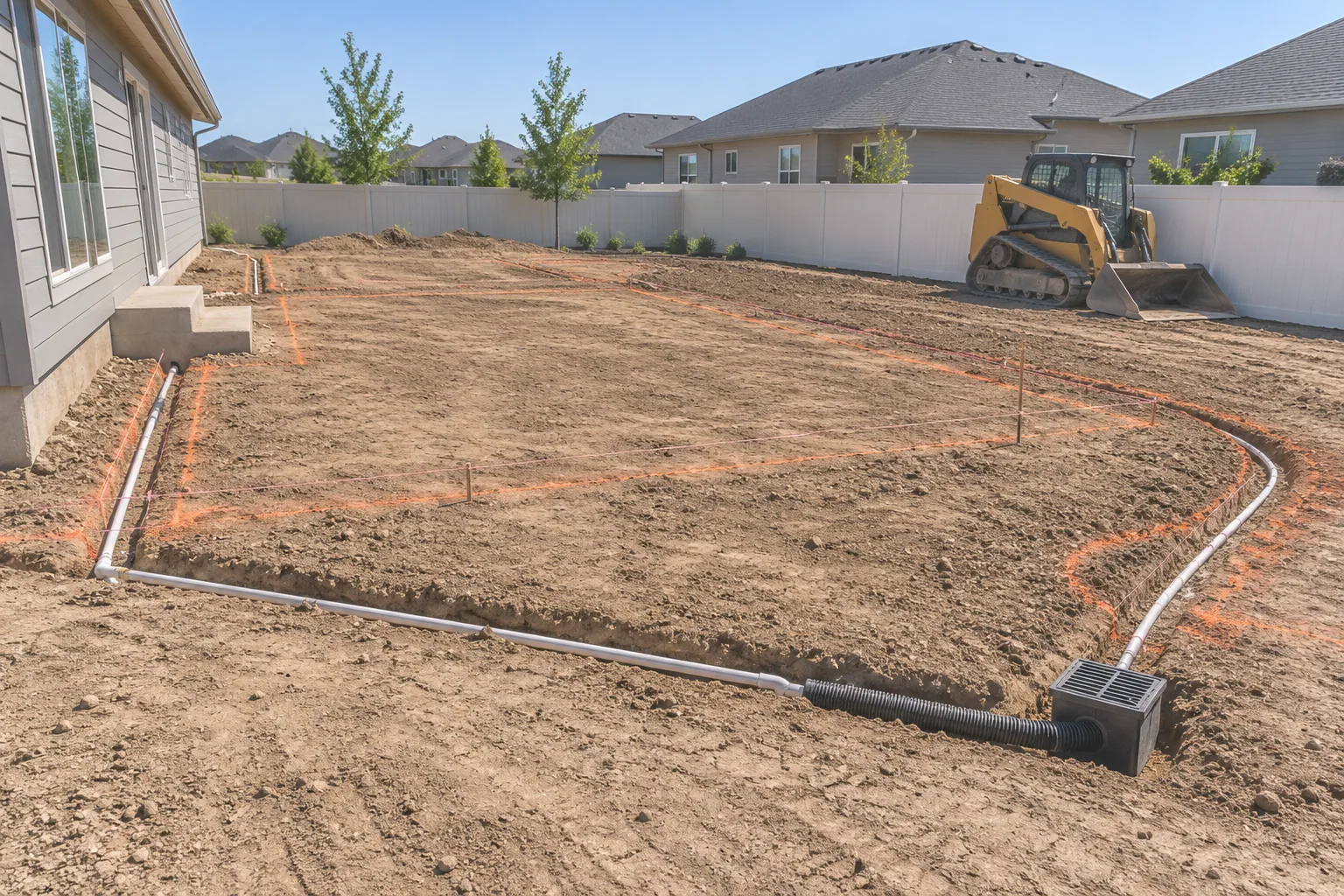
Flat ground fools people. Most of Nampa sits on old valley farmland, and a yard that looks level often has just enough fall in the wrong direction to send runoff toward the foundation or pool it beside the patio. The silty soils that once grew crops pack hard under construction traffic, so newer subdivisions on the north and west edges frequently hide a compacted layer a few inches down. In some spots there is true hardpan underneath. Water sits on top, roots stay shallow, and new sod struggles through its first summer.
Water supply is the second puzzle. Many Nampa neighborhoods run on the City of Nampa's pressurized irrigation utility, while other lots draw from an irrigation district such as Nampa & Meridian Irrigation District. Both are seasonal, so a renovated yard needs a system that works with the water you actually have, plus a plan for the shoulder months when it is off. Mainlines, valves, and sleeves have to be located and routed before a single paver goes down, or a full renovation ends up trenching through brand new hardscape. See how we approach irrigation and drainage in Nampa.
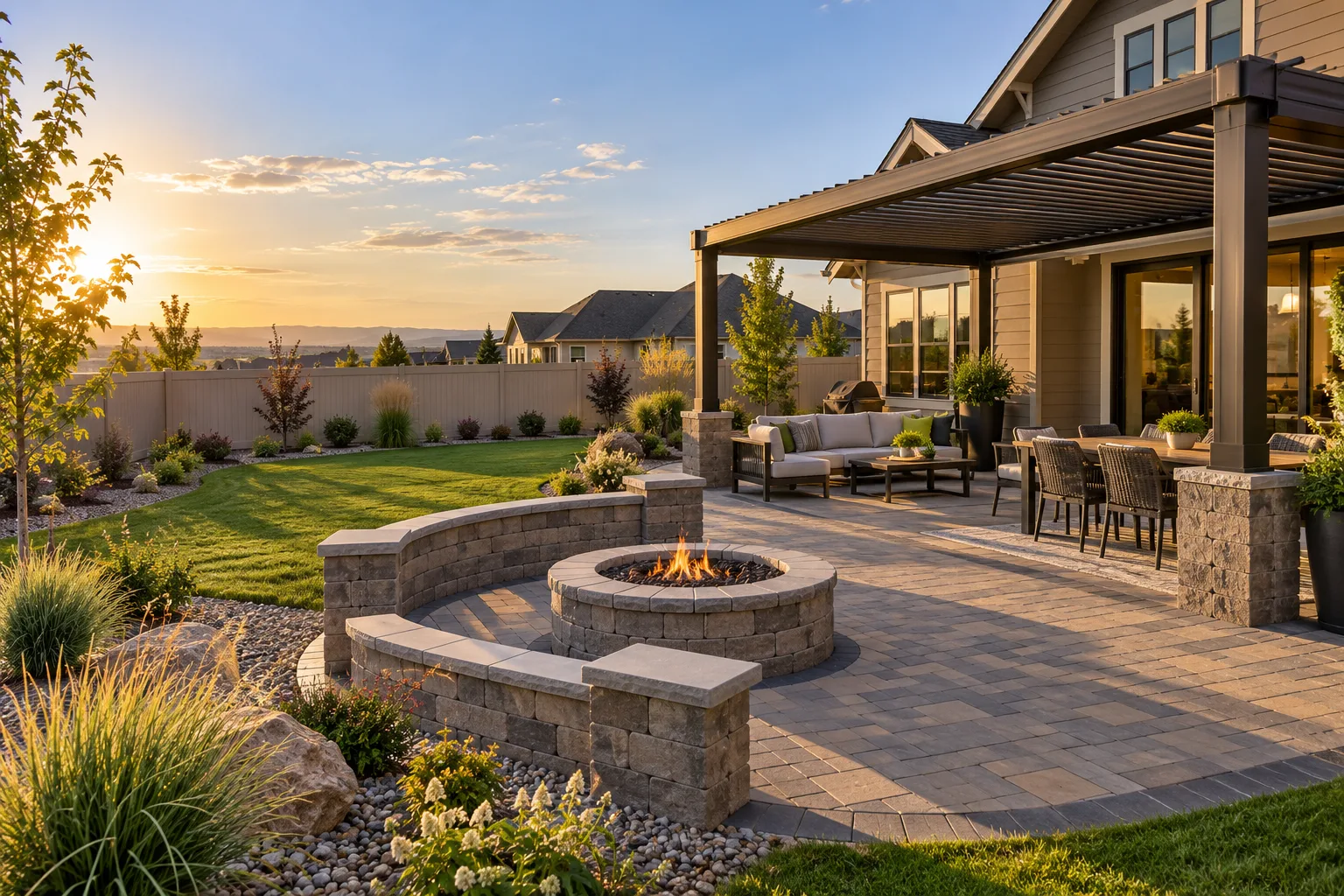
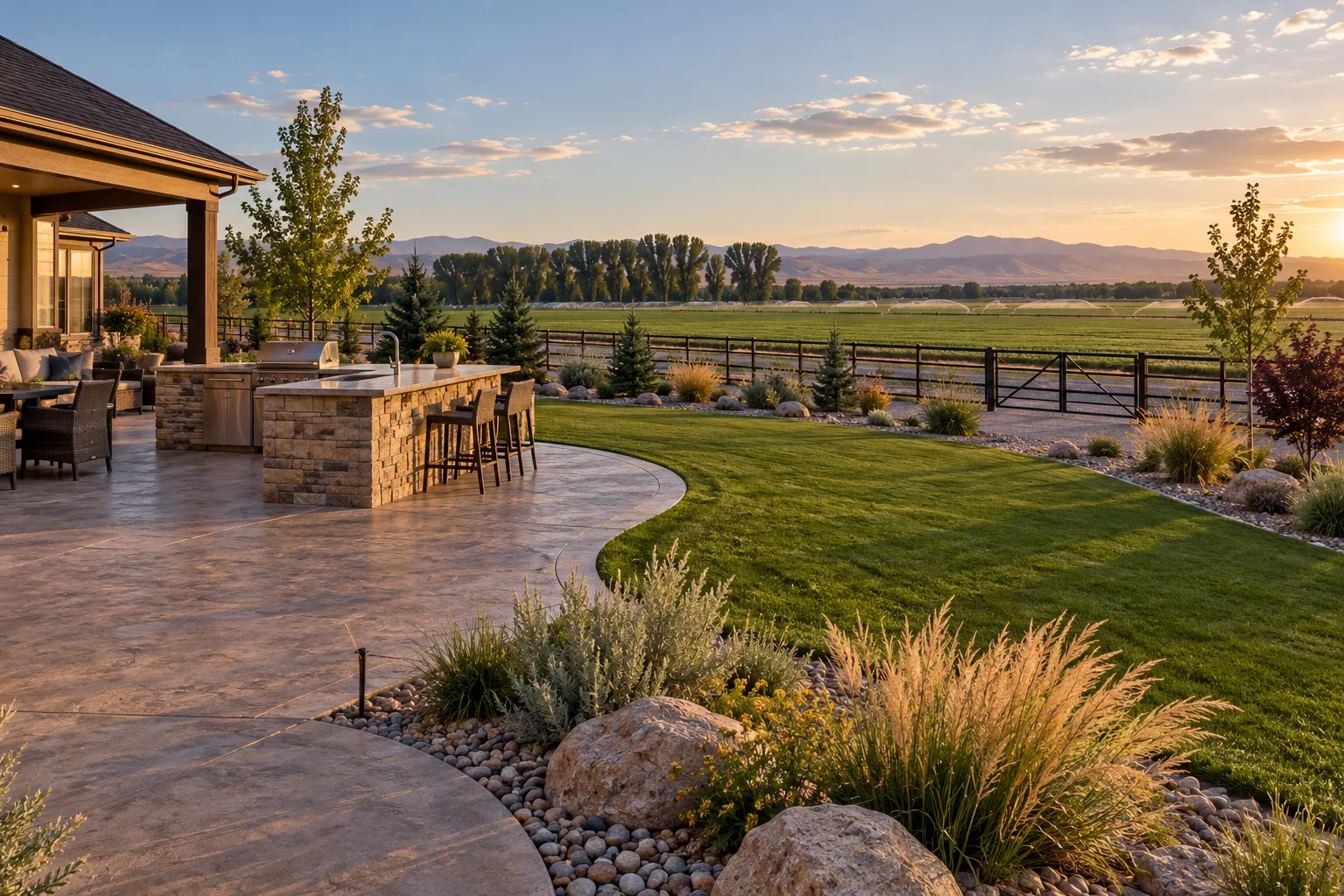
Then there is the lot itself. Downtown Nampa's older homes come with mature trees, tired fences, and decades of patched-together landscaping, while builder subdivisions arrive with a bare backyard, HOA design rules, and often a review step before fences or structures change. Small acreage near Lake Lowell and the south Nampa edges brings longer runs, outbuildings, and open exposure to the wind that sweeps across the valley. Wind shapes everything from where a fire feature sits to how pergola shade falls and whether loose mulch stays put.
How Altavera handles it
We check grades and soil before design is final, then fix drainage and loosen or amend compacted ground first. Irrigation source, mainlines, and sleeves are mapped next. Hardscape, structures, and planting follow in that order, all under one scope with one point of contact, so each phase protects the last.