The Caldwell Renovation Challenge
Why Caldwell Yards Need More Than a Facelift
In Caldwell, the soil, the water, and the wind decide how a renovation should be built, long before anyone picks a paver color.
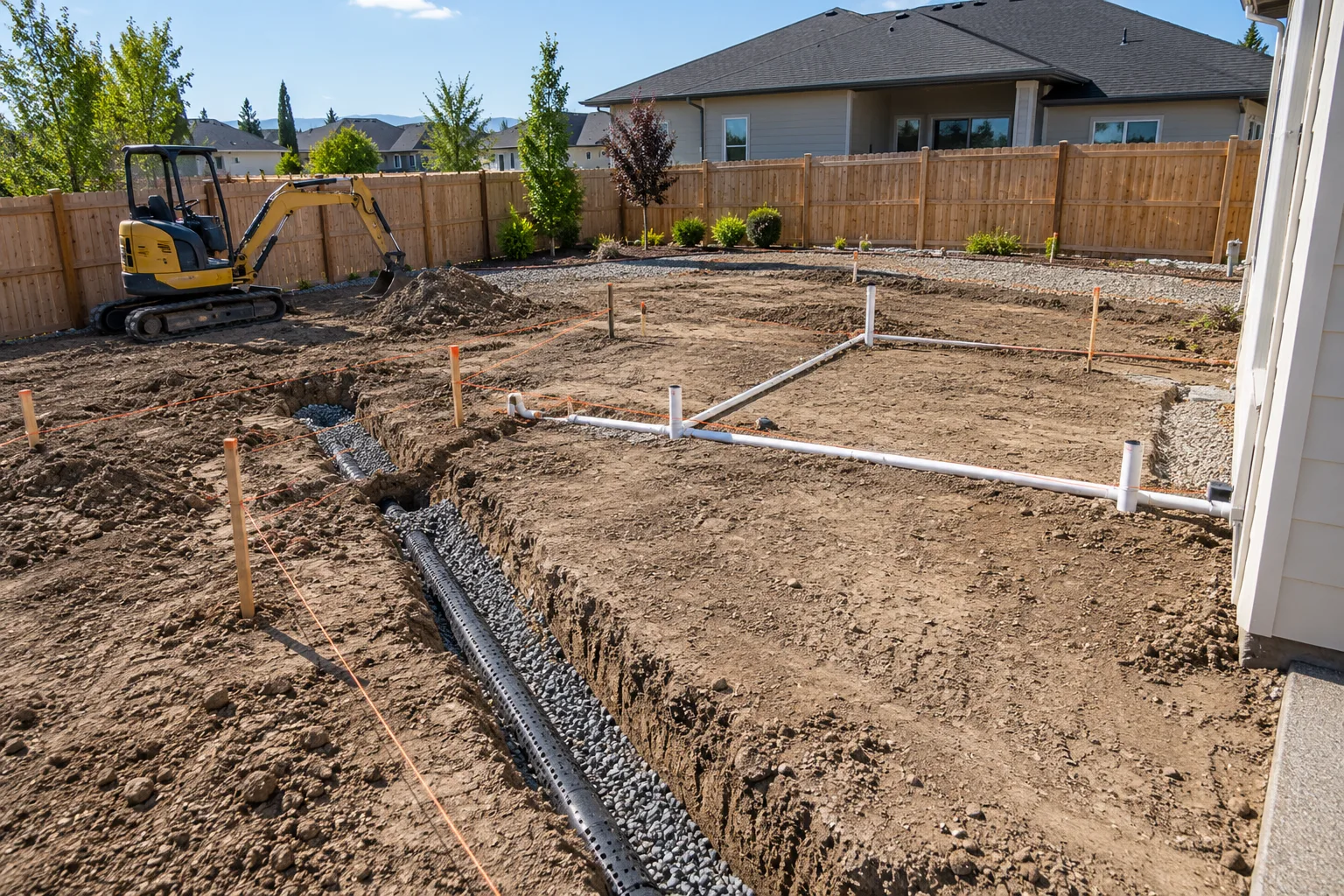
A lot of Caldwell was farmland not long ago, and the ground still behaves like it. The silt that once grew row crops packs tight when it is wet and turns to powder when it is dry, and in places a hardpan layer sits below the topsoil and stops water from moving down. Water that cannot drain sits under lawns and patios, then freezes when winter arrives. Renovating a yard here without first reading the soil and shaping the grade usually means puddles by the back door, soft spots in the lawn, and pavers that drift out of line.
Water is the second half of the story. Many Caldwell subdivisions run pressurized irrigation fed by canal water, often through the Pioneer Irrigation District, while acreage outside town may still pull from a ditch. Both are seasonal: the water shuts off in fall and returns in spring, and pressure and sediment vary with the source. A renovation that adds new beds, sod, or turf has to be designed around that supply, with filtration and zoning matched to it. That is why we plan irrigation and drainage in Caldwell before the first patio is laid out.
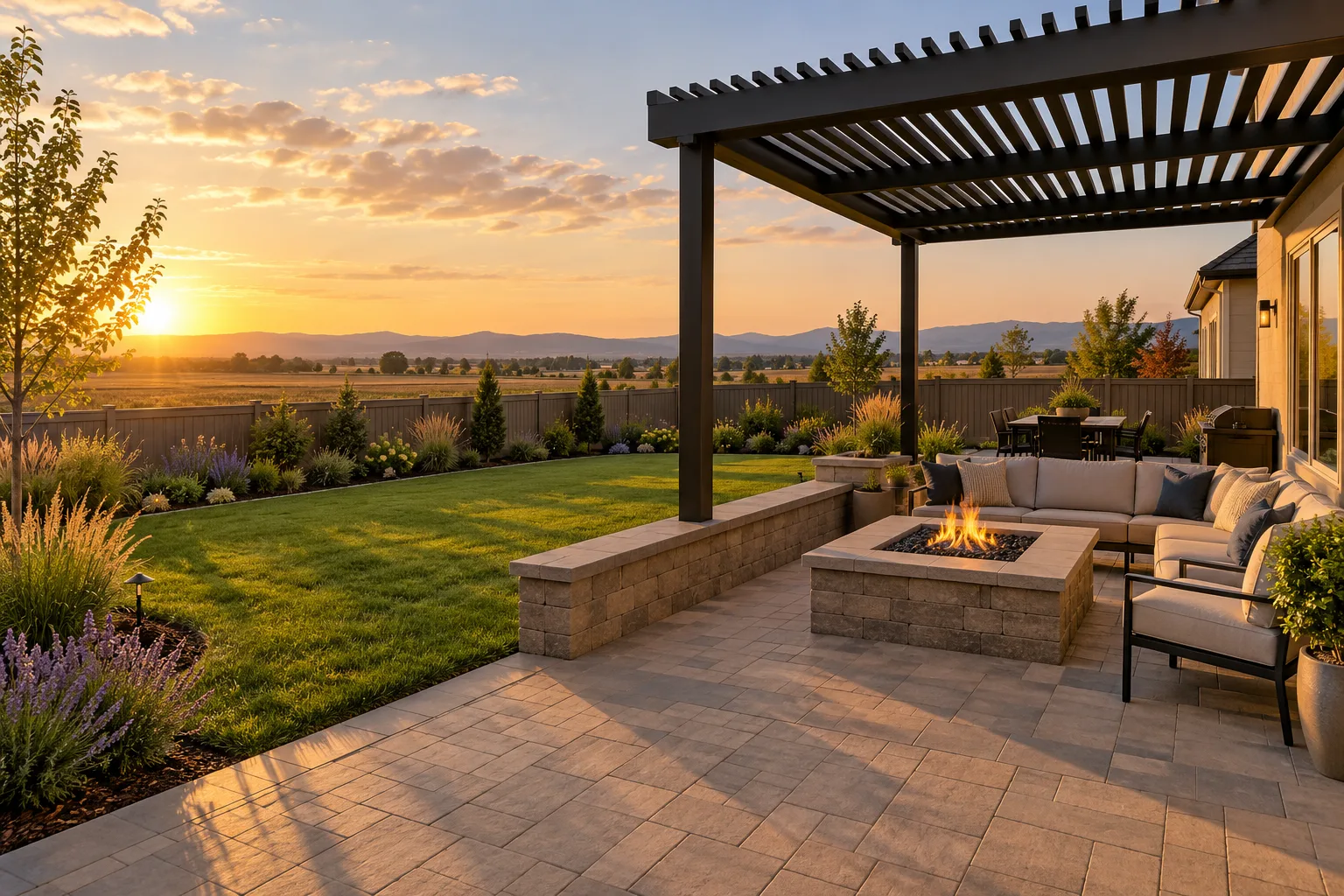
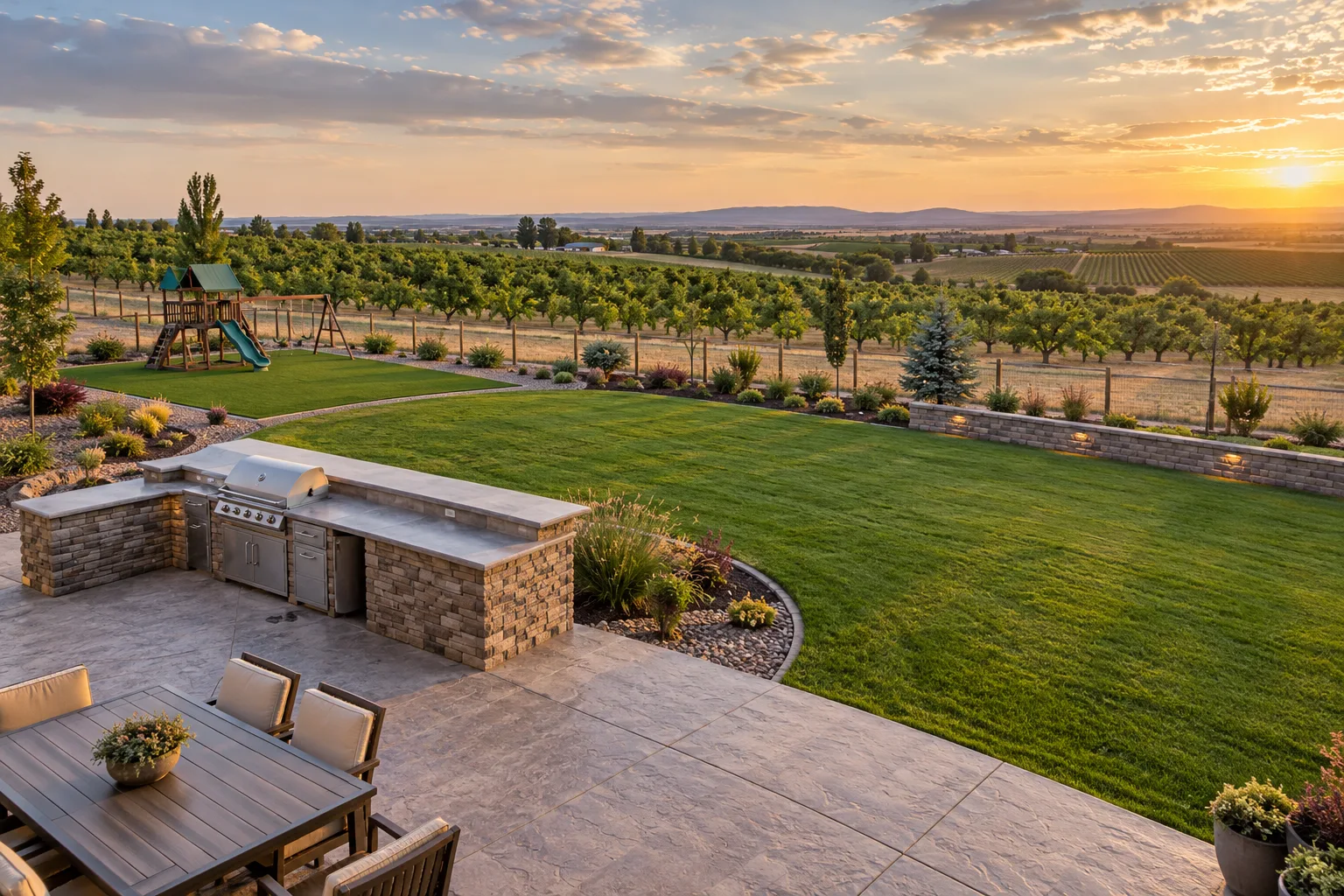
Then there is the lot itself. Older homes near the College of Idaho and around the revitalized downtown along Indian Creek tend to have mature trees, tired concrete, and layouts that predate how people use a yard today. Newer subdivisions on the north and east sides usually come with builder-grade grading and open exposure, so afternoon wind sweeps across patios and dries out new planting. Rural acreage brings longer runs, bigger grade changes, and ditch access to plan around. Each needs a different renovation plan, even when the wish list looks the same.
How Altavera handles it
We walk the Caldwell lot first: soil, slope, water source, wind direction, and what is already underground. Grading and drainage go in before anything else, irrigation lines and sleeves follow, then hardscape and structures, then planting and finish. One point of contact keeps every phase connected, so later work never undoes what came before.