What Lies Under Caldwell Turf
Why Turf Fails on Caldwell Ground and What Fixes It
Turf in Caldwell rarely fails at the surface. It fails in the dirt underneath.
Caldwell sits on some of the most productive farm ground in the valley, and that history shows up as soon as a turf crew starts digging. Old field silt is fine-grained and holds water longer than people expect, then dries into a crust. A few inches lower, many lots hit a cemented hardpan layer that stops water cold. If turf goes over that combination on a thin base, rain and pet urine have nowhere to go. They pool under the backing, start to smell, and soften the base until the surface ripples.
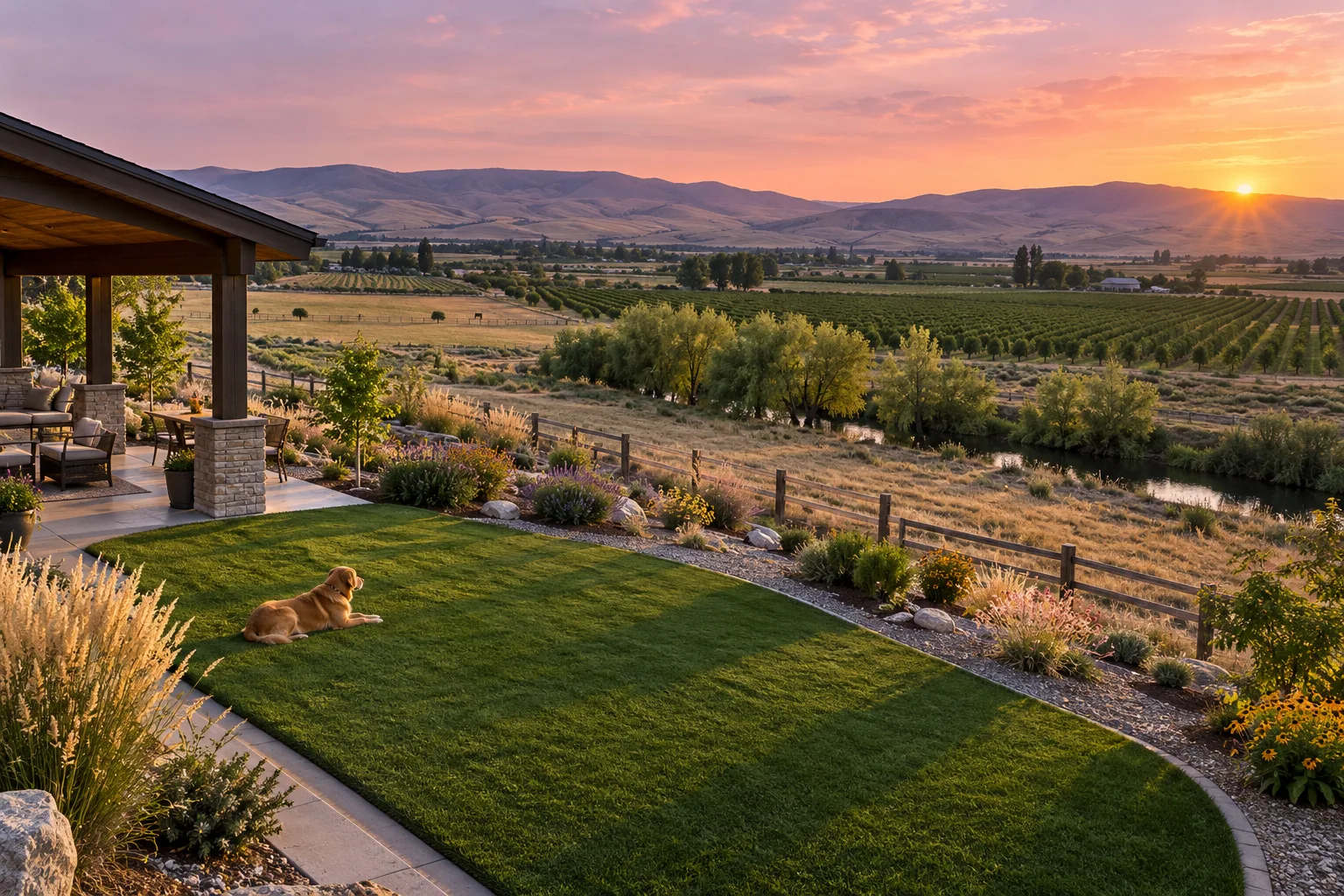
Water is the second piece. Many subdivisions on the north and east sides of Caldwell run pressurized irrigation fed by Pioneer Irrigation District and other canal water, and acreage around town often still takes ditch water during the season. Turf doesn't need that water, but the beds, trees, and lawn next to it do, and their overspray and runoff end up on the turf. Lines that cross the turf area need to be capped, rerouted, or sleeved before the base goes down. Coordinating that with irrigation and drainage work in Caldwell keeps the system serving what's still planted.
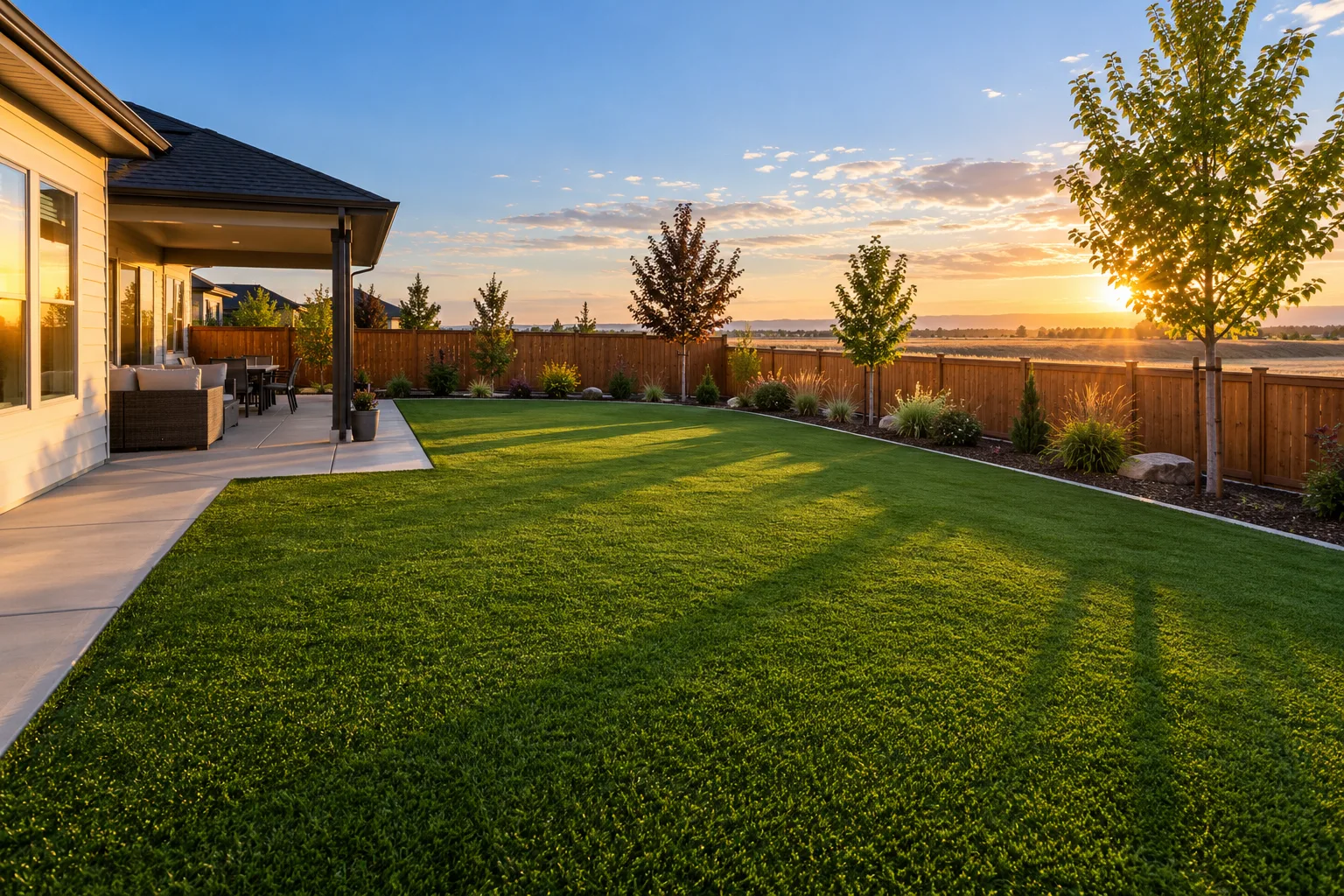
Then there's wind. Open lots in newer Caldwell subdivisions and on rural parcels take steady gusts that lift loose edges and blow dust and chaff from nearby fields into the fibers. In the older neighborhoods near the College of Idaho, the problem is different: mature tree roots, shade, and tight side yards make layout and edge anchoring the hard part. Each setting needs its own plan for perimeter restraint, seam direction, and infill. Some HOAs in newer subdivisions also want to review turf before it goes in.
How Altavera handles it
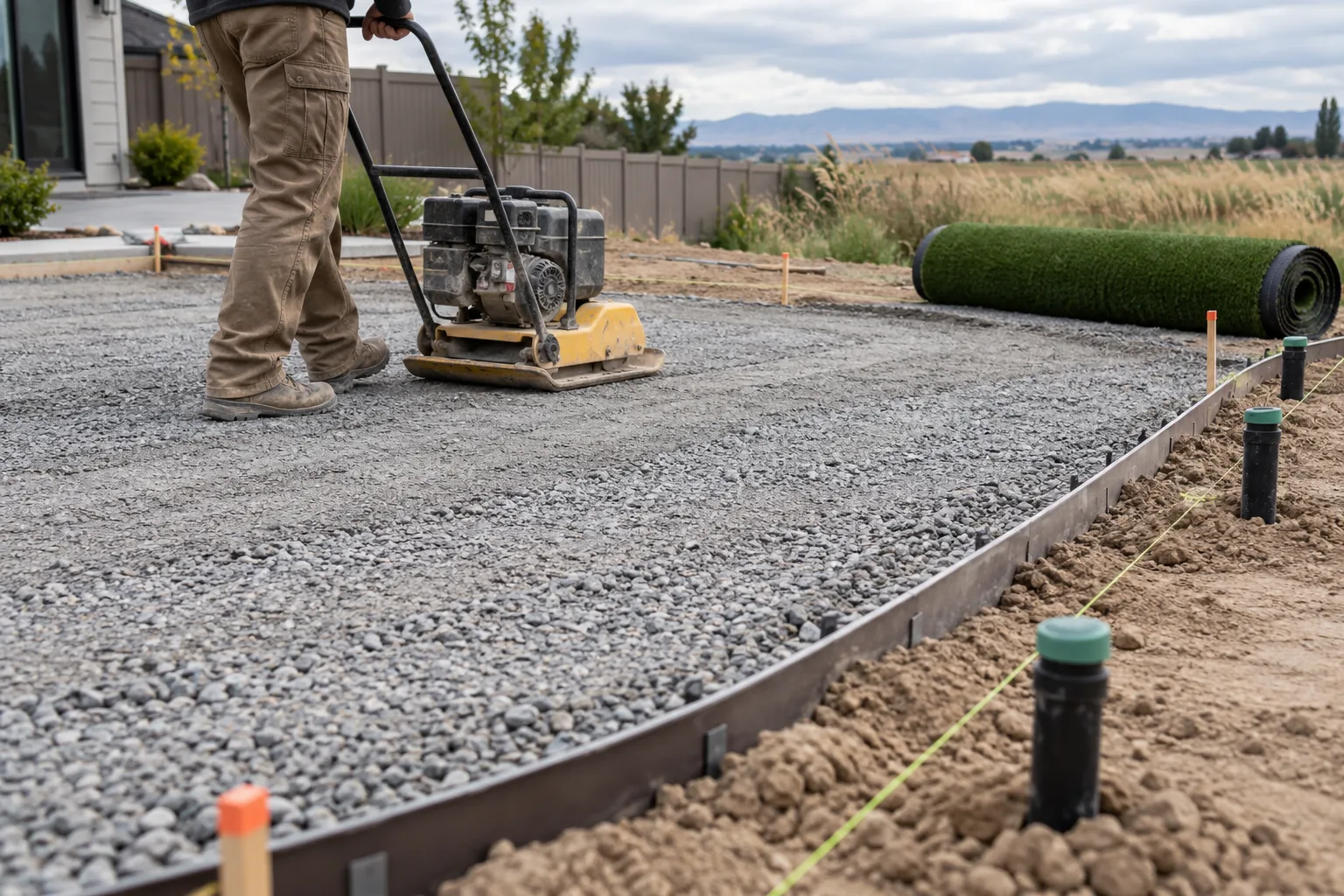
We dig out the soft field silt, probe for hardpan, and break through it or drain around it where needed. Next comes a compacted, free-draining aggregate base, graded so water leaves the turf area. Irrigation gets adjusted before the base goes in, edging is anchored against wind, and seams run with the grain.