The Caldwell Soil and Water Problem
Why Caldwell Lawns Struggle Before the First Roll Goes Down
When a Caldwell lawn or planting bed fails, the cause is usually the dirt or the water schedule, not the sod.
Much of Caldwell was farmed for generations before it was subdivided, and you can see that history as soon as a shovel goes in. The silt that grew row crops is fine textured, packs tight under construction traffic, and can crust over when it dries. In some parts of town a hardpan layer sits below the topsoil, and roots can't push through it and water can't drain past it. Sod rolled over compacted silt or shallow hardpan tends to root shallow, brown at the edges in midsummer, and stay soggy in low spots after every watering.
Water is the other half of the problem. Many subdivisions on the north and east sides run pressurized irrigation fed by canal water, with Pioneer Irrigation District and other canal systems supplying much of the area. Acreage outside town often relies on ditch water. Both sources are seasonal: water shuts off in fall and comes back in spring. A landscape that only works with unlimited culinary water will struggle here. Plant choices, zone layout, and sod timing all have to fit the canal season, so we plan irrigation and drainage in Caldwell before anything gets planted.
Then there is the wind. Newer lots on the open edges of town and rural parcels without mature trees take steady afternoon wind, which dries out new sod seams and blows mulch out of beds. Older neighborhoods near the College of Idaho have the opposite problem: big shade trees, established roots, and decades of patchwork grading that can send water toward foundations. Every Caldwell landscape has to be planned for its own lot, whether it's a bare builder yard in a new subdivision, a historic lot near downtown and Indian Creek, or a few acres with a ditch along the property line.
How Altavera handles it
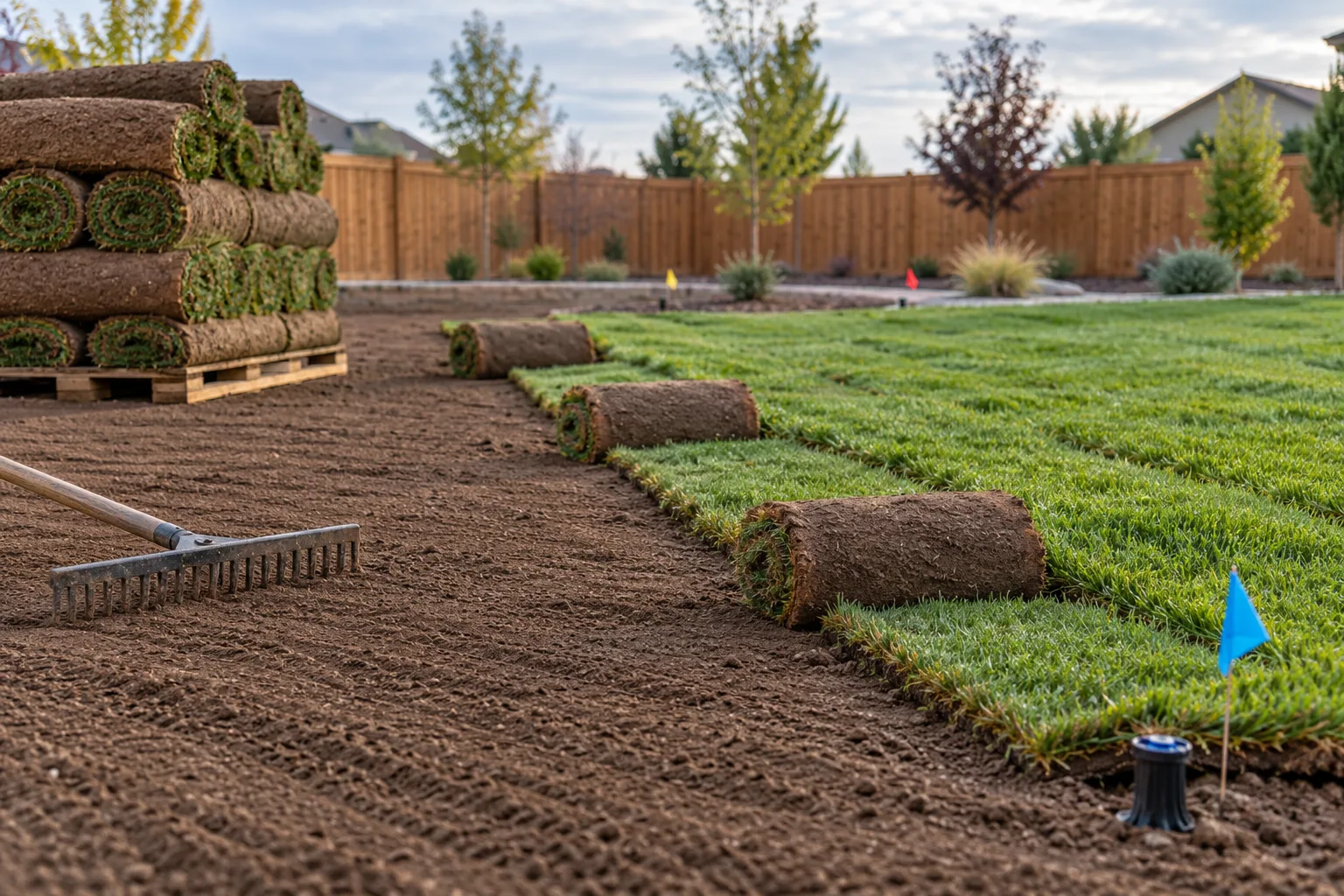
First we check how the soil drains and where water wants to go. We loosen and amend compacted silt, set grades that move water away from the house, and lay out irrigation for the canal season before sod or plants arrive. We choose rock, mulch, and plant spacing with wind and seasonal water in mind.