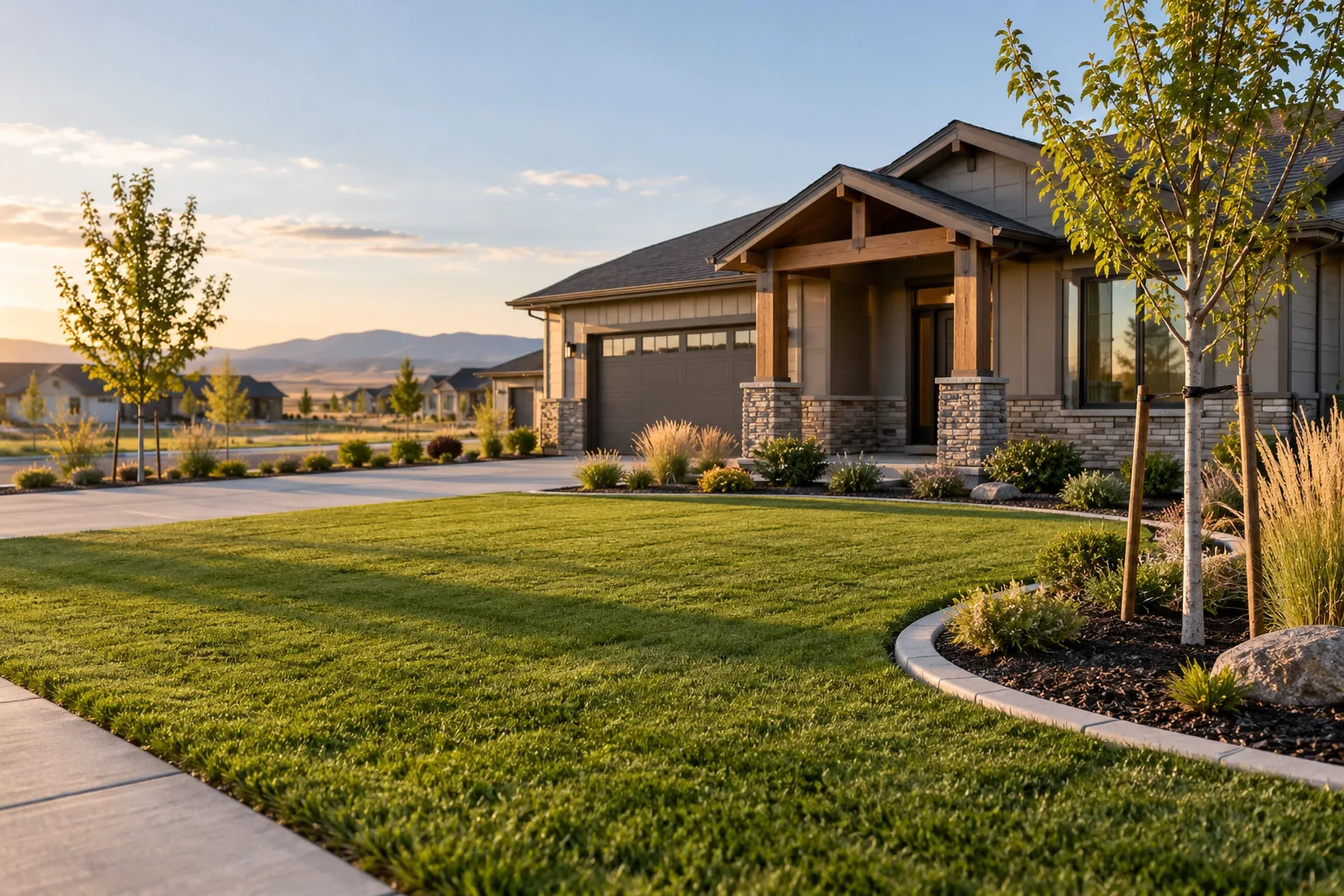
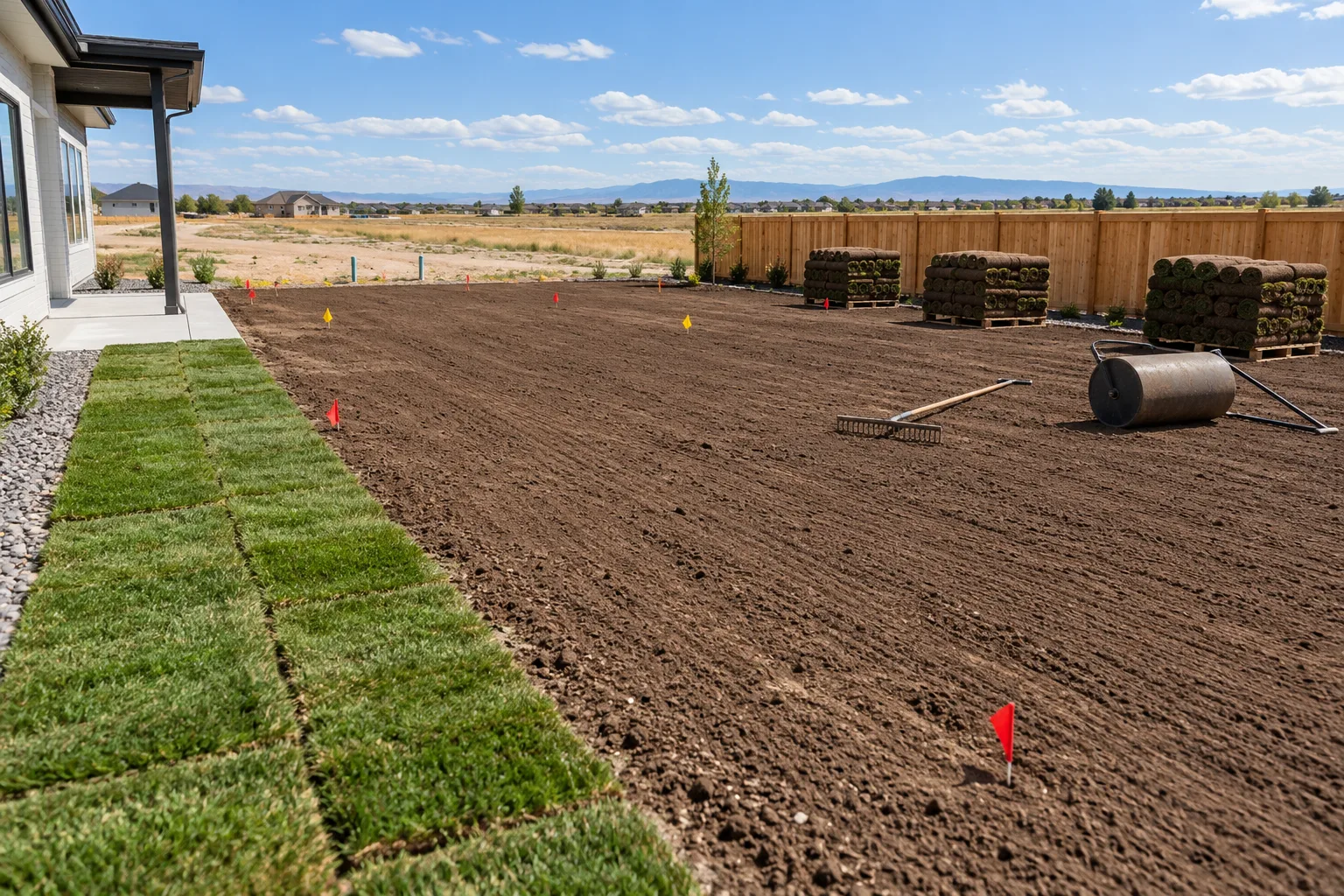
Star grew fast on ground that used to be fields and pasture. When a subdivision goes in, heavy equipment compacts each lot, builders spread whatever soil is left over, and the homeowner receives a flat, bare yard with a sprinkler stub or nothing at all. Sod rolled straight onto that hard surface has trouble pushing roots down, and the weakness shows up during the first long, hot stretch of summer. The fix is loosening and amending the soil, setting a finish grade that moves water away from the house, and confirming irrigation coverage before a single roll goes down.
Then there is the wind. Open ground north of the Boise River, with few mature trees in the newer neighborhoods along State Highway 44 and out toward Highway 16, leaves lawns and plantings fully exposed. Fresh sod edges curl and dry faster, young trees lean or snap without proper staking, and lightweight mulch can end up in the neighbor's yard. Plant selection, tree placement, and ground cover all have to account for that exposure, especially on corner lots and properties that still back onto working farmland.
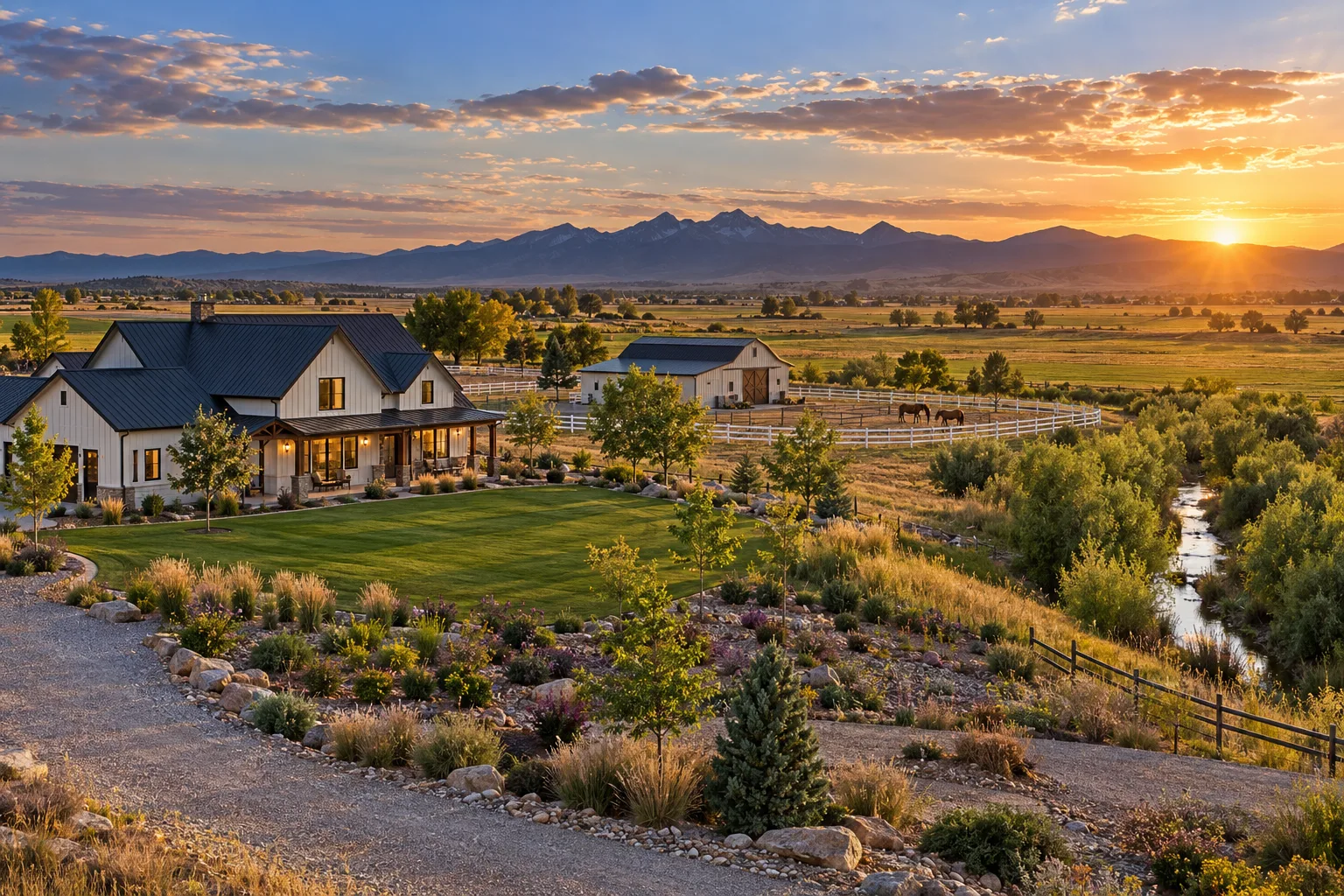
Water is the other variable. Subdivision lots usually run on pressurized irrigation, which is seasonal and shut off over winter. Acreage may pull from a canal or ditch, and some rural parcels depend on a well with limited flow. Each source changes how much lawn makes sense, how zones get split, and where a low-water xeriscape is the smarter call. That is why the irrigation and drainage work in Star gets settled before anything is planted, and why horse properties need turf kept practical around paddocks and gates.
How Altavera handles it
We treat landscaping as the last phase of one coordinated build. Grading, drainage, and irrigation are verified first, then soil is loosened and amended, and sod and plants are chosen for Star's wind, sun, and water source. One team carries the project from rough grade to final walkthrough, so nothing is handed off half done.