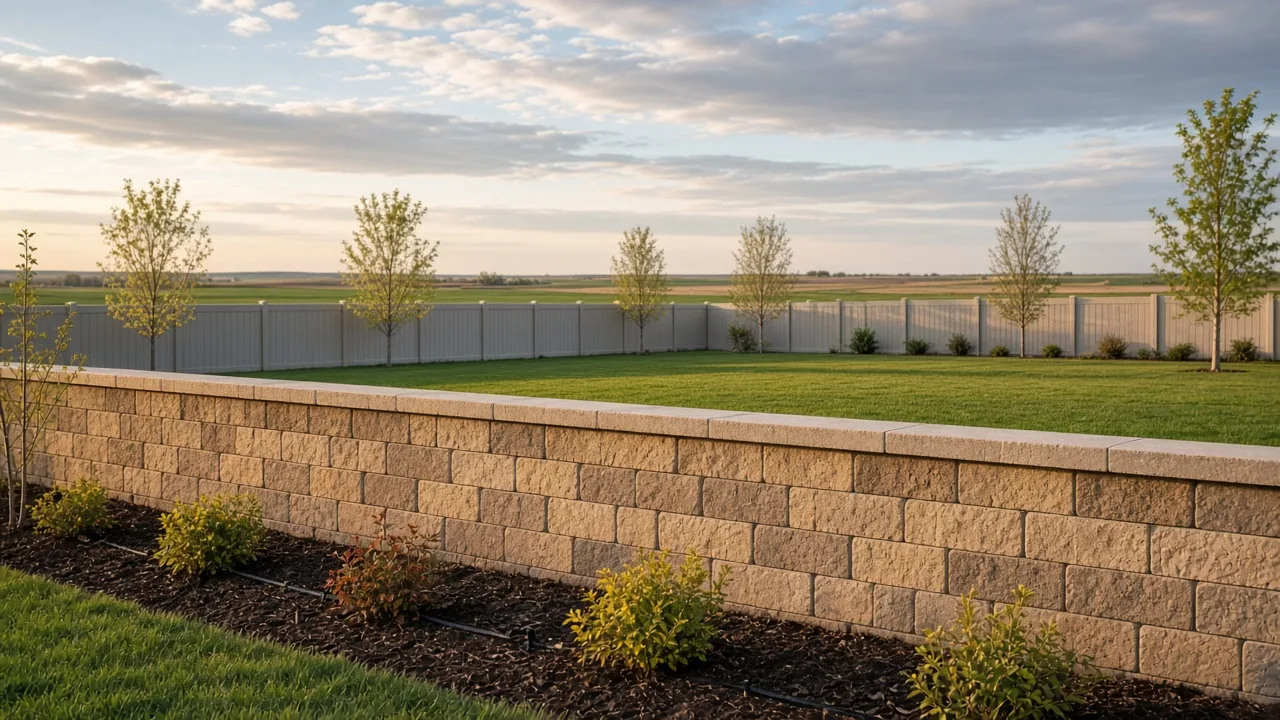
New subdivisions north of State Highway 44 are going in on former fields, and builders often raise house pads and shape lots so each one sheds water toward the street. The result is a series of small but real grade steps between neighbors, along side yards, and at the back fence. A short wall stacked on loose fill along one of those steps can lean within a few seasons, especially where pressurized irrigation keeps the soil behind it wet all summer.
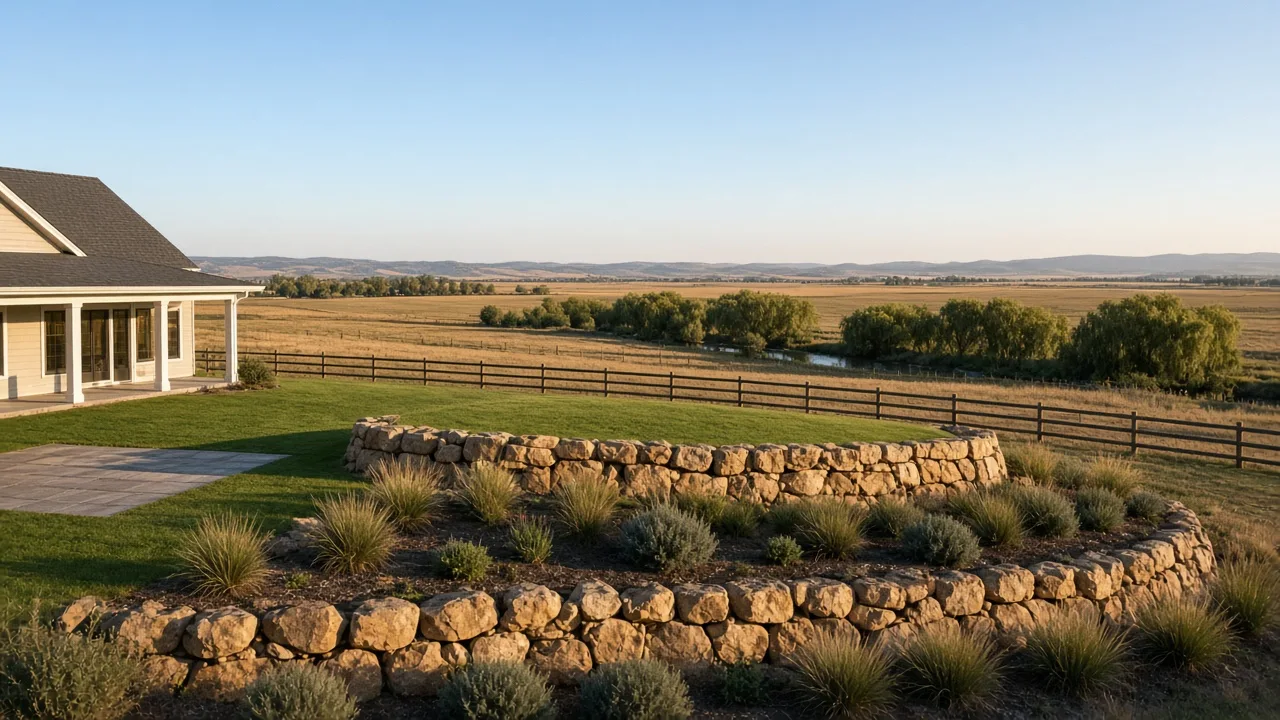
On acreage around Star, the challenge changes. Canal and ditch irrigation can soak the ground near a wall for weeks during the water season, and some properties have ditch banks, laterals, or easements running close to where an owner wants a terrace or raised bed. Horse properties add hoof traffic, equipment, and manure management near the wall line. Each of those conditions changes how the drain rock, drain pipe, and outlet should be laid out before a single course goes down. For the water side of the job, see irrigation and drainage in Star.
Then comes winter. Open fields give wind a long run at exposed yards, and with few mature trees in new neighborhoods, wall faces take full sun, drying wind, and repeated freezing. Water trapped behind or under a wall expands each time it freezes. A wall without free-draining backfill and a firm, compacted footing slowly pushes outward, and caps start to loosen long before the face shows a visible bulge.
How Altavera handles it
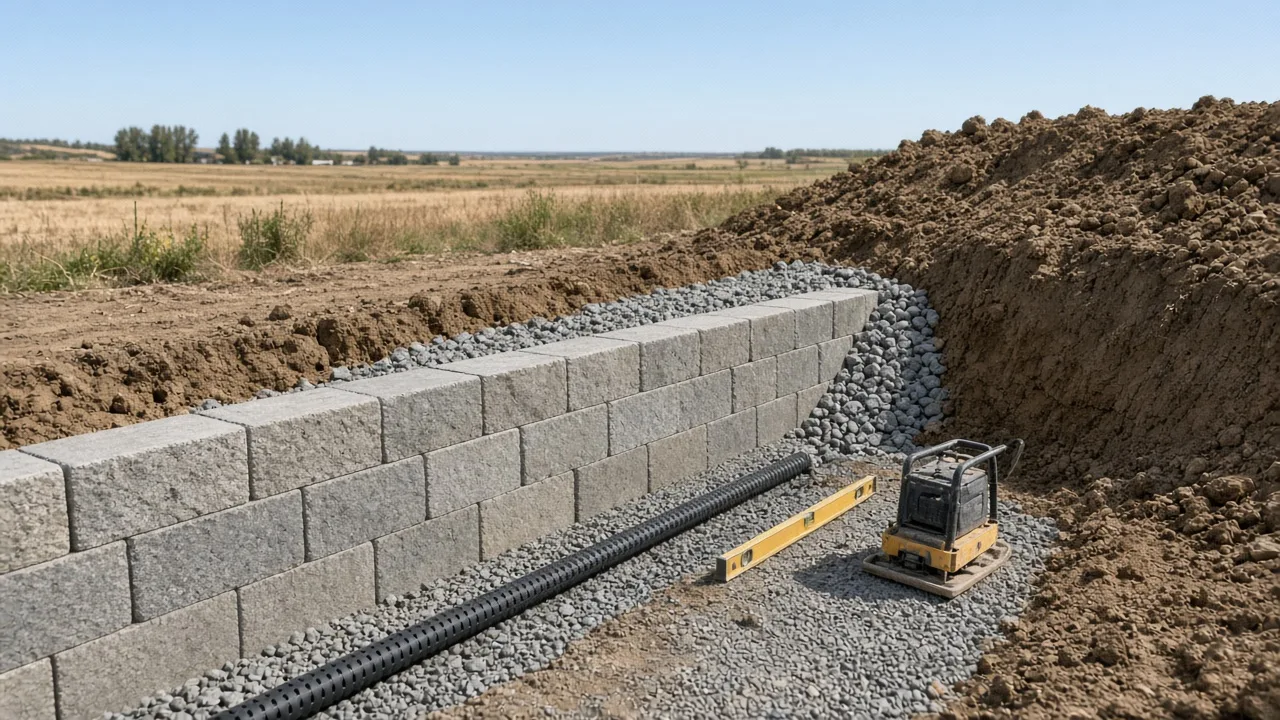
Before we recommend a wall, we walk the Star property and watch where water comes from: the neighbor's lot, a ditch, the sprinkler zone, or the roof. Then we size the footing, set drain rock and perforated pipe with a real outlet, and compact in lifts. We confirm any engineering or permit question for your specific wall before building.