Cooking Outside in Star
What Open Ground Does to an Outdoor Kitchen in Star
In Star, the hard part of an outdoor kitchen is rarely the countertop; it is the wind, the distance, and the water moving across the lot.
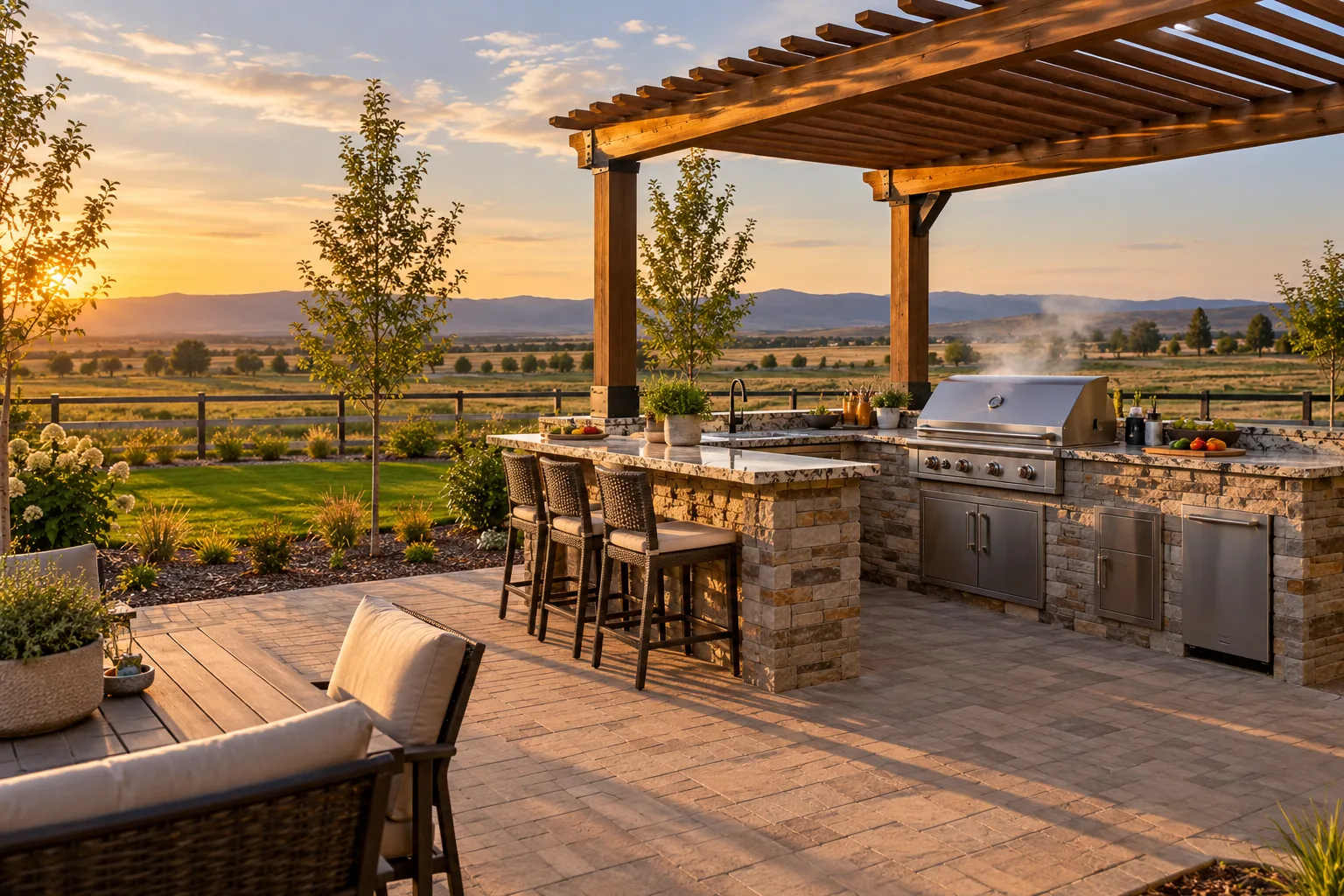
Much of Star sits on open, mostly flat to gently rolling ground north of the Boise River, and a lot of that ground was farm fields not long ago. Wind moves across it with little to slow it down, especially in newer subdivisions where trees were planted with the houses and are still small. For an outdoor kitchen, that exposure shapes everything: which way the grill faces so smoke clears the seating area, where a fire pit sits so embers are not pushed toward the house, and how a pergola is oriented and anchored so it gives shade without catching the wind like a sail.
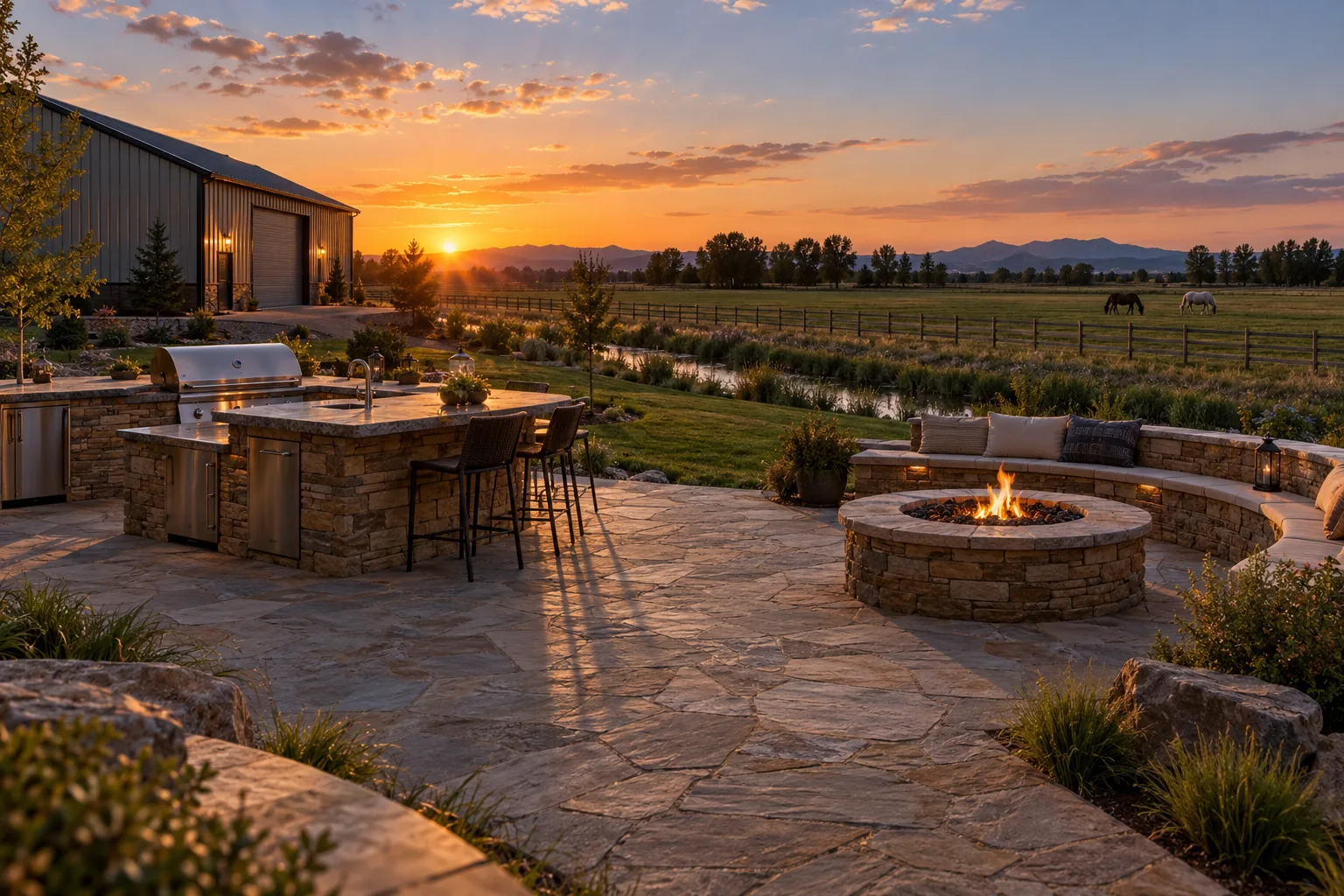
Then there is distance. On acreage and horse properties off State Highway 44 or out toward the Canyon County side, the best spot for a kitchen is often well away from the house, near a pasture view or a shop building. That means longer runs for gas, electrical, and water, and those runs can cross irrigation ditches, laterals, or the lines feeding a well. Planning those routes before any trench is dug keeps the kitchen from becoming a patchwork of afterthought conduit, and it gives the licensed trades a clear layout to work from.
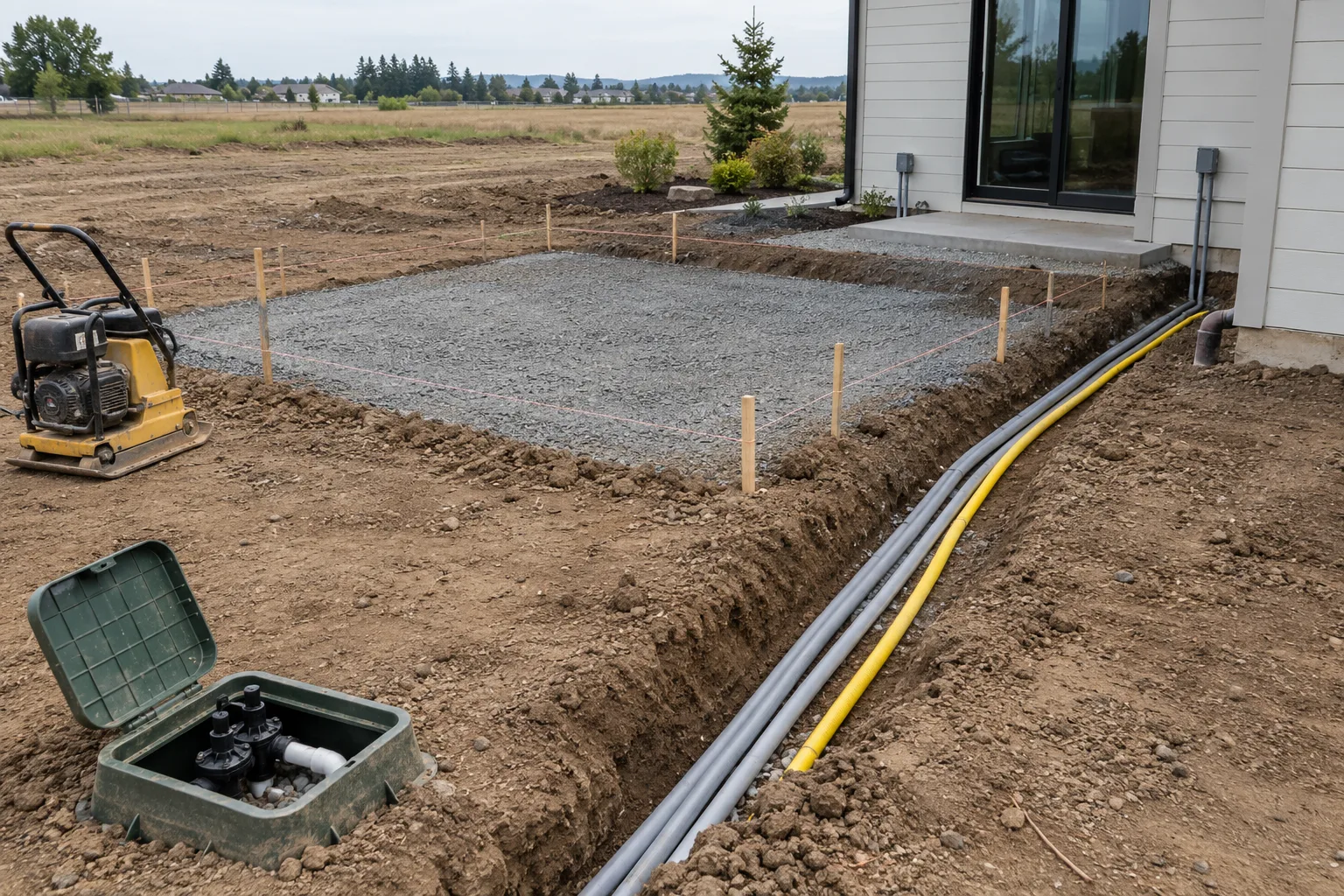
Water is the third factor. Subdivisions in Star typically run on pressurized irrigation, and those mainlines and valve boxes need to be located before anyone digs. On acreage, ditch and canal water moves across large footprints during the irrigation season, and runoff needs somewhere to go besides under a countertop base. Newer neighborhoods may also have HOA design review for structures like pergolas and fireplaces. Grading and drainage around the cooking area, plus a close look at irrigation and drainage in Star, come before the hardscape goes down.
How we handle it
We walk the Star property to read wind exposure, slope, and where water travels before choosing a kitchen location. Drainage and grading come first, utility routes are planned and coordinated with licensed trades, existing irrigation is located, and the hardscape base is built to carry the weight of masonry islands and fire features.