The Emmett Pool Site Problem
A Pool Is Only as Good as the Ground and Water Around It
In the Emmett Valley, the trouble with a backyard pool usually shows up in the deck, the backfill, and the runoff, not in the pool itself.
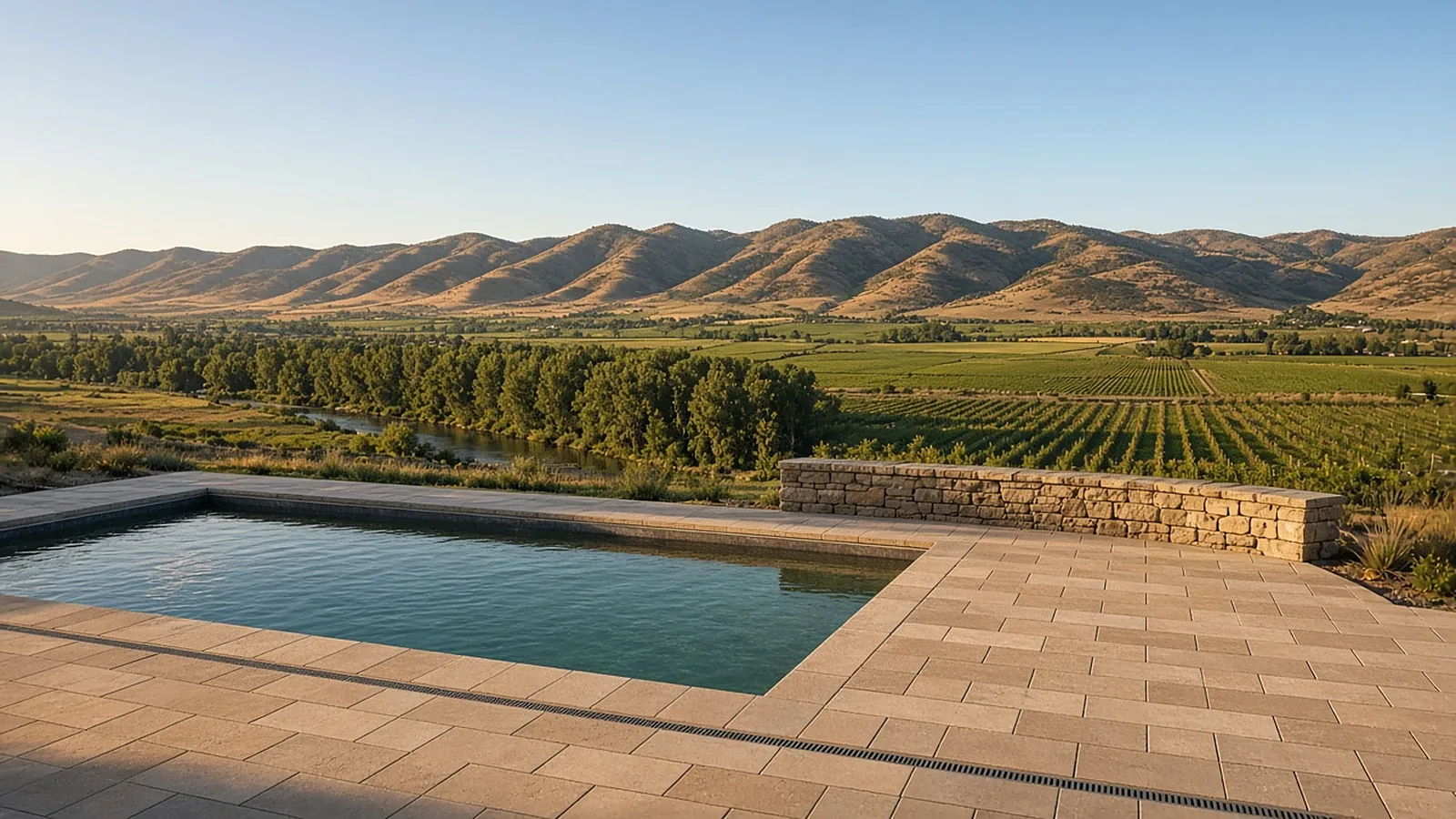
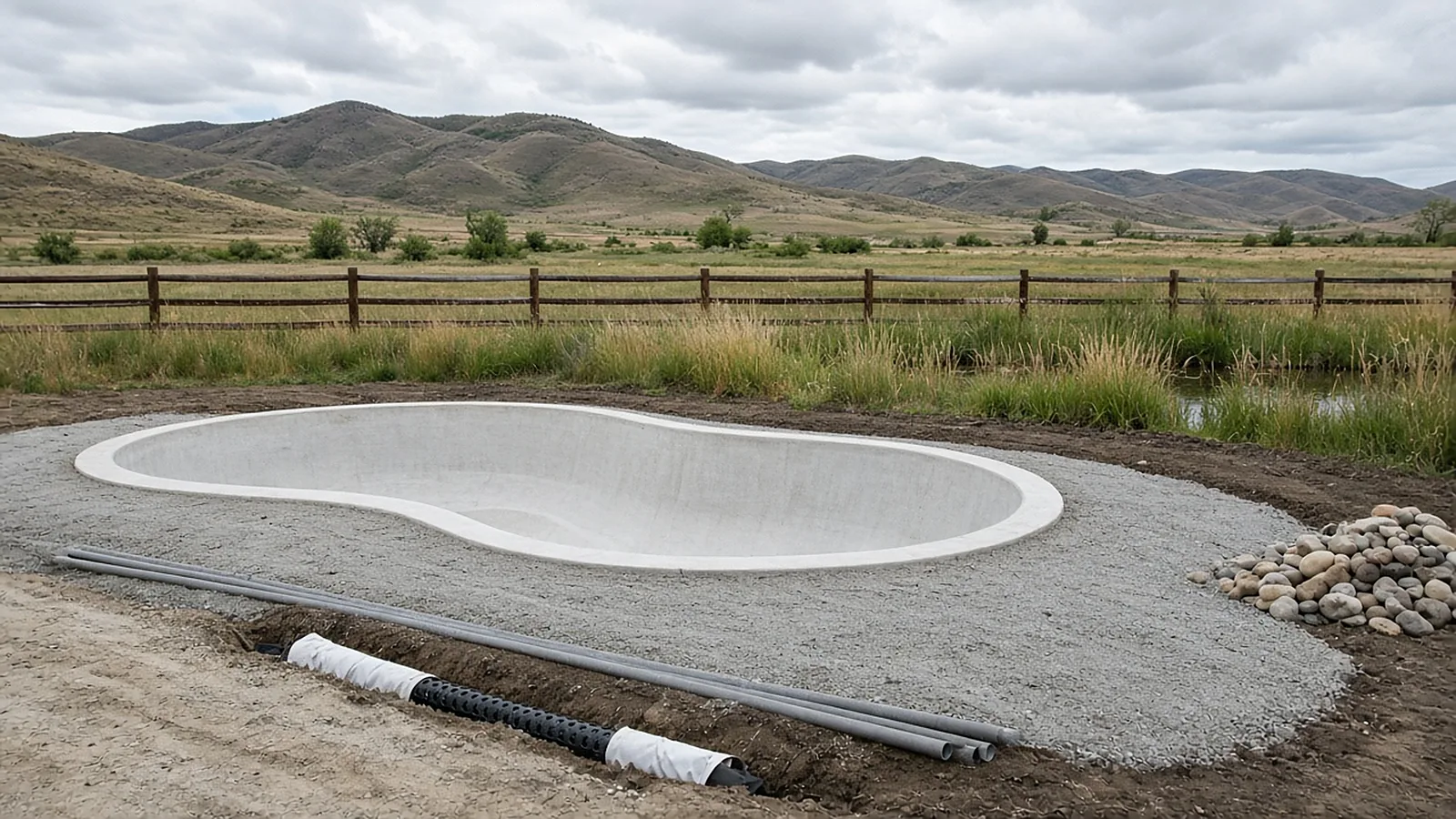
Ground conditions change quickly across the Emmett Valley. Closer to the Payette River, river-bottom soils can mix sand, silt, and rounded gravel, and the excavation for a pool in that ground often turns up cobble that has to be managed rather than spread back under a deck. Backfill around a pool shell keeps settling if it is placed loosely, and a deck poured or laid over uncompacted spoils is a common cause of cracked slabs and tipping pavers along the coping. Deciding what stays on site, what gets hauled, and what gets compacted is the first real conversation.
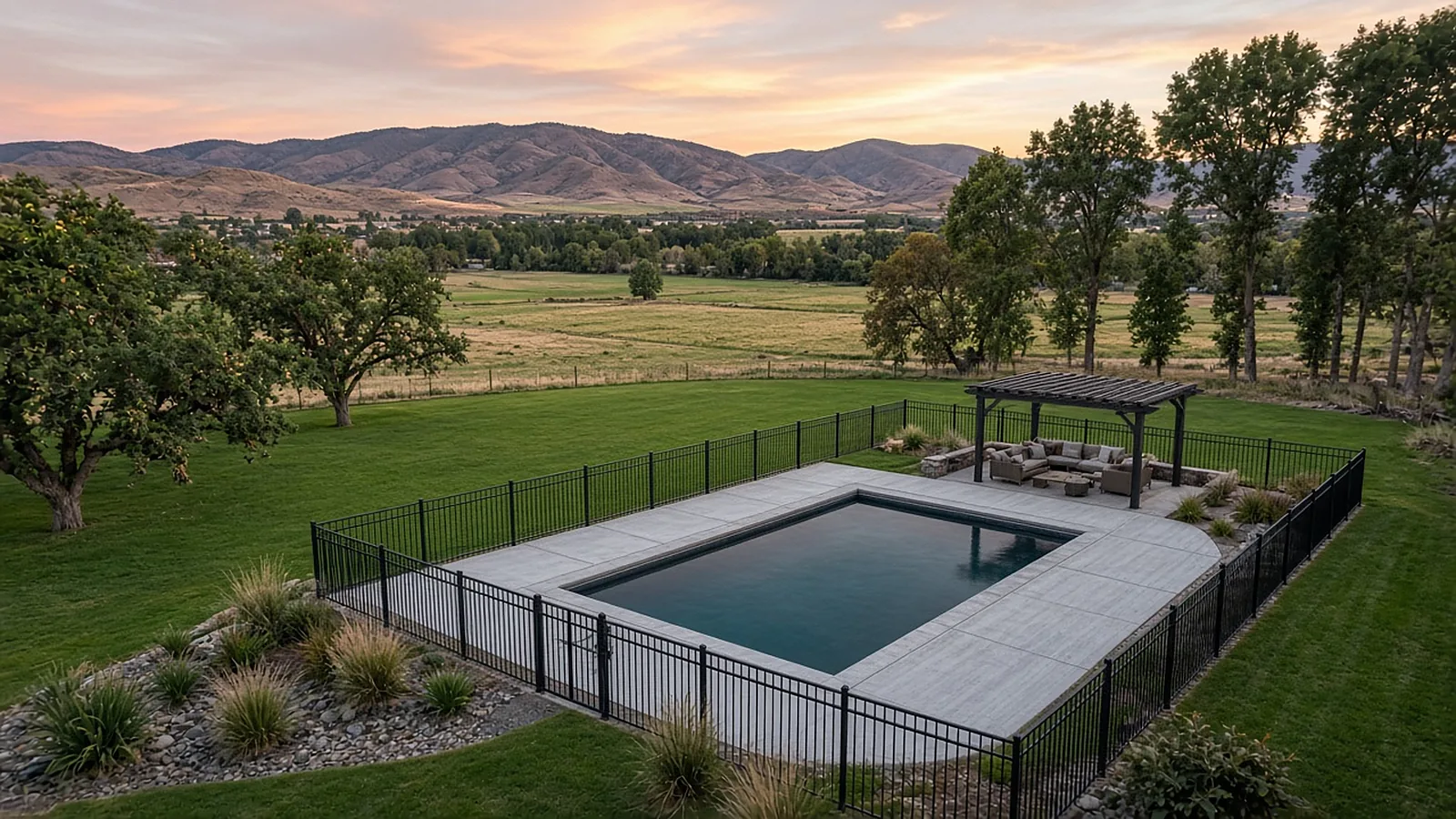
Water is the second issue. Many Emmett properties take irrigation-district or ditch water through the season, and on old orchard ground, past flood-irrigation patterns still shape how the land drains. A pool area set downhill of a ditch, a gated pipe line, or a neighboring pasture can collect runoff nobody accounted for. Rural lots on wells add more to track, since the well head, pump lines, and any septic system need clear separation from deck footprints and trenching. Mapping those flows and features before layout keeps the pool from becoming the low spot on the property.
Then there is the terrain. Homes on the benches and foothill edges around the valley often need a level pad cut into a slope, which brings walls, steps, and grade transitions into the pool plan. See retaining walls in Emmett if a cut is part of yours. In town, older Emmett homes tend to have mature trees, narrow side yards, and limited equipment access. And the valley sees the same freeze-thaw winters and hot summers as Boise, so a deck surface has to handle frost movement in February and bare feet in July.
How Altavera handles it
We walk the Emmett property with your pool plan in hand and coordinate grading, drainage, and utility routes with your pool builder so each crew knows what comes first. Backfill and spoils are planned, sleeve paths are marked, and the deck base goes over compacted ground so the hardscape stays where it was set.