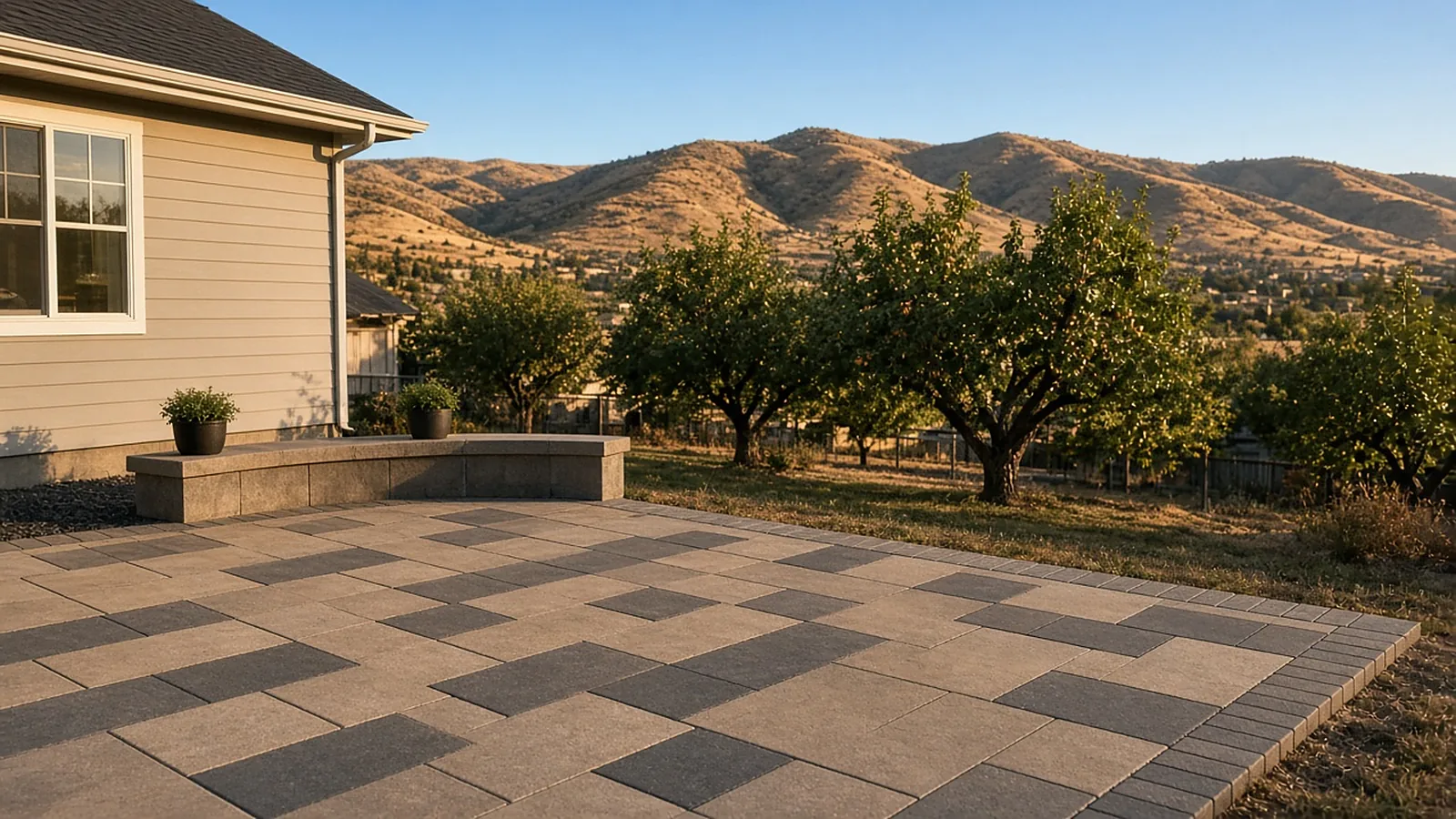
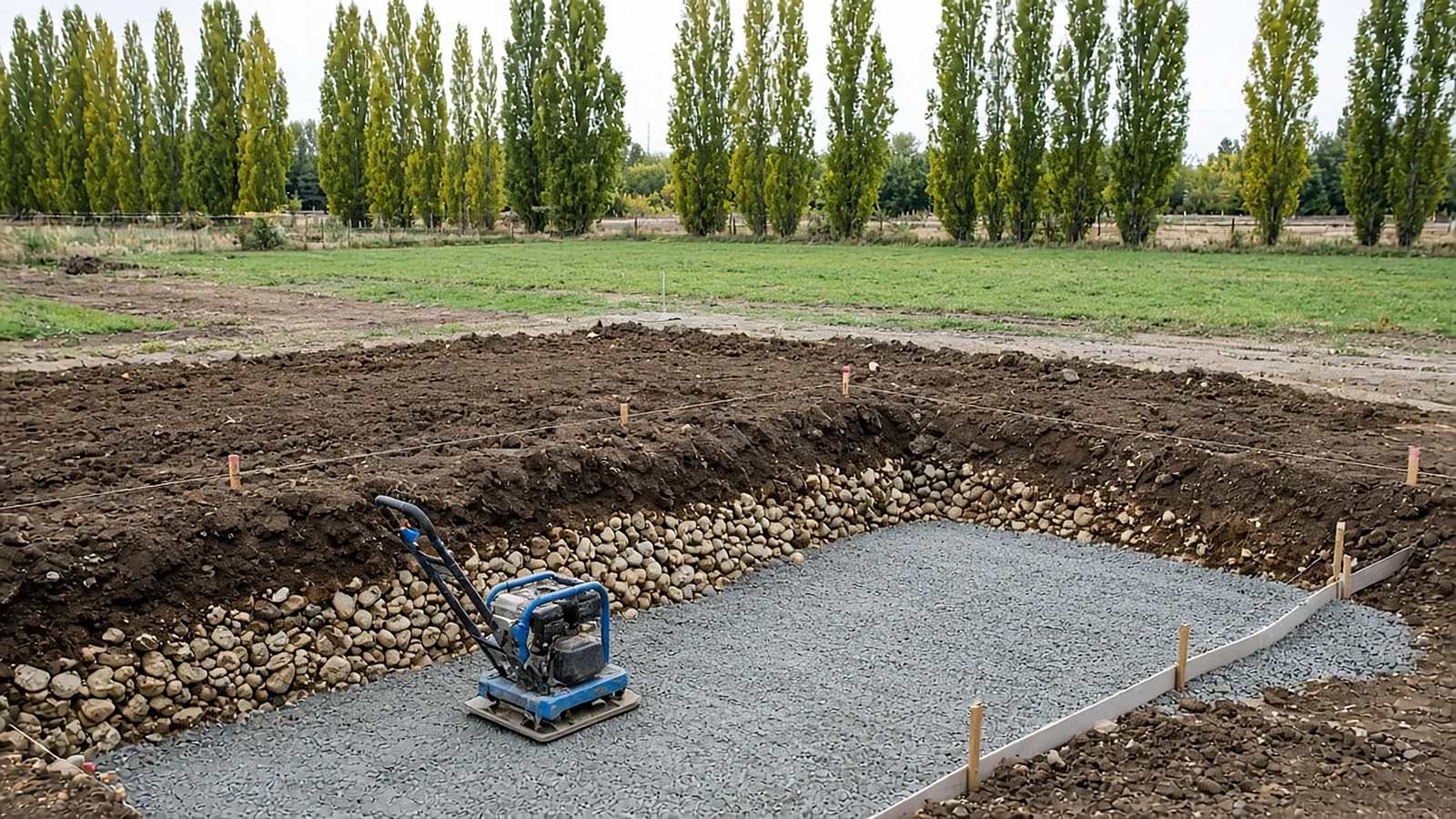
Emmett sits in a valley the Payette River has been reshaping for a very long time, and the soil shows it. On lots closer to the river, you can dig through fine, silty bottomland that holds water after irrigation runs, then hit rounded cobble and gravel only a short distance away. Those two materials compact differently and drain differently. A paver patio laid over both without adjustment tends to settle unevenly, leaving a low corner that collects water and a joint line that opens up after the first hard freeze.
Water is the other half of the story. Many Emmett properties take irrigation-district or ditch water through the season, and old orchard ground often still carries the grade it was given for furrow or flood irrigation, sloping gently toward a ditch rather than away from the house. Put a patio on that slope without regrading and it can catch runoff headed for the foundation. Add hot summers and the same freeze-thaw winters Boise sees, and any water trapped under a slab or paver field will eventually move it.
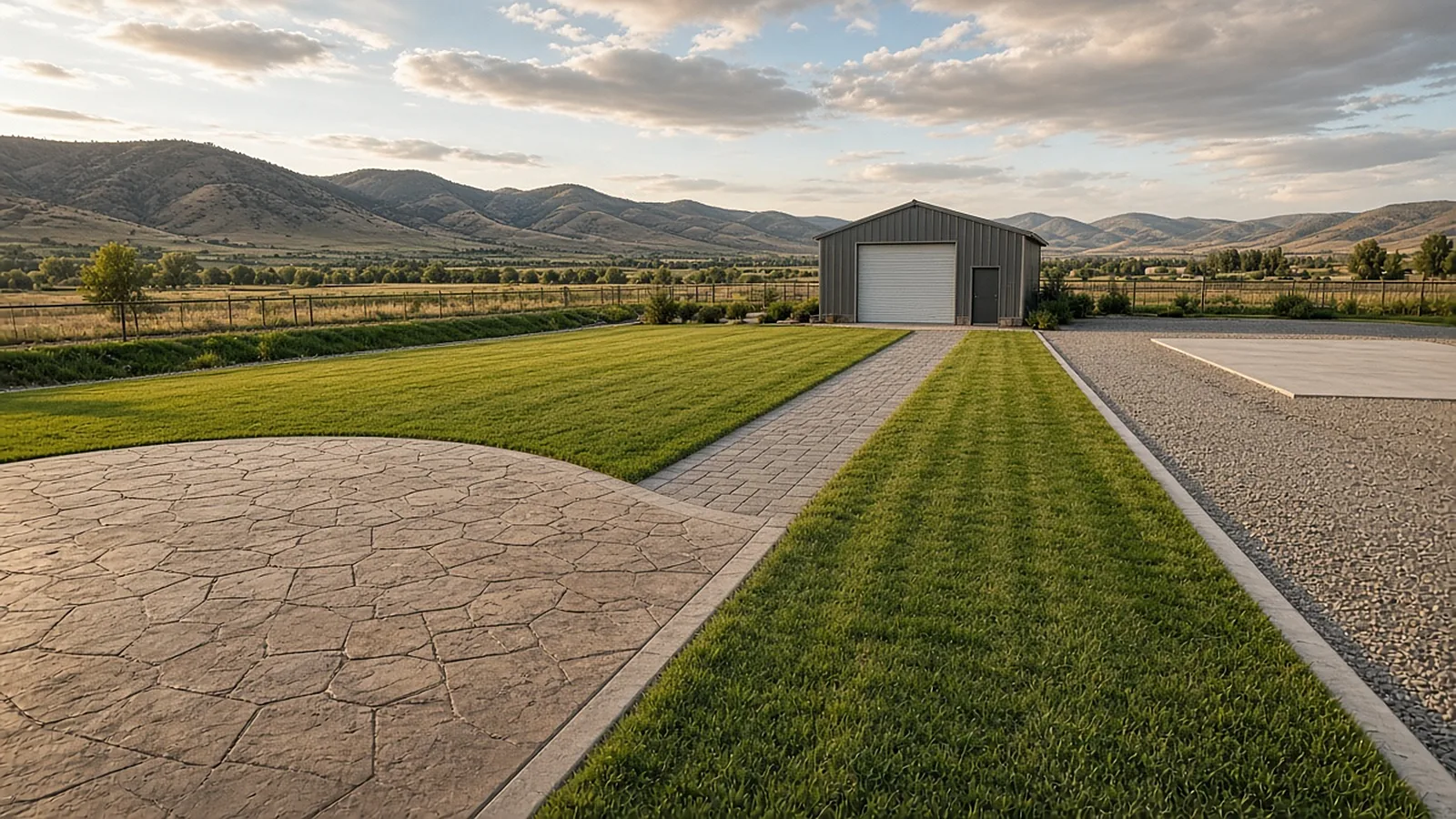
Lot patterns vary just as much. In-town Emmett has older homes with settled yards, mature trees, and narrow side access. Out on the benches and acreage around the valley, owners want long walkways, wide entertaining patios, and pads for RVs, trailers, and farm equipment. Newer subdivisions bring builder-grade concrete and fresh fill. Each one calls for a different base plan, which is why we often pair patio work with irrigation and drainage in Emmett when the ground needs it.
How Altavera handles it
We dig test areas, find where silt gives way to gravel, and set base depth and compaction for each zone instead of one number for the whole yard. Ditch and irrigation flow are mapped before grading, surfaces are pitched away from the house, and sleeves go under the patio before any paver is set.