The Emmett Turf Problem
Why Turf Fails on Emmett Ground, and What Keeps It Flat
In the Emmett Valley, a turf surface usually fails because of the soil and water under it, not the turf itself.
Emmett yards rarely start from a blank, uniform pad. Along the Payette River bottom, digging often turns up gravel and river rock, which drains well but makes a smooth, even subgrade harder to achieve without screening and extra compaction. Up on the benches and toward the foothills, soils can behave differently, holding water longer after a storm or a heavy irrigation set. Turf laid on either one without adjusting the base tends to show it later: soft spots, ripples at the seams, or low corners where water and pet waste linger after the snow melts.
Water is the other Emmett variable. Many properties sit beside irrigation-district ditches or take seasonal ditch water for pasture, gardens, and old orchard rows, and rural lots often run on wells. When a neighboring field is flood irrigated or a lateral seeps, that water can move under a turf area from the side, not just fall on it from above. We look at where ditch water, sprinkler overspray, and roof runoff go before deciding base depth and whether the turf needs a drain path out to daylight or a connection to drainage work on the same property.
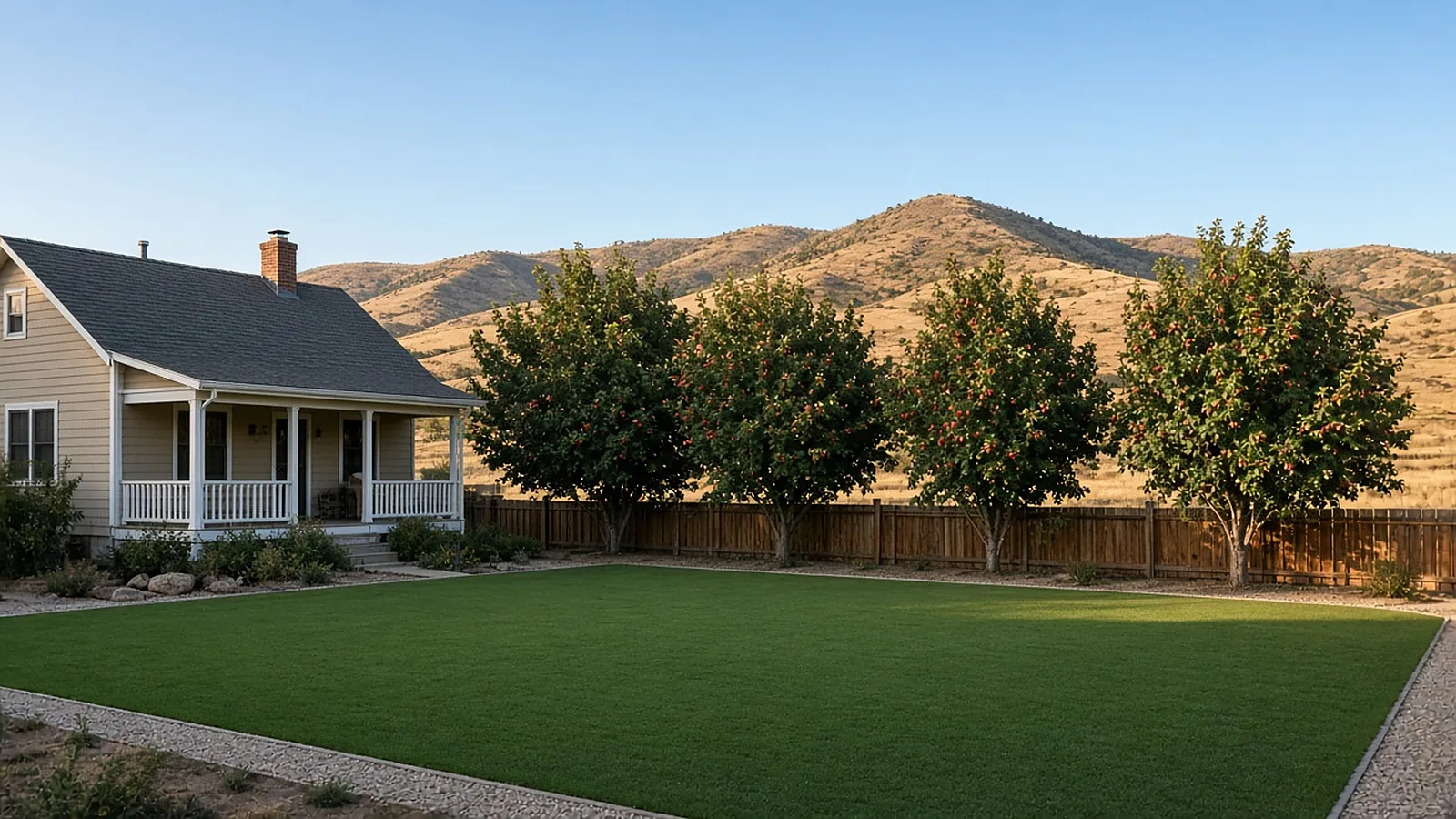
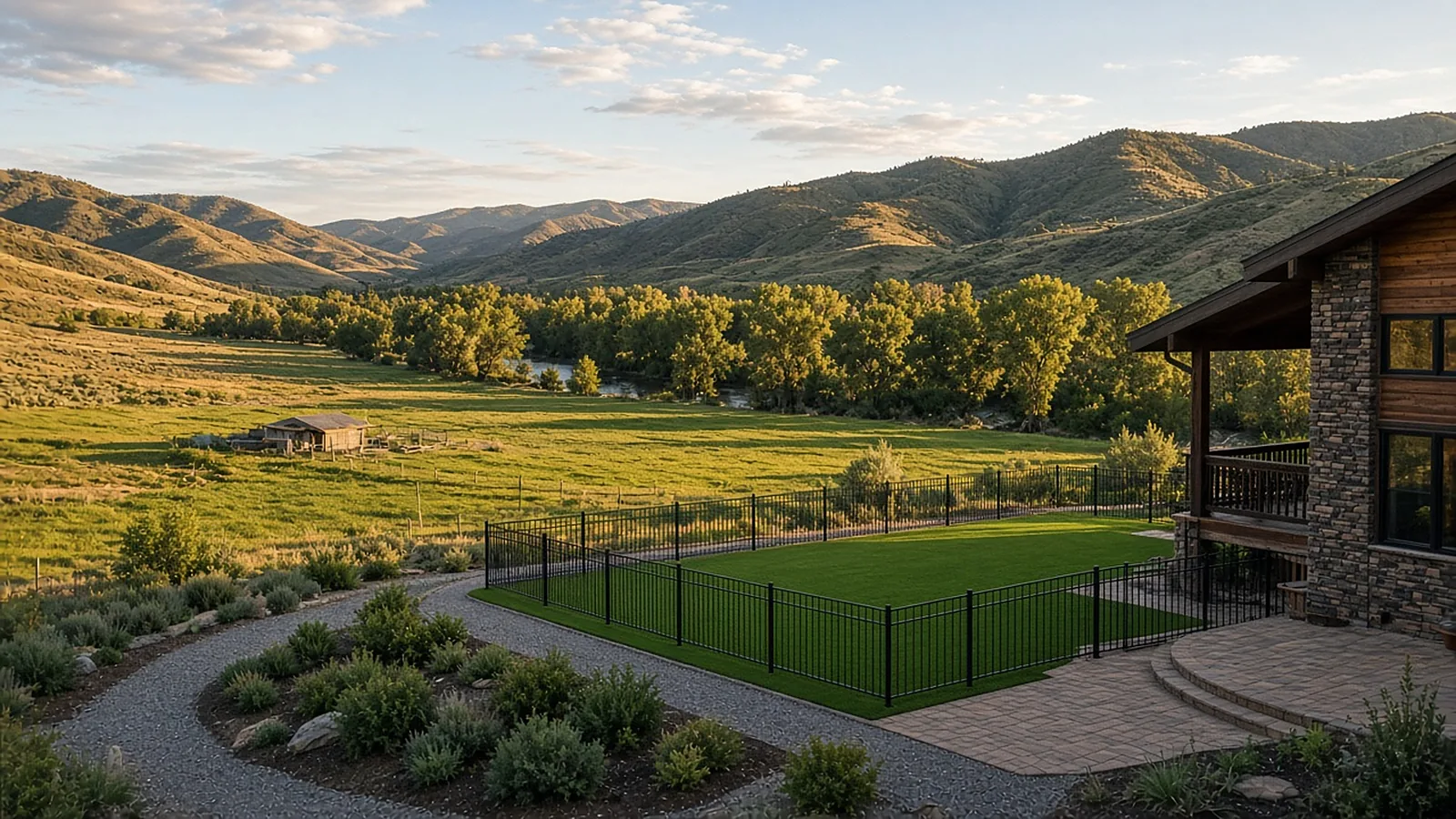
Then there is the weather and the lot itself. Emmett runs a little lower than Boise, but winters still bring repeated freeze and thaw, and July afternoons in the valley get hot enough that turf surfaces warm up quickly. Older in-town homes often have mature shade trees, roots near the surface, and narrow side yards with little room for equipment. Newer subdivisions often come with compacted builder fill. Acreage owners often want turf near the house only, with a clean edge against gravel, pasture, or garden ground.
How Altavera handles it
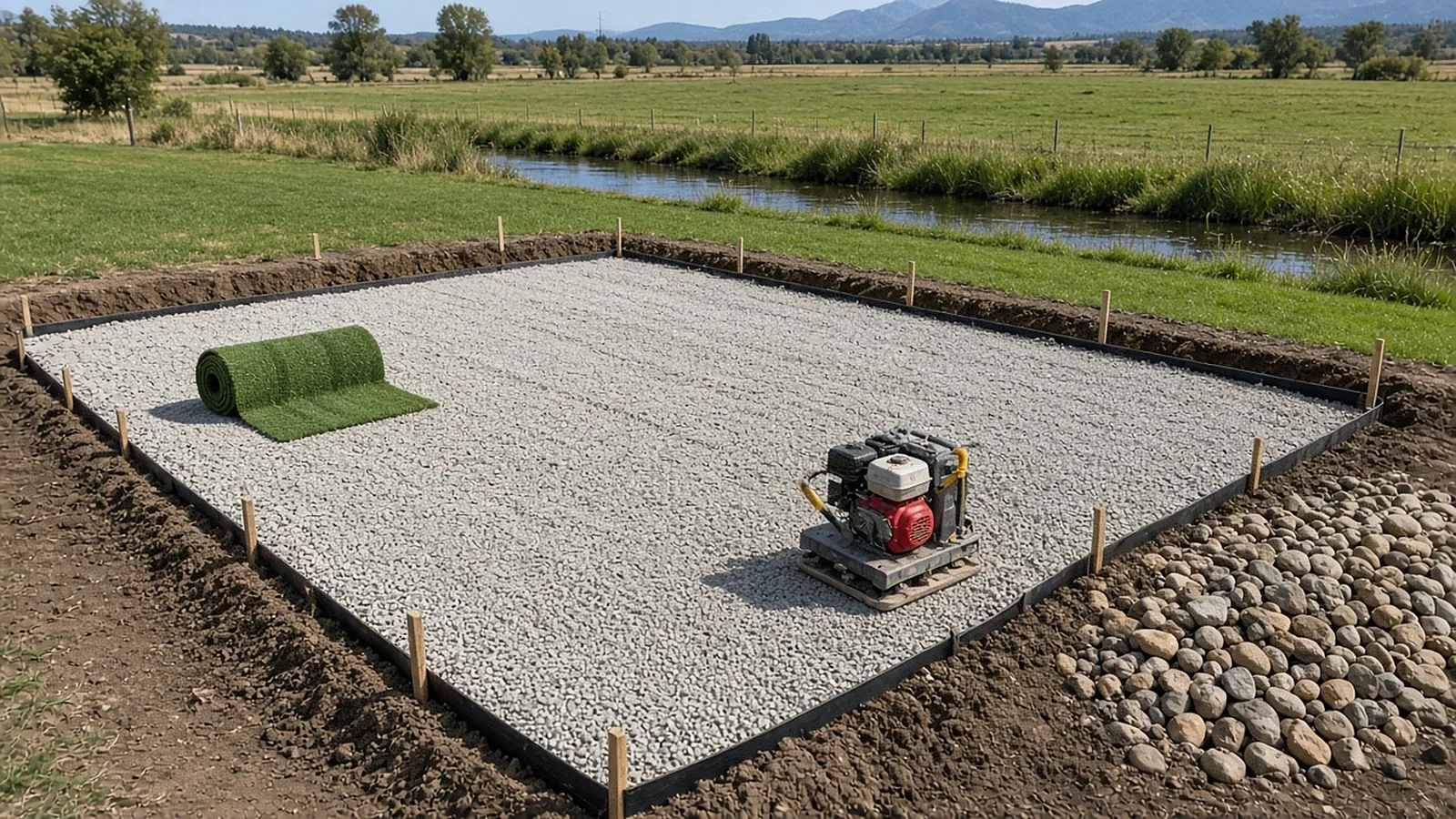
We dig to firm subgrade, cut back shallow roots where it is safe, and screen out oversized river rock where it would telegraph through. The base is compacted in lifts and graded so water leaves the turf instead of collecting under it. Edging is anchored to suit the ground, whether that means bench soil, gravel, or a pasture line.