Water in the Emmett Valley
Why Emmett Yards Need a Different Water Plan Than a Boise Subdivision
In Emmett, a good system starts with knowing where the water comes from and where the ground wants to send it.
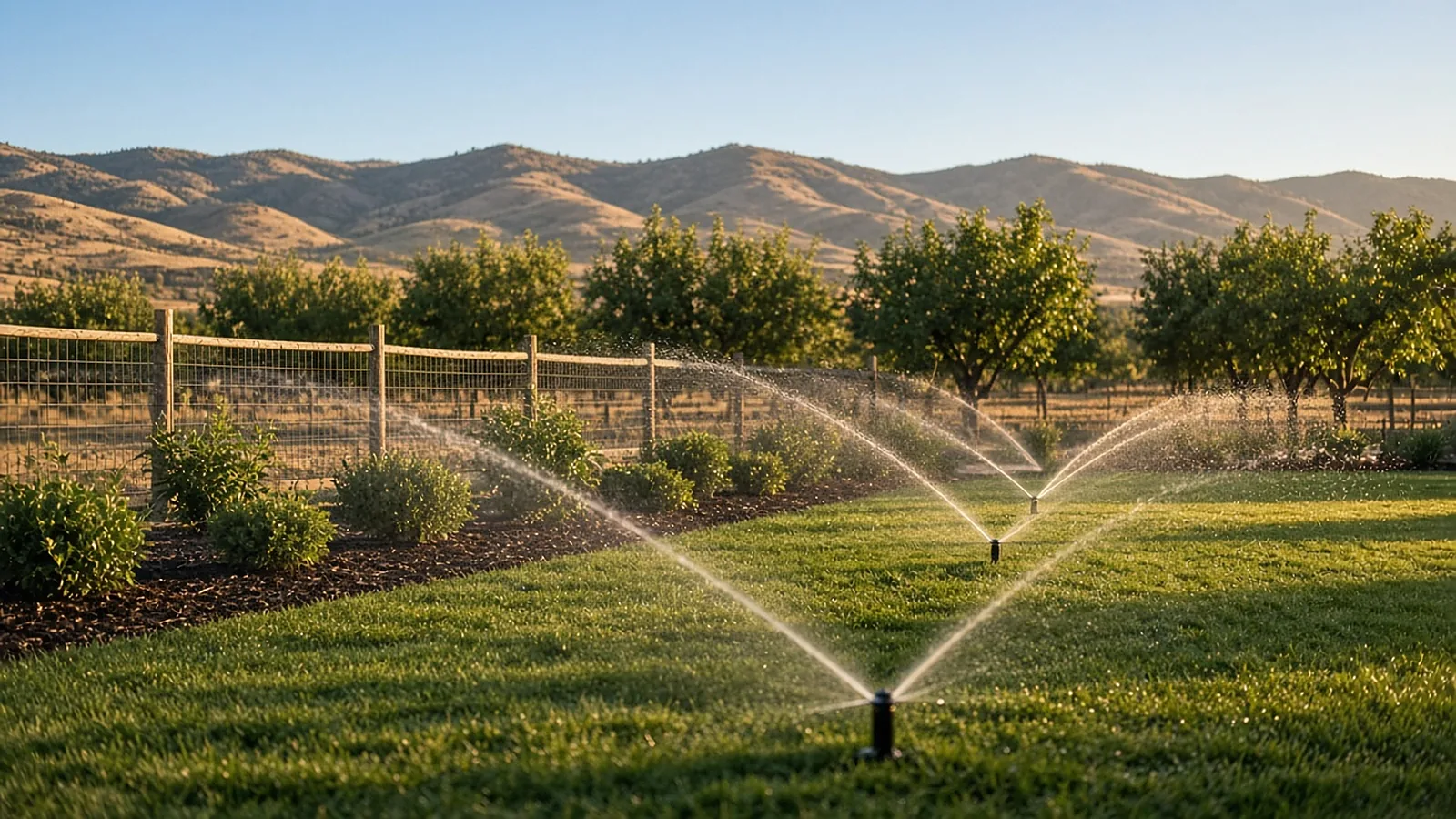
Irrigation in Emmett often starts with a question most city homeowners never ask: where does the water actually come from? Plenty of properties here draw from an irrigation district or a shared ditch, while rural lots may depend on a well. Each source behaves differently. Ditch and canal water carries silt, seeds, and debris that plug drip emitters and wear out spray nozzles. Delivery is seasonal, so the system has to start up cleanly in spring and drain fully before the first hard freeze. Wells bring their own pressure and flow limits. A design that ignores the source rarely performs for long.
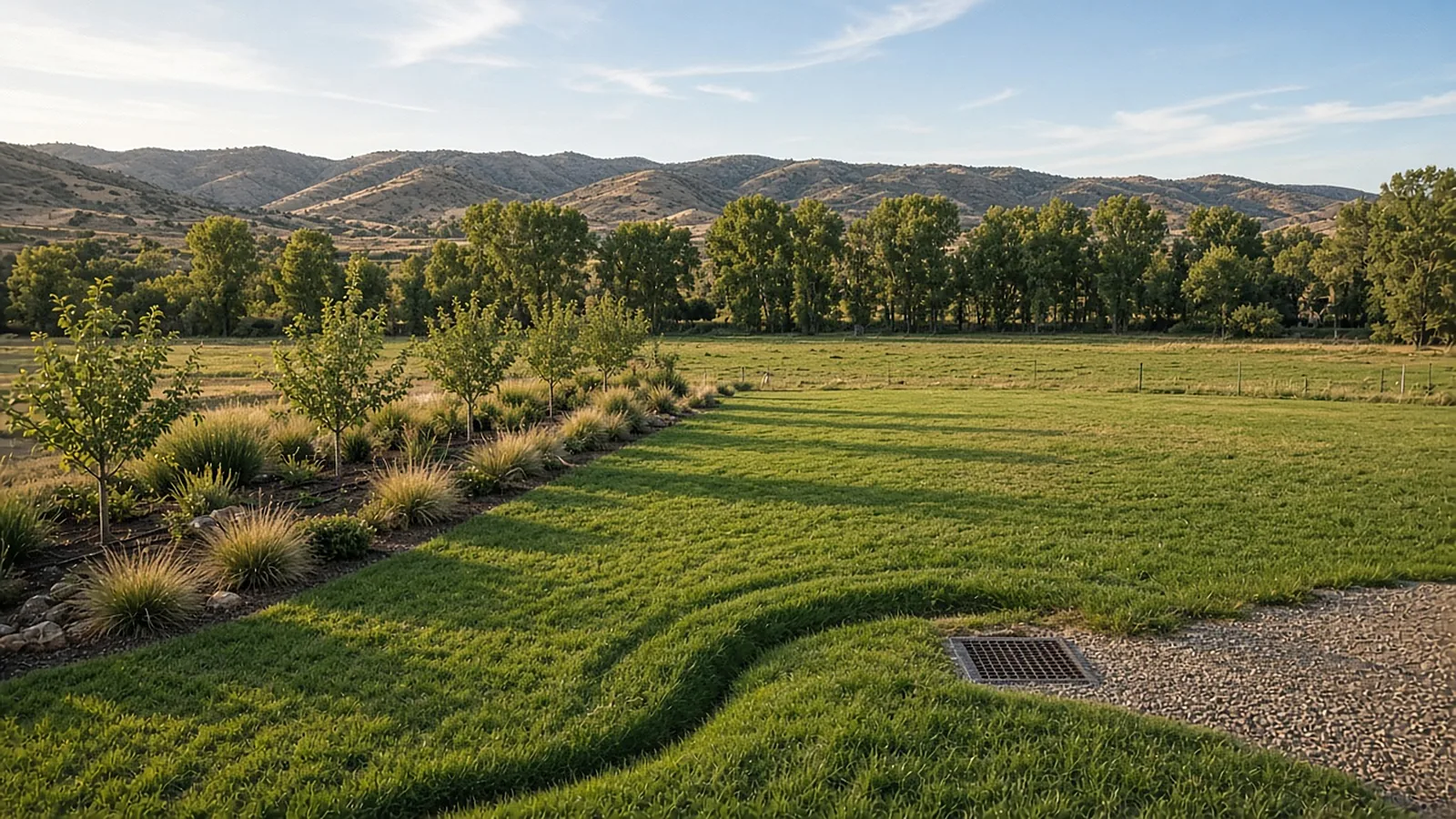
Ground conditions change quickly across the valley. Close to the Payette River, river-bottom soils and gravelly layers can drain fast in one corner of a yard and hold water in another where finer silt settled out. Up on the benches and foothill edges, slope does the work, pushing runoff downhill toward patios, shops, and the back of the house during spring storms and snowmelt. Older in-town homes add their own wrinkle: downspouts that empty right at the foundation line and lawns graded long ago that have since settled flat or tipped backward.
Emmett sits a little lower than Boise, yet it gets the same freeze-thaw winters and hot, dry summers. Lines that are never properly drained can split, and water that pools and freezes along a walkway lifts whatever rests on it. Acreage, pasture edges, and the orchard ground that still runs through parts of the valley mean longer pipe runs, more zones, and more surface to drain. When a slope has to be held back as well as drained, a retaining wall in Emmett may belong in the same plan.
Our approach in Emmett
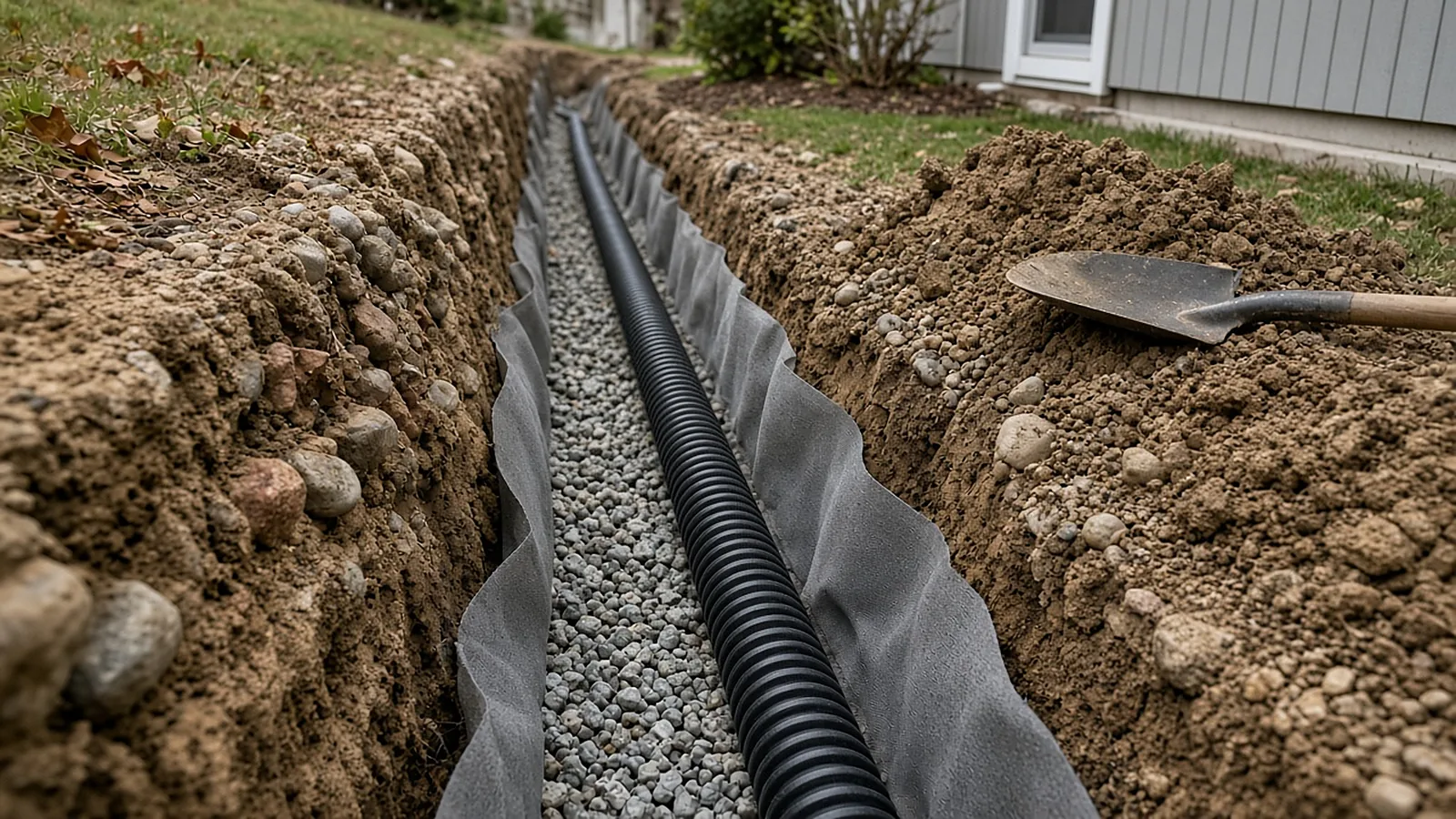
We confirm the water source first, then size zones, filtration, and the controller to match it. Drainage gets mapped on site by reading how the grade actually moves water. Grading and drain lines go in before anything else, sleeves go under future hardscape, and every system is laid out so it can be drained for winter.