The Emmett Retaining Wall Challenge
Why Walls in the Emmett Valley Lean, Bulge, and Settle, and What Keeps Them Standing
In Emmett, the ground and the water behind a wall decide how long it lasts, often more than the block or stone on its face.
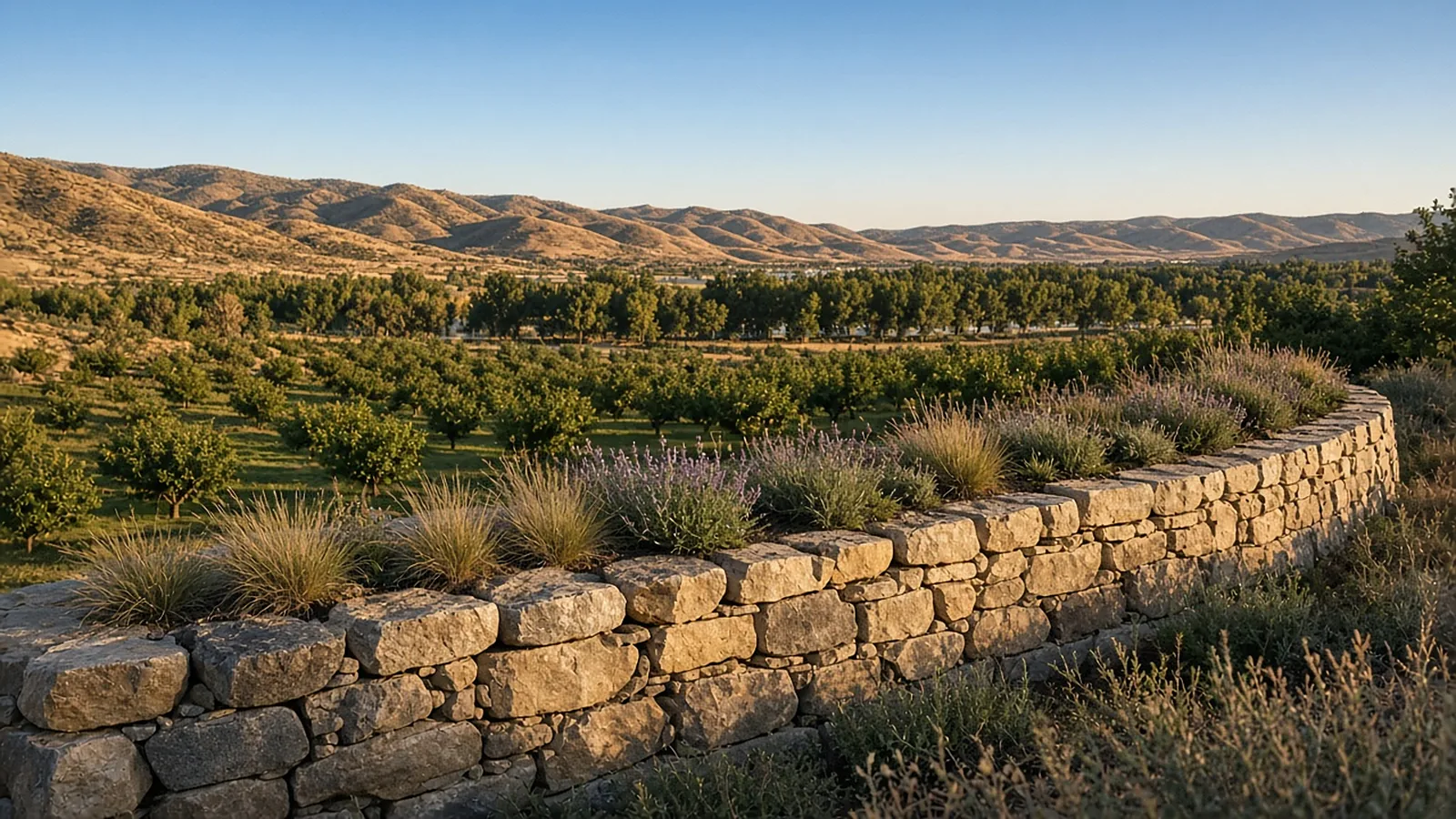
Emmett's ground can change a lot across a single property. Down near the Payette, lots often sit on river-bottom soils mixed with rounded gravel and cobble. Those soils drain well in some spots and hold pockets of silt in others. That mix matters for a wall, because a footing that sits half on clean gravel and half on soft fill will settle unevenly. Up on the benches and foothill edges, the soil is usually firmer but the grade is steeper, so a wall there has to hold back more of the slope above it.
Water matters even more. Many Emmett properties get irrigation-district or ditch water all season, and flood or furrow watering on old orchard ground can keep the soil behind a wall wet for long stretches. Wells and sprinkler systems on rural acreage add runoff of their own. If that water has no way out, it builds pressure against the back of the wall, then freezes in winter and pushes again. When we plan irrigation and drainage in Emmett together with the wall, the two systems work with each other.
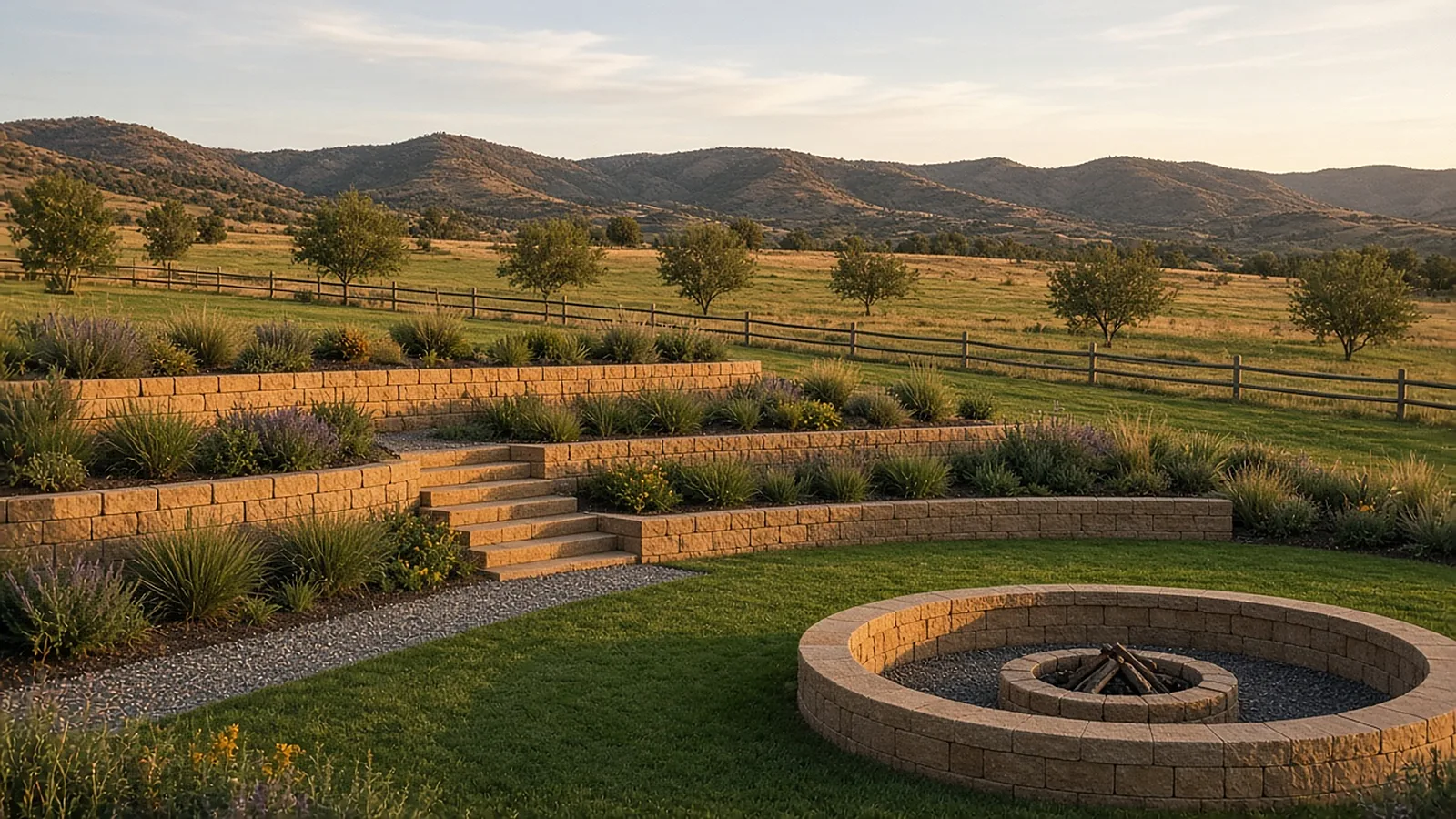
The type of property changes the job too. Older in-town homes near downtown Emmett often have tight side yards, mature trees, and settled grades, where a short seat wall or a low terrace solves the problem. Acreage toward the foothills may need long runs of boulder wall to hold a driveway cut or level ground for a shop or garden. Newer subdivisions come with builder grading that rarely accounts for a neighbor's yard sitting higher than yours. Each of these needs a different wall, sized and built for that particular grade.
How Altavera handles it
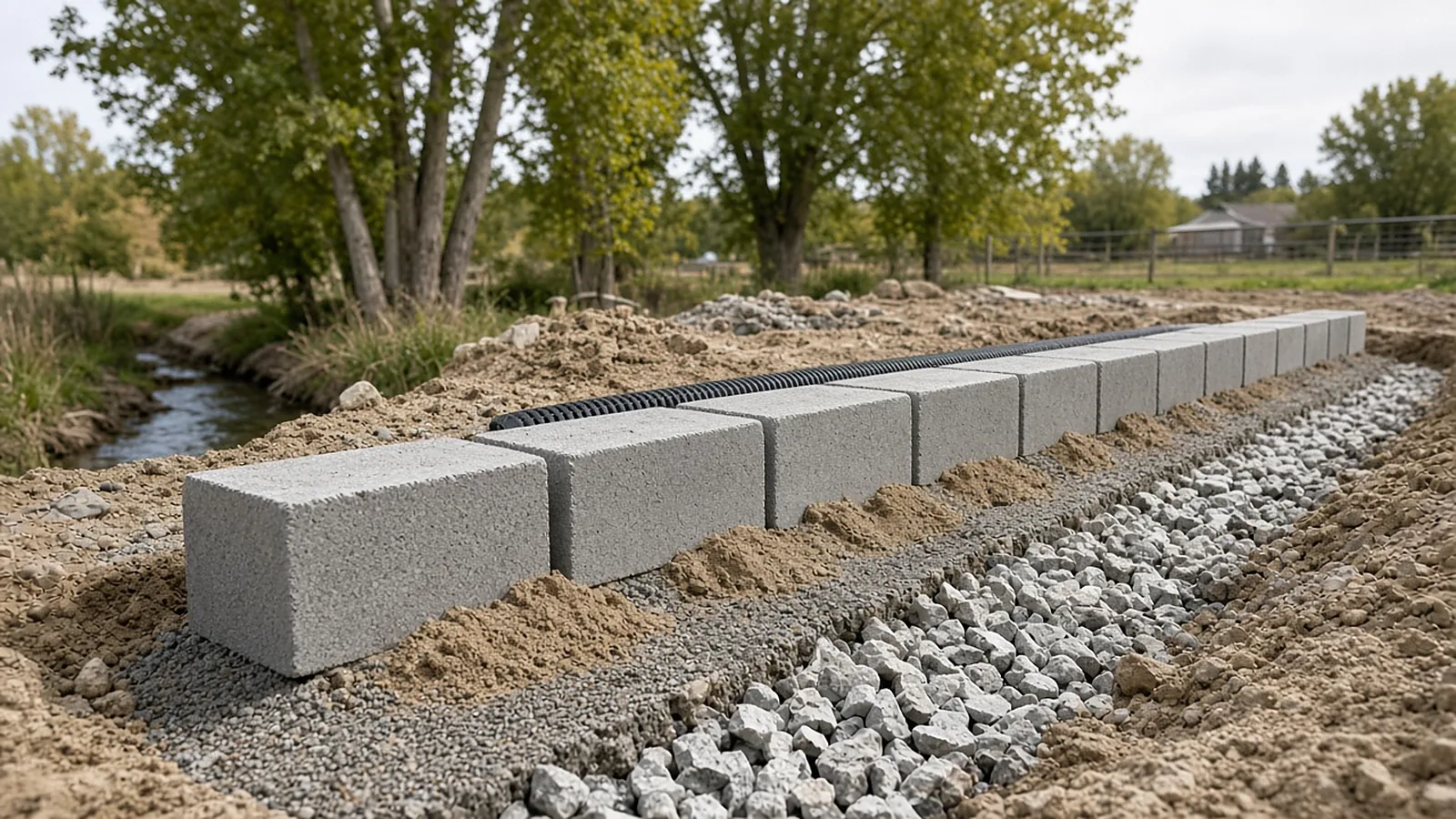
We walk the slope, trace where irrigation and runoff water actually go, and check what the soil is doing before we choose a wall type. Then we set the base and footing for freeze-thaw, run drain pipe and drainage aggregate behind the wall, and backfill in compacted lifts so the wall stays straight and plumb.