The Emmett Court Challenge
Why Emmett Ground Asks More of a Sport Court and How We Plan Around It
A court is a big, flat surface that shows every flaw, and the Emmett Valley gives it plenty of ways to go wrong.
Emmett ground is rarely uniform across a court footprint. Near the Payette River, river-bottom soils can blend fine silt with rounded gravel and cobble, so one corner of a court compacts firmly while another softens when groundwater rises during irrigation season. Up on the benches and foothill edges around the valley, the problem flips: slopes that look gentle still push runoff across a yard after a summer storm. A slab poured over mixed or wet subgrade will move through Emmett's freeze-thaw winters, and on a playing surface, every crack and dip affects the bounce.
Water is the other local factor. Plenty of valley properties still run on irrigation-district and ditch water, with laterals, headgates, and flood or sprinkler patterns that were set long before anyone planned a court. Rural lots often add a well and pump line to the map. A court placed in the wrong spot can block a ditch path, sit downhill of a flood-irrigated pasture, or soak each time the neighbor's water turns on. We map those flows first and slope the court to shed water away, often pairing the build with irrigation and drainage work in Emmett.
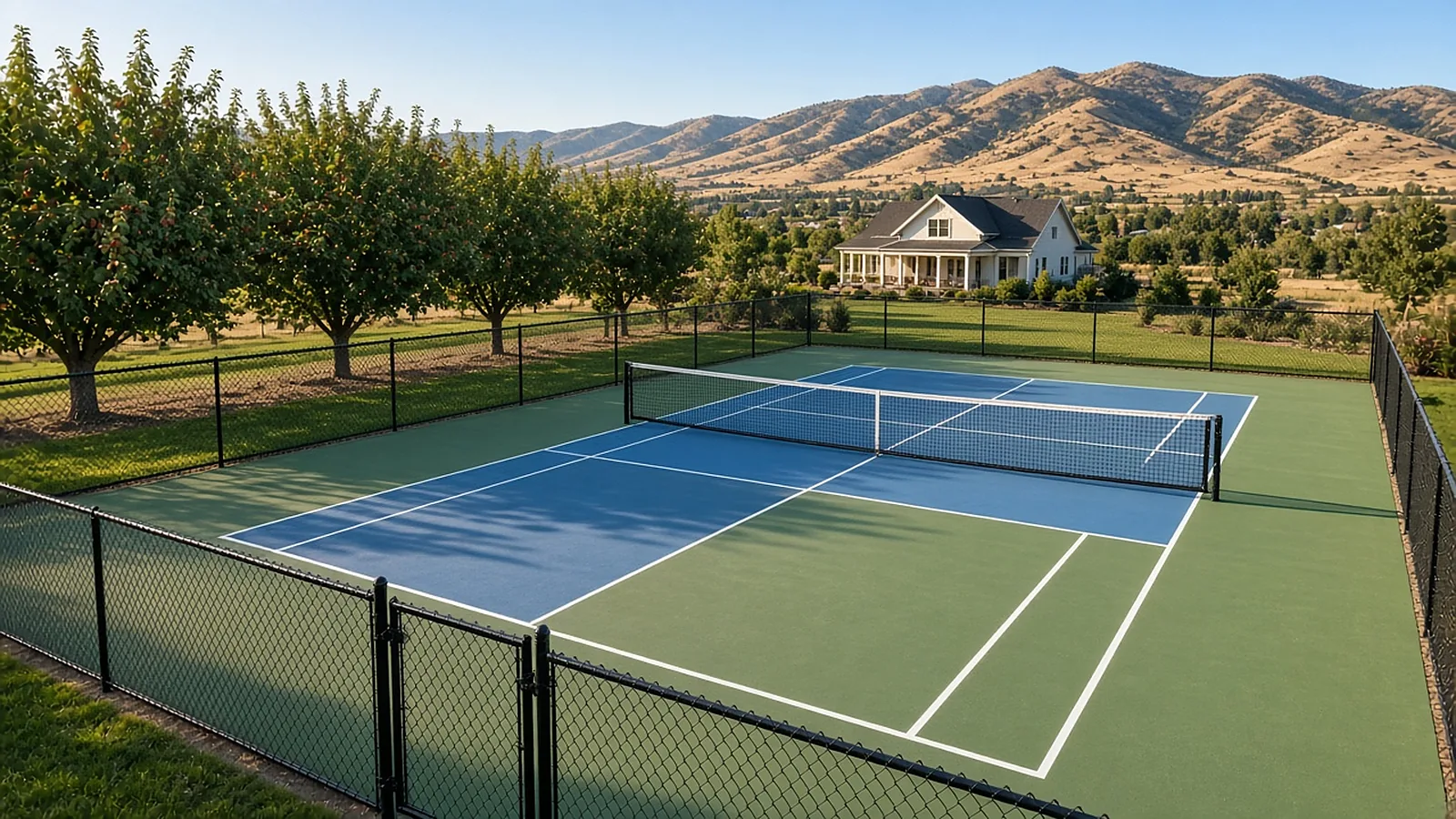
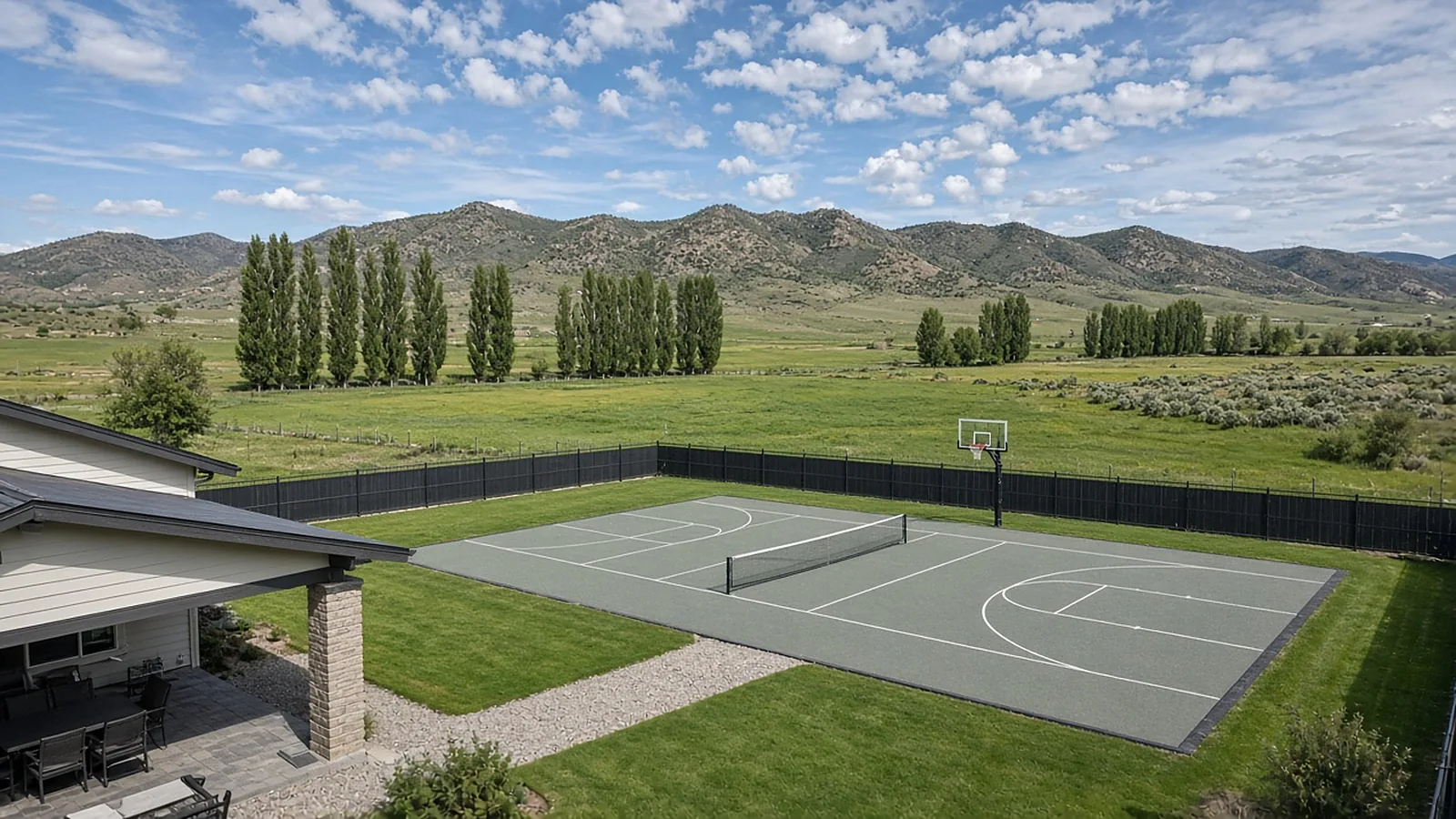
Placement is the third piece. On acreage outside town, a court can go almost anywhere, which makes orientation matter more: a north to south alignment keeps low morning and evening sun out of players' eyes, and fencing on the windward side helps against the gusts that move through the valley. In-town Emmett lots and newer subdivisions bring setbacks, HOA review, and close neighbors, so court position, fence height, and the sound of play all get weighed honestly before layout is final.
Our approach in Emmett
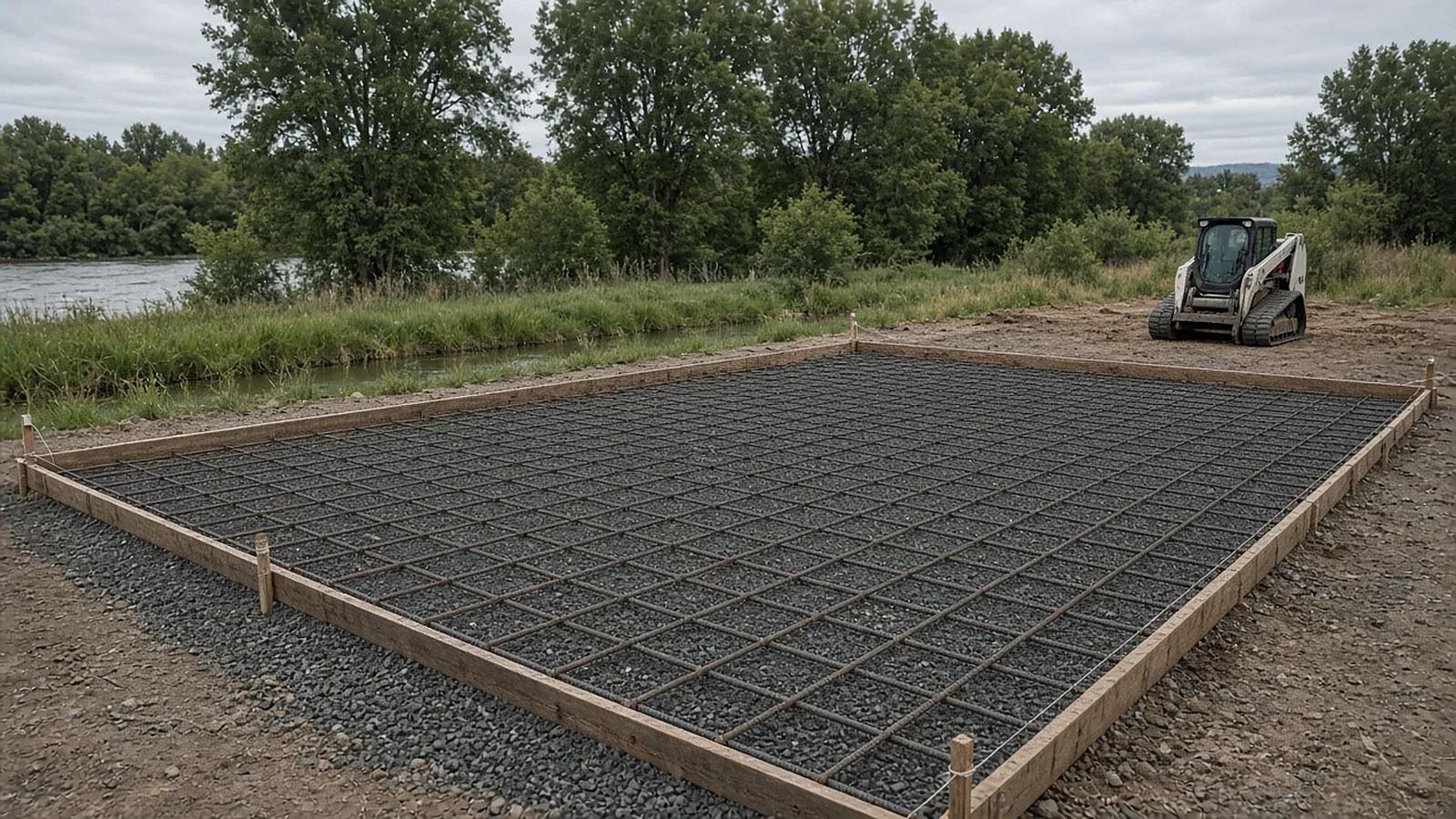
We walk the lot before drawing anything, probing soils, tracing ditches and well lines, and checking slope and equipment access. The subgrade is corrected and compacted, drainage is set to carry water off the court, and the slab base is built for freeze-thaw before surfacing, lines, nets, and fencing go on.