Treasure Valley, Idaho · Retaining Walls

Retaining Wall Contractor for the Treasure Valley

Walls that drain, hold grade, and stay plumb through Idaho winters.

Altavera Construction builds block, boulder, terraced, and seat walls for homeowners across Ada, Canyon, and Gem counties, each one set on a compacted base with drain pipe and clean aggregate behind it. Grading and drainage come first, so irrigation and storm water move away from the wall face before the first block is set.

  • Licensed & Insured in Idaho
  • Idaho Contractor License #6971895
  • Woman-Owned Business
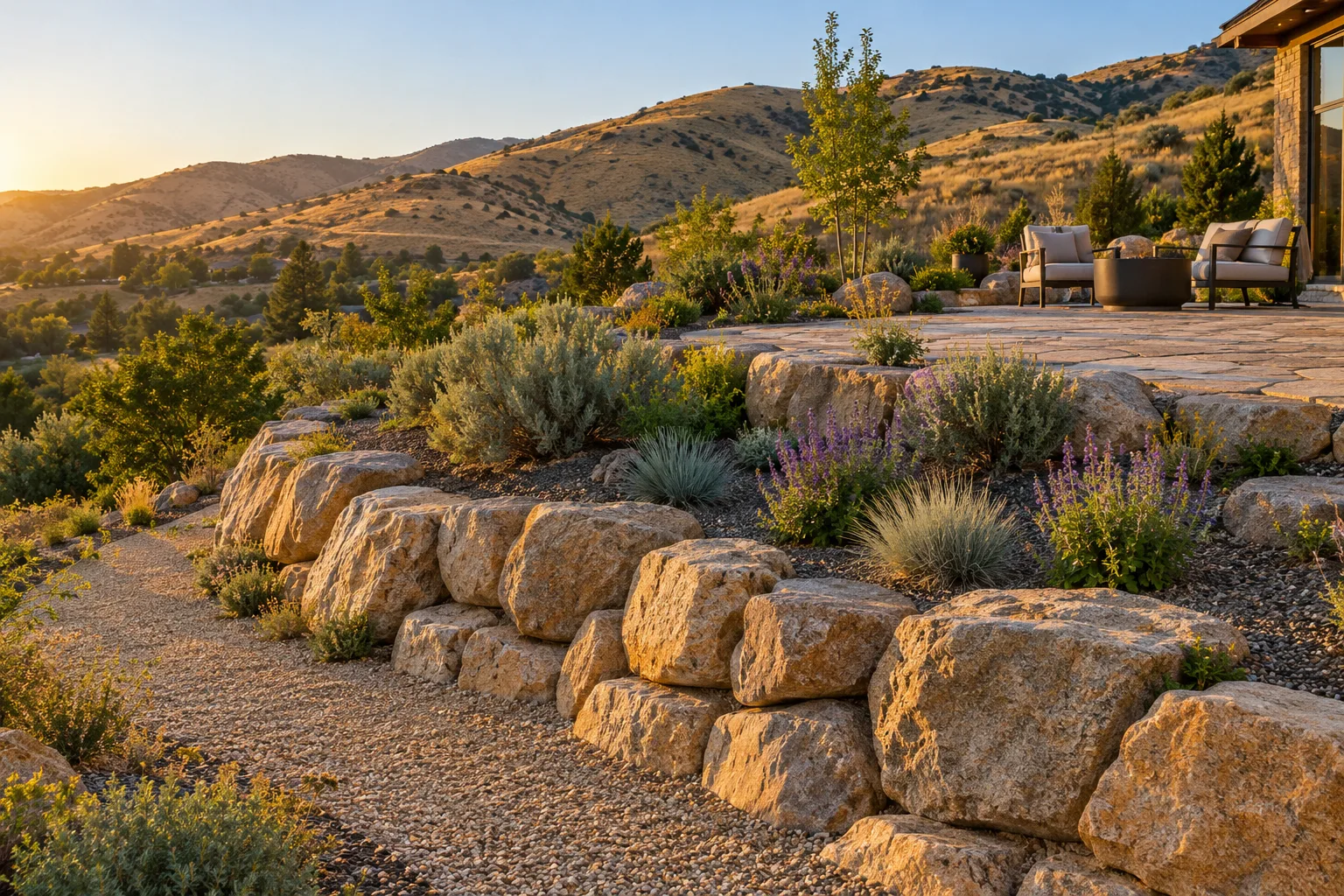
Two-tier boulder retaining wall terracing a sloped backyard in Idaho
A two-tier boulder wall terraces a hillside yard below dry hills, with xeric planting between the levels.

Built to a Higher Standard

Why Retaining Walls Lean, Bulge, and Wash Out and What Keeps Them Standing

Most wall failures come down to water and the ground under the wall, not the block or stone on the face.

Treasure Valley lots range from sandy, erodible slopes to flat yards built on compacted fill graded for a house pad, not a wall. Loose soil looks firm when dry but washes out once water finds a path, and fill can settle under a footing that was never sized for it. A wall cut into either kind of ground needs a proper excavation, a firmly compacted base, and backfill that drains instead of washing out.

Water is the other half of the problem. Irrigation, roof runoff, and flood or canal-fed watering can keep the soil behind a wall saturated for months, and freeze-thaw cycles turn that trapped water into the force that heaves block courses and loosens caps. Drain pipe at the base, clean aggregate behind the wall, and an outlet that actually daylights keep that pressure from building.

How Altavera handles it

We read the slope, dig into the soil, and trace every water source before recommending a wall type. Grading and drainage are built first, then a compacted base sized for the ground we find, then the wall with drain pipe and clean stone behind it.

What's Included

Retaining Wall Services Across the Treasure Valley

01

Segmental Block Retaining Walls

Segmental concrete block is the workhorse for grade changes, from a short step-down beside a patio to a taller wall holding a backyard level. Each course is set on a compacted aggregate leveling pad, checked for setback and line, and backfilled with clean drainage stone so water has a way out instead of pushing on the face.

Includes
  • Excavation and layout
  • Compacted leveling pad
  • Block courses with setback
  • Drainage aggregate
  • Perforated drain pipe
  • Cap installation

02

Natural Stone and Boulder Walls

Natural stone and boulder walls suit hillside and sloped lots where stacked block would feel out of place. Boulders are placed with their weight leaning into the slope, bedded on a prepared base, and chinked so soil stays put. They pair well with native and xeric planting, and there is nothing in them to burn.

Includes

  • Boulder selection and placement
  • Prepared base
  • Filter fabric where needed
  • Backfill and compaction
  • Chinking stone
  • Planting pockets

03

Terraced Walls for Sloped Lots

When a slope is too tall or too steep for one wall, stepping it into two or three shorter terraces can create flat, usable beds or lawn. Spacing between tiers matters, because an upper wall set too close to the one below adds load. Each tier gets its own drainage path, and the levels connect with steps or grade transitions.

Includes

  • Slope assessment
  • Tier spacing plan
  • Drainage for each tier
  • Steps between levels
  • Planting bed prep

04

Wall Drainage and Base Preparation

The parts of a wall you never see decide whether it lasts. Behind every retaining wall goes clean aggregate and perforated drain pipe routed to a daylight outlet, and beneath it a compacted base sized for the soil on site, whether that turns out to be sandy, hard, or builder fill.

Includes

  • Base excavation
  • Compaction in lifts
  • Drain pipe at the heel
  • Clean drainage stone
  • Outlet routing
  • Grading above the wall

05

Seat Walls

Freestanding seat walls in block or stone that frame a patio or fire pit, built to a comfortable sitting height with a cap wide enough to actually use. An easy way to add seating without more furniture.

06

Decorative and Planter Walls

Low walls that define beds, raise planting areas, or edge a front walk on flatter lots. Even short walls get a proper base, so freeze-thaw does not tip them out of line.

07

Failing Wall Replacement

Leaning, bulging, or washed-out walls are removed and rebuilt in block or stone with the drainage and base the original probably skipped. We figure out why it failed before recommending the fix.

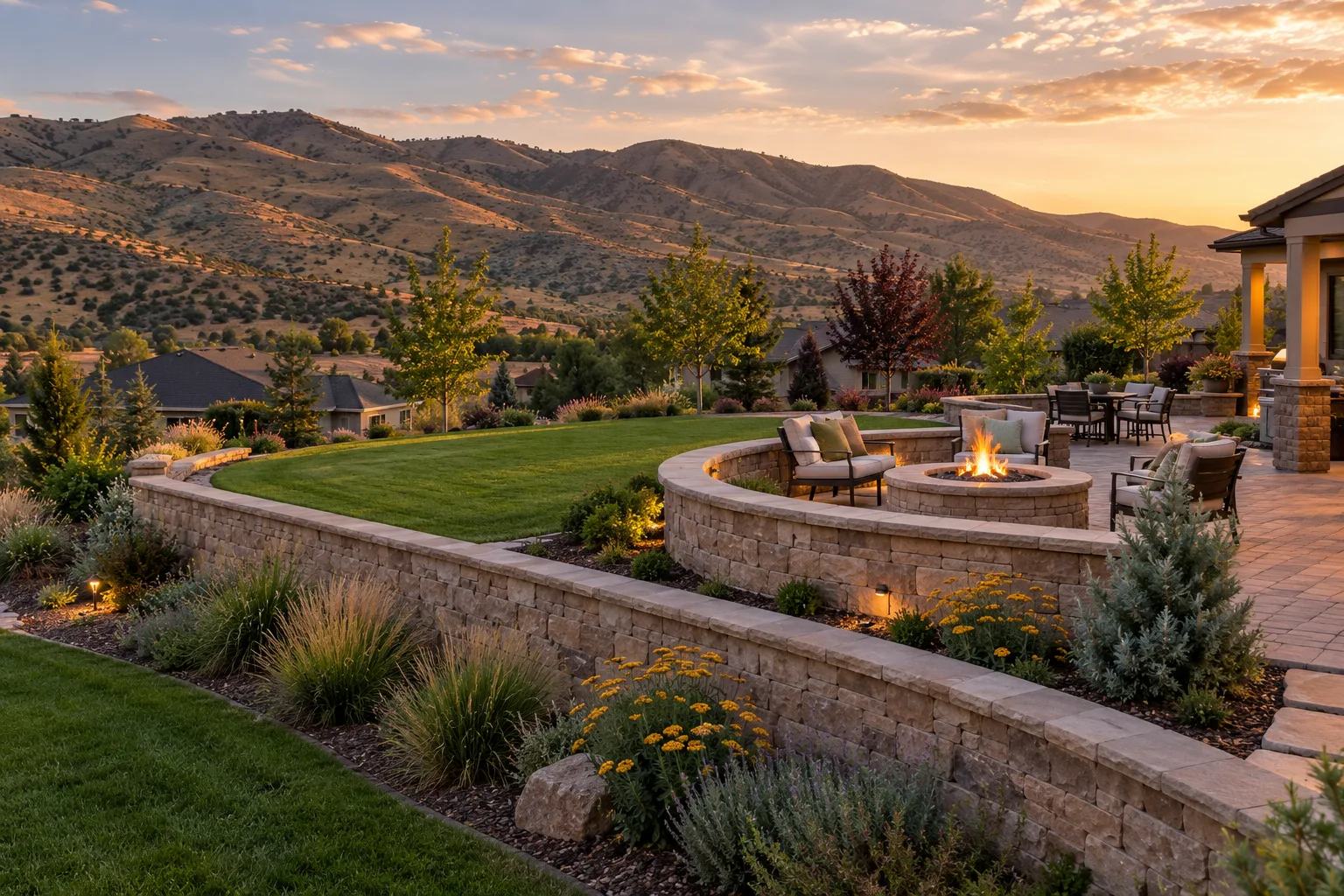
Wide view of a terraced backyard with a block retaining wall, level lawn, and stone seat wall
A capped block retaining wall holds a level lawn and patio, with a curved seat wall and hills on the horizon.

Why One Team Matters Here

One Crew Owns the Wall and the Water Around It

Retaining walls tend to fail where one trade hands off to another: where drainage meets the wall, or where irrigation crosses the footing. Keeping those pieces under one team closes the gaps.

  • 01

    Drainage is planned before the first block.

    Grading and drain routing come first in the build, so water coming off your lawn, roof, or an uphill neighbor already has somewhere to go before the wall goes up.

  • 02

    Irrigation gets rerouted, not buried.

    Underground work happens second, so irrigation lines and sleeves crossing the wall footprint are moved or protected before backfill covers them.

  • 03

    The wall ties into the planting plan.

    A wall usually supports something: a patio, a lawn, a bed. Because Altavera also handles landscaping and sod, the finish grade and planting above the wall belong to the same scope.

  • 04

    One point of contact from layout to walkthrough.

    You work with one team for grading, drainage, wall construction, and finish, instead of lining up separate trades and hoping their work meets cleanly at the wall.

From First Call to Final Walkthrough

How a Retaining Wall Comes Together With Altavera

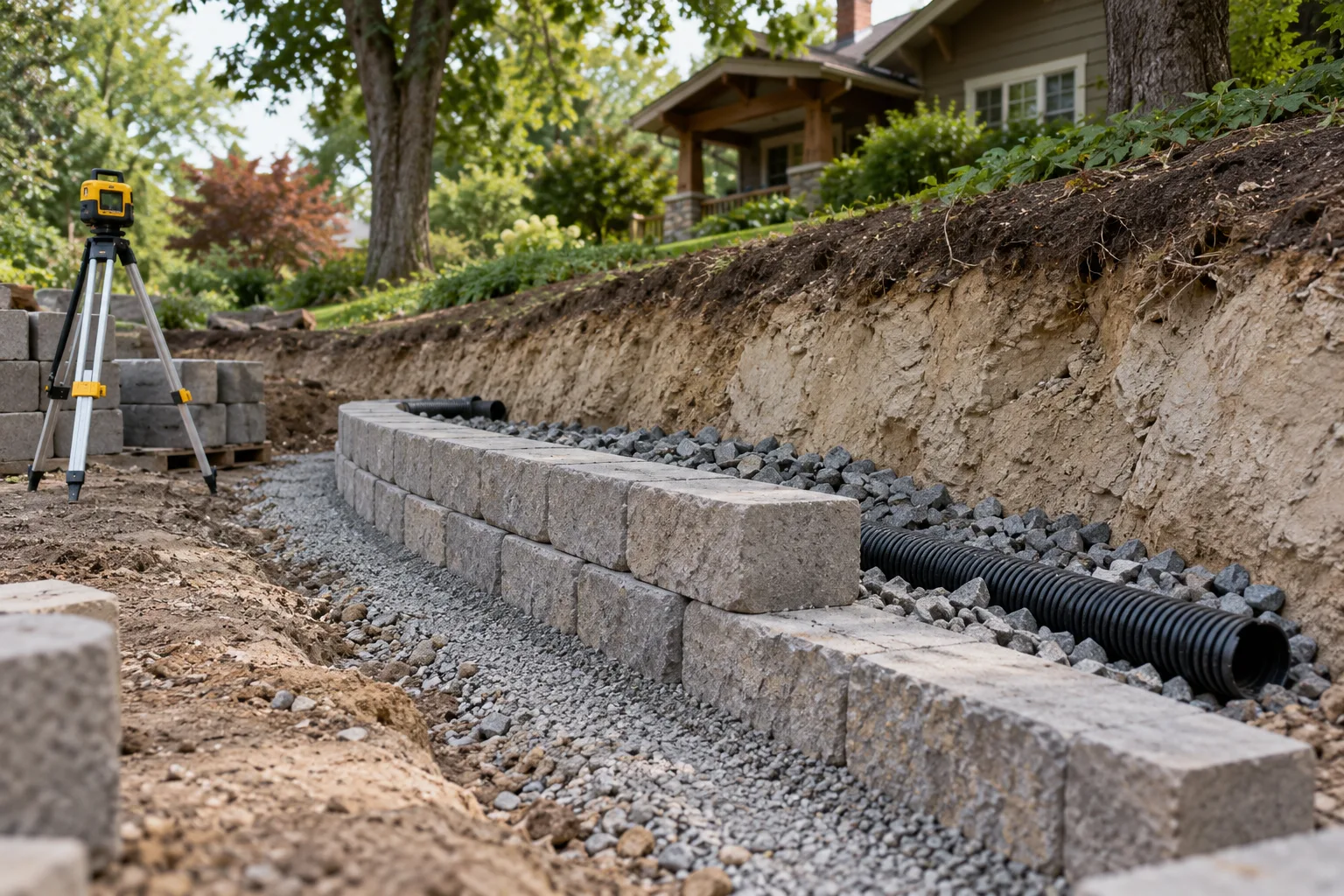
Block retaining wall under construction with drain pipe and drainage stone behind it
First block courses on a compacted gravel pad, with perforated drain pipe and clean stone placed behind the wall.
  1. Step 1: Phone Consultation

    A free 15-minute call to talk through your retaining wall project and your lot, so we both know whether it is a good match. Book it any time at our consultation calendar.

  2. Step 2: Estimator Fit Review

    An estimator reviews the scope and site details, confirms the project fits what Altavera builds, and sets up an on-site visit if it does.

  3. Step 3: On-Site Estimate

    We walk the property and look at slope, soil, water sources, access, and nearby structures, noting any height or location that may need engineering or a permit.

  4. Step 4: Written Proposal

    You receive a written scope covering layout, materials, permit needs, and build order, ready to review before you commit.

  5. Step 5: Deposit and Scheduling

    A deposit locks a start on the calendar. Materials are ordered and the work is lined up around the build sequence.

  6. Step 6: Build in the Right Order

    Drainage and grading go first, underground utilities and irrigation second, hardscape and structures third, and landscaping and finish work last.

  7. Step 7: Final Walkthrough

    We walk the finished project with you, confirm everything works as intended, and close out the punch list.

Where We Build

Retaining Walls Across the Treasure Valley

Altavera builds retaining, terraced, seat, and decorative walls throughout Ada, Canyon, and Gem counties, bringing the same drainage-first approach to every site. Choose your city for local details on soil, permits, and the yards we build in.

If your wall needs a permit, Altavera pulls it and manages the process with your city or county.

Planning more? See New build backyards: where to start or What drives outdoor project cost.

FAQ

Retaining Walls FAQs: Treasure Valley, Idaho

How much does a retaining wall cost in the Treasure Valley?

It depends on your site, so an accurate number only comes after a site visit. Wall height and length, the material, how much excavation and drainage the site needs, and equipment access all shape the budget. Altavera prepares a written proposal after the on-site estimate, and third-party financing is available for projects up to $100,000.

Do retaining walls need a permit?

Some do, depending on the scope and your city or county. Wall height, location, loads above the wall such as a driveway, and closeness to structures or property lines all factor in, and walls over certain heights or near structures may also need engineering. When a permit is needed, Altavera pulls it and manages it with the city or county.

What type of retaining wall works best on sandy or sloped lots?

Segmental block and well-placed boulder walls can both perform on slopes when the base and drainage are right. Sandy and decomposed granite soils erode quickly, so the wall needs a compacted base, clean drainage stone, and drain pipe that carries water away instead of letting it wash out the backfill. Steep or tall cuts may need engineering, which is confirmed for the specific project.

My property gets flood or canal irrigation. Does that change how a wall is built?

Yes. Flood or canal irrigation can keep the soil behind a wall saturated for much of the season, which adds pressure on the wall. We put extra attention on drain pipe, clean aggregate, and an outlet that daylights away from the wall, and we confirm where laterals and ditches run before laying out the base.

Does my HOA need to approve a retaining wall?

Often, but it depends on your HOA's rules. Many planned communities review visible walls for height, material, and color. We provide the layout and material details you need for the submittal and build to the approved design, and HOA approval is confirmed alongside any permit before work starts.

Why do retaining walls lean or crack during Idaho winters?

Most wall failures trace back to water trapped behind or under the wall. When saturated soil freezes, it expands and pushes on the block. A compacted base, drainage aggregate, and drain pipe give the water an exit, which keeps freeze-thaw from slowly moving the wall out of line.

Which cities do you build retaining walls in?

Altavera builds retaining walls across the Treasure Valley in Ada, Canyon, and Gem counties, including Boise, Meridian, Eagle, Nampa, Caldwell, Star, Kuna, Middleton, Garden City, and Emmett. We also build in communities such as Hidden Springs, Cartwright Ranch, and Dry Creek Ranch.

Can you replace an old, leaning retaining wall?

Yes. Older walls often lean or bow because water was never given a path out from behind them. We remove the failing wall, rebuild in block or natural stone, and add the drainage aggregate, drain pipe, and compacted base the new wall needs to stay put through freeze-thaw winters.

Start Your Project

Ready to Get That Slope Holding Steady?

Tell us about the grade you are fighting, and we will walk your property to check the soil, water, and access. From there you get a written proposal for a wall built with the drainage and base it needs.

Prefer to talk? Call 208-314-9967 or try our instant quote.

Licensed & Insured · Idaho Contractor License #6971895 · Serving the Treasure Valley

Altavera Construction logo

We elevate outdoor spaces with professional planning, expert execution, and quality craftsmanship — because your outdoor space is an extension of your home, not an afterthought.

Elevated standards. Real integrity.

Idaho Contractor License ID #6971895  ·  Women-Owned Business

CONTACT

FOLLOW US

© Copyright 2026. Altavera Construction. All Rights Reserved.

3313 W Cherry Lane Suite 1053 Meridian, ID 83642