Built to a Higher Standard
What the Ground Does to New Sod and How to Get Ahead of It
A lawn usually fails because of what is under it or what is feeding it, not because of the sod itself.
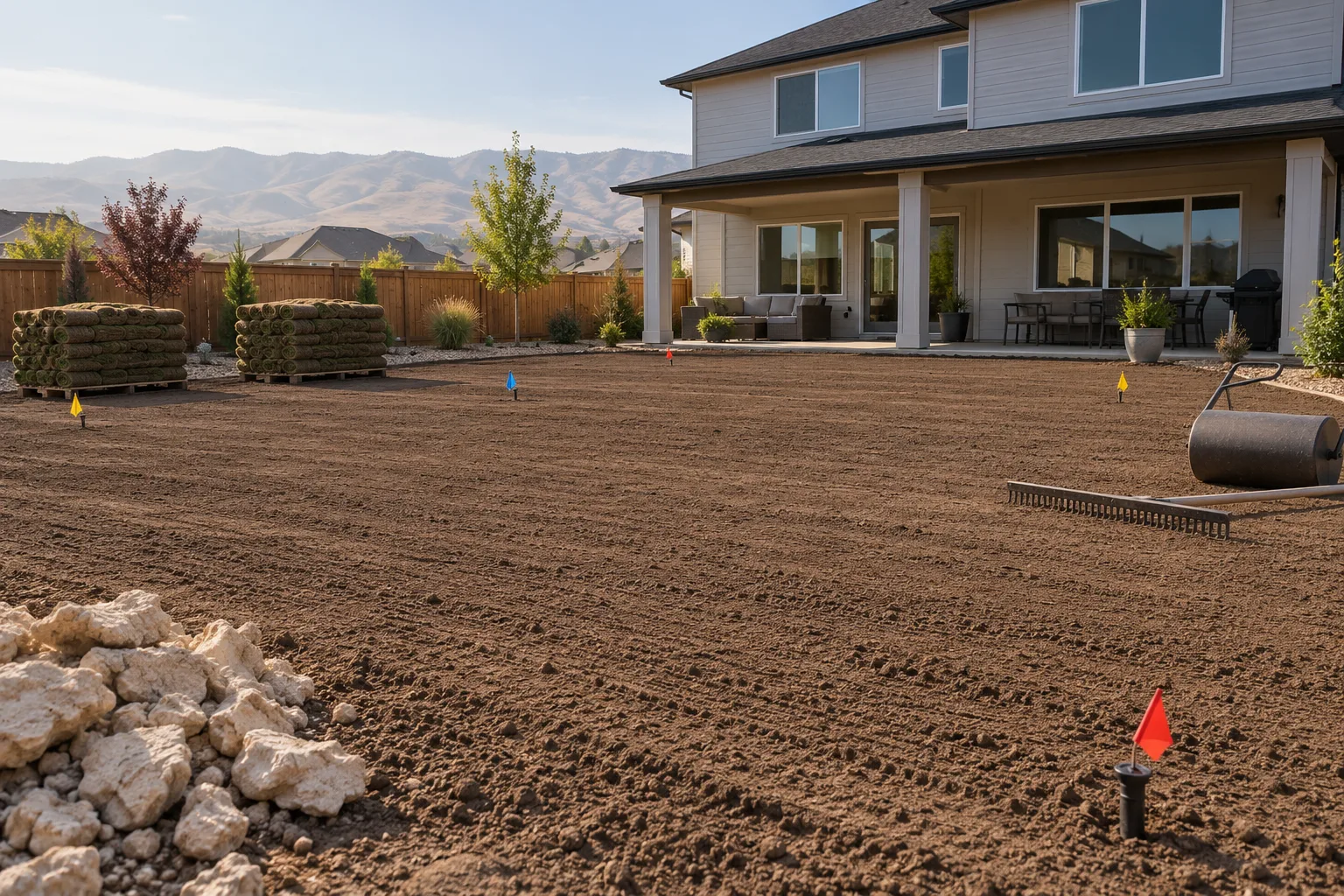
Sod is unforgiving about what sits beneath it. Newer builds often hand over compacted fill left by grading equipment, sometimes with construction debris mixed in, and roots that hit dense ground spread sideways instead of down. A lawn that looked lush in its first June can turn patchy by August, and laying sod without ripping, amending, and fine grading is how a yard ends up with dry spots the sprinklers never seem to fix.
Water is the second variable. Some lots draw seasonal irrigation district water that can carry sediment into drip emitters, while others run on pressurized irrigation or city water, and each changes how zones and plant choices get planned. Whatever the source, a landscape has to be designed around it, with filtration, zoning, and plant groupings that match what the property can actually deliver through a hot, dry high desert summer.
How Altavera handles it
We walk the lot, check the soil, and confirm the water source before recommending sod, beds, or a xeriscape. Grading, drainage, and irrigation are finished first, then we rip and amend the soil, fine grade, and install plants and turf matched to the site's sun, slope, and water.